Condor Blanco Mines intersects sulphide mineralisation at Carachapampa project

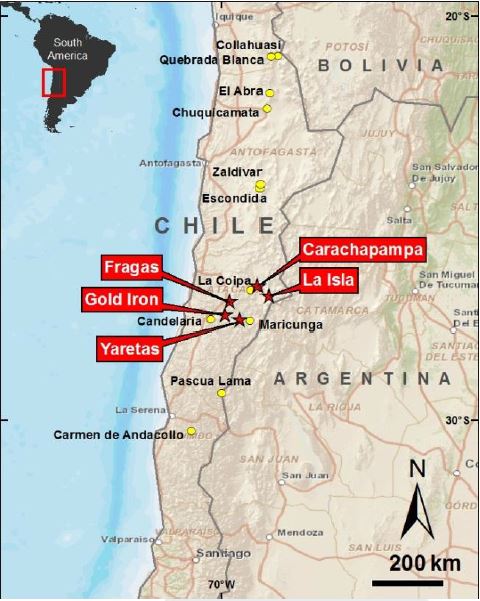
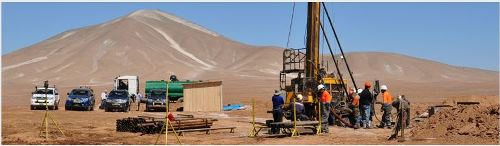
THE DRILL SERGEANT: Condor Blanco Mines (ASX: CDB) has intersected sulphide mineralisation while conducting diamond drilling at the company’s Carachapampa project in the Maricunga Belt of northern Chile.


Project location plan. Source: Company announcement


Condor Blanco explained the mineralisation was intersected over a vertical depth of 137.85 metres and remains open at the end of the hole.

The current diamond drilling program is targeting a series of induced polarisation anomalies.
 
From surface to approximately 98 metres the hole intersected a series of weakly argillically altered dacitic and lapilli tuffs.

Pyrite was encountered from approximately 87m, increasing in dacitic volcanic breccia from 98m to 199.3m.

From this depth, 137.85m of porphyritic dacite was intersected until the end of the hole at 337.15m. The porphyry is characterised by disseminated and chalcopyrite.

Condor Blanco said it has yet to determine the grades of the sulphide mineralisation intersected, although the visual geological findings are encouraging.

“The company is excited by the significant sulphide mineralisation encountered from DDH-CP2B and hopes that this could well be the Company Maker that all junior explorers are looking for,” Condor Blanco managing director Glen Darby said in the company’s announcement to the Australian Securities Exchange.

“Given the number of large gold-copper porphyry deposits in the Maricunga Belt such as Exeter Resources’ Caspiche project, Kinross Gold’s operating Refugio mine and the Cerro Casale gold-copper deposit, these results from Carachapampa appear significant.

“Condor Blanco has always believed in the potential of the Carachapampa project.

“While it is early days, if DDH-CP2B has passed through the high sulphidation epithermal zone into the upper parts of a porphyry copper system, there appears to be potential for two mineralised systems at Carachapampa.

“The company looks forward to the recommencement of drilling.”

Wolf Minerals ready to commence construction of Hemerdon project

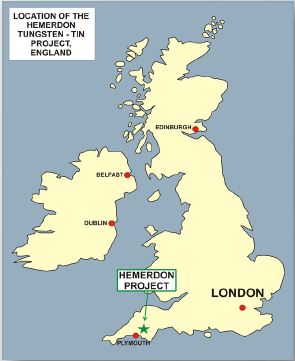
THE CONFERENCE CALLER: Wolf Minerals (ASX: WLF) is set to cut the tape to open commence work at the company’s Hemerdon tungsten and tin project, located near the port of Plymouth in Devon in the United Kingdom.

“It is an awesome thing the team has achieved,” Wolf Minerals managing director Humphrey Hale told The Roadhouse at the RIU Sydney Resources Round Up.

“We have off takers in two different continents, our bankers are in three different countries in Europe, the project is in the UK, our corporate office is in Perth, Australia.

“Our senior shareholders, who want to be part of the deal, are located in Denver, USA and New Zealand, and the project has a German government guarantee.

“To top it all off it is tungsten in the UK.”


Wolf completed a definitive feasibility study at the project in 2011, which confirmed the technical and commercial viability of a three million tonnes per annum open pit mining operation with a 10 year mine life, with available resources to take that out to 14 years.

The project currently boasts a measured, indicated and inferred resource of 401.4 million tonnes at 0.13 per cent tungsten and 0.02 per cent tin.

The total proven and probable ore reserves are 26.7 million tonnes at 0.19 per cent tungsten and 0.03 per cent tin.

Wolf has put in place a total funding package for the Hemerdon project of approx. $212 million (around £139 million) to fund development.

This includes finalisation of £75 million in senior debt facilities plus a US$82 million funding package from Resource Capital Funds.

“It has taken us a while to pull all the documentation together, but we have signed our senior debt deal of £75 million,” Hale said.

“We have signed a binding off take agreement for 80 per cent of the tungsten production and signed and awarded our EPC contract – fixed price fixed term.

“We are about to sign our mining contract and we will be drawing the RCF Bridge Facility and royalty very soon.

“Essentially we will be building the Hemerdon project in three to four weeks’ time.”

One aspect of the project, which is probably its most obvious, that many people have had difficulty in digesting is that the Perth-based company has opted to develop and operate a mine located, not only outside WA but beyond Australia all together.

“Initially they think it is an underground project and that it is a small-scale operation in Cornwall,” Hale remarked.

“It’s none of those – it’s world class and is going to be one of the biggest tungsten producers in the world outside of China.

“It’s in Devon – not Cornwall – and it is a modern openpit mine with a low strip ratio.”

The size and location aside, Hale said the most important thing about the project to note at this stage is the closing out of the finance deal.

“It’s a huge deal as it validates everything,” he said.

“The cash flow generates the debt portion, the signing of the bank deal demonstrates the validity of the due diligence, the £75 million bridging and royalty package reinforces the due diligence of a much closer timetable.

“As a company with a market cap of $55 million we have $200 million worth of funding – based around tungsten.

“I was asked to run a tungsten company called Wolf Minerals with three tenements in New South Wales and we have ended up with tin and tungsten in England.”

IronClad Mining has Wilcherry Hill finish line in sight

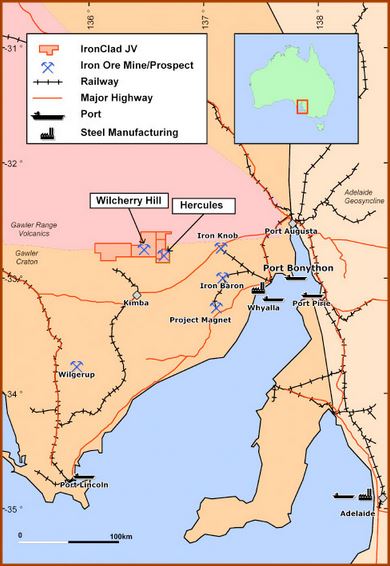
THE CONFERENCE CALLER: IronClad Mining’s (ASX: IFE) Wilcherry Hill iron ore project is almost there.

The company has spent the past five years bringing the Wilcherry Hill project to where it is now and in that time has:

Completed a Feasibility Study for a one million tonnes per annum project;

Signed a Native Title agreement;

Had all mining leases granted;

Secured port access – including 50 hectares of land set aside for the company’s port operations at Lucky Bay;

Had Program for Environmental Protection and Rehabilitation (PEPR) approval to commence mining;

Signed a four year off take agreement; and

Conducted a successful sea trial of its bulk commodity loading system at Lucky Bay.


The Wilcherry Hill project is an 80:20 Joint Venture between IronClad and Trafford Resources.

The project is being developed to produce Direct Shipping Ore for sale to international steel mills.

IronClad has the mining rights to all iron ore extracted from four tenements under the JV agreement.

With the project so close to completion there are now just two hurdles to negotiate.

The first is the last Amendment Approval from the Government of South Australia, which the company anticipates it will receive any time this month.

The final hurdle is finalising the finance for the project, which IronClad managing director Ian Finch described as, “A relatively small figure.”

“We need to finalise our $15 million of standing capital and $6 million working capital,” Finch explained to The Roadhouse at the RIU Sydney Resources Round Up.

“The $6 million of working capital is not so much of an issue because we have got forward sales in place we can rely upon with end users.

“So the $15 million figure is all it amounts to.

“Hopefully we can get as little gap as possible between the final Amendment Approval from the Government of South Australia and having the finance in place.”

After having spent over $67 million in the five years it has been developing the project, Finch said it was frustrating to be held up at this stage.

“We are ready to go,” he said.

“For the sake of $15 million – in this climate – it really is a pittance and is really the only thing that is holding us up at the moment.

“We have been frustrated along the way, by bigger things, and in the end this will just be a blip in the rear-view mirror.

“It’s not something that is unduly distressing us.”

Musgrave Minerals sharpens drill target focus.

THE CONFERENCE CALLER: The Musgrave Minerals (ASX: MGV) story is pretty much at its beginnings but it would appear the company has opened with an interesting beginning.

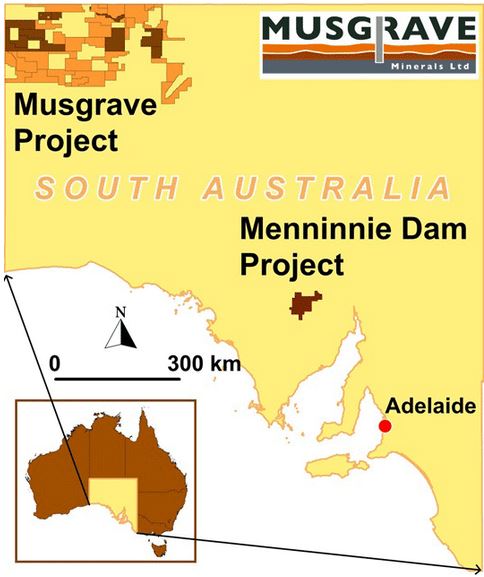
The company has a suite of tenements that includes the nickel-copper-PGE Musgrave project, which intersects the borders of Western Australia, South Australia, and the Northern Territory.

Musgrave’s other main project is its Joint Venture with Terramin Australia at Menninnie Dam, where it is focusing on silver-lead-zinc-gold.


What else does a junior exploration company need, you may ask?

Cash is usually the answer to that question and Musgrave has the ideal answer with $10 million sitting in the bank.

“There are a few key elements to the Musgrave Minerals story,” the company’s managing director Robert Waugh told The Roadhouse at the RIU Sydney Resources Round Up.

“We listed two years ago on the back of six cornerstone investors combing their tenements together in the Musgrave region.

“From there we have identified a number of targets. We have gone through a process to drill test those targets and have continued to develop our processes to identify more.”

Waugh explained the company had worked hard on increasing the quality of its Musgrave targets since it commenced its exploration activities, which has resulted in the identification of some high-quality targets at Mt Woodruff, Deering Hills and Moorilyanna.

“Our focus on the Musgrave side of things is on nickel-copper-sulphide,” Waugh said.

“Our project at Deering Hills has a number of high-quality targets in the order of one to two kilometre long geochemical anomalies that are coincident with magnetics and gravity.

“Some are coincident with airborne EM and we are doing ground EM over the next couple of months to get those in a position to drill by August.”

Is that your main project focus?

Deering Hills, along with Mt Woodruff are the company’s two main focus points in the Musgrave.

Mt Woodruff is in a similar position to Deering Hills in that Musgrave has identified one to two kilometre long airborne EM anomalies, coincident stream sediment geochemistry, with magnetics and gravity, which it considers also suggests these are high-quality targets.

“We have collected ground geochemical data and we are now waiting on those results, which we anticipate being back in around two to three weeks,” Waugh said.

“Again – that should be drill ready for around August.”

While all this has been happening at the Musgrave project the company has also been drilling at the Menninnie Dam project, in particular at the Tank Hill target from which it recently released an intersection from of 6 metres at 4.9 per cent zinc, 62 grams per tonne silver, and 1.2 grams per tonne gold.

“It is only early days at Tank hill, but that’s a positive sign for us,” Waugh said

“We have the drill rig back out there drilling at the moment, so that should give us a better indication of what we are seeing there in terms of potential along strike and down dip.”

Waugh said the company had been greatly encouraged by what it has seen so far from its projects.

“We love the Musgrave Province,” he said.

“We feel it has a significant amount of potential and we also like Menninnie Dam and its links to silver potential, similar to Investigator Resources and what it has achieved at the Paris project.

“Both regions are still very much underexplored at this stage, but that is what we’re about – early-stage greenfield opportunity and discovery.”

Encounter Resources ready for big field season

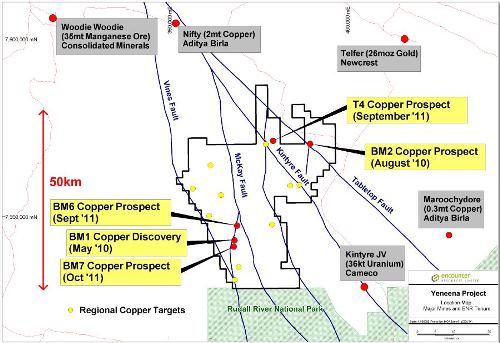
THE CONFERENCE CALLER: The Roadhouse spoke with Encounter Resources managing director at the RIU Sydney Resources Round Up to get a quick rundown on how the company is advancing its BM1 and BM7 copper discoveries at the company’s Yeneena project located in the Paterson Province of Western Australia.

Encounter Resources (ASX: ENR) recently entered into an earn-in agreement with Antofagasta Minerals Perth, a wholly-owned subsidiary of London Stock Exchange-listed Antofagasta PLC, one of the world’s largest copper producers and explorers.

Under the terms of the agreement Antofagasta is set to earn a 51 per cent interest in the project by spending US$20 million over a five year period.

Robinson told The Roadhouse the Antofagasta deal had set Encounter up for a big coming field season.

“They will be spending a god deal of money between now and November in order to meet their first year’s minimum expenditure on the Joint Venture,” Robinson told The Roadhouse.

“All their technical guys are out there on site now and we are very confident we are going to go a long way towards solving this puzzle that has been the BM1 and BM7 copper discovery.”


Robinson was serious when he said the company will be busy with a heritage survey being conducted next week, an EM survey starting the following week and drilling scheduled to commence a few weeks after that.

“We are pretty busy out there at the moment, which is why I‘m the only one here at the conference, Robinson said.

“The project is at a very exciting time now.

It was exciting from a technical aspect, but now it has funding behind it we have the potential to take it forward really quickly.

“I would have thought that if we do manage to really get on to something here, the $20 million that Antofagasta is due to spend in five years could be spent quicker than that and they will want to get on with things, we’ll want to get on with it.”

What the Brokers Say

WHAT THE BROKERS SAY: Interesting news and views from across the Resource Analyst universe.


NRW Holdings Ltd (ASX: NWH)

NWH has won a new contract for RIO Tinto (ASX: RIO) to provide earthworks on the Nammuldi project worth $180 million over 37 weeks and a $67 million contract (subject to FID) on the Roy Hill project.

These contracts help revive a depleted order book. The RIO work, whilst welcome, is later than we were anticipating (refer research March 25) and we are pulling back our 2013 forecasts to the lower end of guidance or $80.5 million.

2014 continues to be difficult to forecast and is very much leveraged to Roy Hill proceeding, which will not be news to anyone.

On balance we see 2014 earnings in the range of $70 million to $80 million provided Roy Hill proceeds and closer to $50 million if it doesn’t.

Nevertheless, NWH is now trading approx. at NTA, on a PE of 4.3x (low end) 2013 guidance.

Consequently, in our view, all but a catastrophic downgrade (refer below) is well priced.

Key Points:

• NWH has recently won a $180 million contract for RIO on its Nammuldi project, commencing May 2013 and lasting for 37 weeks.

• In addition, NWH won a $67 million contract to provide various earthworks around the Roy Hill mine (subject to FID).

• The market has responded consistent with its general lack of enthusiasm towards the mining services sector, and based on all but the most severe of sensitivities, NWH offers significant value.

• That said, delays in the award of the RIO work, together with possible further delays on a Roy Hill green light have resulted in us pulling back both 2013 and 2014 NPAT forecasts by approx. 7 per cent to $80.5 million in 2013 (from $86.7 million) and $73 million in 2014 (from $79.3 million).

• 2014 continues to be difficult to forecast, and without Roy Hill 2014 will prove a scramble, but the idea there is nothing to do seems overly pessimistic, particularly as by our estimation there is circa $600 million locked away as is (excluding Roy Hill entirely).

• Based on the current overhead structure, $600 million revenue wouldn’t generate much 2014 NPAT profit, however with depreciation running at circa $50 million per annum, still generates plenty of cash.

• That said, NWH, even in a challenging environment, will win further work in the normal course.

• In the meantime NWH trades around NTA and if it pays another 8 cents at the full year, will yield 13 per cent during 2013.

Recommendation: Buy

 Consolidated Tin Mines (ASX: CSD)

Consolidated Tin’s major shareholder Snow Peak Mining has now completed the acquisition of the ‘Kagara Central Region project’, which includes a one million tonnes per annum (Mtpa) processing plant and a highly prospective land package.

CSD is well advanced with a PFS assessing the economics of modifying the plant to process tin ore (sourced from the CSD’s flagship Mt Garnet tin project) at the plant.

Consolidated Tin (ASX: CSD) continues to make steady progress in its ambition of becoming the next Australasian tin producer, boosted by a strong relationship with Snow Peak Mining.

Snow Peak Mining recently paid $40 Million for the Kagara Central Region project, which includes a 1Mtpa processing plant and a highly prospective land package.

CSD has agreed to manage the re-commissioning of the 1Mtpa Mt Garnet processing facility (scheduled to re-open Sept. 2013) with ore to be initially sourced from the existing Baal Gammon and Balcooma/Surveyor mines, in return for a 10 per cent free carried interest in any short term profit made.

A pre-feasibility study is well underway (due for completion in Sept. 2013) assessing the economics of processing ore from Consolidated Tin’s Mt Garnet tin project at the Mt Garnet concentrator.

In its current configuration, the plant is not set up to process tin ore and as such, modifications to at least one of the existing 0.5Mtpa circuits will be required (at a fraction of the cost of constructing a stand-alone plant).

On the basis of a positive PFS, a JV company will likely be formed with Snow Peak and CSD each contributing their relative assets.

Each company will then contribute to funding on a pro-rata basis for any plant modifications and upgrades.

Recommendation: Speculative BUY

Disclaimer: The above is intended as a guide only. The Roadhouse accepts no responsibility for investments made from this advice, successful or otherwise.


Rubianna Resources encouraged by maiden Killara drilling

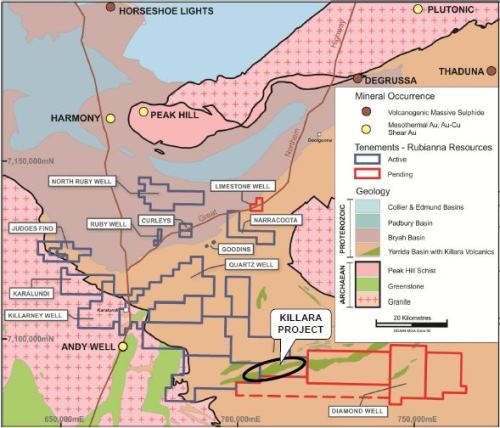
THE DRILL SERGEANT: Rubianna Resources (ASX: RRE) has been encouraged by positive exploration results from a recently-completed maiden RC drill program at the Killara base-metal project within the company’s Murchison tenements northeast of Meekatharra in Western Australia.


Project location map. Source: Company announcement


The company said the results of the drilling had supported its conceptual model for the project.

The program comprised eight RC drill holes for 1,422 metres, which the company designed to evaluate previously returned surface geochemistry and ground geophysical anomalies.

Rubiana indicated it had intersected elevated multi-element geochemical horizons within drilling of all of its principal drill targets, which it claimed supports its interpretation for the potential of sedimentary hosted (SEDEX) mineralisation within the project area.

“It is highly satisfying to have results that significantly improve our exploration and targeting model(s) from our first drill program in this area,” Rubianna Resources managing director Dr Steve Batty said in the company’s announcement to the Australian Securities Exchange.

“The rock chip sampling and mapping clearly shows potential for a minimum of over twenty-five kilometres of anomalous horizons along strike and a minimum of at least three sub-parallel horizons in this area.

“As we are looking for a deposit with the main mineralised target zone potentially in the order of 200 to 300 metres long, there is significant upside to this early stage project following this modest exploration drill program.”

Conference clientele consider their choices

THE CONFERENCE CALLER: The resources conference season is well and truly underway but with the number of events scattered across the calendar, how do junior companies decide which forum offers them the best value?

Next week The Roadhouse heads to Sydney to attend the RIU Sydney Resources Round-Up, kicking off a couple of months of air flights, hotels and handshakes, as we keep abreast of what’s happening in the junior resources sector.

The recent proliferation of events in the conference space has now become an issue for companies, especially in the current economic mood where decisions on how and why they spend their cash are more important than ever.

In an open letter to the industry, long-time participant in the resources conference arena, Vertical Events managing director Stewart McDonald acknowledge the recent growth within his industry and that companies were being more selective in which events they attend.

“Times are tough for the junior minerals and oil & gas exploration sector and I know everyone is tightening their belts and questioning the value of attending resources conferences,” McDonald said.

“The bottom line is that there are too many resources conferences and many of them don’t deliver value to the companies that participate in them.”

We contacted a few company executives to canvass their ideas on the matter and received some fairly straight-forward responses, probably due to our willingness for them to remain nameless on this occasion.

“We also noted the proliferation of conferences a number of years ago, and then found some were more well attended than others (read: some were very poorly attended),” one respondent executive said.

“Notwithstanding the reason that some conferences were poorly attended were due to factors such as the cyclic market downturn, commodities being on the nose investor-wise.

“We have found that Stewart and Doug’s [Vertical Events] conferences were the best run and best attended.

“Pro-active Investors’ investor’s sessions – I like these smaller forums a lot – in Perth and Sydney, and will support these going ahead.

“I also attend Diggers and Dealers, although I think it has outgrown the junior explorer, but it is almost compulsory attendance.

“I would like to see a Junior Diggers run in parallel.

“I usually present at the AMEC Conference in Perth – for support, but it is far from the best.”

Our candid correspondent said he liked to see consistency at events, acknowledging the RIU conferences have a history of this.

He said they are usually supported by good companies, have investors in attendance and are well organised.

“RIU also tries to keep down the number of ancillary industry booths and attendee’s,” he said.

“I’m there to see our story promoted and it is a little frustrating being bailed up by pump salesmen and HR people – albeit both are necessary.”

Another executive told The Roadhouse he often found it more effective to conduct one-on-one broker road shows and investor seminars, such as those run by Proactive Investors, Symposium and others.

However, he did mention these events face the same challenge as conferences in that often he just gets to meet with the same old “tired” investors who go from one seminar free lunch or cocktail hour to another.

“The other conferences that we have attended from time to time are AMEC (Perth), Sydney Resources Roundup, Melbourne Resources Roundup and Brisbane Mining,” he said.


“We’ve also attended a couple of the Mines & Money conferences in London, Hong Kong and Singapore.

“It would be fair to say that these really depend on the market sentiment at the time as to whether they are successful.

“Sometimes they do not attract any investors or brokers, so we are just talking to ourselves – that is others in the industry – which is a waste of time and money.

“As a company our goal is to meet and talk with new investors, and if a conference can’t attract those people, then we’re not really interested.

“The conference organisers have to work a lot harder in that regard.

“They charge us a lot of money to present and exhibit, and we often don’t get value for money.”

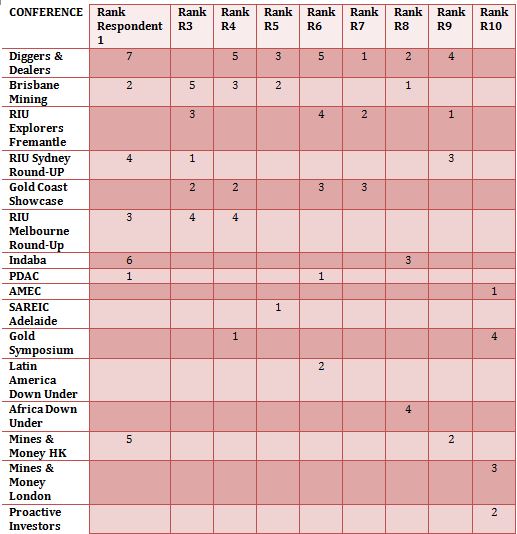
We don’t claim to be overly-scientific at The Roadhouse but a we took a quick straw poll of a few company executives to see which events were ranked in their Top Five must attend events.

Some ranked more than five others ranked less. The chart below shows how each company ranked its preferences from 1 being highest to 5 (one case 7) the lowest.


Although our survey was not exactly spread over the entire industry it does indicate where some companies go to be seen and that what they are mining and where they are doing it can have some bearing on the decisions they make.

In his open letter to the sector McDonald claimed Vertical Events had, “pioneered the Mining Resources Convention” and that the company had been doing so, “Long before the ‘resources boom’ made conferences fashionable.”

“When Vertical Events began its business, there were very few resources industry conferences and virtually nothing that focussed on the junior exploration sector,” McDonald said.

“Over the past 14 years, the resources conference market we helped to create has become swollen by events promoted by opportunists riding the wake of the ‘resources boom’.

“These opportunists promise great things, but routinely fail to attract decent audiences and most importantly, fail to provide value for money to sponsors, exhibitors and participants.

“It’s no wonder in these tough times; many people are now questioning the value of attending conferences at all.”

A further respondent to The Roadhouse survey agreed there certainly are a lot of conferences out there and that it would be possible to travel the world simply by attending resource conferences.

This executive heads a junior Australian gold producer with a focus on the Australian retail market, which means he is more domestic in his frequent flyer point accumulation only attending conferences in Australia.

“My top five as far as effectiveness for promotion of our company to our target audience are: Sydney Gold Symposium, Gold Coast Resources Showcase, Brisbane Mining, RIU Melbourne Resources Round-Up, and Diggers & Dealers,” he said.

“At the Sydney Gold Symposium you get a lot of gold bugs, retail investors; it is a very interesting conference if you want to find out about investing in gold.

The Gold Coast Resources Showcase attracts a lot of very astute retail investors, well-funded retirees who are genuinely interested in discussing your business.

“Also, as it takes place before the end of financial year these investors can soak up end of financial year selling.”

Like most of the junior executives who responded to our questions this executive also claimed his company to be too small to get a look in at Diggers & Dealers.

He did however, acknowledge its effectiveness to simply attend as a delegate to maintain industry contacts and source potential acquisitions adding the company became aware of a project another company was divesting, which it subsequently acquired.

Chris Gale: Latin Resources

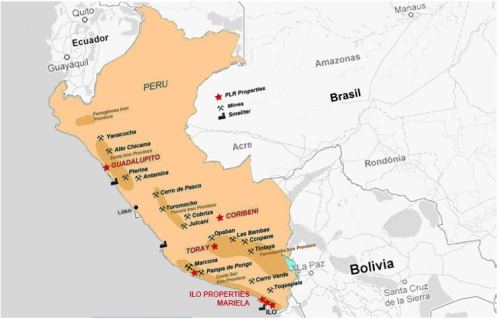
Perth-based Latin Resources managing director Chris Gale dropped by to tell The Roadhouse how the company is positioning itself for a long-term relationship with Peru by way of three diverse projects.


How long has Latin Resources (ASX: LRS) been operating in Peru?

We have been in Peru now for five years and we have built, what we consider to be, three very good projects.

We were the third junior Australian explorer in the country – now there are eighteen of us.

In 2008 there were 20 junior Australian explorers – there are now 80.

What does you Peruvian project portfolio look like?

The Guadalupito iron and heavy minerals sands project is obviously our most advanced towards production. We think it is an excellent project for someone to Joint Venture.

At the Ilo Norte project we have had our drilling permit approved, so we anticipate drilling to commence at Ilo Norte in the next month or so – we’re just getting a rig organised.

Should we have the drilling success we hope to we will most probably look at Joint Venturing there as well.

We also have the Mariela iron copper-gold project, on which we have an already proven solid Joint Venture with our Chinese partners the Junefield Group.


Joint Venture is obviously not a dirty word around the Latin Resources office?

The Mariela JV with Junefield is a great example of how it can quickly progress things for a junior company.

We had $9 million injected into the company – at a 50 per cent premium at the time – that helped us develop Guadalupito to a 1.5 billion tonne project and they will be spending another $35 million developing Mariela – a project where we will be free carried though completion of a BFS and still be taking 30 per cent.

Junefield just chipped in one million dollars at a 25 per cent premium to your share price. Would it be fair to say the quality of your projects in South America were one of the main reasons for your Chinese partner’s recent plunge?

You have to have a decent project and you have to have investors prepared to put their money into it – the two things go hand in hand, really.

The one thing we have shown the market is that we are capable of raising money when we need to.

We are a group that is starting to plan their mining activities with the view of going into production.

Guadalupito is now at 1.5 billion tonnes plus a 4.5 billion exploration target – that’s a big enough resource for a 60 year mine life.

So we don’t need to continue to explore it- we just need to exploit it.

You say you’re ready to go at Guadalupito. What stage is the project at?

The Scoping Study is finished and we recently announced an increase to our JORC Resource at Guadalupito by over one billion tonnes and upgraded our exploration target for the project to 4.5 billion tonnes.

Now that we have the resource all we need is someone with the cash to help us build that business.

The bottom line now is that we are looking at running a 15 million tonne per annum plant to produce the magnetite.

For us right now the best way of creating cash flow is to develop the magnetite plant at Guadalupito and hopefully take advantage of the local domestic market for our product that is basically on our doorstep.

Brazils’ largest steel group is operating electric arc furnaces just 25 kilometres from Guadalupito and are hungry for feedstock.

The quickest way for us to market is to produce a magnetite concentrate. We can achieve that by simply running the ore through gravity spirals and magnetic separation.

That will be a low-cost capital expenditure to produce a magnetite concentrate.

We are currently in the planning stage with the view to building next year to be in production by 2015.

What about the Ilo Norte project?

We intend drilling four holes at Ilo Norte.

Hasn’t there been some readjustment to your original Ilo Norte program?

We basically re-aligned the whole project after earlier drilling hit some copper zinc intersections, which made us think we could have some good copper gold potential there as well.

We will drill the initial four exploratory holes and then back that up with an eight hole program.


When you say you hit some copper and zinc intersections – did that take you by surprise?

It did. We were drilling looking for magnetite – some iron ore – and we hit some high percentage copper that gave us something different to think about in terms of the project’s geology.

We had some Induced Polarisation run over it and had the results reinterpreted, which has changed our position on the project and we are now focusing more on the copper side of things.

You must consider the copper side to be worthwhile to undergo such a change of focus?

It’s not such a big undertaking once you take into consideration the Ilo district’s copper related history.

Some big players are there – both Antofagasta and BHP Billiton are operating in the area now; the region has been producing copper for over 60 years.

The Cerro Verde mine operated by Freeport is about 30 kilometresms north of us , so there is big potential in the district .

We have over 130,000 hectares of land that swoops up along the copper belt from Chile, right through Peru – so we think we could have a big number of prospective targets there.

You would obviously have a good supply of industry-related expertise on hand?

Peruvians understand copper-gold. The country is the second largest producer of copper in the world.

Junefield Group is also heavily involved in the Mariela iron copper-gold project.

They are continuing to spend money at Mariela – they are required to spend $35 million in order to acquire 70 per cent of the project.

Remember they have also just backed us with a further $1 million – so they have gone from being 19.9 per cent to a 23 per cent shareholder of the company.

They’re obviously happy with what they have seen to date?

That Mariela project is shaping up to be pretty solid.

Junefield has six drill rigs on there now and have just applied for a new 300 hole drilling permit.

They recently completed a 21 hole program, which hit some encouraging intersections including 49.6 metres at 42 per cent iron, 65 metres at 27 per cent iron, and 37.5 metres at 31.4 per cent iron.

We anticipate that 300 hole program will kick off sometime around July.

The tie-up with Junefield has enabled you to make good progress?

We signed that deal in March last year – they had six rigs in there by August drilling a 20,000 metre program.

They’ve finished that and now they’re going in with another four rigs for the 300 hole project.

As a junior company, you can’t just do that on your own.

In the current climate it is a lot harder for junior companies to raise cash.

You have to work smarter at getting your cash. The days of getting easy capital from local shareholders are gone.

If you have the right projects you can attract the right investment.

Australian Bauxite: the company name says it all

With its first Tasmanian mining lease well on the way to being granted, Australian Bauxite (ASX: ABZ) is poised to take advantage of favourable developments in the global bauxite market.

Australian Bauxite’s (ABx’s) carefully planned success began in 2006 when chief geologist Jacob Rebek started looking for bauxite deposits on the eastern seaboard of Australia.

Rebek’s discoveries and enthusiasm enticed Ian Levy to join ABx as managing director in 2008, who brought with him a wealth of bauxite project development experience from his time employed with CSR and WMC in Western Australia and Aurum in Fiji.

Then, in 2009 the Indonesian Government passed a raft of laws to preserve the country’s limited bauxite resources for its own domestic industry, which it is now in the process of implementing.

“ABx floated in 2009, specifically to get a project up and running by 2014 to meet the foreseen peak demand,” Levy told The Resources Roadhouse.

“We are now on schedule to be shipping bauxite to customers in China toward the end of 2014.

“It really is credit to Jacob Rebeck; he recognised there was good bauxite in eastern Australia, near existing infrastructure in areas free of socio-environmental constraints.”

ABx secured core project areas along the Eastern Australian Bauxite Province extending from central Queensland, through New South Wales and Tasmania.

All 42 ABx tenements are 100 per cent-owned and free of obligations for processing and third-party royalties.

The company has discovered a number of new bauxite deposits and established global resources of 115.6 million tonnes of high-grade bauxite with a target of 200 to 300 million tonnes.


The Goulburn bauxite project in NSW has been advanced to pre-feasibility status and the Binjour bauxite project in Central Queensland is anticipated to soon follow.

However, it is from the 5.7 million tonnes already defined at the company’s Tasmania-based projects its first shipments of bauxite will be produced.

ABx’s first bauxite project development is now underway at Bald Hill, close to Campbell Town in the central northern Midlands of Tasmania, an area historically known for farming, quarrying, timber and industry.

“The response we have received from all avenues has been very positive,” Levy said

“We have consulted with all of Tasmania’s political players, local councils, and the local opinion-setters and all of them have said we have chosen the site to commence our operations very well.”

Selection of the site for ABx’s first bauxite mine wasn’t simple with 20 prospective sites to choose from.

“We didn’t know for certain which would be the easiest to get started and which would be the most difficult,” Levy said.

“Pitt and Sherry engineers went through every one of our discoveries and said Bald Hill was the easiest site to get started.

“So, having chosen the site carefully, we will now demonstrate how quickly the land can be rehabilitated – and we honestly believe we will leave the land in better than condition that how we found it.”
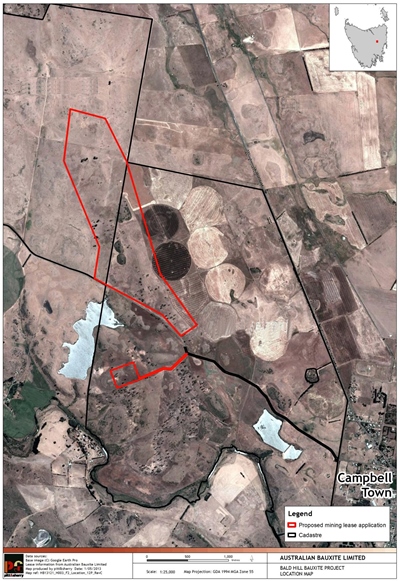
 

The significant aspect of Bald Hill and ABx’s other deposits is the Gibbsite-rich type of bauxite they possess, with elevated iron and also very low in reactive silica which is the main deleterious element in bauxites worldwide.

“It doesn’t have any boehmite which is a refractory mono-hydrate alumina,” Levy explained.

“With alumina minerals – there are two types – one is a tri-hydrate where there are three water molecules per molecule of alumina – and that’s called Gibbsite.

“For example, Western Australian bauxites are Gibbsite rich, they are the lowest grade bauxite deposits being exploited in the world – by a long away – yet they are by far the lowest cost producer of alumina because Gibbsite bauxite is more easily refined at much lower temperatures.”

Another important facet of Gibbsite bauxite is its current in short supply world-wide.

This shortage has been intensified by Indonesia, which has long been a major source of bauxite for China and implemented the first of two major cutbacks to exports in mid-2012.

Indonesia closed a dozen mines and imposed a 20 per cent export tax on bauxite.

In 2014 Indonesia is expected to shut more mines and increase export tax to 50 per cent.

As Indonesian imports wane, China’s demand for seaborne bauxite grows, especially as its own domestic bauxite is deteriorating in quality and rising in cost faster than analysts had predicted.

Chinese bauxite imports reached an all-time monthly record of 6.3 million tonnes in May 2012 then fell to one million tonnes in June 2012 after Indonesia’s first round of bans took effect.

Since then they have has steadily returned to between four and five million tonnes per month, which is insufficient for China’s demand.

“China is looking more and more at importing bauxite from the Asia-Pacific area with Australia emerging as the most logical provider,” Levy said.

Earlier this year, ABx executed a Term Sheet with major Chinese aluminium company, Xinfa Group in regards to early development and operation of the company’s Tasmanian and Goulburn South bauxite projects.

“Xinfa is the second largest importer of bauxite into China, importing more than 10 million tonnes per year,” Levy said.

“We anticipate initially supplying Xinfa with one million tonnes per annum and, hopefully growing that to more than three million tonnes per annum.

“2014 will probably see similarly high prices and we hope to lock-in a few million tonnes with a large operating profit margin.”

Levy compared the likely 2014 Indonesian bauxite prices, which are due to rise through it increasing export taxes and will cost more than US$63 per tonne Cost Insurance and Freight (CIF) to ABx’s proposed cost figures.

“Our operating expenditure looks like being less than US$27 per tonne Free On Board plus US$19 per tonne shipping for a total of approximately US$46/tonne CIF to China,” he explained.

“We are likely to sell at above Indonesian and Indian bauxite prices with operating margins of $10 to $20 per tonne.

“We hope to start at 750,000 to 1,000,000 tonnes per annum and grow to about 3 million tonnes.

“Eventually, we hope to develop a five million tonnes per annum project out of Binjour in Central Queensland via an expanded Bundaberg Port in 2017 onwards – to be our flagship project.”

Bauxite has undergone a ‘quiet revolution’ in recent times.

One contributing factor to this has been the fall in seaborne bulk transport costs, bringing Australia closer to Asia than ever before.

In 1975, it cost US$35 per tonne to ship bulk to North Asia, or US$150 per tonne in today’s money.

Today, the same shipment will cost US$18 per tonne – about 10 to 15 per cent of what it once cost.

“This is a technological revolution that has not been noticed by the investment community – Keating was wrong; we are not at the arse end of the world,” Levy said.

“Similarly, aluminium production costs have benefited from major advances in smelting technology – and real costs of aluminium metal are falling faster than for all other significant metals.

“This means consumption of aluminium will rise faster than other metals as aluminium becomes increasingly cost competitive in transport, power, construction and consumer goods.

“The net effect will be consumption of aluminium will keep rising, leading to the demand and prices for seaborne bauxite to keep rising strongly.

“Australia is poised to be the main beneficiary.”


Australian Bauxite Limited (ASX: ABZ)
…The Short Story


HEAD OFFICE

Level 2
131 Macquarie Street
Sydney NSW 2000

Ph: +61 2 9251 7177
Fax: +61 2 9251 7500

Email: corporate@australianbauxite.com.au
Web: www.australianbauxite.com.au

DIRECTORS
John Dawkins, Peter Meers, Ian Levy, Jacob Rebek, Wei Huang, Ken Boundy

MAJOR SHAREHOLDERS

Hudson Resources Limited 28.73%
Gleaneagle Securities 9.68%
State One Stockbrokers 7%
Washington H Soul Pattinson5.5%

SHARES ON ISSUE
114 million

MARKET CAPITALISATION

22.2 million (9/05/13)