


Chris Gale: Latin Resources
Perth-based Latin Resources managing director Chris Gale dropped by to tell The Roadhouse how the company is positioning itself for a long-term relationship with Peru by way of three diverse projects.

How long has Latin Resources (ASX: LRS) been operating in Peru?
We have been in Peru now for five years and we have built, what we consider to be, three very good projects.
We were the third junior Australian explorer in the country – now there are eighteen of us.
In 2008 there were 20 junior Australian explorers – there are now 80.
What does you Peruvian project portfolio look like?
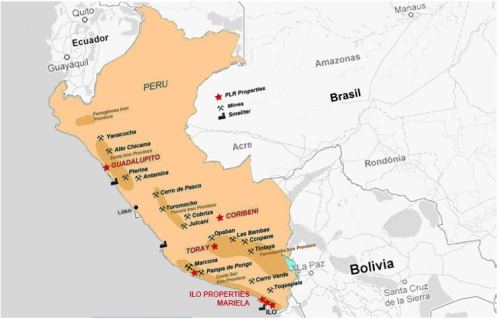
The Guadalupito iron and heavy minerals sands project is obviously our most advanced towards production. We think it is an excellent project for someone to Joint Venture.
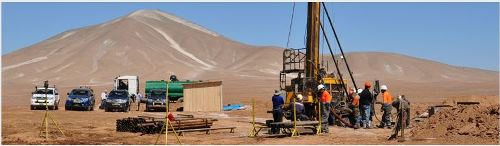
At the Ilo Norte project we have had our drilling permit approved, so we anticipate drilling to commence at Ilo Norte in the next month or so – we’re just getting a rig organised.
Should we have the drilling success we hope to we will most probably look at Joint Venturing there as well.
We also have the Mariela iron copper-gold project, on which we have an already proven solid Joint Venture with our Chinese partners the Junefield Group.
Joint Venture is obviously not a dirty word around the Latin Resources office?
The Mariela JV with Junefield is a great example of how it can quickly progress things for a junior company.
We had $9 million injected into the company – at a 50 per cent premium at the time – that helped us develop Guadalupito to a 1.5 billion tonne project and they will be spending another $35 million developing Mariela – a project where we will be free carried though completion of a BFS and still be taking 30 per cent.
Junefield just chipped in one million dollars at a 25 per cent premium to your share price. Would it be fair to say the quality of your projects in South America were one of the main reasons for your Chinese partner’s recent plunge?
You have to have a decent project and you have to have investors prepared to put their money into it – the two things go hand in hand, really.
The one thing we have shown the market is that we are capable of raising money when we need to.
We are a group that is starting to plan their mining activities with the view of going into production.
Guadalupito is now at 1.5 billion tonnes plus a 4.5 billion exploration target – that’s a big enough resource for a 60 year mine life.
So we don’t need to continue to explore it- we just need to exploit it.
You say you’re ready to go at Guadalupito. What stage is the project at?
The Scoping Study is finished and we recently announced an increase to our JORC Resource at Guadalupito by over one billion tonnes and upgraded our exploration target for the project to 4.5 billion tonnes.
Now that we have the resource all we need is someone with the cash to help us build that business.
The bottom line now is that we are looking at running a 15 million tonne per annum plant to produce the magnetite.
For us right now the best way of creating cash flow is to develop the magnetite plant at Guadalupito and hopefully take advantage of the local domestic market for our product that is basically on our doorstep.
Brazils’ largest steel group is operating electric arc furnaces just 25 kilometres from Guadalupito and are hungry for feedstock.
The quickest way for us to market is to produce a magnetite concentrate. We can achieve that by simply running the ore through gravity spirals and magnetic separation.
That will be a low-cost capital expenditure to produce a magnetite concentrate.
We are currently in the planning stage with the view to building next year to be in production by 2015.
What about the Ilo Norte project?
We intend drilling four holes at Ilo Norte.
Hasn’t there been some readjustment to your original Ilo Norte program?
We basically re-aligned the whole project after earlier drilling hit some copper zinc intersections, which made us think we could have some good copper gold potential there as well.
We will drill the initial four exploratory holes and then back that up with an eight hole program.
When you say you hit some copper and zinc intersections – did that take you by surprise?
It did. We were drilling looking for magnetite – some iron ore – and we hit some high percentage copper that gave us something different to think about in terms of the project’s geology.
We had some Induced Polarisation run over it and had the results reinterpreted, which has changed our position on the project and we are now focusing more on the copper side of things.
You must consider the copper side to be worthwhile to undergo such a change of focus?
It’s not such a big undertaking once you take into consideration the Ilo district’s copper related history.
Some big players are there – both Antofagasta and BHP Billiton are operating in the area now; the region has been producing copper for over 60 years.
The Cerro Verde mine operated by Freeport is about 30 kilometresms north of us , so there is big potential in the district .
We have over 130,000 hectares of land that swoops up along the copper belt from Chile, right through Peru – so we think we could have a big number of prospective targets there.
You would obviously have a good supply of industry-related expertise on hand?
Peruvians understand copper-gold. The country is the second largest producer of copper in the world.
Junefield Group is also heavily involved in the Mariela iron copper-gold project.
They are continuing to spend money at Mariela – they are required to spend $35 million in order to acquire 70 per cent of the project.
Remember they have also just backed us with a further $1 million – so they have gone from being 19.9 per cent to a 23 per cent shareholder of the company.
They’re obviously happy with what they have seen to date?
That Mariela project is shaping up to be pretty solid.
Junefield has six drill rigs on there now and have just applied for a new 300 hole drilling permit.
They recently completed a 21 hole program, which hit some encouraging intersections including 49.6 metres at 42 per cent iron, 65 metres at 27 per cent iron, and 37.5 metres at 31.4 per cent iron.
We anticipate that 300 hole program will kick off sometime around July.
The tie-up with Junefield has enabled you to make good progress?
We signed that deal in March last year – they had six rigs in there by August drilling a 20,000 metre program.
They’ve finished that and now they’re going in with another four rigs for the 300 hole project.
As a junior company, you can’t just do that on your own.
In the current climate it is a lot harder for junior companies to raise cash.
You have to work smarter at getting your cash. The days of getting easy capital from local shareholders are gone.
If you have the right projects you can attract the right investment.