Coventry is counting on Cameron

While the world trudged through the Global Financial Crisis, Coventry Resources recognised an opportunity that may well prove to be a company maker.

After its ASX-listing in 2009, Coventry agreed to purchase a 100 per cent interest in the Cameron gold deposit, located in northwestern Ontario, Canada.
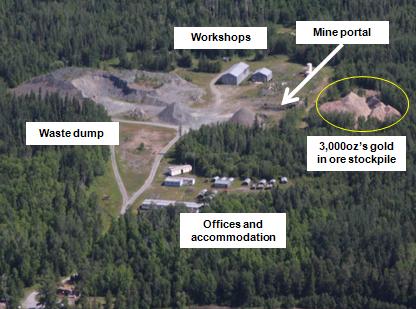
 

The vendors, TSX-listed Nuinsco Resources had owned Cameron since 1980, during which time it had carried out 85,000 metres of drilling.

Completion of the acquisition in 2010, allowed Coventry access to the historic data to calculate a JORC-compliant Indicated and Inferred Mineral Resource estimate for Cameron of 11.3 million tonnes at 2.77 grams per tonne gold for 1,005,833 ounces of gold, using a conservative cut-off grade of 1.5 grams per tonne.

“We knew just from the historic drilling that we have an economically viable project,” Coventry Resources executive chairman Mike Haynes told The Inside Story.

“Nothing has been done on the project since 1988, when the gold price was close to US$300 per ounce. This is a totally different opportunity today.

“The previous owners had considered Cameron to be an underground mining proposition, we are very confident we can develop an open-pit operation followed by underground mining.”

Mineralisation close to surface encouraged Coventry to commence a shallow drilling program in June 2010.

One rig became two and by the time the northern hemisphere winter rolled in Coventry had four rigs going.

The rigs kept turning until just several weeks ago, completing 299 new holes, comprising 44,135m of drilling.

Coventry called a short halt to the drilling while it awaits over 10,000m of outstanding analytical information from the laboratories.

The latest results will be combined with the historic data to calculate a resource upgrade, which Coventry hopes to announce during November 2011.

“We’re confident the recent drilling has added a lot of shallow ounces that are open-pittable,” Haynes continued.

“We know we have improved the economics of the project.

“What we don’t know yet, because we haven’t received all of the analytical results and carried out a resource upgrade, is just how good it is going to be.”

A clue to how good Cameron may be came with one impressive assay result of 3.4m at 58.7g/t gold from 5.4m (including 0.6m at 320g/t gold from 5.4m).

The initial purpose of the extensive drilling at Cameron was to convert shallow, open-pittable sections of the current resource into “Measured” and “Indicated” categories.

Because Coventry didn’t have any of its own data the calculation of the original resource was conservative in estimate and classification.

This meant a large proportion, about 58 per cent, was classified as “Inferred”, despite there being 85,000m of drilling to draw from, while only 42 per cent was categorised as “Indicated”.

“We wanted to improve the confidence level of our resource, so we can confidently move the project through feasibility studies and into production quickly,” Haynes said.

“We anticipate bumping a lot of the current resource into higher categories to where we anticipate having some in the “Measured” category.”

Another objective of the drilling program was simply to add ounces at the Cameron deposit.

A lot of the historical work had focused on a thicker, high-grade portion of the deposit that has been drilled to over 700m depth, with little attention paid to the project’s shallow mineralisation and open-pit potential.

 “Previous explorers were exploring this when the gold price was sliding,” Haynes explained.

“Nuinsco had purchased Cameron in 1980 when gold was US$650 per ounce.

“From 1980 to 1988, when virtually all of the previous work was undertaken, gold fell almost US$350 per ounce.

“That severely impacted the way they viewed this project, believing the low prevailing gold price meant the only way to make this work was to focus on a higher-grade component of the deposit.”

That higher-grade component of the deposit forms a thicker, higher-grade chute extending beyond 700m depth. As such, during the 1980s, Cameron was assessed as an underground mining proposition, with this chute the main target.


“There is a robust core to this deposit that has been exceptionally well-defined,” Haynes said.

“We acquired a substantial, robust resource, but we also realised that with a drastically different gold price, we could approach this from a totally different perspective.”

Coventry’s different perspective is to focus on the upper couple of hundred metres, from surface, where very little work had been done to explore the lower-grade material on offer.

Where the previous owners were chasing five to six grams per tonne at depth, Coventry believes it can mine much lower grades from surface with an open-pit operation.

“There is a lot of lower-grade mineralisation. We can be mining around two to 2.5 grams per tonne and make good money,” Haynes said.

“That in itself makes accessing the deeper ore for subsequent underground mining cheaper, but our intention is to have at least six years of open-pit mining before we have to go underground.

“In that time we will pay off the capital and the processing plant; we will have reached a reasonable depth, probably to 200 metres to 250 metres depth, and have access to the thicker, high-grade chute that extends to 700 metres and beyond.”

A conceptual open-pit study conducted in 2010 looked at mining 5Mt at 2.1g/t gold for 336,000 ounces.

At operating costs estimated at US$595 per ounce, based on current gold prices, this would provide Coventry with around US$300 million – solely based on the historic drilling data.

“There is much merit starting with an open-pit,” Haynes said.

“It requires less capital up front and we will recover a lot more gold by mining a lower grade due to the cheaper mining costs.”

A considerable amount of Coventry’s recent 44,000m drilling program has delineated additional shallow resources within close proximity to the high-grade chute at Cameron.

But the company also recognises considerable potential to add resources and extend mine life with successful exploration away from the Cameron deposit.

Coventry originally acquired a 100% interest in a package of 3,200 hectares. Through aggressive growth that has now become a 100 per cent interest in 12,800 hectares.

The Cameron deposit sits on the western edge of this landholding, hosting all of the one million ounces of current resources.

It is surrounded by a series of deposits, prospects and occurrences, many of which sit within the company’s landholding.

The project measures 30 kilometres wide, making it easy to truck ore from a satellite deposit to the proposed centralised processing facility at the Cameron deposit.

Initial exploration has commenced at the highest priority of these other prospects, with a view to growing the project’s resource base while the initial open-pit at Cameron is developed.

The expected resource upgrade in November will be used to generate a new mine design as part of a pre-feasibility study, scheduled for delivery during second quarter of 2012.

A baseline environmental study has also been implemented, which forms the basis for a mine permit application when the feasibility study is completed.

“In Ontario the permitting process takes around six to eight months, Haynes said.

“So by mid-2013 we will have approval, then move into construction and hopefully be in production by early 2014.

“We expect six to seven years from the open-pit then five or six years from combining satellite and underground mining at Cameron – through that period we will just continue to explore.”

Coventry Resources (ASX:CVY)
…The Short Story

HEAD OFFICE
Suite 9
5 Centro Avenue
Subiaco, WA, 6008

Ph: +61 8 9324 1266
Fax: +61 8 9226 2027

Email: info@coventryres.com
Web: www.coventryres.com

DIRECTORS

Michael Haynes, Tony Goddard, Rhod Grivas, Faldi Ismail

SHARES ON ISSUE
174.5 million shares
37.8 million options

MAJOR SHAREHOLDERS
Macquarie Bank 8.8%
Sun Valley Gold Master Fund 5.9%
Nuinsco Resources 5.7%

MARKET CAPITALISATION
~$33.16 million at 10 October 2011

M&A activity depletes Australian projects

M&A activity depletes Australian projects

Although the boom keeps booming it seems the gap between the Australian mid-cap sector and the majors is growing.

According to Citi Investment Research and Analysis Metals and Mining analysts, Australia, over the last ten years, has basically been acting as a clearing house of its quality mining assets.

Of the $114 billion worth of deals involving Australian companies over this period 43 per cent of the total value came from foreign investment.

Domestic Merger and Acquisition activity accounted for 35 per cent, while 22 per cent was money invested beyond our shores.

Although the activity has probably been a boon for shareholders it has resulted in a widening cavernous pit between the existence of mid-cap and major mining houses.

“With the shrinking relative size, Australian midcap miners lack the scale to become global players and as such we see the divide between the goliaths and the rest continuing to widen,” Citi Investment said.

“Foreign M&A is likely to continue to flow into Australia, but at a slower rate given the premium quality assets have already been cherry picked out of this market.”

Although the Foreign Investment Review Board tries to keep one vigilant eye on Chinese involvement in Australia its other eye has watched on powerless to stop the former’s burgeoning domestic sector.

China has gone from having eight listed mining companies with a total Enterprise Value (EV) of $19 billion in 2004 to boast 33 companies today worth over $320 billion.

If the two powerhouses of the Australian bourse, BHP Billiton and Rio Tinto, were to slip off the boards, the EV of what would be left of the Australian mining market would just surpass that of India.

Citi Investment Research and Analysis analysed over 800 M&A deals in the global mining market, with the minimum deal size set at $250 million, to assess where capital has been flowing and what regions have been responsible for the acquisitions.

It found there had, in the past decade, been over $709 billion of completed deals.

Of that value, around 42 per cent has been M&A activity conducted in the domestic sphere, while the remaining 58 per cent, around $410 billion, has been acquisitions made from outside Australia’s girt.

The traditional mining hubs of Australia, Canada, USA and South Africa have not been the buyers in these situations.

They have rather been the targets of buyers from China and, perhaps surprisingly, the United Kingdom market, where companies such as Xstrata, Anglo, BHP and Rio have been busy.

“Australia and Canada have effectively been the hunting ground for the large cap miners as well as the Chinese,” Citi Investment said.

“Australia has seen a ‘net’ outflow of mining money to the tune of around $30 billion whilst Canada has had an outflow of $65 billion.

“China has been the biggest region of foreign cross border M&A with a net offshore deal flow of $33 billion.”

One important aspect to arise from the Citi Investment study is that while there has been a large outflow of market capitalisation from the Australian mining sector, this void has not been replenished with projects of the same quality.

Citi Investment found there has been 588 Initial Public Offerings in the Australian market raising around $4.3 billion, with the average IPO just hitting the $7 million mark.

Although the number appears large the new listings have not, according to Citi Investment, provided the quality and scale of the assets that have been removed from the sector through the M&A activity.

“And unless there is some more domestic consolidation, we expect that gap to continue to widen,” Citi Investment said.

“As we see it, the relentless M&A of Australian assets has some potentially interesting ramifications on the Australian mining equity market.”

The ramifications identified by Citi Investment include Australia losing relevance on an international scale as stocks lack size and liquidity to attract large cap international investors.

This will not stop M&A altogether, but it could possibly slow down as the local sector’s quality assets have already been picked out of the market.

“Some M&A targets remain in Australia. Namely those with large, long life, scalable assets,” Citi Investment said.

“Australia’s significant contribution as a target in region in global M&A is likely to see the region as a base for future deals.”

The table below lists Citi Investment’s top M&A picks.

Company

Likelihood of

being acquired

(0-low 10-high)

Rationale

BHP Billiton

0

Too big.

Rio Tinto

1

Too big and BHPB unlikely to make another offer.

Fortescue

2

Unlikely to be acquired given size and FIRB issues but attractive iron ore plug and play for likes of Xstrata or Anglo.

Atlas Iron

8

Most open register of emerging iron ore stocks with no controlling shareholders. Port capacity allocation at Port Hedland through

NWIOA could be the catalyst.

Gindalbie

3

Ansteel already own 36% of GBG and 50% of project. Any bid could face difficulties getting FIRB approval.

Murchison

6

POSCO own ~14% and Sinosteel 5.8%. May be cheaper for Mitsubishi to take out MMX rather than proceed with current 50:50 JV for Jack Hills and Oakajee Port and Rail.

Mount Gibson Iron

4

Entities associated with Shougang already control ~40%. FIRB approval could be barrier for any further increase.

Grange Resources

2

Shagang and associated entities control 2/3rd of register already and are unlikely to move to take full control.

OZ Minerals

4

Short mine life. Can’t see buyer paying M&A premium for cash.

PanAust

8

A bite size copper acquisition with good growth. Only negative is 20% cornerstone stake Chinese has.

Sandfire

8

A bite size copper acquisition. OZL and Posco already shown interest.

Western Areas

5

Great ore body, but lacks scale and mine life.

Mirabella Nickel

9

The ‘Equinox of the nickel world’. Long life, low cost scalable assets.

Alumina Ltd

4

Alcoa logical acquirer but selling assets to raise cash. Acquisition by Chinalco/Chalco/Chinese small probability to form an alumina JV with Alcoa – have co-invested before in Chalco and Rio Tinto stake.

Iluka Resources

5

Unique position as the largest zircon and 2nd largest feedstock producer, commodities that China is increasingly short. Register is very open and could potentially spin out MAC iron ore royalty to partially offset cost.

Lynas Corporation

2

FIRB blocked the last deal and given the strategically sensitive nature of REO’s we don’t think it is likely any new deal will be approved unless by a ‘known’ western world miner.

Macarthur Coal

IN PLAY


Whitehaven Coal

9

Has been under-bid conditions before. Large reserve base, growing production and port/rail problems have been sold. Only a matter of price for WHC.

Coal & Allied

IN PLAY


New Hope Coal

8

WH Soul Pattinson (60%) and Mitsubishi (11%) are long-term holders but could be sellers of assets at the right price. Good quality coal with scale that would appeal to a foreigner looking to get access to the Australian market.

White Energy

5

May be part of ongoing industry consolidation. Large resource base and 3.5Mtpa port access differentiate it from most other emerging coal companies but register has several strategic interests.

Cockatoo Coal

8

Large, long-life resource would be attractive to a utility. CESC has already invested and similar deals in the same coalfield have recently taken place in Botswana at US$0.16/t resource. Infrastructure solutions will increase its attractiveness.

Resource Generation

1

More likely to be an acquirer with ~A$2bn cash. WH Soul Pattinson (60%) and Mitsubishi (11%) are long-term holders.

ERA

1

We do not think RIO is a seller of the ERA stake on the basis of its hedge against energy it provides for aluminium/mining assets.

Paladin Energy

7

One of few uranium companies producing, with production likely to triple over the next 5 years. Operating assets in Africa, but undeveloped projects in Australia could be problematic from a regulatory stand point.

Aquarius Platinum

2

Unlikely target as too small a player to be an entry point into PGM market.

Newcrest Mining

1

Too big.

Medusa

8

Cheap, volume growth, growing reserve base and big exploration potential. All an acquirer would want from a gold company.

Kingsgate

7

Good assets in Thailand make KCN a target for any gold company looking to move into S.E. Asia.

Beadell Resources

3

Lacks scale.

Alacer Gold

8

If Alacer can hit its production targets of 800koz it may be a target for a larger gold company looking to buy cheap production and resource ounces.

Gryphon Minerals

7

Good exploration potential in West Africa. Attractive for acquirer looking to consolidate on the continent.

Regis Resources

7

Best of the available Australian assets. A bit expensive vs. some of the other gold producers.

Resolute

4

Has scale, but historical production issues.

Perseus

8

Good entry point into West African Gold space. Good size, exploration profile and cost base.

Oceana Gold Corp

2

Good value, but unlikely assets will attract many buyers.

St Barbara Mining

2

Short mine life and high costs make it an unlikely target.

Source: Citi Investment Research and Analysis

Elvis has left the building Oct 7

THE BOURSE WHISPERER: The regular game of musical chairs
continues within the boardrooms across the resources industry. The
Whisperer pokes his head down the corridors of power to take a quick
look at some of the chairs to have recently been vacated and to find out
which ones have been filled:


Appointment of New Directors

Gloucester Coal has appointed two new directors, Dr Julie Beeby and Brendan McPherson.

Beeby will be an independent non-executive director of Gloucester Coal.

She is a development and change management leader with extensive experience in the energy sector in general management, business development and specialist project management roles.

Her career spans 22 years in the Australian coal mining, petroleum and gas industries.

McPherson has been appointed managing director and is currently the chief executive officer of Gloucester Coal.

Shareholder approval for the election of Beeby and Denis Gately, who was appointed as a director earlier this year, will be sought at Gloucester Coal’s AGM.

As part of the company’s Board of Director rotation requirements, David Brownell and Ricardo Leiman will retire at the AGM.

Leiman will be standing for re-election; however, Brownell has opted not to stand for re-election.

Firestone Appoints Directors

Firestone Energy has made changes to its Board.

Morore Benjamin (Ben) Mphahlele and Kobus Terblanche have been appointed non-executive directors.

Sizwe Nkosi has terminated his executive role to take up another senior executive role.

Nkosi has agreed to continue as a non-executive director.

Appointment of Non-Executive Director

PlatSearch has appointed Alan Breen as a non-executive director.
 
Breen is a metallurgist with over 35 years operational and executive management experience across a diverse range of commodities in Australasia, Europe and Africa.

He has held senior and executive management roles with Xstrata, Rio Tinto Aluminium and, more recently, at Ok Tedi Mining where he held the position of managing director for four years.

Breen has previously been a director of Britannia Refined Metals, Brittannia Recycling, MIM Holdings (UK) and Ok Tedi Mining.

New Director appointed at Marenica

Marenica Energy has appointed Nelson Chen, as a non-executive director.

Chen has served as chief operating officer of Hanlong (Australia) Resources since March 2010.

He has served as a director of Hanlong (Australia) Resources since June 2010 and has served on the board of Moly Mines as an alternate director to the principal of Hanlong Group since April 2010.

New Managing Director appointed Reconstruction of Board

Republic Gold has appointed Raymond Shorrocks as chairman and Campbell Smith as managing director.

Smith was previously managing director of Galilee Energy. He has worked at Jeebropilly, Ernst Henry and Savage River Mines in Australia as well as MICCL’s No.1 Copper mine in Myanmar.

He also developed the Cascade, Whareatea and Takitimu coal mines in New Zealand for Galilee Energy.

New chairman Shorrocks has over 20 years’ experience in the finance industry.

The previous Chairman Peter Wicks will remain as a non-executive director.

Western Areas Director retires; new Independent Director appointed.

David Cooper has retired from the Board of Western Areas.

Cooper was one of the founding directors of Western Areas in January 2000.
He has filled many roles including chairman from 2006 to 2007 as well as being chairman of several Board committees.

The company has appointed Mr Ian Macliver as an independent non-executive director.

Macliver is managing director of Grange Consulting Group, a specialist Corporate Advisory business.

His experience covers all areas of corporate activity including capital raisings, acquisitions, takeovers, business and strategic planning, debt and equity reconstructions, operating projects and financial reviews and valuations.
Macliver is currently a director and chairman of a number of ASX listed companies.

Appointment of Independent Non-Executive

OM Holdings has appointed Zainul Abidin Rasheed as an independent non-executive director.

Zainul Abidin will hold the position of independent deputy chairman.

Zainul Abidin was until recently a Member of Parliament and the Senior Minister of State for the Ministry of Foreign Affairs of the Government of Singapore, a position he held since 2006.

He holds a Bachelor of Arts (Honours) in Economics and Malay Studies from the National University of Singapore.

Zainul Abidin will be a member of the Company’s Audit and Remuneration Committees.

In his role as independent deputy chairman he will also assume the role of lead independent non-executive director.

Looking past near-term turmoil and gold market weakness

So apparently the gold bubble has burst, at least according to the media. The weakening value of gold over the fortnight in particular has led to a rash of negative comments with respect to the metal’s future. One really has to take a step back and put a commodity’s price fall into its proper perspective.

Gold is 12.0 per cent weaker (or US$226.90 in price terms) than it was a month ago, but by the same token the metal is still 25.7 per cent higher (or US$338.70 in price terms) than it was 12 months ago, even accounting for the latest price correction. As the price chart below clearly demonstrates, it’s hardly a matter of the gold bubble bursting.

The graphic demonstrates a steady climb in the price of gold (black line) for the past five years, although prices have surged over recent months. What we are seeing is a price correction that is indeed healthy for the market. And of course it’s clearly evident that there was a similar correction back in the latter part of 2008.


These types of corrections are normal and not unexpected. Since the start of the quarter, gold bullion had rallied by more than 25% to its recent record high of US$1,920 on the back of investor nervousness. At US$1,600 gold has merely reverted back to its trend-line.

The graphic also reflects one of the major anomalies of gold’s strong price run since late 2008 – that being the corresponding underperformance of gold equities. The gold line above represents the Philadelphia Gold Index. What’s apparent is that during the immediate sell-off in the wake of the GFC, gold (like everything else) was hit, hard but gold equities were hit even harder.

And gold equities have maintained their relative underperformance since late 2008 until now. In fact, the performance divergence is once again growing.

What this means is that investors have remained somewhat nervous about equities of all types since 2008. Whilst gold equities should naturally benefit from the strong underlying performance of gold, investors have remained nervous about share market exposure. Hence, they’ve opted for the relative safety of physical gold rather than investing in gold stocks.

The important thing that investors have to understand about the recent gold price correction and the correction back in late 2008 is that gold has been sold off because it has been a profitable asset.

It has effectively been utilized as a source of funding for margin calls made on declining assets in investors’ portfolios, like equities. This means gold is effectively undergoing forced selling.

Many inexperienced investors and market-watchers have an unrealistic expectation of how gold performs during a crisis. Gold, like everything else, gets sold down during the midst of a crisis as desperate investors attempt to raise cash. During the GFC this amounted to a 25% price fall for gold, from which the metal both strongly and rapidly recovered.

This time around it’s been a fall from a high of US$1,920 to a low of US$1,531 on 26/9/11 (a fall of 20%), but the price has already rallied more than 8% (or US$129 in price terms) from that low. Again, you have to stand back and judge gold’s performance over a period that’s much more representative than merely just a few days.

When you do this, a la 2008, you do get an appreciation that gold indeed does retain and deserve its safe-haven status.

It’s also worth examining a long-term gold price chart that highlights the relative inactivity in the metal during the 20-year period between 1980 and 2000. In fact gold averaged US$400 during this period.


It’s little wonder that some investors have had trouble grappling with the concept of a rising gold price, given that modern history taught them that gold never moved much and was a poor investment performer.

Over the next few months it is likely that the US$ will retain its strength and that the price of gold will underperform for the time being, in a scenario similar to that post-GFC. This provides a period of consolidation for gold and a buying opportunity for investors, before the next upward leg in gold’s price climb. US$1,600 in my view is the critical gold buying level for investors.

Market disenchantment with the US Federal Reserve’s Operation Twist and the likely clambering in some quarters for some form of additional fiscal stimulus (potentially QE3) to help resuscitate the ailing US economy, are all factors that are likely to kick-start the next phase of gold bullion’s price ascent.

As a result, I’m maintaining my positive outlook on gold and gold equities.

Gavin Wendt is the founder of MineLife, publisher of the MineLife Weekly Resource Report  

Andre Labuschagne – Norton Goldfields

ONE OFF THE WOOD: On his way to the airport Norton Goldfields managing director Andre Labuschagne called into the Roadhouse for a quick refreshment and a quiet chat.

It’s been a good year for Norton Goldfields. The company has been able to turn a lot of things around. What would be your top highlights for the year?

One of the highlights for the year would definitely be that we have managed to refinance the hedge and refinance the debt.

In the last month or so we have paid of another $20 million down on the debt.

I think that has been one of the factors that has managed to turn the company around where have gone from a massive debt to a much more manageable debt under current gold prices.

So the debt you have now is at a fairly comfortable level for the company to be sitting with?

We would always, as we have always said, work to try and get it down even further. But where it is now is a comfortable level, where the net debt position of the company at this point is probably around 15 to 20 million dollars.

What other highlights spring to mind?

The other highlight is the fact that we have produced another record year of gold production for the company.

In the four years that we have been the owners of the Paddington gold mine, every year we have increased production.

This year is the same and we have now produced just on 153,000 ounces of gold, which was another production record for us.

So from a balance sheet point of view the company is in a much better position and from a production point of view we have managed to continually grow the company and at the current gold prices we are in a very good position to take up other exploration opportunities that may be ahead for us.

Have you been with Norton Goldfields the entire time it has owned Paddington?

I have been with the company in a number of different roles. I was a project director for a while and then chief operating officer, so I have been with the company, basically for just over three and a half years but only in this role, as managing director, for the last 12 months.

How are you enjoying that role?

I love it. It’s great to see that we are moving things along and we are starting to achieve our targets and internal goals.

The company is probably in the best position that it has ever been.

We’re unhedged and sit as one of the top gold producers in Australia, with Australian assets.

It’s really a nice place to be.

How important has the gold price been to the turnaround of Norton’s fortunes?

The project was always aiming to have high gold prices so we can generate some cash and be well positioned to deal with certain issues.

The gold price over the last three of four months is definitely putting us in a very good position.

A $100 increase in the gold price delivers around $15 million to our bottom line.

So what do you do when you manage to take time off?

I’m a very keen fisherman. I really enjoy fishing.

What’s the best fish you’ve ever caught?

Probably a nice big tuna, I’ve caught a few of them, and some mackerel. But I still haven’t caught the Big One.

Do you think you ever will? And if you do will that mean you will stop?

Of course I will, but I won’t stop. It relaxes me and I enjoy it too much.

Is fishing like gold mining that if you do find the big one, be it a fish or a nugget, will that be enough to stop your search?

No. I think when that happens, with both, is when the bug really bites.

So, what does Norton Goldfields have in store over the next couple of months?

Our focus now is on increasing production and reducing costs. We have told the market that we will produce around 150,000 ounces of gold and we will do that at around $970 per ounce, which is quite a healthy margin.

That’s the nice thing about where we are at present. For the last 18 months all my time has gone into operations. Now we can spend more time looking at operational issues such as efficiencies and productivity and actually look at how we are going to deliver what we have said we are going to deliver.

Octanex moves towards drill decision

JETT RINK: Oil & Gas company Octanex, with its Joint Venture partner OMV New Zealand, has progressed towards reaching a decision on whether to drill the Matuku prospect in PEP 51906.

PEP 51906 is situated in the offshore Taranaki Basin of New Zealand.

Octanex holds a 35 per cent participating interest in the permit. The JV is operated by OMV which holds the remaining 65 per cent participating interest.

A new 3D seismic survey, acquired within the area of PEP 51906 and PEP 53537, was completed in late July 2011.

At the same time a number of additional lines of 2D seismic data were acquired across both permit areas.

Both the 3D and 2D surveys aimed to provide better delineation of the Matuku feature.

Processing of the new Matuku 3D data is progressing to schedule and is currently expected to be completed by early November, after which mapping and interpretation of the new data will commence.

In tandem with the acquisition and processing of the new Matuku 3D data, OMV is conducting basin modelling to assess the hydrocarbon source potential in the north-west of PEP 51906 and to the west of and beneath the Matuku feature.

Octanex said early indications from the basin modelling suggest Matuku is ideally located adjacent to a potential hydrocarbon source.

Related exploration work has also identified a number of follow up leads adjacent to Matuku.

The JV has budgeted to commence initial planning for a well, hopefully to test the Matuku prospect, with a view to drilling in the first half of 2013.

However, OMV has not yet made a commitment to drill a well.

“OMV is an experienced international operator of both exploration and production interests and has substantial New Zealand permit interests,” Octanex said in its ASX announcement.

“These New Zealand interests include being the operator of the Maari oil field (PMP 38160), located to the immediate south of PEP 51906 in which OMV holds a 69 per cent interest, a 10 per cent interest in the Maui gas/condensate field (PML 381012) and a 26 per cent interest in the Pohokura gas/condensate field.

“All of these permits are located in the offshore Taranaki Basin.

“Octanex is confident OMV will continue to bring to bear its considerable exploration and operational experience, knowledge and expertise regarding the hydrocarbon potential within PEP 51906 and PEP 53537.

“Octanex considers PEP 51906 has the potential to contain a number of discrete oil accumulations and is encouraged in having a Joint Venturer and Operator of the substance and experience of OMV carry out the on-going exploration of these two permits.”

Chinese stock commodity coffers

OUT AND ABOUT: Ancient Greek writer and philosopher Aesop wrote about the tortoise and the hare and how the former won their contest as the latter became complacent thinking it could never lose the race they ran.

It is probably sad, in world market terms, that the birthplace of democracy is the basket case it is today having taken the role of spectator in that duel rather than opting to be one of the main competitors.

Those parts were taken up by the western world, built on the basis of capitalism, and its eastern nemesis, riding the shoulders of Marxist revolutionaries and communists.

Russian communism eventually folded and attempted to harness the ideals of western thinking, however, corruption and nepotism in high places restricted any real advantages reaching the grassroots population.

China, on the other hand continues to roll on. Some may say at an unabated pace, even with recent inflationary concerns providing a slight hiccup to world commodity prices.

Although it maintains its Maoist regime, China also remains loyal to its ancient philosophical roots, which acknowledge that the world will exist beyond five year plans and, all things going well, for centuries beyond.

It is this philosophy that was most likely behind the prediction of The Dines Letter editor James Dines that a new social global order is emerging.


“My long-standing prediction of the coming new social order was introduced in Australia one year ago,” Dines told the RIU Melbourne Resources Round-up.

“It was founded on the prediction that unlimited printing of paper money, not related to the true wealth created by labour, plus borrowing, would distort the world’s primary currency.”

Dines bases the re-affirmation of his prediction on the fact America maintains a policy of printing money and running deficits to boost its struggling economy.

According to Dines in order to cure its need to over-print of money the land of the free is just printing more, and then can’t apprehend why that is not working.

“True, America has provided the world with a unified currency – a unified, international currency – and as it spread it helped to awaken the entire and non-European world,” Dines said.

“But America’s apoplectically high deficits have caused currency crises.”

As the USA has continued its attempts to print itself out of trouble China has systematically amassed a foreign exchange surplus of over three trillion dollars.

“Not everybody fully comprehends how much even one trillion dollars is,” Dines said.

“If you spent one million dollars every single day since Jesus was born you could not spend one trillion dollars.

“America’s deficit is projected by the government to be twenty trillion dollars nine years from now.

“That will never be repaid. Clearly, it seems to me, the world is in danger of something breaking, one currency crisis after another.

“These are all connected, these are not separate events. It is one organic, underlying, rumbling Vesuvian volcano and not everybody will survive financially.”

As the world continues to become smaller in the metaphysical sense the populations of China and other non-European countries, such as India, are seeing the ‘American dream’ first-hand.

Their collective desire to emulate this life-style is driving demand for consumer goods, which in turn is driving the demand for rare earths, which China is busily squirrelling away.

Dines suggested this hoarding mentality would be certain to kick off, “A mad scramble for the world’s remaining commodities”.

“Believe the unbelievable or not as China, for example, is buying way more copper than it currently needs, storing it as a form of hard money for the next century and beyond,” he said.

“This transition is truly momentous, and I feel constrained to report it as the coming desperate race for planetary self-sufficiency.

“I’m going to the heart of the nature of your wealth and where to store it safely.”

Paper, as in paper money and financial assets, was highlighted by Dines to be flimsy and easily blown away.

It is hard assets, such as rare earths, gold and silver that he identified as the wave of the future.

“China is also stealthily gaining monopoly positions in many other commodities,” he warned.

“Anything and everything in a new “Resource Imperialism”, a phrase that I’m inventing that you will hear more about, I suspect.

“Nothing I am saying is anti-China by the way because what they are doing is legal and far-sighted thinking.”

Ostensibly, this all comes down to the differences in cross-cultural thinking.

America, like the rest of the western world, reinforces its fast food desire for immediate satisfaction by remaining fixated on quarter to quarter earnings outlooks.

China, on the other hand, China is stocking up for coming centuries.

To draw parallels between the two philosophies take a morning walk in any park around the world.

There you will see westerners engaged in frantic exercise regimes determined to get fit or lose weight for summer.

In the same park you will see others engaged in the calming eastern practice of Tai Chi as they attune themselves for a long healthy life.

“In the nineteenth century the work of Marx and Engels favoured seizing the means of production by violent revolution,” Dines said.

“But, here, now in the twenty-first century China’s communism has evolved from violence to actually buying the means of production busting the free-trade, free-enterprise capitalist model.

“I am not envisioning old-fashioned communism spreading again.

“I am predicting the end of capitalism as previous centuries have known it. Believe the unbelievable or not.”

Dines said the new social order is evolving right in front of us and China’s monopoly of rare earths and its hunger for other commodities are just early examples of what is to come.

“China uses seven hundred pounds of rare earths in each wind turbine and might need all of its rare earths for itself as it is furtively taking control of the centre of the world’s energy chess board,” Dines said.

“The game is changing and China gets it.”

Stewie McDonald – Vertical Events

ONE OFF THE WOOD: While at the recent Resources Round-up conference in Melbourne,The Roadhouse was able to blow the froth off a couple while speaking with Vertical Events managing director and resources identity Stewart McDonald.

This is the second time you’ve held the RIU Melbourne Resources Round-up, how do you gauge the success of this one so far?

Very good. Despite the market being down the investor turn-out is pretty high, the broker turn has been reasonable. I guess days like today, they need to stay in their office.

The involvement this year of the Victorian Department of Primary Industries has introduced a different edge providing more technical information as well as the company presentations.

It’s pretty hard to go to a resources conference anywhere around Australia and bump into you. How many conferences does Vertical Events operate throughout the year?

We have about eight in Australia and we operate the Australian component of a number of overseas conferences.

The Aussie conferences we focus on Sydney, Brisbane, Melbourne, the Gold Coast and Perth, which includes our Oil & Gas and Uranium conferences.

They always seem to be well supported, by both the industry and investor communities.

We have competitors, like everybody else, but I think we are seen to be the ones that deliver the right level of investor to the client.

Other shows, from what I am told, are mainly industry talking to industry. They don’t seem to have the same level of investor involvement that ours do.

We work hard on that to maintain it as a speciality.

That is one thing I have noticed this week, that there has been a lot of investor badges walking around the room.

In places like Melbourne and Sydney the population is much larger than say Perth. Because of that we are able to get that level of investor through the door that may be retired or working part-time that has the ability to attend on a Tuesday or a Thursday.

The timing of the Melbourne conference seems to be quite opportune, given it is AFL Grand Final week.

Gee, that was fortunate wasn’t it?

Was that a deliberate part of the conference design process?

Absolutely; a lot of the guys from Perth are over here anyway for this week, regardless of who is playing in the Grand Final.

They’re going to be here anyway so we may as well provide them with something worthwhile to do.

The next cab of the Vertical Event conference rank is Brisbane Mining 2011, which I understand is shaping up to be pretty big this year.

We’re at the Brisbane Convention and Exhibition Centre this year so we have a larger area, which is just as well as we have 147 booths booked and around 1500 delegates.

Is the Brisbane conference developing as your biggest?

It is; and this is the first year that we will be working with the Queensland Resources Council, on day three of the conference, to include the coal and coal seam gas sectors.

What they want to do is see how that goes this year and if they like the response they get then maybe enlarge that next year to then have three auditoriums running throughout the conference.

After nine years it has now become a mining week. They have the Queensland AUSIMM Ball, the Queensland Resources Council breakfast; it’s all part of the same week.

The industry trusts us, after so many years, to put on a good show.

From an analyst’s point of view

OUT AND ABOUT: It’s hardly rocket science that when making an investment decision the regular retail punter requires research and information.

There’s no question there is a great deal of uncertainty in the marketplace at present so what should an investor be looking for when parting with their hard-earned readies?

Speaking at the RIU Melbourne Resources Round-up, Patersons Securities senior resources analyst Simon Tonkin provided some insight into how the experts think.


“Obviously we are looking for a stock that has a quality resource project with high margins and good earnings,” Tonkin told his audience.

“We’re looking for a stock that has limited funding issues. In this uncertain market we like to see a solid cash position with limited debt.”

Tonkin said one important factor to consider was how the management of a company is aligned with shareholders and that the management team also has a strong track record.

“In the small resources space we actually like management to own a large shareholding in the company,” he continued.

“We think that really motivates them, especially when the market drops, to not dilute shareholders and run the company as if they do have all their wealth invested in that company.”

Other aspects for consideration when looking to invest are what Tonkin described as, “near term catalysts”.

These involve looking at what market movements may drive a stock higher or being aware of what events may be going to happen in the next couple of months that could drive the stock up or down.

“We don’t like companies that require a lot of funding, especially in this volatile market,” Tonkin explained.

“Projects with large capital expenditure requirements versus their market capitalisation – they really find it difficult to raise that capitalisation. They look for partners with deep pockets.”

Turning his attention to the different sectors collected in the resources envelope Tonkin said Patersons’ favoured sectors in the longer term are gold, copper, coking coal and uranium, while its least favoured at present are iron ore and nickel and rare earths.

“Gold is our preferred sector for the current macro environment,” he said.

“The key take-away is that gold equities have significantly underperformed to the gold price since around April 2011.

“We believe this is due to operational risks associated with mining.”

Gold is almost everybody’s commodity of choice these days.

There are a few analysts brave enough to deride its virtues, but nonetheless there has been a significant increase in bullion sales world-wide over the last few years.

According to the World Gold Council there has been a 70% increase in bullion sales to China, India and the Middle East.

“Given the diversion of the gold price and equities; either the gold price has to fall further or the equities are cheap,” Tonkin said.

“We would hope that it is the latter and it is important to be stock-selective.”

Casting a glance at base metals Tonkin described the outlook for this particular mixed bag to be varied.

Unsurprisingly China was again mentioned, this time to remain as the key driver to continuing support for the base metals.

Amongst these copper emerged as the analyst’s preferred pick due in part to a lack of new discoveries in the copper space.

“Grades are getting a lot lower,” Tonkin claimed.

“They were around 1.8 per cent in 1990; they are now 1.07 per cent in 2010.

“New projects are in riskier jurisdictions and the other thing that I like about copper is that the Chinese do not control the copper market, with 35 per cent of supply coming from Chile.”

World nickel supplies are shaping up to be in surplus for the next several years causing a number of nickel plays to be now focussing more on gold.

Because of this Tonkin suggested nickel companies could find the going tough over the next few years.

He was more positive, however, for the prospects for coal, especially coking coal.

“Most of the supply comes from Canada and Australia and these mines are getting deeper,” Tonkin said.

“China has moved from being a net exporter of coal in 2009 and is now the second largest importer of coal.

“New coal regions such as Mongolia and Mozambique will make a small difference but won’t make up the shortage.”

With energy in the frame Tonkin turned to uranium saying its demand appears favourable with China embarking on the largest reactor build in the last 30 years.

“China needs clean power,” he said.

“The World Nuclear Association is forecasting Chinese installed capacity to increase by 13 times to 136 Giga Watts by 2030.

“This would make China the largest nuclear reactor nation in the world.

 “Fukushima negatively impacted sentiment in the uranium market with equities falling around 48 per cent.

“We don’t believe equities can fall much lower without putting a lot of new supply at risk.”

WestSide launches Galilee Basin exploration

JETT RINK: The Galilee Basin exploration program of Brisbane-based coal seam gas exploration play WestSide Corporation has commenced with the spudding of the Glenlyon 1 exploration well located in exploration tenement ATP 974P in north western Queensland.

WestSide said it expects the target horizons in Glenlyon 1 will most likely occur from around 1,000 metres below surface.

The well will then be cored for testing to determine the gas content and composition of any coal seams that may be intersected.

WestSide has a 51 per cent operating interest in exploration tenements ATP 974P and ATP 978P in joint venture with Mitusi E&P Australia ,which has a 49 per cent interest in both tenements.

According to WestSide chief executive officer Dr Julie Beeby Glenlyon 1 is the first well to be spudded in an exploration program of up to four wells.

The program has been designed to investigate the hydrocarbon potential of the Permian-age Betts Creek and Aramac Coal Measures present throughout the basin.

“These tenements in the north-western part of the Galilee Basin cover a combined area of more than 14,000 square kilometres, which WestSide believes could contain up to 21 trillion cubic feet of gas in place, so we are quite excited now that drilling is underway,” Beeby said in the company’s announcement to the Australian Securities Exchange.

Once drilling has been completed at Glenlyon 1 the drill rig and associated camp will be relocated to the next well site.

Other planned wells in the initial program include locations at Essex Downs 1, which is also in ATP 974P.

Wells are also planned for Dunluce 1 and Malakoff 1 in the adjoining tenement ATP 978P.

WestSide expects to have completed the program by the end of the 2011 calendar year, subject to weather and geology.

The anticipated cost for the joint venture to complete the program is around $4 million.

Data collected will then be collated and analysed to determine well locations for the JV’s next phase of drilling.