Intermin Resources Making Gold While Vanadium Shines

THE INSIDE STORY: Intermin Resources (ASX: IRC) is a gold exploration and mining company focussed in the Kalgoorlie area of Western Australia with a lot more happening on the sidelines.

Intermin Resources is developing a mining pipeline of projects to generate cash and self-fund aggressive exploration, mine developments and further acquisitions.

The company currently has the Teal gold mine in production where it commenced open pit mining in 2016 with ore processed at the Paddington mill of Norton Gold Fields Limited and the Lakewood toll milling facility.

The company commenced mining of an eastern cutback (Teal Stage 2) in September 2017, concurrently with Stage 1 to recover approximately 22,000 ounces at plus-three grams per tonne gold from oxide and transitional ore.

This was completed at the end of March 2018.

Intermin’s aim is to grow the current Teal JORC 2012-compliant Mineral Resource Estimate of 1.49 million tonnes at 2.18g/t gold for approximately 104,000 ounces of gold (above 1g/t gold lower grade cut-off and below a 20g/t gold upper grade cut-off).

“The project needs to be self-funded,” Intermin Resources managing director Jon Price told The Resources Roadhouse.

“The mining we completed at the Teal gold mine was very successful in meeting all its Feasibility Study parameters, resulting us sitting on a bank balance of around $10 million.

“That allows us to go and spend $4 million on a drilling program of 55,000 metres, a program that is huge for a company our size.”

Intermin spent a good deal of time and effort throughout 2017 compiling and reviewing a large geological database comprising geochemical, geophysical and historic drilling datasets to prioritise targets for drill testing.

Field reconnaissance investigations were undertaken during the year to confirm these targets and finalise the design of the 2018 drill program.

The company recently released a maiden JORC 2012 Mineral Resource Estimate for its Anthill project of 1.42 million tonnes at 1.72g/t gold for 78,000 ounces with 75 per cent sitting in the Indicated Category and mineralisation open in all directions.

The Resources took Intermin’s Total Mineral Resource to 6.36 million tonnes at 2.12g/t gold for 434,000 ounces.

“We have a number of mantras that we follow, and one of those is that you have to grow the Resource beyond one million ounces,” Price explained.

“That’s what this year is all about.

“The drilling program is split 50 per cent looking for new discoveries and fifty per cent growing the Resource over the one million ounce mark.

“For us that converts to around 400,0000 ounces in Reserves providing four years producing 100,000 ounces per year, which in turn triggers the ability to commission a mill, either bought or built, and operating as a standalone producer.”

In addition to the Teal and Anthill drilling, Intermin will commence testing Blister Dam, a project that sits on the Zuleika Shear that hasn’t been drilled since the 1990s.

“We have done all the preparation work, we have identified the targets, now it’s the drillbit’s turn to tell us what is there,” Price said.

As it focuses on its self-proclaimed specialty of gold, Intermin has several joint ventures in place across multiple commodities and regions of Australia providing exposure to vanadium, copper, PGE’s, and nickel/cobalt.

“The business model has always been based around gold, because that is our core competency – we stick to our knitting, so to speak,” Price continued.

“Having a main gold focus has resulted in us Joint Venturing the other commodity projects we have to some high-quality specialists in those respective fields.

“Our business model remains pretty simple – to grow into being a mid-tier gold producer, then if we get taken over on the way and all our shareholders make money, so be it, that’s all well and good and we’ll go out and do it all over again.

“The recent industry vanadium interest has raised the profile of our Joint Venture – suddenly everybody wants to know what we have and how we can bring it to commercial production.”

Intermin’s Richmond vanadium/molybdenum project is in Queensland and is a Joint Venture with AXF –Vanadium, a company that lends plenty of technical expertise to the project as well as extensive business relationships throughout one of the world’s strongest vanadium markets in Southeast Asia.

An update to the Mineral Resource for the Richmond project has moved it into the ‘world class’ category standing at 2,579 million tonnes at 0.32 per cent vanadium pentoxide (V2O5) at a 0.29 per cent lower cut-off grade.

“It’s a monster Resource and we have Chinese backing in our Joint Venture partners who can deal with taking it to that commercial level and all the offtakers that come with that, because they know them – they have a complete network already in place,” Price said.

China is the logical step for a company with such a vanadium Resource as the Chinese government considers ways of replacing its current coal-fired energy generation while closing steel mills to ease pollution and consolidate environmental controls.

“There’s an enormous gap and supply crunch now, let alone in the future with the growth in vanadium redox flow batteries self-evident,” Price continued.

“We want a seat at that table, we have one of the largest vanadium Resources in the world and it sits just five metres below the surface.”

According to international research house, Roskill, vanadium demand growth is expected across most applications.

Vanadium consumption for steel manufacture will depend on use and growth in steel demand.

Just one area this will play out is in the manufacture of reinforcing bars (rebar), used primarily in the construction industry.

Higher-strength rebar contains more vanadium and, therefore, the more high-grade rebar used globally, the more vanadium is needed.

“This means that construction regulations, such as those introduced recently in China, which mandate the use of certain rebar for key applications can considerably impact vanadium demand,” Roskill observed.

Roskill also noted the rise in interest in the potential of vanadium redox batteries (VRBs).

“As of 2016, Roskill estimates that demand from VRBs accounted for less than 500 tonnes of vanadium pentoxide consumption,” the research house said.

“VRBs will likely achieve commercial success in specific energy storage applications such as load levelling, which will support an increase in market share and in vanadium demand.”

Intermin prides itself as being a gold company, however, it has developed several Joint Ventures across the commodity spectrum, incorporating commodities that are enjoying current success as the electronic revolution buoys the exploration sector.

“That provides the opportunity for our shareholders to have us focus on our gold project without distraction,” Price said.

“We are good at gold, and we don’t pretend to be good at anything else, so we let experts handle the other commodities.

“Our shareholders benefit by having exposure to all those other commodities, in different areas through the percentages of retained ownership.

“We want to participate in those JVs as they progress to commercial reality and we need to be able to fund that, which is where our gold business comes into play.

“We are a small junior gold business, but we have exposure to all those commodities.

“One or two of them may come to fruition, and the others may not, but when one of them does we want to be there maximising our opportunities.”


Intermin Resources Limited (ASX: IRC)
…The Short Story

HEAD OFFICE
163-167 Stirling Hwy
Nedlands WA 6009

Ph: +61 (8) 9386 9534

Email: iadmin@intermin.com.au
Website: www.intermin.com.au

DIRECTORS
Peter Bilbe, Peter Hunt, Jon Price


Venture Minerals Flags Intent to Rattle Tin Market

THE INSIDE STORY: Venture Minerals (ASX: VMS) has commenced a detailed reassessment of the high-grade tin and tungsten Resource base at the company’s Mount Lindsay project in Tasmania.

Venture Minerals believes that as one of the world’s largest undeveloped tin project, Mt Lindsay is ideally placed to take advantage of the recent rise in both interest and the price of tin.

The 148 square kilometre Mt Lindsay project is in north-western Tasmania within the contact metamorphic aureole of the highly perspective Meredith Granite.

The project sits between the world class Renison Bell tin mine, which has produced more than 231,000 tonnes of tin metal since 1968, and the Savage River magnetite mine that has operated for over 50 years and currently producing approximately 2.5 million tonnes per annum of iron pellets.

Venture owns 100 per cent of the tenure that hosts both the Mt Lindsay tin-tungsten deposit and all surrounding prospects.

Tin hasn’t exactly been in the top ten sexiest metals list for some time, however a recent presentation by global powerhouse Rio Tinto at a battery metals conference in Perth, Australia, drew as much attention to the metal as when Battery King, Elon Musk provided nickel with a boost.

Part of the Rio presentation was a slide showing the metals most impacted by modern technologies, ranked by the Massachusetts Institute of Technology (MIT).

Although Rio was using the information to push its Jadar lithium project in Serbia, using the MIT ranking to show lithium as the second most impacted metal, what caught the attention of most people in the room was the metal sitting above the market’s recent hot commodity, separated by a good amount of daylight – tin.

MIT credited the result to tin’s applications across a range of modern technologies, ranging through autonomous and electric vehicles, advanced robotics, renewable energy, advanced computation and information technology.

Mount Lindsay contains more than 80,000 tonnes of tin metal in the same mineralised body that also hosts a globally significant Resources of another, some may say, forgotten contributor to the current world technological advancement in tungsten.

The tungsten Resource contains 3.2 million metric tonne units (MTU) of tungsten trioxide (WO3).

The U.S. Geological Survey Mineral commodity summaries 2018 stated that total mine production of tungsten outside China was expected to be slightly higher than that of 2016.

This met with an expected combined decrease in production from Mongolia, Rwanda, Spain, and elsewhere that was less than the combined increase in production expected from the recently started Hemerdon mine in the United Kingdom and from the largest mine outside of China in Vietnam, which has improved its productivity.

“China was the world’s leading tungsten consumer,” the report said.

“During the first six to nine months of 2017, China’s consumption of tungsten concentrates, and its production and exports of downstream tungsten materials were higher than those of 2016, indicating an increase in global tungsten consumption.

“Prices of tungsten concentrates, and downstream tungsten materials continued the upward trends that began in late 2015 or early 2016.”

The International Tin Association describe tin as “the forgotten EV metal”, emphasising that it is now making ground on its contemporaries, “as a performance enhancing component in all of the three generations of advanced anode materials that have been road-mapped to 2030, plus some solid-state technologies.’”

The current market focus may be on the likes of lithium and cobalt for the manufacture of lithium-ion batteries, but according to the Association there is a newer generation of cheaper, safer products already in development, including sodium-ion, magnesium-ion, potassium-ion and other products.

“Tin, its alloys and compounds are prominent candidates for anode materials in some of these, and a growing number of developments including tin are noted,” the Tin Association claims.

“Although performance of some prototypes already exceeds commercial lithium-ion products, it is likely that such products will find their own market space and indeed some are already being used in niche markets.”

Other battery technologies are under development, particularly for larger scale utility power storage opening opportunities for tin, possibly in liquid metal technologies or as a catalyst in redox flow batteries.

Other recent work on ion-exchanging technologies includes tin as a possible metal-ion candidate.

Venture believes now is the time for Mt Lindsay where it has a large Resource base to draw from.

Tin recently hit around US$21,000 per tonne, an increase of some 60 per cent since January 2016.

Tungsten’s APT price has touched the plus-US$300 per MTU, representing an increase of 90 per cent since February 2016.

Since commencing exploration on the project in 2007, Venture has completed approximately 83,000m of diamond core drilling at Mt Lindsay, from which it has defined JORC compliant Measured, Indicated and Inferred Resources of 4.7 million tonnes at 0.4 per cent tin and 0.3 per cent WO3 with over 60 per cent in the Measured and Indicated categories.

A Feasibility Study completed on the project with comprehensive metallurgical test-work and post feasibility determined a very high-grade 75 per cent tin concentrate result Venture considers to likely attract price premiums.

In 2012, Venture Minerals claimed a major new high-grade tin discovery only six kilometres from the Mt Lindsay project when drilling encountered a 47-metre intersection of tin mineralisation at the Big Wilson prospect that included: 17.4 metres at 2 per cent tin, including 4m at 5.6 per cent tin.

Venture Minerals interpreted the results as being a combination of high-grade skarn style mineralisation and, typically large tonnage, greisen style mineralisation.

The high-grade nature of the earlier Big Wilson drilling opens depth opportunities, as these grades would be amenable to underground mining.

The company has made its intentions clear that it will be considering strategies to optimise the higher-grade portions at Mount Lindsay.

Venture will now look to focus on assessing the underground mining potential of this high-grade resource.

“Knowing that the Mount Lindsay project has a large tin Resource that could be harnessed to meet applications in Electrical Vehicles and renewable energy has refocussed the company to revisit its approach in developing this asset,” Venture Minerals managing director Andrew Radonjic told The Resources Roadhouse.

“Mt Lindsay is a very advanced project in Tasmania that has plenty of Resource tonnes but has a higher-grade core that we could approach from an underground perspective.

“We have a fair degree of confidence in developing an underground operation there.

“Instead of originally looking to maximise the Resource through mostly open pit mining 14 million tonnes of ore we would more likely be looking at mining four million tonnes from purely underground which we believe is the best way of bringing forward tin and tungsten production from Mount Lindsay.

“We also have a number of high-grade targets that we can follow up.”

On top of the Big Wilson target, Venture has successfully defined eight new targets it considers prospective for high-grade tin-tungsten mineralisation.

There are also several targets that appear to be prospective for copper and nickel mineralisation.

These targets are hosted within the broader skarn units identified throughout the Mount Lindsay area of which to date only 10 per cent have been drill tested.

Venture has already completed reconnaissance work designed to identify additional targets in the broader Mount Lindsay area.


Venture Minerals Limited (ASX: VMS)
…The Short Story

HEAD OFFICE
Suite 3, Level 3
24 Outram Street
West Perth, WA, 6005

Ph: +61 8 6279 9428

Email: info@ventureminerals.com.au
Web: www.ventureminerals.com.au

DIRECTORS
Mel Ashton, Andrew Radonjic, Hamish Halliday, John Jetter


Global Geoscience: Lithium and Boron on Equal Terms

THE INSIDE STORY: Global Geoscience (ASX: GSC) is developing a unique dual-streamed lithium-boron deposit, ideally located in the United States in proximity to a growing potential customer base.

Global Geoscience’s 100 per cent-owned Rhyolite Ridge lithium-boron project is in the US state of Nevada is close to existing infrastructure and just 25 kilometres west of Albermarle’s Silver Peak lithium mine and 340km from the Tesla Gigafactory near Reno.

Rhyolite Ridge is one of the largest lithium and boron deposits in North America and has the potential to become a strategic, long-life and low-cost source of lithium and boron.

Being a dual-stream lithium and boron deposit, neither being by-products as they are two co-products, Rhyolite Ridge has the potential of producing equal revenue streams for both commodities, which places the project within a category of its own.

The Rhyolite Ridge project has a total Indicated and Inferred Resource that currently stands at 460 million tonnes at 0.9 per cent lithium carbonate and 2.6 per cent boric acid, containing 4.1 million tonnes of lithium carbonate and 11.9 million tonnes of boric acid.

The high-grade lithium-boron component of the Resource is estimated at 137 million tonnes at 1800ppm lithium (equivalent to 0.9% lithium carbonate) and 1.26 per cent boron (equivalent to 7.2% boric acid), with 75 per cent of the Resource in the Indicated category.

Global Geoscience has already demonstrated lithium and boron can be readily extracted by simple heap leach processing with high recoveries.

The company carried out heap leach processing of Rhyolite Ridge lithium-boron mineralisation returning lithium and boron recoveries of 88 to 92 per cent.

Metallurgical and environmental studies are in progress as part of the overall Rhyolite Ridge Pre-Feasibility Study, which is scheduled for completion in the second half of the year.

Global Geoscience is looking at Rhyolite Ridge in terms of it supporting a long-life mining operation at rates of 2 million tonnes per annum to 4 million tonnes per annum.

At present, the company is considering two development paths: the first being a smaller 2 million tonnes per annum starter pit based on a 26 million tonnes resource, and the second, a larger, unconstrained pit based on an 87 million tonnes Resource able to support 4 million tonnes per annum.

The smaller starter pit is winning at this stage as it has the potential to be granted fast tracked permitting by the US Government.

Independent metallurgical testwork has shown that simple, low-cost heap leach processes can be used to extract lithium and boron at high recovery rates into a Pregnant Leach Solution (PLS), from which lithium and boron can be removed through crystallisation and purification steps to produce lithium carbonate and boric acid at the mine.

Being able to extract lithium and boron via heap leaching at modest acid consumption rates means the project can operate using lower capital and operating costs when compared to other forms of acid leaching such as agitation (tank) leaching that require crushing, grinding, filtration and leach tanks.

It also demands substantially lower capital and operating costs to those involved with hard rock lithium deposits (spodumene, mica, clay) that require beneficiation and high-temperature conversion or roasting to liberate the lithium from the lithium-bearing minerals.

Assuming a processing rate of 2 million tonnes per annum of ore, the project would generate revenue of about US$240 million per annum split equally between lithium carbonate (US$8,000/t conservative long-term pricing) and boric acid ($800/t).

The company believes operating margins of 100 per cent are achievable with Rhyolite Ridge producing lithium carbonate and boric acid at roughly half the long-term prices being used.

“It doesn’t really matter how big a deposit is or where it is, if it isn’t going to be economic then it will not be viable,” Global Geoscience managing director Bernard Rowe told The Resources Roadhouse.

“Being a low-cost of production project due to its the unique mineralogy, Rhyolite Ridge allows us to consider heap-leach/vat-leach type options for the extraction of the lithium and the boron.

“Rhyolite Ridge is the only deposit in the world of lithium or boron, certainly of lithium, that has been demonstrated to be processable by heap-leach or vat-leach.

The advantage of either processing route means less preparation is needed before leaching the ore and that the company will basically just need to crush the ore then pour on the acid with no secondary crushing, grinding, or beneficiating required.

“It is a simple operation, we just dig it, crush it, then leach it,” Rowe said.

“At Rhyolite Ridge the minerals containing the boron and the lithium are quite soluble in relatively dilute acid, which we demonstrated by reducing the feedstock crush size to minus 38 millimetres from the minus 150 millimetres in earlier tests.

“Once you put the acid on it you produce a solution, from which you crystallise the lithium and boron, it is a simple flowsheet.

“Realistically, there are no other lithium deposits in the world where utilising this sort of flowsheet is being contemplated.

“Clearly that can’t be done with a spodumene deposit and the other sedimentary types, like lithium clays, also require high-temperature roasting for other reasons, but essentially it is not suitable to try and leach clay deposits with the diluted acid we are talking about at Rhyolite Ridge.”

The United States is the ideal location for such a project with the country being the second-largest market for boric acid in the world, meaning Rhyolite Ridge’s production is likely to have a ready-made customer base in the domestic market.

Currently, there is very little in the way of advanced lithium projects in the United States, apart from one existing producer, which only produces about 4000 tonnes of lithium carbonate per annum.

President Trump has stated the country’s need to establish a supply of critical metals, indicating lithium is one of those metals and if, as many analysts predict, the US is going to embrace the uptake of electric vehicles and power storage, demand is set to grow.

From a boron perspective, the US is currently a major producer of borates, due mainly to a boron mine operated by Rio Tinto in California, however this is an old mine that is getting more expensive to mine as it approaches the end of its life.

Turkey is the country to presently host an abundance of boron with only a few known large boron deposits being either developed or mined elsewhere in the world.

These are Rhyolite Ridge, the Californian deposit mentioned above and the Jadar deposit in Serbia, also owned by Rio Tinto.

“Potential boron production outside of Turkey remains very limited and yet the US is a major consumer of borate products, as is China, which has limited supply of its own,” Rowe continued.

“Japan, Taiwan, and South Korea are all big boron consumers, so the situation exists where Pacific countries are the dominant consumers while future production, other than Rhyolite Ridge – as it currently stands – has to come from Turkey and Serbia.”

Global Geoscience expects to have the PFS completed in mid-2018, which it anticipates will confirm the company’s view that it has an economic pathway to develop the Rhyolite Ridge deposit into a substantial, low-cost, near-term producer of lithium carbonate and boric acid.


Global Geoscience Limited (ASX: GSC)
…The Short Story

HEAD OFFICE
Suite 203
161 Walker Street
North Sydney, NSW, 2060

Ph: +61 2 9922 5800

Email: rhowe@globalgeo.com.au
Web: www. globalgeo.com.au

DIRECTORS
James D. Calaway, Bernard Rowe, Alan Davies, Patrick Elliott, John Hofmeister


Blackham Resources Returns to Winning Form

THE INSIDE STORY: Just as a week is a long time in football, Blackham Resources (ASX: BLK) has shown the industry a quarter can be a long time in mining.

If Blackham Resources were to be compared to the fortunes of an Australian Rules Football club it would most likely be Richmond.

Its supporters are fanatical and are quick to let those in charge feel their wrath when things are down and are equally magnanimous when their team starts performing to their liking.

Blackham disappointed its followers last year when its 2017 June Quarterly reported the company had missed guidance of 17000 to 22000 ounces of gold at its 6.5 million ounce Wiluna gold operations in Western Australia, producing an sub-performance 15700 ounces.

This result had followed a lower return from the March 2017 quarter of 14900 ounce.

Blackham provided several reasons for the performances, including wet weather, wall slippages and lower than expected underground grades for missing expectations, however it also signalled a return to form was imminent, flagging a likely increase in grade profile, which would generate better production and Free Cash Flow from the September 2017 quarter.

Although gold production was still down for the September 2017 quarter at 15,619 ounces, there was a noticeable improvement in mill feed due to mining of bigger and higher-grade proportions of Golden Age underground ore.

Mill feed grade was weighed down by 39 per cent of the ore milled during the quarter being from lower grade stockpiles (0.7g/t) and access to a substantial portion of higher-grade M4 open pit ore was delayed into the December 2017 quarter due to the pit wall instability which was rectified during the quarter.

Blackham started showing a return to form during the December 2017 quarter when it reported that extensive waste stripping it had carried out during the calendar year 2017 had provided access to high-grade zones in both the Galaxy and M4 pits, in November and December respectively that would provide up to six months of access to consistent high-grade ore.

Mining at M4 and Galaxy is expected to underpin strong operational cashflows for Blackham in 2018.

Both got off to flying starts during December 2017 with 137000 tonnes of high-grade ore at 1.6 grams per tonne gold mined from the M4 and Galaxy pits and a further 7,887 ounces of gold mined from the two open pits in December.

When Blackham released its quarterly in January the two pits were already ahead of previous results with 11410 ounces of gold mined, more than the entire September quarter.

By kicking off mining of these high-grade M4 and Galaxy pits zones, Blackham began to build high-grade stockpiles, which was the first significant high-grade stockpile build-up the company had achieved since March 2017.

Blackham Resources started its return to Brownlow Medal-form in 2018 producing a strong March quarter at Wiliuna that increased gold production by 38 per cent from the previous December quarter including new monthly record gold production achieved in each successive month of the quarter.

In January Blackham produced 6,498 ounces of gold that was achieved along with a record low monthly All In Sustaining Costs (AISC) of $1,158 per ounce, which compared well to an average realised gold price during the month of $1,663 per ounce, demonstrating a clear step change in economics for the operation.

February’s numbers saw further improvement thanks to a low open pit mining stripping ratio of 1.5:1 (waste:ore).

The company chalked up another record month of gold production, combing with the low stripping ratio to set a record low monthly AISC for February of $912 per ounce with an average realised gold price during the month of $1,670 per ounce.

Rainfall and lightning events during the month threatened to destabilise mining operations once again, however this time the company was able to see them off and increased the high-grade stockpiles to 144000 tonnes at 1.7g/t gold – more than a month’s production.

“February’s operational results demonstrate a continued improvement of the turnaround that commenced in December 2017,” Blackham Resources executive chairman Milan Jerkovic said.

“Record production and further reduced costs from the operation underpinned another month of strong cashflow, whilst maintaining stockpiles with increased grades.”

Blackham completed a premiership quarter with another gold production record for the month of March pumping out 7419 ounces of gold, an impressive 11 per cent increase on February.

AISC were reduced in the March quarter to $1092 per ounce, representing a substantial 42 per cent decrease on the December of $1882 per ounce.

An average realised gold price of $1669 per ounce was achieved for the quarter and the company holds gold forward sales contracts of 29,417 ounces at $1725 per ounce over the next nine months representing approximately 50 per cent of targeted production over that period.

“The March operational results demonstrate a continuation of the step change in project economics that commenced in December 2017,” Jerkovic said.

“Record production and significantly reduced costs underpinned a quarter of strong operational cashflows, whilst building stockpiles.”

As at 31 March 2018, Blackham had improved its net debt position to $10.4 million, a much healthier position than at 31 December 2017 where it sat at $27.4 million.

The company also held cash and bullion of $29.6 million and secured interest-bearing debt of $40 million.

A $14.3 million term loan previously due on 31 December 2017 was refinanced in mid Jan’18.

Blackham’s improved performance was recognised in the form of very strong shareholder support for an underwritten Entitlement Offer that raised approximately $35.9 million.

“The funds raised from the Entitlement Offer puts Blackham in a strong position to execute on its free milling mine plan, as well as to advance exploration focussed on growing our free milling mine life,” Jerkovic said.

“As demonstrated by the strength of our operations in December 2017 and January 2018, the company is at an exciting stage, with 2018 likely to be a transformational year of strong operational and financial performance.”

During March, Blackham’s exploration team drilled a program consisting 84 RC holes that was focused on delineating further free milling open pit reserves over the four kilometres of strike at the Wiluna mine.

This drilling was undertaken to follow up on a program of 77,000m drilling completed during the 2017 financial year.

That drilling had established probable reserves of 669,000 ounces (7.7 million tonnes at 2.7g/t gold), which includes oxide and transitional reserves of 144,000 ounces (2.5 million tonnes at 1.8g/t gold).

The drilling is focused on free milling ores that can be processed through the current plant.

The company has revised Wiluna mining and metallurgical studies that are well advanced in this area following the Wiluna Expansion PFS published in August 2017.

The Expansion PFS confirmed the robust economics for a plus-200,000 ounces per annum long mine life operation.

Key outcomes were life-of-mine AISC of $1,058 per ounce (US$822/oz), IRR 123 per cent and NPV of $360 million before tax at $1600 per ounce gold price.

Blackham is now re-estimating the open pit oxide reserves around the Wiluna mine site as the Blackham management team believes the Wiluna free milling ores are an obvious feed stock for the current operating mill and has a plan to fast track mining approvals.


Blackham Resources Limited (ASX: BLK)
… The Short Story

HEAD OFFICE
Level 2, 38 Richardson St
West Perth WA 6005

Ph: +61 8 9322 6418

Email: info@blackhamresources.com.au
Web: www.blackhamresources.com.au

DIRECTORS
Milan Jerkovic, Bryan Dixon, Greg Miles, Greg Fitzgerald

Draig Resources Eager to Develop Tribune Gold Discovery

THE INSIDE STORY: Draig Resources (ASX: DRG) aspires to fast track development of a high-grade underground and open pit operation at the company’s Bellevue project in Western Australia.

Draig Resources set a cracking exploration pace in 2017 at the company’s Bellevue gold project, located 400 kilometres north west of Kalgoorlie in Western Australia.

In March 2017, Draig appointed Steve Parsons as executive director and charged him with the responsibility of advancing Bellevue.

Parsons came well-qualified for the job, having been managing director of Gryphon Minerals, which under his watch grew to be included on the ASX200 group of companies, eventually being taken over for $100 million by a North American gold company in late 2016.

Parsons oversaw the discovery and delineation of Gryphon’s 3.6 million ounce Banfora gold project in West Africa.

“After I joined Draig, we spent the first six months looking to find what projects and opportunities were sitting out there waiting to be ‘rediscovered’ – ones that hadn’t been drilled to death and had exploration upside with high-grade mineralisation,” Parsons told The Resources Roadhouse.

“It has only been 12 months since I joined Draig, at which time the company owned just two mining licences covering 20 square kilometres of ground.

“These licences did, however, include the old Bellevue gold mine.”

The Bellevue gold mine stood out as an obvious starting point for the company, having been one of Australia’s highest-grade historical gold mines producing approximately 800,000 ounces of gold at 15 grams per tonne gold before it closed in 1997.

High-grade gold was mined at Bellevue for over 100 years through to 1997 when the operation shut down.

After the mine closure in 1997 it changed hands between some of the industry’s biggest-hitting companies yet very little modern exploration was undertaken as it never fell into their collective portfolio considerations.

This ultimately benefitted Draig Resources, which kicked off the first systematic exploration at Bellevue in the last 20 years.

“The Bellevue project was an amazing standout opportunity,” Parsons said.

“When we first looked at it, we were stunned to find it was a project with almost nothing done on it in 20 years, as it was, after all, one of the highest-grade gold projects of its day and has been sitting there idle.

“We always thought there was a very good chance we would find more high-grade gold – not just more, but a significant amount.

“There’s an old saying in the gold exploration community – one that a lot of people stick by – and it is one that does tend to ring true: if you want to find high-grade gold go to an old high-grade gold mine.”

Draig completed a small program of shallow diamond holes at Bellevue in August 2017 within the high priority Western Mineralised Corridor to gain an understanding of the project’s geology.

Two RC holes from this program confirmed previous historical intersections and provided confidence the company was drilling in the right area.

These holes returned intersections of:

DRRC0018
2 metres at 8.67g/t gold from 30m and 2m at 3.66g/t gold from 109m; and

DRRC0017
3m at 2.17g/t gold from 70m.

The company started a second phase of targeting drilling in November, and in December announced a new discovery.

The Tribune Lode is a Bellevue parallel structure located immediately to the west of the Highway Fault and about 300m to the west to the historic Bellevue underground mine.

It is in a relatively untested area mostly under the Western Mineralised Corridor shallow transported sand cover.

The Tribune Lode was intersected by drill hole DRRC0024, which returned assays of:

7m at 27.4g/t gold from 92m, including 5m at 37.5g/t gold from 92m.

This was followed up by drill hole DRDD0004 collared 80m south of the Tribune discovery drill hole, which returned:

5m at 16.5g/t gold.

Continued step-out extensional drilling further confirmed the high-grade mineralised system to be extended to the south, at depth and down plunge, with numerous high-grade drill intersections received from the latest round of results.

These include:

DRDD010
12m @ 12g/t gold from 68m downhole; and

DRCD020
2.5m at 29g/t gold from 147.5m and 3.8m at 5.2g/t gold from 133m;

DRCC033
4m at 9g/t gold from 57m downhole; and

The company recently completed a fully underwritten institutional placement raising $8 million, which will allow it to carry out an aggressive drill program at the Tribune Lode and explore for further high-grade zones within the highly prospective Western Corridor and beyond.

The placement resulted in new institutional investors enrolling on the company share register as well as strong support from existing shareholders.

“We see a real opportunity to significantly grow the Bellevue gold project into a standout high-grade gold project,” Parsons said.

“We took the approach that it would most likely be a two-year exercise to put some real geological thinking into the project, to bring in new, modern techniques and ideas and then go and test those ideas.

“Then, with pretty much with the first drillhole of our second drill program, we made the Tribune discovery that is in an entirely new parallel structure to what Bellevue sat in.

“So far we have defined it over about 550 metres strike length and since the start of the year the plan has been to drill that out on 80 metres by 40 metres spacings down to about 300 metres vertical depth.

“We expect that will enable us to calculate a maiden Inferred category JORC Resource, which we are hoping to release sometime in the middle of this year.”

Draig will launch into a second phase of exploration activity in the second half of this year that will focus on stepping out on the broader project area and systematically testing the shear Shear Zone that continues for about 20km to the north.

The second half of the year will also afford the company time to start looking at its recently acquired South Yandal project.

Draig exercised an option agreement to acquire 100 per cent of the highly prospective and underexplored Yandal South project, located between Echo Resources (ASX: EAR) Bronzewing project and gold processing plant as well as Red 5’s (ASX: RED) Darlot gold project and gold processing plant.

The project is only 40km to the east of the Bellevue gold project.

Draig has reviewed historical data at the Yandal project and identified targets for follow up exploration in a highly prospective greenstone belt.

The company intends to return to a first principles approach on the project conducting an extensive regolith and geological review of the project to assist targeting similar to the work leading up to the Tribune Lode discovery.

“Exploration is what we are good at and the company geologists and I wanted to develop a bigger footprint for the company,” Parsons said.

“We were interested in finding a complementary project within a 100 kilometre radius consisting good exploration ground that hadn’t been looked at closely.

“The Yandal project fell into that category and we have now grown our land position to over 1,400 square kilometres.

“It’s great to have a second project and our geologists can’t wait to get stuck into it however as the potential size Tribune starts to unfold the key focus for the company right now is the Bellevue gold project.”


Draig Resources Limited (ASX: DRG)
…The Short Story

HEAD OFFICE
Suite 3, Level 3
24 Outram Street
West Perth, WA, 6005

Ph: +61 8 6424 8077

Email: admin@draigresources.com
Web: www.draigresources.com

DIRECTORS
Ray Shorrocks, Steve Parsons, Guy Robertson


Ventnor Resources Eyes Bright Future Through Silica Glass

There has been a great deal of market chatter recently concerning the expected rise in production of electric vehicles and the subsequent growth in demand for commodities to manufacture them.

However, there is one commodity that is as essential to the manufacture of these new vehicles.

This commodity is commonly found, which is possibly why it has received very little market attention of late.

It’s many, varied uses include the manufacture of the PVC elements, such as dashboards and door trims as well as the window glass of internal combustion engine vehicles to meet demand from the burgeoning automotive industries of India and China.

It is also used in construction as an important ingredient of concrete and common flat glass.

This wonder commodity is also used to produce high-grade glass that provides clarity to the screens of modern computers and televisions.

It is easily mined and found in any number of locations and it is an extremely precious resource the world is rapidly running out of.

This commodity…is sand.

Current supply deficits of sand are expected to blow out due to several reasons, an important one being Asian regional governments acknowledging sand as a strategic resource.

Global demand for industrial silica sand is forecast to advance 5.5 per cent per annum to 291 million metric tons in 2018, with a value of $12.5 billion.

China is the main reason the Asia/Pacific region will remain the largest regional consumer of industrial sand through 2018.

China has the world’s largest glass industry, which is expected to sustain industrial sand consumption for production of double-glazed windows, electronic display screens, photovoltaic panels, and other flat glass products.

The contribution of India cannot be discounted where activity will include production of sand moulds to manufacture automotive, machine tool, wind turbine, and other types of metal castings.

Renewable power generation is never far from the story and the increasing demand for high purity silica sand in the production of Photo Voltaic panels and Silicon-Metal composite material for high capacity lithium-ion rechargeable batteries has been well-documented in recent times.

Demand for sand is escalating to feed infrastructure-construction programs utilising concrete in Asia – particularly China, which in the last four years has poured as much concrete as the United States has in the past 100 years.

The looming lack of supply caught the attention of Bruce Maluish, managing director of Ventnor Resources, a company previously focused on gold and base metals exploration.

In October 2017, Ventnor Resources informed the market it had acquired the Arrowsmith silica sand project, located 270 kilometres north of Perth in Western Australia.

Ventnor applied for four Exploration Licenses totalling 400 square kilometres, convinced that Arrowsmith had potential to address dwindling sand supply in the Asia-Pacific region.

It has recently had two of these tenements granted – the Arrowsmith Central and Arrowsmith South prospects.

The remaining two contiguous exploration license applications are pending, including the Arrowsmith North prospect, which the company expects to be granted in May.

“The noise emanating from the global sand markets piqued my interest and I started looking for sand deposits,” Maluish told The Resources Roadhouse.

“The first place I started looking was the Perth basin, because it is close to home and because of its geomorphology that pointed to the possibility of high-grade silica sand deposits.

“The other important aspects I was looking for were tenements sitting on vacant Crown Land with proximity to a railway line.

“The Arrowsmith project immediately ticked a lot of boxes as it has the Eneabba-Geraldton rail line running straight through it, providing direct access to ship-loading facilities at the Geraldton Port, from where we can ship up to 50,000 tonnes at a time.

“There EL applications predominantly cover Vacant Crown Land and are extensively covered by cleared tracks from historic oil exploration seismic surveys and they can be easily accessed by driving down the Brand Highway.”

Even though the tenements had yet to be granted, Ventnor was able to carry out a shallow hand auger program to collect composite representative samples from the Arrowsmith North prospect.

A five-kilogram sample was submitted to Nagrom Laboratories for an initial testwork program, replicating conventional sand processing techniques that confirmed processing to upgrade the sand to glassmaking quality would involve a low-capital intensity, low technical risk operation and eliminated the need for processing chemicals.

The feed stock in the test had a head assay of 97.7 per cent silicon dioxide (SiO2) and after attritioning, magnetic separation and sizing, the 0.425mm to 0.85mm product achieved a grade of 99.5 per cent SiO2.

The remainder of the product, 0.212mm to 0.425mm, returned an assay of 99.3 per cent, however Ventnor remains confident additional testwork will improve both product grades.

Ventnor secured an option to acquire another, potentially high-grade, high tonnage silica sand project near Muchea, also north of Perth.

Like Arrowsmith, the Muchea silica sand project is strategically located adjacent to Brand Highway with a rail connection, this time to Kwinana port.

Due diligence carried out by Ventnor confirmed the potential of the prospect with assays indicating a high-quality +99.7 per cent SiO2 deposit over an area of more than 3,400 hectares.

Ventnor has determined Exploration Targets for the Muchea silica sand project, including:

For the area previously subjected to aircore drilling: 70 Million to 125 Million tonnes silica sand grading above 99.5 per cent SiO2; and

Where Ventnor has conducted hand auger drilling: 100 Million to 150 Million tonnes silica sand grading above 99.5 per cent SiO2.

These figures are expected to be supported by Exploration Targets at the Arrowsmith project of:

Arrowsmith North: 100 million to 140 million tonnes high-quality silica sand;
Arrowsmith Central: 40 million to 80 million tonnes high-quality silica sand; and
Arrowsmith South: 40 million to 80 million tonnes high-quality silica sand.

The ASX determined the option grant constituted a change in the nature and/or scale of Ventnor’s activities and brought ASX Listing Rules 11.1.2 and 11.1.3 into play.

This meant Ventnor has been required to seek shareholder approval for the proposed transaction and that it may not proceed should that approval not be given.

The company is also required to re-comply with ASX’s requirements for admission and quotation.

“When I was looking for ‘the right sand project’ for the company, I found Muchea,” Maluish explained.

“The sand at Muchea is extremely high-grade, it is, in fact, the largest high-grade silica sand Resource in the world.

“The key number here is 99.5 per cent silica – that’s what you can manufacture glass with, but it depends on the amount of iron, aluminium, titanium in it, to what quality glass you can produce.

“Normal glass has a green tinge, which is caused by the amount of iron, usually 100 to 200ppm.

“If you can get the iron content down to 50ppm you can produce ultra-clear glass, which is the hot product known as architectural glass, our product can meet that.”

Ventnor has been investigating markets in, and fielding enquiries from, the Asia-Pacific region for the supply of high-quality silica sand.

The company is keen to take advantage of the current environment brought on by the commodity’s increasing demand and diminishing supply from both the Muchea silica sand project and the complementary Arrowsmith silica sand project.


Ventnor Resources Limited (ASX: VRX)
…The Short Story

HEAD OFFICE
Level 1
6 Thelma Street
West Perth, WA, 6005

Ph: +61 8 9226 3780

Email: info@ventnorresources.com.au
Web: www.ventnorresources.com.au

DIRECTORS
Paul Boyatzis, Bruce Maluish, Peter Pawlowitsch


Aruma Resources – Pursuing a Major New Australian Gold Discovery

Aruma Resources (ASX: AAJ) is targeting large scale sediment- hosted gold deposits at its Eastern Goldfields project area in Western Australia.

With the Slate Dam project, it may be on the cusp of the state’s next major gold discovery.

There’s no such thing as a ‘quick chat’ with Aruma’s managing director Peter Schwann once he starts talking about the company’s 100 per cent-owned Slate Dam project.

Schwann has been around the industry longer than most, and was quick declare the Slate Dam project as, “The best gold project I have had in my entire career.”

Slate Dam is Aruma’s major project and is located 40 kilometres from the Western Australian home of gold mining, Kalgoorlie.

Further north, the company also has the Beowulf gold project, which it pegged in 2017, that covers 490 square kilometres of gold prospective greenstone sediments.

Schwann draws comparisons to Slate Dam from the Invincible gold deposit, being mined by global gold major Gold Fields at its nearby St Ives operation, which set a new discovery benchmark for gold explorers in the Western Australia goldfields.

The Invincible deposit is considered by market watchers as one of the most important gold discoveries in recent decades for many reasons.

Invincible highlighted potential for new substantial gold systems within an existing gold district, hosted by an alternate geological setting.

It also readjusted the way geologists regard lithological units within the region, which were previously thought to never contain gold.

Invincible broke all the rules by being a hydrothermal gold deposit formed near the geological contact between the Black Flag Group and Merougil Sediments.

Schwann revisited Aruma’s land package paying close attention to the potential of sediment-hosted gold deposits.

He concluded that Slate Dam could also potentially be hosting gold in the Black Flag Group.

In February, Aruma received results from its maiden drilling program of Slate Dam testing the project’s large seven square kilometre historical gold anomaly.

The drilling was highly successful and identified a 20m thick zone of gold mineralisation extending from surface to a depth of around 200m, which remains open.

The first results from the drilling included:

SDRC006
5 metres at 3.8/t gold from 10m; and

SDRC020
7m at 2.1g/t gold from 11m.

The intersection from SDRC20 was part of a 16m at 1.34g/t gold from 8m hit that resulted in Aruma discovering a new mineralised gold zone.

The results also continued to draw parallels to the initial Invincible discovery drill results, which included:

LD11486
3m at 5g/t gold from 73m;

LD11486
4m at 3g/t gold from 79m; and

LD11496
6m at 2.3g/t gold from 46m.

Following the success of the maiden drill program, a second phase of drilling is already underway at Slate Dam, designed to provide further results towards what Aruma anticipates will be a substantial maiden Resource estimate.

“Our maiden drilling results immediately justified drilling the previously known gold anomalism and validated our sediment-hosted gold model at Slate Dam,” Schwann told The Resources Roadhouse.

“They also showed that the extent of that historic anomaly is limited only by the insufficient historic drilling and sampling.

“The importance of our strategy to control the whole stratigraphic belt, both at Slate Dam and Beowulf, also became evident demonstrating the favourable stratigraphic trends to the north and south could continue to extend mineralisation.”

The discovery of new large, high-grade gold anomalies at Slate Dam continued as predicted with new anomalies identified over an area of 1.3 kilometres in strike length and 250m in width, with a peak value of 444ppb gold plus 10 further gold zones of greater than 10ppb.

“The discovery of those anomalies extended the main gold system we discovered at Slate Dam,” Schwann said.

“More importantly, they provided immediate, high priority drill targets for our next phase of drilling.”

The new anomalies were identified during a recently completed geochemical program at Slate Dam, which included a soil sampling and a rock chip sampling program.

While all this was happening, Aruma added a 28sqkm exploration licence to Slate Dam covering the eastern side of the highly prospective Transfind Granite, which hosts the Trojan and Transfind open-pit gold mines.

It followed up by signing a binding Sale and Purchase Agreement with Westgold Resources (ASX: WGX) to acquire 100 per cent of the Trojan gold project (ML25/104).

Under the terms of the deal, Aruma issued six million fully paid ordinary Aruma Resources shares to Westgold as payment in full for the project.

Located approximately 55km south east of Kalgoorlie, the strategic acquisition of the Trojan project slotted into Aruma’s landholding like the vital piece of a jigsaw puzzle with anomalies traversing the tenement borders.

The Trojan lease fits the company’s belief in Slate Dam’s potential to host large sediment-hosted gold deposits.

Schwann considers the potential success lies in the geological dolerite dykes that dot the Slate Dam landscape.

“I love these dolerite dykes,” he said.

Schwann described the dolerite dykes as the old geological plumbing system of the region that the alluvial fluids emerged through.

He supported his thesis by listing the gold companies and the mines they had discovered near dolerite dykes.

The list included names such the Paddington gold mine of Norton Gold Fields that is located just south of a dolerite dyke.

He also cited the Kambalda area, host to Aruma’s benchmark Invincible deposit, which is also located adjacent to dolerite dykes

“The soil samples that returned the gold hits at Slate Dam were taken due north of a dolerite dyke,” Schwann explained.

“The Trojan open pit sits in between two dolerite dykes.

“So, we think the area we have now consolidated is very exciting.”

Trojan includes a JORC 2012 Indicated and Inferred Resource estimate of 2.8 million tonnes at 1.61 grams per tonne gold for 144,800 ounces of gold (at a 0.70g/t cut‐off) at the Trojan Open cut extension.

Aruma has received an up to date data base that it will appraise in the coming months.

The company considers there to be potential for Trojan to generate near-term cash‐flow from a resumption of mining operations at the project.

The main focus now is to evaluate the gold mineralisation under and around the Trojan open pit and undertake targeted exploration at the project.

The second phase of drilling at Slate Dam will consist of around 30 reverse circulation (RC) drill holes for a total of up to 4,000m, with planned drilling depths up to 200m.

This drilling will include extensional holes to follow up the 20m thick trend of gold mineralisation identified by the maiden drill program.

It will also include repetition holes, which are hoped to discover stratigraphic repetitions of the gold mineralised system to the east.

Drilling will endeavour to extend the dip and strike potential of the major gold shoots identified in the first phase of drilling and define higher grade lodes within these shoots.

Further drilling of a six-hole RC drilling program is also underway at the nearby Beowulf project that is to involve drilling depths of up to 100m.

Aruma’s Beowulf exploration model is the same as the model it has developed for Slate Dam, in which nuggets define the greywacke beds in between the underlying shale, which is the drill target for the discovery of gold lodes.


Aruma Resources Limited (ASX: AAJ)
…The Short Story

HEAD OFFICE
Level 1
6 Thelma St
West Perth WA 6005

Ph: +61 3 9321 0177

Email: info@arumaresources.com

Web: www.arumaresources.com

DIRECTORS
Paul Boyatzis, Peter Schwann, Dr Mark Elliott


Lithium Australia Closing the Lithium Economy Loop

Lithium Australia (ASX: LIT) is moving towards its goal of becoming the first Australian integrated lithium company capable of capitalising on all major sectors of the lithium supply value chain.

Lithium Australia’s ethos received industry support with the release of a report sponsored by the Association of Mining and Exploration Companies (AMEC) from the Future Smart Strategies think tank that identified opportunities awaiting Australia should it choose to take them.

Those opportunities pretty much sit in the hands of anybody who uses a mobile phone or computer, or drives an electric vehicle (EV), or uses any other modern technological lifestyle enhancing device.

These all use batteries – lithium-ion batteries (LIBS) to be precise – which is fast becoming the most important sector on the planet.

The AMEC sponsored Future Smart Strategies report claimed the compound growth estimates baseline for the battery energy storage sector to be above 10 per cent per annum, adding that some estimates indicate periods of year on year growth of 50 per cent peaking during the mid-2020’s.

It highlighted factors expected to impact on these figures, including consumer technology adoption rates, cost reduction, impact of environmental policies, functional convenience and competition between new and existing manufacturers.

“It is also accepted that Lithium, due to its availability and chemical ability to efficiently mobilise electrical charge, will remain as the key material component of these batteries well beyond 2030,” the Think Tank said.

“Exploiting lithium as an energy store has allowed EVs and other weight-sensitive electronic applications, such as mobile electronics, power tools and, most recently, robots and drones, to become ubiquitous.”

According to Future Smart Strategies, the opportunity currently sitting in Australia’s lap stems from the many local advantages it enjoys within the global lithium industry.

Australia currently mines most of the world’s lithium and all minerals necessary to domestically manufacture batteries.

Future Smart Strategies threw down a lithium gauntlet, declaring, “Now is the time for Government and industry to act as other supplier countries are already acting to value-add downstream.”

If there were such a thing as a lithium-ion battery powered crystal ball, then Lithium Australia would have the right to claim being the first to put it to use.

The company has been involved in the research and development of chemical processing technology for the economic recovery of lithium from spodumene and lepidolite minerals since 2014.

During this time, LIT it has progressed development of the company’s SiLeach® process, a halogen-accelerated sulphuric-acid leach processing technology that efficiently digests and recovers metal values from treated minerals, without the need for high temperature, or energy and environment intensive roasting of typically refractory lithium minerals.

It can be used across a wide range of lithium feedstock beyond the usual spodumene, including mica, using low energy consumption, producing high metal recoveries and extensive by-product credits.

LIT believes commercialisation of the SiLeach process will allow exploitation of micas, the most common lithium minerals, which are currently considered waste.

LIT has received confirmation from patent authorities of the SiLeach process’ novel, inventive and industry application.

Lithium Australia completed a preliminary feasibility study (PFS) in July 2017, on the application of the revolutionary SiLeach® technology to the recovery of lithium chemicals from micas.

The study enhanced the company’s confidence in the process with engineering design studies and financial modelling demonstrating a large-scale pilot plant (LSPP) using the SiLeach® process can produce lithium chemicals from waste micas on a competitive basis.

The studies also identified multiple avenues for more substantial capital and operating-cost reductions.

LIT believes the construction and operation of the LSPP to be a necessary step in the successful commercialisation of the SiLeach process.

Operation of the LSPP will allow the company to integrate data collected on an industrial scale to evaluate its next aspirational step, which is full commercial production.

The LSPP is designed to produce lithium carbonate equivalent (LCE) at an annualised rate of 2,500 tonnes from approximately 27,500 tonnes of lepidolite mica feed (to a maximum grade of 4.5 per cent lithium dioxide (Li2O)).

Output of this scale is approximately one-tenth the scale of output of a full-scale commercial lithium carbonate production facility.

Production of by-products could also be part of the LSPP’s development with by-products like potassium sulphate (K2SO4), sodium silicate (Na2SiO3), caesium (Cs) and rubidium (Rb) potentially produced using the SiLeach process.

“Being able to advance the SiLeach process to an industrial scale is a critical element in the research and development required to bring a superior process into the lithium industry,” Lithium Australia managing director Adrian Griffin told The Resources Roadhouse.

“We are confident of success, which will subsequently enable us to utilise mine waste in the production of lithium chemicals – that is one of our great sustainability goals.

“Our technology offers a solution to the problem of the large quantities of lithium continue that continue to be discharged to waste streams emanating from the production of a range of industrial minerals.

“Such waste streams, which most commonly contain lithium micas, may very well prove the most cost-effective source of primary lithium.

“The development of more efficient processing technologies to allow exploitation of such materials is a major corporate achievement of Lithium Australia.”

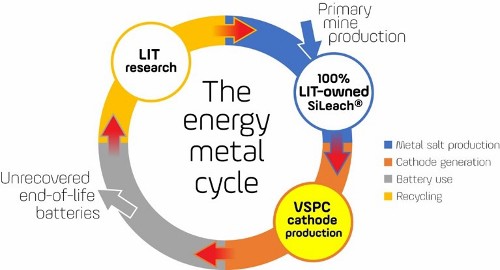
Lithium Australia understands a rapidly expanding battery industry needs to plan a sustainable future, which will require better utilisation of primary resources, higher rates of recycling energy metals from LIBS and improved battery production techniques.

Less than 10 per cent of batteries in Australia are recycled and most of the lithium waste produced from mining operations, both here in Australia and globally, is discharged to tailings.

Lithium Australia looking to ‘close the loop’ and create a circular economy for the production and utilisation of LIBs and is integrating technologies to achieve that outcome.

It recently finalised due diligence for the acquisition of advanced cathode material producer, the Very Small Particle Company (VSPC), which owns a proprietary process to produce advanced high-quality lithium iron phosphate battery cathode nano-powder material, a pilot plant situated in Brisbane Australia, complete with advanced laboratory and testing facilities.

LIT also announced an Inferred Mineral Resource of 25 million tonnes grading 0.45 per cent Li2O at the Sadisdorf tin-lithium-tungsten project in Germany, where it is farming into a joint venture (JV) with Tin International AG.

“We have demonstrated SiLeach can unlock Sadisdorf as a true polymetallic operation, recovering lithium from residues of conventional tin concentration processes,” Griffin said.

“The Sadisdorf resource has potential to feed a 25,000 tonnes per annum lithium carbonate plant for 10 years.

“Sadisdorf has similar grades to the nearby Cinovec deposit (Czech Republic) and is not far from the Zinnwald deposit of Deutsche Lithium GmbH.

“All of these deposits have similar characteristics, making them difficult, if not impossible, to commercialise using conventional lithium processing technology – SiLeach provides the solution.

“We are where the most rapidly expanding consumption of lithium is happening outside China, which means Lithium Australia is are well placed to take advantage of that expanding market.”


Lithium Australia NL (ASX: LIT)
… the short story

HEAD OFFICE
Level 1,
675 Murray Street,
West Perth WA 6005

Ph: +61 8 6145 0288

Email: info@lithium-au.com
Web: www.lithium-au.com

DIRECTORS
Adrian Griffin, George Bauk, Bryan Dixon


Corazon Mining Poised to Deliver in 2018

An active, targeted and focused approach sees Corazon Mining on the cusp of delivering on the potential of its two core projects.

Corazon Mining (ASX: CZN) has always had a strong direction and focus at both its projects – the Lynn Lake Nickel Sulphide Project in Manitoba Province, Canada, and the Mt Gilmore Cobalt Project in northern New South Wales.

Thanks to recent exploration efforts the company is now better placed than ever to reap the rewards for its efforts.

Corazon completed the acquisition of the entire Lynn Lake nickel-copper sulphide Field, historically one of Canada’s largest nickel producing regions, in 2015.

It was the first time the Lynn Lake Mining Centre had been consolidated under the ownership of one company.

Since that time, Corazon Mining has systematically explored the project area; a process that has seen the company define and continually refine its priority targets over three completed field seasons.

This work has included drilling, ground geophysics, downhole geophysics and geochemistry, and has resulted in detailed geophysical and geochemical models for the stand-out target, at the Fraser Lake Complex (FLC), located five kilometres south of the Lynn Lake Mining Centre in the southern region of the company’s project tenure.

With this work complete, at time of writing, the company had confirmed new high priority drill targets and was finalising preparations for its next phase of drilling at FLC – and, with the high amount of positive, supporting exploration data generated to date combined with a highly evolved technical interpretation of these results, there is a heightened level of anticipation about the potential of the upcoming drilling program to deliver a major new nickel sulphide discovery.

Now it becomes a case of ‘watch this space’.

Corazon’s focus at the Mt Gilmore project is the Cobalt Ridge prospect, which hosts one of the highest-grade cobalt deposits in Australia.

“What is important to note, is that it is a ‘pure-play’ cobalt sulphide prospect, not a re-badged nickel – make that cobalt – laterite target, which should equate to a simpler, easier and more cost effective processing flow sheet for any future mining operation,” Corazon Mining managing director Brett Smith told The Resources Roadhouse.

“The company acquired the Mt Gilmore project in mid-2016.

“It is located 35km from the major regional centre of Grafton in north eastern New South Wales.

“Corazon Mining owns a 51 per cent interest in the project and has the exclusive right to earn up to an 80 per cent interest in the project.”

Consistent with its approach to Lynn Lake, the company has systematically advanced exploration at Mt Gilmore with similar strong success.

It has completed two substantial drilling programs at Mt Gilmore – one in the second half of 2016 and a second phase program in late 2017.

Drilling, primarily targeted the high-grade Cobalt Ridge prospect, and assay results have continued to validate Cobalt Ridge as a unique, high-grade, cobalt-dominant deposit.

Two phases of metallurgical test work have also been completed on Cobalt Ridge mineralisation, and this work has delivered exceptional results, which has strengthened the company’s view on the development potential of the project.

Corazon believes Cobalt Ridge may have the potential to supply a quality cobalt product, suitable for use in the emerging lithium-ion battery and rechargeable battery sectors.

As with most success stories, timing plays a key role.

This point is not lost on Corazon as it eyes the development of its cobalt asset at the same time that global demand for ‘technology metals’ (like cobalt, lithium and graphite) is expected to surge as the commercial adoption of these new battery technologies begins to take hold.

Cobalt is a critical component of next generation batteries.

The price of cobalt has already experienced sharp growth – from around US$22,000 per tonne in February 2016, to around US$40,000 per tonne in February 2017 and now to a long term high of more than US$80,000 per tonne – and the outlook remains strong.

Add in the fact that current global supply is constrained and skewed toward African production, and it is easy to grasp the huge opportunity that Mt Gilmore project represents for Corazon.

“Our recent metallurgical test work at Cobalt Ridge yielded recoveries of 93.6 per cent cobalt and 98.4 per cent copper,” Smith said.

“The concentrate mass represented only five per cent of the initial mass feed, with the concentrate grading at 2.02 per cent cobalt and 5.18 per cent copper.

“Also, it is important to note that this metallurgical test work was from lower grade material than the Phase 1 test work, yet still delivered these exceptional results.

The test work is on-going and is focused on defining down-stream concentrate processing options and detailed process engineering studies, as part of the wider development plan for the project.”

All results from the most recent drilling program have been reported.

Drilling has highlighted multiple cobalt, copper and gold mineralised trends.

The Main Cobalt Lode has been the primary drill target and is up to 25 metres in true width and contains multiple narrow zones of higher-grade mineralisation.

Mineralisation at the Main Cobalt Lode is open in all directions, and there is considerable scope to define extensions, and to define additional parallel lodes.

Geochemical and geophysical surveys are currently underway, and this work will assist in defining new drill targets for the next phase of drilling.

In the immediate short term though, the focus returns to the FLC at Lynn Lake.

Corazon’s exploration at the FLC to date has resulted in the discovery of a large magmatic sulphide system with the potential to host substantial nickel-copper sulphide deposits, and all holes drilled in the previous round of drilling were mineralised over their entire lengths.

The FLC has the physical and chemical characteristics that suggest it is prospective for hosting large, Lynn Lake-style nickel-copper-cobalt deposits, and the company’s drilling has confirmed this potential, consistently intersecting Lynn Lake mine-grade nickel-copper-cobalt mineralisation.

The missing piece in the model remains the pursuit of a discovery hole at the FLC, which puts Corazon’s current activities at the project into sharp focus.

The management of two potentially company-making projects is no small feat for a listed junior resources company, but it is something Corazon has handled exceptionally well – due in part to the seasonal variances of each project; field work at Lynn Lake is best undertaken in the northern winter where the frozen surfaces make access and work easier, and the company has been able to focus on Mt Gilmore through the winter months in Australia.

Also, due to the quality of the projects and their obvious potential to deliver value, Corazon has always enjoyed dedicated support for its capital raising activities, which have allowed it to continue to advance both projects.

It is fully funded for its current planned activities at both projects.

The ongoing exploration success at both the Mt Gilmore and Lynn Lake projects continues to provide Corazon with dual, highly exciting opportunities with the potential to deliver much value for shareholders, and it remains focused on delivering this on both fronts.


Corazon Mining Limited (ASX: CZN)
…The Short Story

HEAD OFFICE
Level 1
329 Hay Street
Subiaco WA 6008

Ph: +61 8 6142 6366

Email: info@corazon.com.au
Web: www.corazon.com.au

DIRECTORS
Clive Jones, Brett Smith, Jonathon Downes, Adrian Byass


Blackstone Minerals Consolidating Canadian Cobalt

Blackstone Minerals (ASX: BXS) listed on the ASX in January 2017 on the back of three Western Australia-based projects.

The Red Gate and Middle Creek gold projects and the Silver Swan South gold-nickel project all provided encouraging results and attracted a good deal of investor attention during the company’s first few months on the Australian bourse.

However, it was an opportunity to provide its shareholders with exposure to the potentially lucrative and fast growing cobalt market that Blackstone Minerals just couldn’t pass up.

In July, Blackstone Minerals entered into a binding Heads of Agreement to acquire 100 per cent of the Little Gem project, located in British Columbia, Canada.

“Our three Australian assets are all very good early exploration projects; however, our aim has always been to find a company making asset, which is what we believe Little Gem has the potential to be,” Blackstone Minerals managing director Scott Williamson told The Resources Roadhouse.

The Little Gem project was discovered in the 1930s by prospectors who identified a pink cobalt-bloom on weathered mineralisation.

There has been very little modern-day exploration conducted at Little Gem with the main activities being airborne geophysical surveys, including magnetic, radiometric and electromagnetic (EM) surveys carried out in the 1970s and a further two drill holes completed in 1986.

Work undertaken by the original explorers resulted in the development of three adits with drilling carried out underground and detailed channel sampling taken.

Results from this work generated some exceptional cobalt and gold assays including:

Surface channel samples of massive sulphides returning assays up to:

0.4 metres at 5.7 per cent cobalt and 1,574grams per tonne (≈50oz) gold.

Underground adit channel sampling of massive sulphides returned multiple high-grade intersections including:

1.8 m at 4.4 per cent cobalt and 73g/t gold; and
2m at 3.1 per cent cobalt and 76g/t gold.

Historic underground drilling from adits returned multiple intersections including:

1.8m at 2.4 per cent cobalt and 112g/t gold;
3.3m at 1.4 per cent cobalt and 12.3g/t gold; and
2.9m at 0.9 per cent cobalt and 12g/t gold.

High-grade cobalt and gold mineralisation was demonstrated to be open along strike and down dip.

Blackstone Minerals’ move into the cobalt space had it playing catch up to other companies that had entered earlier, but it didn’t take long for it to make its mark.

The first hole drilled as part of the company’s maiden drilling program at Little Gem intersected massive, semi-massive and disseminated mineralisation, returning:

4.3m at 1 per cent cobalt and 15g/t gold, including 1.1m at 3 per cent cobalt and 44g/t gold.

Importantly, these initial results were consistent with the historic drilling and adit channel sampling data.

The first hole only tested the upper portion of the mineralised target but was able to identify multiple zones of massive sulphide (cobalt-gold) mineralisation within a broader alteration halo.

“After finalising the acquisition around September 2017, we were able to hit the ground immediately,” Williamson said.

“The very first hole confirmed the data we had inherited and gave us confidence that we really are onto something at Little Gem.

“Our belief is growing that we are dealing with something that could be one of the highest-grade cobalt-gold targets in the world today.”

With the project demonstrating its potential, Blackstone became eager to see how the geological setting shaped up against other, world-wide, cobalt-gold occurrences.

The one that stood out was the Bou-Azzer primary cobalt district in Morocco where cobalt has been mined for the past 75 years.

“There are fifty different deposits within that belt, not just cobalt, a lot of other metals too, it is a highly-endowed base metals province, which has produced over 100,000 tonnes of cobalt metal,” Williamson said.

“What we have been able to determine is that we have the same geological setting as Bou-Azzer with the contact between serpentinized ultramafics and granodiorites at Little Gem.”

Galvanised by the geological outcome, Blackstone made its next move, which was to acquire the extensive land holdings along strike from Little Gem, giving the company control of an impressive land position over the proven high-grade gold and cobalt mineralised belt.

The acquisition increased the Little Gem project’s land tenure to approximately 335 square kilometres while taking the target strike zone from 12 kilometres to over 48 kilometres.

“The similarity to Bou-Azzer was hard to ignore and was the impetus behind pegging the entire belt wherever that same setting occurred,” Williamson explained.

“We now have four times the strike extent potential and we believe we could be sitting on something that is much larger than the couple of prospects we made the original acquisition on.

“This district has been well-explored and is well-understood for gold, but we are the first to be looking here for cobalt, and the first, we believe to understand the geology and the similarities to Bou-Azzer.”

The work Blackstone has carried out to date has not only verified the previously identified mineralisation at the Little Gem prospect.

It has also provided information on the Jewel gold-copper prospect and discovered a new high-grade gold-copper prospect named Roxey.

The Roxey gold-copper prospect is located 1.5km west-southwest of Little Gem and sits along strike to that prospect’s cobalt–gold mineralisation.

Blackstone visually identified Roxey while undertaking due diligence on Little Gem, taking rock chip samples within the target area, which assayed up to 24g/t gold, 1.9 per cent copper and 24g/t silver.

Mineralisation at Roxey is associated with quartz-pyrite altered diorite containing chalcopyrite.

Surface rock chip samples were also taken to verify the mineralisation at the Jewel prospect, located 1.1km north-northeast of Little Gem.

These returned assays of up to 98g/t gold and 3.2 per cent copper.

Blackstone interpreted these results to confirm its earlier investigations that revealed historical samples of up to 0.6m at 75g/t gold and 0.45m at 153 g/t gold from underground and surface channel sampling and up to 6.9g/t gold, 19.25 per cent copper and 137g/t silver from underground rock chip sampling.

Mineralisation at Jewel sits in a serpentinized ultramafic near the easterly trending/steep south dipping contact with the quartz diorite/granodiorite that hosts the Little Gem prospect.

“Jewel and Roxey aren’t cobalt targets, they’re copper-gold targets,” Williamson explained.

“So again, we are dealing with geology similar to Bou-Azzer, this time being multiple base metals occurrences with high gold grades.

“This is the sort of mineralisation that will work in any commodity price environment.

“We don’t need the cobalt price to keep running for this project to work.”

Blackstone’s immediate focus is the completion of the maiden drill program at Little Gem to follow up the outstanding initial results and to further understand the full potential of the prospect.

This is expected to reboot in Q2 2018 with drilling focused on delineating the extents of the mineralisation with potential to deliver a maiden resource in the medium term.

“We are very pleased that we have been able to make such rapid progress at Little Gem,” Williamson said.

“We have already moved it along to be a project with real scale in a district that hosts such compelling high-grade cobalt and gold mineralisation.

“We can’t wait to complete an aggressive exploration campaign over the coming year.”


Blackstone Minerals Limited (ASX: BSX)
…The Short Story

HEAD OFFICE
Suite 3, Level 3
24 Outram Street
West Perth, WA, 6005

Ph: +61 8 9425 5217

Email: admin@blackstoneminerals.com.au
Web: www.blackstoneminerals.com.au

DIRECTORS
Hamish Halliday, Scott Williamson, Andrew Radonjic, Steve Parsons, Bruce McFadzean, Michael Konnert