Azure Minerals Eyes Mine Potential at Oposura

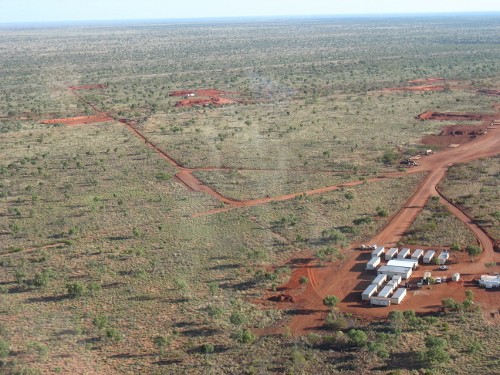
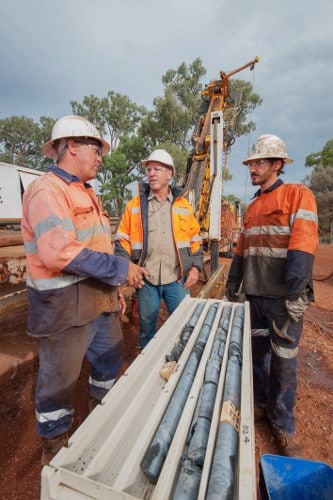
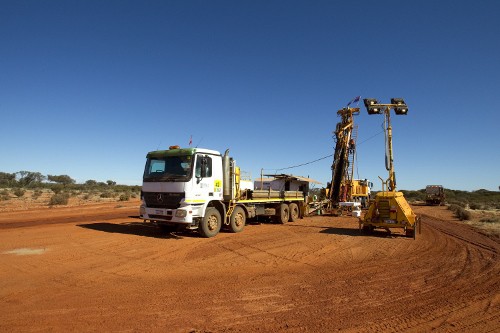
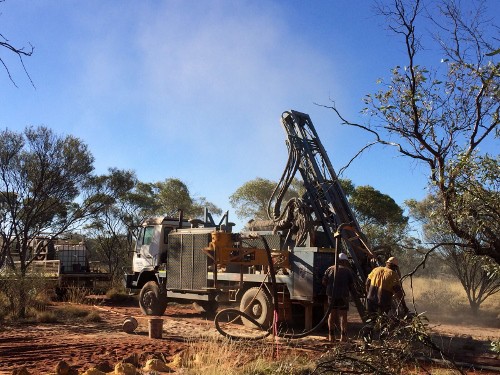
Azure Minerals (ASX: AZS) is drilling up an initial Mineral Resource at the company’s high-grade zinc and lead Oposura project, located in the northern Mexican state of Sonora.

Azure Minerals is no stranger to Mexico where it has the Mesa de Plata and Loma Bonita silver-gold deposits on its Alacrán project, where Teck Resources is earning a 51 per cent interest.

The 771 hectare Oposura property is located on the same Laramide Copper Trend, that extends from Arizona to central Mexico, as the Mesa de Plata and Loma Bonita deposits.

Oposura is 150 kilometres by road northeast from Hermosillo, the capital city of Sonora where Azure has its Mexican-based exploration and administration office.

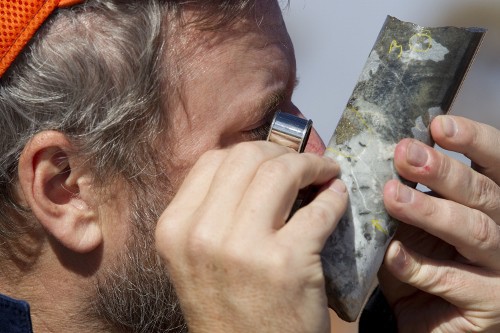
The project contains a mineralised zone hosting massive, banded, and disseminated sulphides containing high-grade zinc, lead and silver mineralisation.

The mineralised zone forms an extensive, relatively flat-lying horizon influenced by minor small-scale folding and faulting.

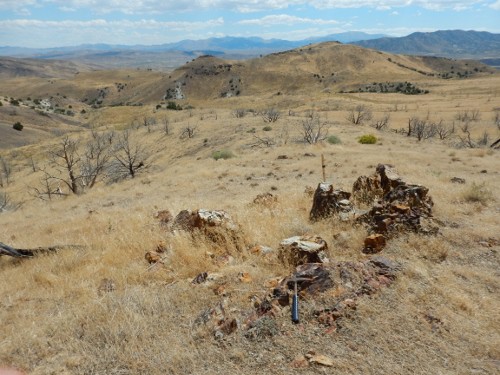
“Put more simply, this material is massive sulphides, and it outcrops at surface under a gently sloping hill,” Azure Minerals managing director Tony Rovira told The Resources Roadhouse.

“A large proportion of the mineralisation will be able to be extracted by open pit, but not like a standard open pit.

“Because the deposit outcrops on the side of a hill, we will basically be taking a scallop off the side of the hill.

“When we reach the point where the pit wall is tall enough we will go underground using a room and pillar mining method, as mineralisation is mostly horizontal.”

For a project of its potential, Oposura has been inexplicably neglected for many years.

Major mining companies Anaconda Copper Company and Mexican company Industrias Peñoles both conducted exploration and exploratory mining activities on the project between the 1940s to 1970s.

This work developed over 500m of mine tunnels within the ore zone, small-scale trial stoping to provide bulk samples for metallurgical testwork, and about 100 surface and underground diamond drill holes.

Of course, these results – although plentiful – are not up to speed in terms of JOC Code 2012 compliance, which means Azure needs to bring the project into the 21st century.

Azure began its drilling at Oposura last year with the aim of completing a Mineral Resource estimate by April 2018.

The resource drill-out covers known mineralisation identified by historical exploration, upon which Azure released an Exploration Target for Oposura of 2.5 to 3 million tonnes grading 10 to 12 per cent zinc plus lead (Zn+Pb).

“We have results for over one hundred diamond holes previously drilled along with the drill logs and assay sheets, so we are confident we know what’s there already,” Rovira said.

“We are replicating some of the drilling and that will give us confidence to utilise some of the historical drill results as well.

“The current drilling entails twinning of some of the historic holes, with others being drilled just nearby, or in between earlier holes.

“So far, every hole we have drilled has replicated the historical results.

“We are confident the historical resource will be updated to JORC 2012 standard and will be similar to what was produced historically.

“We see ourselves as having a deposit there that just needs to be defined and then published – and that is exactly what we intend doing.”

By the end of January 2018, Azure had completed 110 diamond drill holes for approximately 7,200m of the planned resource drill-out program.

Interestingly, most of the holes drilled along the eastern part of the deposit intersected fresh, unoxidized, massive sulphides within 10 metres of surface.

This was consistent with previous sampling of near surface mineralisation in the historical underground workings and is a good indication for an initial open pit mining operation in this area.

Most recent assay results have shown further near-surface, high-grade zinc and lead mineralisation intersected in the East Zone, including:

OPDH-036
2 metres at 42.6 per cent Zn+Pb from 37.5m;

OPDH-023
2.9m at 16.1 per cent Zn+Pb from 18.9m;

OPDH-025
2.1m at 15.4 per cent Zn+Pb from 27.9m; and

OPDH-026
2.2m at 14.2 per cent Zn+Pb from 15.2m.

The result from OPDH-036 extended the high-grade mineralisation south of a previously reported hole:

OPDH-008
16.6m at 22 per cent Zn+Pb, including 9.3m at 36.9 per cent Zn+Pb.

Mineralisation was extended 170m to the west of surface outcrop by drill hole OPDH027:
2.65m at 10.4 per cent Zn+Pb

The mineralised horizon remains open in that direction.

“We currently have three rigs drilling at Oposura and should have the resource drill-out completed towards the end of February,” Rovira said.

“We will be working on the resource estimation during February and March, which means by April, we should be able to publish our initial Minerals Resource.

“We expect it will be in line with the exploration target we previously released.”

Once the current resource drill-out program is complete, Azure will continue drilling to expand the area of currently defined mineralisation and, ultimately, the resource, and to explore for repetitions and extensions of the mineralised zones.

Preliminary metallurgical testwork at Oposura produced positive results highlighting excellent recoveries of commercial-grade concentrates of lead-silver and zinc concentrates.

Flotation tests demonstrated consistent zinc recoveries exceeding 70 per cent producing zinc concentrates grading 55 per cent zinc, and lead recoveries exceeding 80 per cent with lead-silver concentrates grading more than 55 per cent lead and greater than 300 grams per tonne silver.

“As this is a flat-lying sulphide deposit we envisage it being a very simple mining operation.

“From a processing point of view – being sulphides – it floats like a dream, producing a very high-grade lead-silver concentrate and another, high-grade zinc concentrate, with very good recoveries.

“It is a crushing, grinding, flotation produced concentrate with no contaminants and we are already getting interest from various metal smelters who would like to put their foot on the product.”

Azure believes Oposura is a feasible development option for a company of its size.

Because of the size of the project, Azure is eyeing development options most likely be processing in the order of 300 to 400 thousand tonnes per annum to produce perhaps 25,000 to 30,000 tonnes of metal in separate high-grade zinc and lead concentrates per annum.

“At about 1,000 tonnes per day, it is modest in size, but it is achievable for a company of our size to build a mine and processing plant that will facilitate that,” Rovira said.

The company’s confidence reflects what is happening elsewhere in the district with other companies with similar deposits and grades completing studies have determined capital costs of around $30 to $40 million.

“We see something around $30 to $40 million capex for the project being what a company our size can do without selling the farm to get it, Rovira continued.

“The other benefit of having such a relatively compact deposit is that it doesn’t require a long lead-time feasibility study to bring it to fruition.

“We see a scoping study being completed around the middle of 2018, and then going directly to a feasibility study to be ready by the middle of 2019 and a decision to mine shortly thereafter.

“We consider the Oposura project as being the ideal opportunity for us to be able to transition from junior explorer to becoming a mining company.”


Azure Minerals Limited (ASX: AZS)
…The Short Story

HEAD OFFICE
Level 1, 34 Colin Street
West Perth, WA 6005

Phone: +61 8 9481 2555

Email: admin@azureminerals.com.au
Web: www.azureminerals.com.au

DIRECTORS
Peter Ingram, Anthony Rovira, Wolf Martinick

 

Diversified approach to reap rewards for Pioneer Resources

With the Sinclair Zone Caesium Project rapidly advancing towards production and exploration success on multiple fronts, Pioneer Resources’ (ASX: PIO) diversified project development strategy is poised to bear fruit.

Pioneer Resources has always taken a diversified approach to delivering value to shareholders.

Knowing that pinning a company’s hopes – and funds – on the success of a single project is an extremely high-risk, albeit, high-return strategy, Pioneer has adopted a ‘portfolio approach’ to its exploration strategy.

“As a company, we have always sort to maintain and develop a portfolio of projects and prioritise the allocation of funding and resources to them based on our assessment of their potential to deliver shareholder returns,” Pioneer Resources managing director Crook told The Resources Roadhouse.

“It requires both a technical and commercial approach to help ensure that we are pursuing the right projects and over time we have refined our targeting and identification processes, and it helps that we have a board with a strong mix of technical and corporate knowhow.

“Pioneer has assessed and explored a number of projects and have and added and subtracted to our project portfolio accordingly, but we feel extremely pleased with the current projects within the company – to the point where we believe the Pioneer project portfolio has never been stronger, nor has the company been in a better position to realise value for shareholders.”

That optimism is based on a portfolio of projects in key, global demand-driven commodities, all strategically located relative to requisite infrastructure in jurisdictions with low sovereign and geo-political risk.

Pioneer’s most advanced project, and current core focus, is the Sinclair Zone caesium project, located within the company’s 100 per cent-owned Pioneer Dome lithium-caesium-tantalum (LCT) roject in the Eastern Goldfields of Western Australia.

The company continues to advance the project towards production – with mining activities scheduled to commence in the following quarter.

Pioneer made its world class caesium discovery at the Sinclair Zone, as part of its LCT focused drilling programs at Pioneer Dome, in October 2016.

The caesium at the Sinclair Zone presents as the mineral pollucite, a rare caesium mineral found in extremely differentiated LCT pegmatite systems.

The Sinclair Zone project has a JORC 2012 pollucite Mineral Resource Estimate of 10,500 tonnes of pollucite at 17.1 per cent caesium oxide (Cs2O) in the Measured category, which makes it the world’s third largest known pollucite deposit.

Pollucite is a high-demand niche commodity with a lack of ready substitutes.

It is primarily used in the manufacture of caesium formate brine, a high-density fluid used in high temperature-high pressure oil and gas drilling.

It acts as a lubricant and helps deliver higher production rates, and is non-corrosive on drilling equipment and can enhance hydrocarbon recovery, plus it is largely non-detrimental to the environment.

The world’s supply of pollucite is highly constrained and the Sinclair Zone project has the potential to be a high margin operation for Pioneer and contribute significantly to global pollucite supply.

With this is mind, Pioneer is committed to the project’s rapid development, which continues apace.

Key agreements required to facilitate the commencement of mining are in place.

A Mining Lease (and Miscellaneous Licence) has been granted, and a Heritage Protection Agreement and a Mining Agreement with the traditional owners, the Ngadju Native Ti Ngadju Native Title Aboriginal Corporation, have been reached.

In addition, archaeological and anthropological heritage surveys have been completed and no objections have been raised for the Sinclair Zone project to proceed to mining.

Mine planning and permitting is ongoing with Flora and Fauna surveys concluded and a Clearing Permit lodged, a Project Management Plan has been submitted to the WA government and a detailed Mine Plan is progressing.

Discussions with potential off-takers continue to advance.

Drilling is currently underway, to further define the pollucite deposit.

Due to the high value of pollucite, Pioneer has reduced drill spacing to a nominal 10m by 5m pattern and results, which are due in March, will be used to help finalise the pit design and mine schedule.

In addition to the project’s pollucite, the Sinclair Zone hosts other minerals that may potentially also be commercially extracted and have a significant positive economic impact on the project.

These include lepidolite and microcline (potassium feldspar) and the company is in ongoing discussions with interested third parties.

Pioneer’s exploration projects have also delivered exceptional results, validating its diversified project portfolio approach.

The company recently completed highly successful cobalt and nickel sulphide drilling programs at its Golden Ridge project and has also commenced its next phase of drilling at its Mavis Lake lithium project in Canada, plus further LCT-focused exploration drilling at Pioneer Dome.

The Golden Ridge project is located south east of Kalgoorlie in WA and hosts substantial areas prospective for lateritic cobalt as well as nickel sulphides.

Pioneer recently completed a 31 hole – 3,084 metre reverse circulation drill program over four cobalt targets (Rocket, Leo’s Dam, Anomaly 13 and Anomaly 14 Prospects) at Golden Ridge.

The results were highly positive with 16 holes intersecting cobalt mineralisation; with a highest grade of 1.6 per cent cobalt, and a thickest intersection of 31m at 0.15 per cent cobalt from a depth of 43m.

Pioneer’s nickel sulphide focused drilling at Golden Ridge was also successful, intersecting nickel sulphide mineralisation of 22m at 1.02 per cent nickel and 475ppm copper from 202m.

“This discovery of a broad zone of disseminated nickel sulphides is highly significant,” Crook said.

“It validates and strengthens Pioneer’s nickel sulphide geological model for the project as being analogous to other major nickel sulphide mining camps in the region, such as Kambalda and Widgiemooltha.

“And, based on the success of these programs, planning for the next phase of field work at Golden Ridge to further unlock the project’s lateritic cobalt and nickel potential has already commenced.”

The Mavis Lake project provides another potentially valuable string to Pioneer’s bow.

Pioneer has an Option Agreement and Strategic Alliance with International Lithium Corp (TSX.V: ILC) to earn up to an 80 per cent interest in the Mavis Lake, and Raleigh, lithium projects, in the province of Ontario.

Drilling at Mavis Lake has consistently intersected spodumene-bearing pegmatite mineralisation and the current phase of drilling – an initial 1,200m diamond drilling program commenced in January – is no exception.

This drilling is targeting extensions to spodumene-bearing pegmatites intersected at the Fairservice prospect in the previous round of drilling.

The first hole in the current program intersected three spodumene-bearing pegmatites, including one with a down-hole thickness of 20m (from a depth of 82m).

Drilling is ongoing and is expected to be completed and all results available by the end of March.

It is worth noting the strong focus within Pioneer’s project portfolio on lithium and cobalt.

Both are acknowledged as core components in next generation battery and energy storage technologies, and with global demand for these ‘technology metals’ expected to surge over coming years as mainstream commercial adoption comes online, Pioneer will continue to pursue the development of its projects as a core priority.

With the Sinclair Zone project on schedule for production in the near-term and continued strong results from its exploration activities, 2018 is shaping as a year of value delivery for Pioneer and its shareholders.


Pioneer Resources Ltd. (ASX: PIO)
… The Short Story

HEAD OFFICE
21 Ord Street
West Perth WA 6005

Ph: (08) 9322 6974

Email: pioneer@pioresources.com.au
Web: www.pioneerresources.com.au

DIRECTORS
Craig McGown, David Crook, Wayne Spilsbury, Allan Trench


Metalicity Increases WA Zinc Footprint

Metalicity Limited (ASX: MCT) recently increased the company’s zinc presence in the northwest of Western Australia with the purchase of two under-explored projects.

Metalicity strengthened its zinc project pipeline with the acquisition of the high-grade Napier Range zinc project and the Emanuel Range zinc project.

The combination of the two projects equals the Lennard Shelf zinc project, located in the Lennard Shelf of the Kimberley Region, WA.

Metalicity views Napier Range as a low capital and near term producing zinc production opportunity, while Emanuel Range represents an early stage but highly prospective zinc exploration project with an extensive 30 kilometres strike of largely untested targets.

The company believes these projects will complement the development of its large scale long life Admiral Bay zinc project, located in the adjoining Canning Basin of the Kimberley Region.

The Admiral Bay zinc project is one of the world’s largest undeveloped zinc projects and contains an extensive mineralized corridor over an 18 kilometre strike.

Metalicity has established a JORC Code 2012-compliant Inferred Mineral Resource at Admiral Bay measuring 170 million tonnes at 7.5 per cent zinc equivalent (ZnEq) (4.1 per cent zinc, 2.7 per cent lead, 25 grams per tonne silver) at a cut-off grade of 3 per cent zinc plus lead (Zn+Pb).

This includes a higher-grade zone of 20 million tonnes at 10 per cent ZnEq at 7.7 per cent ZnEq cut-off.

“The acquisition of the Lennard Shelf zinc project provides more than one focus for the company,” Metalicity managing director Matt Gauci told The Resources Roadhouse.

“It delivers one near-term zinc producing asset and one highly prospective zinc exploration asset that will be of significance in our future development.

“The Napier Range zinc project is a potential high-grade, low-capital, near-term zinc development project that complements the pathway for our 100 per cent-owned Admiral Bay zinc project.

“We have already had positive results from field work, exploration targeting and base case financial modelling at Napier Range and we are keen to commence an aggressive exploration program to determine the project’s capacity to provide a source of cashflow for our ongoing advancement of the long-life Admiral Bay zinc project.

“At the same time, we will be seeking new discoveries at the Emanuel Range zinc project.”

The Napier Range zinc project is the most advanced of the recent acquisitions consisting of two granted mining licenses, an exploration license application and a granted general purpose license.

It comes with an already established JORC 2012 compliant Inferred Mineral Resource Estimate (MRE) at the Wagon Pass deposit, measuring 750,000 tonnes at 5.8 per cent zinc, 7.2 per cent lead, 54g/t silver (13.6% ZnEq).

It also hosts an adjoining Exploration Target Range (ETR) of 100,000 to 200,000 tonnes at 10 to 15 per cent zinc equivalent.

At Napier Range, Glencore and Teck (via Lennard Shelf Pty Ltd (a 50:50 joint venture) retain an option to earn a 51 per cent participating interest in the Wagon Pass tenements if a new JORC Inferred Resource has been discovered, by either completing and sole funding a Feasibility Study, or spending $20 million on the assessment of the inferred resources.

A report by independent geological consultant CSA Global, determined that extensions to the Wagon Pass deposit, and additional deposits, are considered likely if the project were to be systematically explored.

The report outlined nine targets, one for resource extensions to the Wagon Pass deposit and eight further targets, adding that that the area is underexplored.

Metalicity has a program of resource and exploration drilling planned for the March Quarter within the Wagon Pass deposit.

The drilling will also test along the four-kilometre strike extent at Napier Range, subject to requisite approvals and completion of the wet season.

As the Wagon Pass mineralisation is still open to the west, part of the upcoming drilling will entail two holes designed to test the N1 target area for a potential western and north-western extension of the mineralisation.

The holes are vertical and have been designed to test the Lower Napier Dunr5 and 4 units hosting most of the Wagon Pass mineralisation.

“Wagon Pass is of particular interest in that the mineralisation indicates there could be potential to extend the current resource to west of the deposit,” Gauci said.

“Although the remaining eight targets are located further south, they are sitting mostly in analogous settings to Wagon Pass.

“The CSA report noted that the drilling had occurred in the project area, but many of those drill holes did not test the favourable Lower Napier stratigraphy.”

The remaining eight targets are located further south, and along strike of the Wagon Pass deposit, mostly in analogous litho-stratigraphic settings within that favourable Lower Napier stratigraphy.

Metalicity agrees with CSA in that the area has been under-explored for additional deposits of the 0.5 to one million tonnes size.

“The targets for the upcoming program were selected based on having similarities with the existing Wagon Pass deposit in terms of interpreted stratigraphic position, overall geological setting, geophysical character, and proximity to exploration drilling and rock ship sampling results,” Gauci explained.

“The 750,000 tonnes ‘footprint’ of the existing Wagon Pass Mineral Resource guided the anticipated range in size of the targeted mineralisation, of between around 0.5 to one million tonnes per target.”

The Emmanuel Range zinc project is less advanced, but by no means any less-important.

It consists of one exploration tenement and two tenement applications near the Pillara, Kapok, Cadjebut and Goongewa Mines, in the Emmanuel Range of the Kimberley Region.

All the Emmanuel Range tenements cover the prospective stratigraphy and structural positions, in very close proximity to existing deposits or mines.

For example, E04/2453 is located less than two kilometres from the Pillara deposit, the largest Lennard Shelf lead-zinc discovery.

Funding for the upcoming drilling has been secured through a recently completed private placement to Australian and international institutional and sophisticated investors.

The placement was co-lead by Echelon Wealth Partners Inc. and Paradigm Capital Inc to raise $2.61 million via the issue of 58.25 million shares at 4.5 cents per share, with a 1 for 2 free attaching option exercisable at eight cents with a five-year term.

Besides being used to undertake resource and exploration drilling at the Napier Range project, the cash will also be put towards progressing Pre-Feasibility Studies (PFS) at the Admiral Bay project.

It will also be of assistance as the company undertakes due diligence and evaluation of a dual listing on the TSX Venture Exchange.

“The placement resulted in a number of key North American institutional funds joining our register, which is encouraging as we complete due diligence and evaluation of a TSX Venture Exchange listing,” Gauci said.

“It also allows us to concentrate on drilling and feasibility studies on our 100 per cent-owned Napier Range and Admiral Bay projects, while considering a spin out of our cobalt and lithium projects.”


Metalicity Limited (ASX: MCT)
…The Short Story

HEAD OFFICE
6 Outram Street
West Perth WA 6005

Ph: + 61 8 9324 1053

Email: info@metalicity.com.au
Website: www.metalicity.com.au

DIRECTORS
Andrew Daley, Matthew Gauci, Chris Bain, Mathew Longworth


Calidus Resources Advancing Pilbara Gold Project

Calidus Resources (ASX: CAI) has made rapid progress on its Warrawoona gold projects in the Pilbara region of Western Australia since listing on the ASX in June 2017.

Calidus Resources came prepared, armed with a global resource at Warrawoona, most of which was located at the Klondyke prospect, one of the three main prospect areas of the Warrawoona project.

Calidus rang in the New Year by announcing a substantial increase in the Warrawoona gold project Mineral Resource, which included a high conversion to Indicated Mineral Resources.

The total JORC Code 2012-compliant Mineral Resource stands at 10.5 million tonnes at 2.11 grams per tonne gold for 712,000 ounces, representing an increase of 74 per cent over the previous estimate.

The total includes a maiden Indicated Mineral Resource of 8.4 million tonnes at 2.01g/t for 541,000 ounces.

In the break down, the Klondyke prospect has an Inferred Resource of 9.9 million tonnes at 2.06g/t gold for 654,000 ounces with 532,000 ounces in the Indicated Category that is defined from just two kilometres of an identified 7.5km strike length.

In additional to Klondyjke, the area contains numerous satellite deposits including the Copenhagen and Fieldings Gully prospects.

Copenhagen hosts an Inferred Resource of 180,000 tonnes at 6.1g/t gold for 36,000 ounces and Fieldings Gully boasts 0.4 million tonnes at 1.65g/t gold for 22,000 ounces.

The Copenhagen deposit and historical open pit is located approximately 10km to the west of Klondyke in a high-titanium basaltic unit that hosts additional historical workings to the north.

Calidus completed a round of RC drilling late last year testing two conceptual targets: a) the southerly extent of a possible parallel lode directly south of the existing shallow pit, and b) to test the position to the immediate west of the existing pit of the interpreted faulted off portion of the orebody.

The Fielding’s Find shear zone can be traced over tens of kilometres.

It is truncated to the East by the Klondyke shear zone and contains numerous gold targets along strike.

The most prospective of these targets centre around an extensive gold anomaly defined by shallow historic open hole drilling completed in the 1980s and 1990s.

Fielding’s Gully remains open in all directions with results defining an initial strike length of over 325m.

Drilling at the prospect encountered consistent, broad intersections with similar characteristics to the nearby Klondyke orebody.

The company considers the shear structure continuing along strike to both the east and west of the immediate drill area, augers well for the rapid expansion of this shallow high‐grade orebody.

“The first question a lot of people ask us is, how can two-grams-per-tonne-gold – outcropping – still be found in Western Australia,” Calidus Resources managing director David Reeves told The Resources Roadhouse.

“It’s not that we found it, it has been known about for a long time.

“What we have been able to do is consolidate the tenement package.

“The consolidation allowed us to join the Klondyke and Fieldings Gully resources together, which is where the bulk of the recently announced resource comes from.

“This is one continuous Resource of 2.6 kilometres that is open in all directions, and you don’t see that length of Resources very often.”


Calidus believes this increase bodes well for further resource expansion in the coming year.

To that end, the company has been carrying out RC drilling on the Copenhagen and Fieldings Gully deposits to follow‐up assays at Fieldings Gully (16m at 3.52g/t gold) and Copenhagen (18m at 4.35g/t gold) drilled late last year.

The latest drilling has produced a string of encouraging results, especially at Copenhagen, which has demonstrated high grade down plunge potential.

Recent results include:

17CPRC017
2 metres at 17.99 g/t gold from 122 m;

17CPRC017
6m at 21.47g/t gold from 131m;

17CPRC018
4m at 9.57g/t gold from 110 m;

17CPRC020
1m at 13.81g/t gold from 94m;

17CPRC021
1m at 38.1g/t gold from 141m; and

17FGRC013
7m at 5.66g/t gold from 63m.

“The latest high‐grade results continued the story of the under-explored Warrawoona area, which is emerging as a significant gold project with results impressing at both Fieldings Gully and Copenhagen” Reeves said.

“What they are telling us, is that both prospects contain significant potential to further grow the Warrawoona Mineral Resource base and we will be undertaking further drilling in quarter two to target that outcome.”

The ability for a junior exploration company, just eight months into its ASX-timeline, to increase an existing high-grade resource base by 74 per cent with its initial program of targeted drilling, provides some insight into the unique attributes and potential of the Warrawoona project.

The outcropping gold mineralisation allows Calidus to rapidly and cost-effectively add ounces to development of the project.

The company has no intentions of slowing down either, with extensional drilling of the resource, down dip and along strike planned targeted at bringing other satellite targets to resource status.

These plans are supported by Calidus’ current cash position following the recent completion of a capital raising that injected around $10 million into the bank.

So, with drilling underway to further increase a JORC-compliant Resource over 2g/t, and a full war chest to pay for it, what else does a junior exploration play require?

That’s right, infrastructure, and due to its Pilbara location, Calidus Resources also has that criterion covered.

“We fly to Port Hedland, from where we drive on a bitumen road to Marble Bar – where there is also a bitumen airstrip should we require that later,” Reeves said.

“An all-weather, council-maintained road runs right through the middle of the lease holding.

“So, we drive 20 kilometres on council-maintained roads from our base at Marble Bar, where we enjoy all the mod cons, which means we are not camped out in the middle of nowhere.”

On top of the Copenhagen and Fieldings Gully drilling, Calidus will also conduct deeper drilling at Klondyke testing high-grade extensions of the orebody down-dip to a depth of up to 400m.

This drilling is being planned with the assistance of the CSIRO and part funded under a $140,000 Western Australian Governments Exploration Incentive Scheme grant to assist with prospectivity modelling of high-grade down dip extensions of the orebody.

Further strike definition drilling along strike of the published resources is planned for the second quarter of 2018 with the aim of increasing the resource base to more than one million ounces.

While this is happening, initial scout drilling will be conducted on some of the high priority regional targets to examine their potential as higher-grade satellite deposits that could form ore feed based on the assessment of future development scenarios.

A Pre-Feasibility Study including optimisation, mine scheduling and metallurgical studies based on the new Resource plus planned extensions in 2018, is currently planned to commence late 2018 subject to the resource definition program.

“We have only been around a short while, but we have already established a really good base to work from into 2018 with a cash position of over $10 million,” Reeves said.

“The idea is to drill that Resource to over one million ounces and then eventually to prove that up to a plus-six-year minelife at one hundred thousand ounces per annum with plenty of regional upside.”


Calidus Resources Limited (ASX: CAI)
…The Short Story

HEAD OFFICE
Suite 12
11 Ventnor Avenue
West Perth WA 6005

Ph: +61 8 6245 2050

Email: info@calidus.com.au
Web: www.calidus.com.au

DIRECTORS
David Reeves, Keith Coughlan, Peter Hepburn-Brown, Adam Miethke


Peel Mining Basking in Southern Nights Glow

Peel Mining (ASX: PEX) is recalibrating its project rankings following the discovery of the Southern Nights deposit within the company’s Cobar Basin projects in New South Wales.

Peel Mining’s focus has been development of the Mallee Bull and Wirlong copper and base metals discoveries.

Mallee Bull is a 50:50 Joint Venture with CBH Resources hosting a JORC 2012-compliant Mineral Resource of 6.76 million tonnes at 1.8 per cent copper, 31 grams per tonne silver, 0.4g/t gold, 0.6 per cent lead and 0.6 per cent zinc for approximately 119,000 tonnes of copper, 6.6 million ounces silver, 83,000 ounces gold, 38,000t lead and 38,000t zinc.

Recent drilling at Mallee Bull focused on the high-grade near-surface zinc-lead-silver-gold Silver Ray lens to define mineralisation limits and provide material for ongoing metallurgical testwork and geotechnical review.

A feasibility study is investigating the conceptual development of the Silver Ray lens as a dig and truck operation, under which ore would be milled at CBH’s Endeavor mine approximately 150km away.

The Wirlong prospect is part of the Cobar Superbasin project, under a Memorandum of Agreement with Japan Oil, Gas, and Metals National Corporation (JOGMEC).

Wirlong is a large hydrothermal system hosting high-grade copper mineralisation along a 2.5km strike length to depths of up to 950m, bearing the hallmarks of a Cobar-style deposit.

Recent drilling defined and extended the known mineralised system at Wirlong with assay results confirming exceptional copper-silver drill intercepts, including:

WLRC026
27 metres at 5.3 per cent copper, 23g/t silver from 286m.

The company believes the results highlight the structurally dislocated nature of the Wirlong copper system, which it considers to likely be a series of stacked, short-strike length, shoot-like structures characteristic of Cobar-style deposits.

The true width of mineralisation remains unknown, but Peel has estimated it to be 60 to 80 per cent of downhole widths based on the likelihood of mineralisation being sub-vertical in nature.

Wagga Tank is located approximately 130 kilometres south of Cobar on the western edge of the Cobar Superbasin.

Mineralisation at Wagga Tank comprises a near surface oxide gold zone, a possible supergene-enriched copper-gold-silver zone, and a primary zinc-lead-silver -rich massive sulphide zone starting at the base of oxidation at around 120m below surface.

Peel carried out a second drilling program in June 2017 at the main Wagga Tank deposit testing for north-easterly strike extensions to mineralisation encountered by the first stage of drilling.

This intersected a substantial zone of semi-massive/breccia quartz-sulphide mineralisation.

WTRCDD020
6m at 8.52 per cent zinc, 2.97 per cent lead and 12g/t silver from 282m.

This mineralised zone was reinforced with intercepts from another two holes drilled on up and down dip of WTRCDD020.

WTRCDD023 returned a zone of semi-massive/breccia quartz-sulphide mineralisation grading:
11m at 7.15 per cent zinc and 2.31 per cent lead, 58g/t silver from 396m, approximately 80m down-dip of the intercept in WTRCDD020.

This intercept was the deepest mineralised intercept Peel had achieved at Wagga Tank and currently remains open at depth and along strike.

Hole WTRCDD024 confirmed the up-dip continuation of zinc-lead-silver rich mineralisation returning:
16m at 1.46 per cent lead, 0.54 per cent zinc, 7.6g/t silver from 158m
22m at 1.06 per cent lead, 0.95 per cent zinc, 5.3g/t silver from 183m, and
10m at 1.22 per cent zinc, 0.73 per cent lead, 11.4g/t silver from 240m.

The zinc-rich Southern Nights discovery is located approximately one kilometre south of the high-grade (zinc-lead-silver-gold-copper) Wagga Tank deposit.

Drilling from in October 2017 confirmed Southern Nights as hosting Wagga Tank-style mineralisation with drillholes WTRC035 and WTRC033 returning assays of very high-grade zinc-lead-silver rich sulphides including massive sulphides.

These included:

WTRC035
21m at 31.02 per cent zinc, 12.05 per cent lead, 258g/t silver, 1.43g/t gold from 194m; and

WTRC033
46m at 17.01 per cent zinc, 9.57 per cent lead, 272g/t silver, 1.22g/t gold from 201m.

“Mallee Bull is our most advanced project in terms of exploration, however, Southern Nights is rapidly becoming our number one project ranking,” Peel Mining managing director Rob Tyson told The Resources Roadhouse.

“The discovery at Southern Nights can be attributed to the fact we have now spent eight years in the Cobar Basin.

“During that time, we have had an almost permanent presence there, which has allowed us to learn a great deal about the area.”

Peel Mining sprang in to action following the Christmas/New Year break, eager to commence field activities at Southern Nights, including two double shift diamond drilling rigs in operation.

Peel has begun planning for a systematic resource drill-out of the Southern Nights area along with first pass metallurgical testwork.

The company has interpreted the Southern Nights results to indicate it being a sub-vertical mineralised system, with a likely steep (70 to 80 degrees) westerly dip, implying true widths of between approximately 30 to 50 per cent of the downhole intervals it has encountered for all west-oriented drillholes, and between 70 to 90 per cent for east-oriented.

The company also considers Southern Nights to be a very large mineralised system that could be an extension of the Wagga Tank deposit.

“Our technical team has been with the company pretty much since we began exploring in the Cobar Basin, which has contributed to building our knowledge bank of the ground we have been exploring over that time,” Tyson said.

“That consistency has been a great contributor to the Southern Nights discovery.

“There are enough indicators to suggest that Wagga Tank and Southern Nights are part of the same large mineralised system.

“To date we have identified over two kilometres of strike with indications from recent RAB drilling that we could extend that out to over three kilometres.”

Peel Mining is currently undertaking RC and diamond drilling at the Wagga Tank/Southern Nights project, which is including two other prospects Fenceline and The Bird.

The program is to consist up to 15,000m of RC/diamond drilling and up to 10,000m of RAB drilling over the coming months and has been designed for:

Resource estimation purposes;
To continue to test for strike and dip extensions; and
To test other targets in the general Wagga Tank area.

Additional airborne and surface geophysical surveys are also planned to assist with targeting along with first-pass metallurgical testwork.

“We have drilled enough high-grade results at Southern Nights now that tells us we have a few hundred metres of strike, minimum, that possibly could end up being much bigger than that,” Tyson said.

“So, we are really focusing in on that area and starting to head towards resource drilling to define the geometry and grade of that system.

“We want to be in the position of being able to say – this is what Southern Nights looks like – but, at this stage I get the feeling it will remain a moving feast for the time to come.

“It is open in all directions and is definitely stacking up as being a big system.

“Our original aim of conducting all this Cobar Basin exploration was to build a camp of deposits in the one jurisdiction.

“I think we’re really on our way to that now.”


Peel Mining Ltd. (ASX: PEX)
… The Short Story

HEAD OFFICE
Unit 1
34 Kings Park Road
West Perth WA 6005

Ph: (08) 9382 3955

Email: info@peelmining.com.au
Web: www.peelmining.com.au

DIRECTORS
Rob Tyson, Simon Hadfield, Graham Hardie


Cassini Resources to Advance Exploration Portfolio

Attracting a senior Joint Venture partner to participate in development of a project is always a good sign that said project has potential.

Keeping that senior JV partner interested, invariably means the project is living up to its expectations.

Cassini Resources (ASX: CZI) and its JV partner, OZ Minerals (ASX: OZL), recently completed a Further Scoping Study (FSS) on the West Musgrave Joint Venture Project (WMJV) in Western Australia.

Completion of the FSS moved to the commencement of a Pre-Feasibility Study of the development of the project’s Nebo Babel deposits as well as exploration work in the broader project area.

The FSS increased the scale of the project, delivering a range of possibilities beyond what had been originally contemplated.

The study delivered an initial eight years of mine life with a view to increasing this to beyond 15 years.

A subsequent regional exploration program at the West Musgrave is charged with expanding the current understanding of the mineralisation at One Tree Hill and the Succoth copper deposit, with the goal of establishing a multi-decade mining operation.

Cassini is playing its part by electing OZ Minerals to manage the PFS.

Under the terms of the current Earn-in Agreement, OZ Minerals has the right to earn up to a 70 per cent interest in the West Musgrave project by funding a minimum expenditure of $36 million over a maximum period of 3.5 years to complete the study work required to reach a decision to mine.

This occurs through three milestones, the initial milestone having already been met through the successful completion of the Further Scoping Study.

The next milestone of the Earn-in is a contribution of $19 million to a PFS within an 18-month period to earn a 51 per cent interest.

When this is completed, OZ Minerals may elect to progress to the final Joint Venture stage of the agreement where it can earn an additional 19 per cent interest (taking its total to 70%) by contributing a further $14 million to complete a Definitive Feasibility Study.

Cassini has a free carry interest of 30 per cent up to the completion of the minimum spend requirements ($36M) and then a loan carry to production cash flow if the amount required to complete a DFS exceeds the minimum spend.

“This year our goal is to continue to add value to the West Musgrave – and the way that will be done is through our regional exploration program,” Cassini Resources managing director Richard Bevan told The Resources Roadhouse.

“That is more likely to add value to the project in the short term.”

The OZ Minerals Joint Venture provides Cassini with up to $8 million in funded exploration over the next two years, with field programs commencing around March this year.

The company realises that as a minority partner in a developing asset, it needs to avoid falling into the trap of being seen to be sitting on its hands instead of breaking new ground and making new discoveries.

“We want to compliment the work being carried out at the West Musgrave JV with an aggressive exploration strategy,” Bevan explained.

“One that will add value to the project and will also provide Cassini-focused news flow and allow us to progress some of these other projects we have in the pipeline.”

Cassini has been developing the 100 per cent-owned Mount Squires project over the past 12 to 18 months, where it has consolidated tenements with several prospective gold targets that include a range of conceptual to advanced prospects.

Heritage surveys completed at Mount Squires have cleared priority targets for reconnaissance drilling and regional geochemistry sampling.

Cassini has all necessary approvals to commence exploration and is currently finalising programs.

Previous owners carried out limited drilling of identified gold prospects, which led to the discovery of mineralisation at the Handpump prospect, producing intercepts of:

15 metres at 2.3 grams per tonne gold from 31m, including 5m at 4.7g/t gold from 34m and 12m at 1.3g/t gold, including 5m at 2g/t gold from 25m.

Only 26 RC holes were drilled, and mineralisation remains open in most directions, however, Cassini considers the thickness and tenor of gold mineralisation demonstrates the economic potential of the project.

At the 100 per cent-owned West Arunta project, Cassini is targeting large-scale, sedimentary zinc-lead mineralisation, like that found in Mt Isa deposits.

West Arunta is a base and precious metals target, located in an underexplored region near Lake McKay in Western Australia.

Cassini will be conducting an aerial EM survey during its 2018 field season over the prospective Dione Horizon and Janus gravity anomaly to assist with mapping the regolith profile and to identify base metal mineralisation.

The company will utilise funding through the WA Government Exploration Incentive Scheme to co-fund drilling at the Janus gravity anomaly, which it plans to complete by the end of June 2018.

“We haven’t been talking about these projects in the past 12 months, because we have been so focused on the West Musgrave JV,” Bevans said.

“Now that we are not managing the WMJV, we are in the position of managing our exploration programs and can start to progress our other projects.

“Because they are early-stage projectd, we can quickly progress them along to the next technical milestones to determine whether there is something there worth following up or not.

“At this stage they all look very interesting and are all in good commodities, including gold and zinc, so it will be good to get out and do some work on them.”

Cassini showed just how serious it is about actively identifying and reviewing new exploration and development opportunities to complement its existing portfolio by entering an option agreement to earn into the Yarawindah Brook nickel-copper-cobalt project in WA.

The deal was done through private company Souwest Metals Pty Ltd, a company associated with Kalgoorlie prospector Scott Wilson.

Yarawindah Brook is located 130 kilometres northeast of Perth, near the township of New Norcia.

The project has been subjected to limited nickel, copper and cobalt exploration despite being in a favourable regional setting, prospective geology and near-surface occurrences of nickel and copper.

Historic exploration has focussed primarily on a small platinum and palladium (PGEs) resource, which Cassini views as a ‘path-finder’ anomaly for massive nickel-copper-cobalt sulphides.

The most recent drilling was completed in 2007 and targeted surface EM anomalies.

This returned encouraging results from hole YWRC0083, including:

7m at 1.3 per cent nickel, 0.22 per cent copper, 0.06 per cent cobalt and 432ppb palladium from 74m.

No further follow-up drilling was conducted due to budget limitations of the previous operator during the exploration downturn post-GFC.

Importantly, the Yarawindah Brook project is located adjacent to roads and power, providing development advantages if exploration proves successful.

“We have learned a lot about nickel-copper systems from the work we have carried out on the West Musgrave project,” Bevan said.

“That makes Yarawindah Brook an excellent opportunity for us to apply that geological expertise we have developed to an apparently similar mineralised system that has undergone only limited modern exploration.

“The project gives us further exposure to nickel, copper and cobalt, three critical components of the burgeoning advanced battery technology minerals sector.”


Cassini Resources Limited (ASX: CZI)
…The Short Story

HEAD OFFICE
10 Richardson Street
West Perth WA 6005

Phone: +61 8 6164 8900

Email: admin@cassiniresources.com.au
Web: www.cassiniresources.com.au

DIRECTORS
Mike Young, Richard Bevan, Dr Jon Hronsky, Phil Warren, Greg Miles

S2 Resources on International Discovery Tour

S2 Resources (ASX: S2R) managing director and CEO Mark Bennett knows better than most how exploration success can create wealth and good times for shareholders.

Bennett is also aware of how that same success can create expectations, especially when those shareholders support your next endeavour.

S2 Resources was spun out of Sirius Resources, after the discovery and subsequent sale of the Nova nickel deposit.

S2 enjoyed exploration joy at its Polar Bear gold project in Western Australia, quickly establishing a Mineral Resource estimate for the Baloo deposit of 2.8 million tonnes at 1.8 grams per tonne gold for 123,000 ounces of gold at a lower cut-off grade of 0.8g/t gold.

As encouraging as that all seemed, Bennett had, as it turns out, much loftier ambitions for the company.

“We do have a number of shareholders on the register who went through the Nova experience with us, which they would like to see us repeat – and quite frankly who could blame them,” Bennett told The Resources Roadhouse.

“That’s the base level expectation, so we need to make some brave exploration calls to try and find monster deposits.

“That is why we lifted our gaze from the Goldfields to look internationally.

“We could find a few hundred thousand gold ounces, which is fine in a commercial sense, but in a company, corporate, share price sense it’s not what our shareholders want.

“So, we looked around at a few different regions, prepared to take bigger risks as we attempt to find a Nova-equivalent deposit.”

First port of call on S2’s global odyssey was the Skellefte district of northern Sweden, a prolific mining district populated by numerous major polymetallic zinc-copper-gold-silver volcanogenic massive sulphide (VMS) deposits.

The neighbourhood where S2 has approximately 805 square kilometres of ground, considered highly prospective for similar polymetallic VMS mineralisation and orogenic shear zone hosted lode gold mineralisation, includes the mining and smelting operations of global Swedish metals and mining giant Boliden.

S2 ran the first ever VTEM survey to be carried out over the area, generating 64 targets, which it subsequently raised to over 100.

“Our team in Sweden spent the last European summer, when there’s no snow on the ground, mapping, prospecting, sampling, as well as conducting some geophysics and geochemical sampling to complete as much as they could during that window,” Bennett explained.

“The aim was to get as much information as possible to enable us to make an intelligent decision on what targets to prioritise for the drilling season.”

The second hole drilled in S2’s Swedish winter drilling campaign, diamond core hole SBJK170008, confirmed continuation of VMS mineralisation a further 170 metres down plunge from hole SBJK170006, the last hole drilled during the company’s previous winter program.

The hole intersected an upper 2.7 metre thick zone of brecciated massive sulphides and a lower 10.1m thick footwall stringer zone.

Assays returned:

Upper sulphide lens:
2.7m at 7.14 per cent zinc, 0.32 per cent copper and 8.9 grams per tonne silver from 301m; and

Footwall stringer zone:
10.1m at 0.52 per cent copper and 7.1g/t silver from 319.25m.

The extensive VMS mineralisation hit at Bjurtraskgruvan was substantial enough for S2 to believe it had affirmed the prospectivity of the belt, while at the same time validating its exploration methodology.

However, the thickness of the mineralised horizon wasn’t enough to divert its attention from the many other targets it still has scheduled for reconnaissance drilling over the winter season.

These include the Granbergs target, which S2 identified using induced polarization (IP) geophysics and base of till (BoT) infill drilling.

Granbergs sits along strike from a gold-rich VMS deposit mined by Boliden in the 1950s.

The Nasvattnet target is located outboard of the western end of the Skellefte belt and contains two known clusters of mineralised boulders comprising polymetallic sulphides, whose source has not yet been identified

Individual boulders have been shown to contain up to 3.85 per cent copper, 17.2 per cent zinc, 9.2 per cent lead, and 680g/t silver.

The Storgroven gold target was identified by prospecting and follow up BoT drilling around two known VMS occurrences on the company’s Petitrask number 402 lease.

Storgroven is centred 400m to the north of the known Aliden VMS occurrence.

BoT drilling defined a 1,000m long gold anomaly, which remains open to the northwest.

On the northwestern-most BoT line this anomaly is 500m wide and contains a distinct gold and silver bearing gossan concealed beneath four metres of glacial till, grading 1.1g/t gold and 8.2g/t silver.

Extensional and infill BoT drilling is in progress to better delineate the anomaly as a precursor to planning a diamond drill program scheduled for late March 2018.

S2 Resources other international commitments involve three active earn-in agreements with TSXV-listed Renaissance Gold on three Carlin-style gold targets in Nevada in the United States of America.

“The way things seem to operate in Nevada is that majors, such as Barrick, Newmont, and Kinross dominate the landscape and juniors pretty much work up prospects until they are ready for the big boys to take them off their hands,” Bennett said.

“The juniors tend to be very small, low-cap companies with plenty of good ideas but not much cash in the bank for exploration activities, something we recognised as a niche in the market.

“We noticed there weren’t too many juniors actually drilling, and what juniors were, didn’t have enough money and were over-reliant on the majors.

“We are smaller and flexible, which fits in with how they want to operate, but -most importantly – we still have enough money to carry out the activities they can’t.”

The Pluto project is located 50km north of Austin in Lander County, Nevada, on the north-south ‘Rabbit trend’ of gold deposits.

S2 can earn a 70 per cent interest by spending US$3 million by June 2022 and can withdraw after the expenditure of US$200,000 by June 2019.

The target at Pluto comprises a gravity anomaly interpreted to represent an uplifted block containing carbonate bearing stratigraphy known to be favourable for gold mineralisation.

Four deep reverse circulation (RC) holes were drilled as an initial ‘proof of concept program, however, no significant gold was intersected.

These four RC holes did intersect a thick sequence of Havallah Formation mudstones S2 believes forms a hangingwall seal to the more favoured Antler sequence host-rocks.

These results will be reviewed in early January prior to any further work being undertaken at Pluto.

The South Roberts (S2 earning 70%) project is in Eureka County, Nevada, 35km northwest of Eureka, on the Battle Mountain–Eureka trend of world class gold deposits and on the western margin of the northern Nevada rift in a similar setting to Barrick Gold’s 12 million-ounce Goldrush deposit to the north.

The Ecru (S2 earning 70%) project is 40km southeast of Battle Mountain in Lander County, Nevada, in the heart of the highly endowed Battle Mountain–Eureka trend and surrounded on three sides by Barrick’s Cortez District property, containing the Pipeline, Cortez Hills and Goldrush deposits with a collective gold endowment of approximately 50 million ounces.

S2 Resources is planning to drill its first programs on the South Roberts and Ecru projects once they are accessible, which is most likely to be from April 2018 onwards.


S2 Resources (ASX: S2R)
…The Short Story

HEAD OFFICE
North Wing, Level 2
1 Manning Street
Scarborough WA 6019

Ph: +61 8 6166 0240

Email: admin@s2resources.com.au
Web: www.s2resources.com.au

DIRECTORS
Jeff Dowling, Mark Bennett, Anna Neuling, Grey Egerton Warburton.

Competitive Company Culture to Keep Discoveries Coming

With fully-funded construction underway to mine Australia’s most recent greenfields gold discovery, it would be tempting for a junior gold explorer to become complacent.

However, having made its big, company making, Gruyere gold discovery Gold Road Resources (ASX: GOR) is determined to create a company culture that ensures discovery of such deposits keeps coming.

Gold Road, along with its 50:50 Joint Venture partner, Gruyere Mining Company Pty Ltd, a member of the Gold Fields Limited group, currently has development of the Gruyere gold project, 200 kilometres east of Laverton in Western Australia, well under control.

Development kicked off at Gruyere in December 2016, and with construction activities having been in progress for more than 12 months, the project remains on schedule to pour first gold at the end of the first quarter of 2019.

Most pleasing is that costs incurred to date are in line with the budgeted overall Project Capital of A$532 million.

A five‐year A$400 million mining services contract with Downer EDI Mining will begin soon with Downer scheduled to mobilise its workforce in the March 2018 quarter to commence construction of the mining infrastructure.

Mining activities are due to launch in the December 2018 quarter.

In November last year, Gold Road signed margined Gold Forward Facilities with two major banks for up to 200,000 ounces of Australian dollar denominated forward sales.

The Hedging Facilities equate to 100,000 ounces of gold with each bank and so far the company has forward sales contracts locked in for 25,000 ounces at an average forward price of A$1,705.

With the gold price currently above the modelled Gruyere Feasibility Study gold price of A$1,500 per ounce, the company believes it is prudent to lock in a small portion of its forecasted production.

The hedging is part of the company’s stated “prudent management of financial risks”, under which it is reviewing options for standby revolving credit or working capital facilities, which would also include discretionary gold hedging facilities.

The company has slated the end of the March 2018 quarter as a target for the finalisation of any Standby Facilities with the intention to merge the early hedges into any Standby Facility, and to roll the delivery dates of the hedged ounces to meet forecast gold production dates.

By combining higher gold prices and the Standby Facilities, the company can lower its risk profile and ensure flexibility in an environment which is historically volatile.

To date project engineering is 72 per cent complete and construction 32 per cent complete, numbers that support the JV’s confidence of hitting its 2019 deadline.

The company gives a great deal of credit for the achievements of the past 12 months to its project team and the project contractors.

In 2017, Gold Road Resources embarked on a A$30 million greenfields exploration drilling program.

The drilling focused on the Wanderrie and Corkwood Camps, located within the company’s 100 per cent-owned North Yamarna tenements.

RC and diamond bedrock testing of prioritised highest-ranked targets, and infill definition of gold anomalies identified through regional aircore drilling were conducted while Gruyere studies were being completed.

The results improved understanding of these targets with Santana and Satriani (Wanderrie Camp), and Ibanez (Corkwood Camp) standing out.

Broad spaced drilling confirmed gold bedrock mineralisation along the main mineralised shear through the Santana and Satriani prospects, which form part of a continuous 11-kilometre-long mineralised corridor known as the Wanderrie Supergroup Trend.

Gold Road’s geologists were able to develop a deeper understanding of each prospect’s potential, which they have been encouraged to demonstrate inhouse over the summer break.

To keep the company’s exploration ambitions on track, the company called in its geologists from the field for a moment’s respite from the extremely hot December, January and February sun, for what Gold Road’sManaging Director and CEO described as, “The Summer of Fun”.

The heat in the company’s air-conditioned West Perth offices soon intensified as each geology team began presenting what the exploration programs had taught them about their respective prospects.

“Basically, it is creating some competitive tension between the members of the team regarding who it might be that will make the next big discovery for the company,” Murray told The Resources Roadhouse.

“They have all been allocated different geographical areas across the tenement package looking at all the historical work we have conducted over each.

“That then culminates in a meeting where – as a peer group – they will all decide what should be the highest priority exploration targets for the company to tackle next.”

The company’s strategy is simple, but highly effective.

The various teams collect a large amount of information throughout the year in the field, which means they are kept so busy it becomes almost impossible to adequately collate the information and assess the quality and priorities of the targets.

At some 6,000 square kilometres, Gold Road’s Yamarna Belt tenement holding is substantial, and is expected to produce more discoveries to follow the 148 million tonnes at 1.3 grams per tonne for 6.2 million ounces of contained gold Gruyere deposit.

The company has a large number of targets scattered across the belt and believes the best way to determine which targets stand out from the rest is for each to be presented to, and debated by the entire geological group.

“It is a terrific way for the team to reassess, regather their thoughts and retarget opportunities right across the belt,” Gold Road’s Executive Director – Exploration and Growth Justin Osborne said.

“This entails looking at all the work we have conducted at Corkwood, down at Wanderrie and some new areas.

“We have updated the whole geological map for Yamarna with an improved geological understanding.

“That means we can take a good look across the entire tenement area and not just fall in love with one project.

“It allows us to step back and consider the merits of each project in the context of being a small part of the large picture.”

Osborne expanded his point, saying that when targeting prospects, it is very important for the company to have a consistent set of criteria to use when identifying and assessing each one.

“Otherwise, you will have somebody that will look at a target and emerge super-optimistic about it, while somebody else may be more conservative in their approach and consider the same target to be interesting, but that is all,” he explained.

To that end, Gold Road spent a great deal of time last year developing and defining a system that applies consistent parameters to the targets, so the company is then able to classify each with a targeting score.

“This is based on a range of geological criteria that we have determined to be important for gold deposits at Yamarna and can be applied across the Yilgarn,” Osborne continued.

“We can then put all the targets together and rank them objectively – we will work through and update all the interpretations – and then all the targets that come out of that.

“They will be peer reviewed by the whole team, from where we will develop a ranked list of targets.”


Gold Road Resources (ASX: GOR)
…The Short Story

HEAD OFFICE
Level 2
26 Colin Street
West Perth WA 6005

Ph: +61 8 9200 1600

Email: perth@goldroad.com.au
Website: www.goldroad.com.au

DIRECTORS
Tim Netscher, Ian Murray, Justin Osborne, Sharon Warburton, Brian Levet

Middle Island Ore Sorting Inspires Sandstone Rethink

Testwork carried out by aspiring gold developer Middle Island Resources (ASX: MDI) on the company’s Sandstone gold project in Western Australia provided a ‘Eureka’ moment.

Middle Island’s focus at the Sandstone project is to extend and enhance its proposed gold production profile to recommission the on-site processing plant.

One major hurdle had been Sandstone’s Two Mile Hill tonalite deeps deposit, for which Middle Island has released an Exploration Target of 24 to 34 million tonnes at 1.1 to 1.4 grams per tonne gold for 0.9 to 1.5 million ounces of gold.

Two Mile Hill tonalite deeps sits four kilometres north of the 600,000 tonnes per annum Sandstone plant, and was previously considered incompatible with existing processing plant capacity.

Because of this perceived incompatibility, the company was considering Two Mile Hill tonalite deeps as a potentially separate project, even a possible farm-out deal.

The company reviewed its assessment of Two Mile Hill tonalite deeps after positive results from preliminary ore sorting testwork conducted on drill core demonstrated the deposit’s amenability to pre-concentration of gold mineralisation.

This ticks off several boxes for the recommissioning of the Sandstone processing plant, including reduced throughput and costs, and an increase to the feed grade to a level that is anticipated to be compatible with the plant’s capacity and capability.

This means the Two Mile Hill tonalite deeps deposit has potential to provide a substantially higher production profile over an extended period, without the requirement for a new larger processing plant, and Middle Island has adjusted its focus accordingly.

“We were running two separate projects within the Sandstone project,” Middle Island Resources managing director Rick Yeates told The Resources Roadhouse.

“The first was focused on recommissioning the mill, and the second was how we would develop the Two Mile Hill tonalite deeps deposit.

“We are very confident the initial ore sorting results can be substantiated by further test work.”

The process of ore sorting is not, as might be thought, grading of small bags of ore material by weight or colour.

It is rather, a simple mechanised pre-concentration process that facilitates ‘upgrading’ of ore and mineralised waste and has been used across the industry for sorting myriad of commodities, such as diamonds, uranium, tungsten for more than 25 years.

Like other technological advancements in the industry, ore sorting has also benefitted from improvements in technology, including the use of sensors and applying faster data processing speeds, which have contributed to the application of the process.

Sorting has been found to be effective for managing dilution from mining operations, upgrading low grade stockpiles, reducing haulage costs for satellite operations and, most importantly, improving processing costs and efficiencies.

Middle Island appointed Nexus Bonum Pty Ltd, a highly experienced consulting group in sorting technology and its application to mining projects, to advise on all aspects of the sorting program.

“The ore sorting technology we have employed is a good example of how new or enhanced technologies can transform the economics of mining and processing operations,” Yeates said.

“Middle Island is proud to be an early mover in utilising this significant technological opportunity.”

The ore sorting study followed an encouraging mineralogical assessment on ore sourced from the Two Mile Hill tonalite deeps deposit in October 2017. This work identified that greater than 99 per cent of the gold is hosted within the quartz veins.

The test work aimed to determine if a mill feed upgrade was achievable and the optimum pre-concentration route to do so.

Two ore sorting processes were run.

The first by Tomra, was undertaken on 78 kilograms of -30mm/+10mm material following screening to remove fines.

A primary sort using X-ray transmission (XRT) was followed by a Colour scavenge on the product and waste fractions generated.

A -10mm screen upgrade to 6.38g/t gold recovered 19.4 per cent of the gold in just 7.3 per cent of the mass in this test with the Tomra results showing 64.5 per cent of the gold was recovered in 24 per cent of the mass by XRT sorting following screening.

Colour sorting of the XRT product did not result in any further upgrade. However, Colour sorting of the XRT waste fraction recovered a further 12.3 per cent of the gold to yield a total screening (fines) plus sorting gold recovery of 96.3 per cent in 41 per cent of the mass.

Middle Island interpreted the data to indicate that a mined grade of 2.38g/t gold could be upgraded to a plant feed grade of 5.61g/t gold by screening and XRT/Colour sorting.

A second sorting trial using a Steinert sorter was carried out to assess if Laser sorting would be more effective than Colour sorting.

The Steinert sort was conducted on the recombined Tomra products (73kg), following sub-sampling for gold analyses.

The 73kg recombined composite sample was run through a Laser at different settings to produce two concentrates.

The Laser waste fraction was then scavenged twice by the XRT sensor to produce high grade (HG) and medium grade (MG) fractions.

The Steinert results indicated 12.2 per cent of the gold was recovered in 14.2 per cent of the mass by Laser (concentrates combined).

Scavenging of the Laser waste fraction with XRT recovered a further 75.6 per cent of the gold (HG plus MG) to yield a total screening plus sorting gold recovery of 95 per cent in 81 per cent of the mass.

The MG material is below the marginal cut-off for processing and would not be recovered.

Overall, the Steinert test resulted in a 93.9 per cent recovery of gold in 54 per cent of the mass.

Middle Island saw the results as an indication that reviewing ore sorting is a valid means of upgrading mill feed, thereby lowering process operating costs – and consequently the mining cut-off grade – for a possible underground mining operation, is readily justified.

It also signalled the potential that the substantial scale of the Two Mile Hill tonalite deposit could ultimately prove compatible with the milling capacity of the existing Sandstone processing plant.

“The results from the ore sorting characterisation testwork are obviously, at this stage, only preliminary, however, these initial results are outstanding,” Yeates said.

“Even Nexus Bonum principal, Geoffrey Laing, described the indicative performance as one of the best he has seen.

“The opportunity to generate a 185 to 257 per cent increase in sorter product grade, whilst retaining more than 93 per cent of the gold, is an outstanding result.

“The expected equivalent decrease in unit haulage and mill operating costs will also feed back into the economic mining cut-off grade, thereby potentially increasing the material available for mining and processing.

“Assuming more definitive testwork on larger composite samples replicates or improves on these results, ore sorting has the potential to make a significant positive impact on the economics of the Two Mile Hill tonalite deeps deposit.

Middle Island has lodged a Program of Work (POW) application to complete a large diameter (PQ) diamond core hole to provide material for more definitive ore sorting trials.

On the back of the initial ore sorting testwork results, it also lodged another POW to drill out the upper levels of the tonalite deeps deposit (to approximately 450m depth) to a notional Indicated Resource status.


Middle Island Resources Limited (ASX: MDI)
…The Short Story

HEAD OFFICE
Suite 1
2 Richardson Street
West Perth WA 6005

Ph: +61 8 9322 1430

Email: info@middleisland.com.au
Website: www.middleisland.com.au

DIRECTORS
Peter Thomas, Rick Yeates, Beau Nicholls

Rox Resources on The Hunt for New Projects

Historically, Rox Resources (ASX: RXL) has demonstrated its ability to acquire, develop, and monetise quality projects.

Rox Resources is currently sitting on a healthy war chest of approximately $12 million after selling the Reward zinc project in the Northern Territory to Teck Australia Pty Ltd.

Rox wasted very little time in showing its strategic intentions by landing a 100 per cent-acquisition of the Collurabbie nickel- gold-copper-PGE project in Western Australia.

The Collurabbie project tenements are situated due east of Rox’s other current operations – the Fisher East nickel sulphide and Mt Fisher gold projects.

The latest results from aircore drilling of strong nickel-copper-PGE anomalies at Collurabbie have again highlighted the project’s potential.

The drill program produced standout results, including:

Olympia North

CXAC013
24 metres at 0.38 per cent nickel, 0.17 per cent copper, 126ppb platinum, 235ppb palladium from 28m, including 8m at 0.5 per cent nickel, 0.29 per cent copper, 228ppb platinum and 317ppb palladium from 36m; and

CXAC086
32m at 0.6 per cent nickel, 0.36 per cent copper, 273ppb platinum, 405ppb palladium from 4m, including 20m at 0.7 per cent nickel, 0.4 per cent copper, 305ppb platinum, 464ppb palladium from 8m.

Ortus

CXAC008
24m at 0.56 per cent nickel, 0.12 per cent copper, 178ppb platinum and 212 palladium from 16m, including 12m at 0.74 per cent nickel, 0.19 per cent copper, 309ppb platinum and 315ppb palladium from 20m; and

CXAC046
24m at 0.56 per cent nickel, 0.04 per cent copper, 78ppb platinum and 84ppb palladium from 16m, (hole did not reach target depth).

In addition, anomalous nickel results were received north of Ortus along the Beta Sill.

The results indicate lateritic enrichment above a potential large low-grade disseminated nickel sulphide mineralized body:

CXAC011
27m at 0.45 per cent nickel from 4m; and

CXAC041
20m at 0.39 per cent nickel from 4m.

An aircore drilling campaign was completed at Mt Fisher, where Rox has already identified mineral resources of more than 86,000 ounces of gold.

The latest drilling focused on the Dam, Damsel, Dirks and Shiva prospects, delivering results that provide excellent potential for further exploration to add to the current resources.

Rox believes the Dam-Damsel-Shiva area has similarities to the 3.6 million-ounce Bronzewing deposits to the southwest, and is using the knowledge base built up in the 1990s and 2000s regarding Bronzewing and the Yandal Belt in its exploration program design.

The Damsel area hosts a gold indicated mineral resource of 726,000 tonnes at 2.3 grams per tonne gold for approx. 55,000 contained ounces of gold.

The aircore drilling extended the anomaly surrounding this resource by 800m to the south, suggesting possible extension and increase to the existing mineral resource.

Highlights of the aircore drilling include:

MFAC109
4m at 6.1g/t gold from 48m;

MFAC146
4m at 2.75g/t gold from 32m;

MFAC153
8m at 2.4g/t gold from 20m; and

MFAC161
4m at 3.5g/t gold from 40m.

The Collurabbie acquisition set a precedent for the company that it is eager to repeat in the coming months.

Rox is on the lookout for the acquisition of suitable projects, which it hopes will deliver meaningful shareholder value and, just as importantly, allow the company to progress to near-term production.

No doubt such an acquisition is liable to take ‘flagship’ billing from the company’s current portfolio, however, Rox is determined to continue exploration and development activities at its nickel and gold assets.

“We are watching the nickel price closely and have been encouraged by its recent run,” Rox Resources managing director Ian Mulholland told The Resources Roadhouse.

“Having said that, we do believe nickel probably has another year or two before it reaches a price where we will see previously working operations reopen and deposits, particularly the class 1 sulphide deposits, become economic.

“All the signs are there – demand is increasing, and supply has gone down.”

Mulholland’s optimism received support from some powerful corners.

The World Bank Group, in its 2017 Commodity Markets Outlook, October said, “All metals prices increased in the third quarter, led by zinc and nickel, which jumped 14 percent on robust demand and reduced mine production (zinc) and solid stainless steel demand (nickel).

“The market is expected to remain in deficit in the near term.

“Over the longer-term, demand is seen increasing to meet growing needs for nickel in lithium-ion batteries for electric vehicles and storage.”

According to recent research note from McKinsey & Company – The future of nickel: A class act, the global nickel market is about to enter a two-nickel market, comprising two distinct commodity segments.

These are traditional ferronickel pig iron (NPI) players (Class 2) versus (Class 1) the rechargeable batteries for electric vehicles (EVs).

“The global nickel market has traditionally been driven by stainless steel production using both high-purity class 1 and lower-purity class 2 nickel products,” McKinsey & Company said.

“Significant expansion of low-cost class 2 nickel capacity over the past decade – in particular NPI – has caused nickel prices to fall from the highs of US$29,000 per metric tonne in 2011 to an average of just above US$10,000 per metric metre in 2017, resulting in the curtailment of higher-cost class 1 capacity.

“However, the growing adoption of EVs and the resulting demand for high-purity nickel is providing a much-needed reprieve for the industry as a shift towards nickel-rich battery chemistries accelerates.”

McKinsey suggested that with demand for EVs expected to hit 31 million units by 2025, demand for class 1 nickel could increase from its current 33,000 tonnes to 570,000 tonnes by 2025.

Other analysts suggest this could occur much earlier, perhaps 2020.

Rox may be ready for the nickel worm to turn, but it is not prepared to sit around and wait for it to happen.

Since declaring its project accumulation strategy last year, the company has undertaken a first-pass review of many opportunities, assessing them against its project acquisition criteria.

Three projects are currently the subject of more advanced assessment including due diligence, data review and suitability to deliver near-term production and revenue.

Rox has developed a stringent, well-structured investment and technical criteria which each project is being assessed against.

It has identified specific commodity targets which are currently displaying strong macro fundamentals, including increased pricing, but which show a lack of any new near-term production options to cater for the surging demand globally.

These commodities include, but are not restricted to zinc, which has recently seen prices hit a ten-year high, and copper, with prices recently at three-and-a-half year highs on supply fears due to a lack of near-term production projects and increasing demand from major economies such as China.

“We remain one of the ASX’s well-cashed-up junior explorers with $12 million at the end of December,” Mulholland said.

“Our exceptional portfolio of existing assets provides exposure to the nickel and gold markets and we will continue to monitor market conditions, particularly with respect to where nickel goes in coming years.

“Importantly, our financial position gives us the firepower to aggressively pursue near-term growth opportunities and we are looking at numerous projects across a range of attractive commodities that we think can deliver significant shareholder value in the short term.”


Rox Resources Limited (ASX: RXL)
…The Short Story

HEAD OFFICE
Level 1, 34 Colin Street
West Perth WA 6005

Ph: +61 8 9226 0044

Email: admin@roxresources.com.au
Web: www.roxresources.com.au

DIRECTORS
Stephen Dennis, Ian Mulholland, Brett Dickson