African governments must not increase taxes during downturns in mining

CONFERENCE CALLER: African governments of all persuasions must resist the temptation to increase taxes during times of mining downturn.

That was the blunt message from Paladin Energy managing director John Borshoff, speaking in Perth on the first day of the 2013 Paydirt Africa Down Under conference.

“To us, this is a no brainer,” Borshoff said.

“We understand why the temptation exists – to increase taxes during mining downturn to retain revenue streams.

“But it is during these hard times with low commodity prices that miners have already cut costs where possible – just to survive.

“We still have high fixed costs which cannot be reduced, options to defer expenditure and optimise resource.

“Government and miners need to work in partnership.

“We need to learn to ride out the poor season, recognising the key benefit from a mine is from the relatively constant cost of production and the ‘revenue’ thus derived to the local economy.

“In this case, profit based royalties can be fairer and can help preserve a mining operations during bad times and can provide higher revenue to government during good times.”

During a wide-ranging presentation, titled “The changing mood in the global resources sector (what implications for Africa, its miners and developers”, Borshoff said it needed to be understood that the window of opportunity for mine development is often short and can easily be missed.

And he warned the climate for exploration, new developments and mine growth had changed.

“It’s not summer time anymore, but hopefully it’s not winter either – But we are in a tougher season” he said.

“Mines are becoming marginal with lower commodity prices (gold, uranium, nickel, rare earths, etc.

“We must respond to the environment which is thrust upon us.

“African can become even more competitive on a global scale having higher quality mineral deposits and much upside potential.

“Paladin will continue its commitment through good times and tough times to the African continent, and be ready to expand its operations with an upturn in uranium price.

“Just remember, a mine is like an iceberg – 90 per cent of its benefit lies beneath.

“The top 10 per cent is the profit, but the other 90 per cent is the engine room of the entire operation.

“Africa must do all that is can to ensure it supports as many mines as possible.”

Paladin Energy is a uranium production company with projects currently in Australia, and two operating mines in Africa (Namibia and Malawi).

Dealing with Africa? Recognise sensitivities

CONFERENCE CALLER: A hit list of seven key areas of sensitivity which could wreck or salvage future deals between Australian miners in Africa if handled poorly, has been identified.

Speaking in Perth on the first day of the 2013 Paydirt Africa Down Under conference, Gilbert+Tobin Lawyers Partner, Michael Blakiston, said it was increasingly essential to have all agreements between stakeholders, documented.

This applied whether it was simply the grant to an Australian miner of an African exploration tenement, or a deal of such maturity that it required protection under legislative action by the host country.

“Given the nature of many African economies and the outcomes they need to achieve from foreign investment in developing their mineral resources, there have emerged in recent years some very specific areas of real sensitivity which can compromise agreements,” Blakiston said.

“These are how the interests of each agreement signatory is protected under an aggressive tax planning regime, particularly one which is treaty based; the status and use of offshore bank accounts and booking foreign currencies, and external securities such as OH&S issues applying to an agreement.

“Individual country politics in areas in close proximity to an Australian-African mining project, and the failure to appreciate the colonial past of many countries which still have the hallmarks of business models still used from the past, are considerations.

“Transfer pricing is also a cause for concern but worst of all, is flipping a deal.

“That is a real issue as historically we have seen deals done, then flipped, and the host country ends up with little or no benefit – a situation now viewed as unacceptable.”

Kibaran Resources MoU provides Great Expectations

THE BOURSE WHISPERER: Kibaran Resources (ASX: KNL) has signed a Memorandum of Understanding (MoU) with an un-named major European graphite trader for the sale of graphite material from the  Epanko deposit, located within the company’s Mahenge graphite project  in Tanzania.


Watch The Roadhouse’s interview with Kibaran managing director Andrew Spinks now.


Under the terms of the non-binding MoU, the mystery buyer proposes to purchase 10,000 tonnes of flake graphite concentrate per year, over a minimum 10-year period.

The unidentified suitor has completed its due diligence on both Kibaran Resources and the Epanko deposit, from which it has concluded the potential quality of graphite from the Epanko deposit is suitable to its needs.

Due diligence on the Epanko deposit included metallurgical test work and analysis of the recently completed Scoping Study, which was based on the maiden Inferred JORC Resource estimate of 14.9 million tonnes at 10.5 per cent total graphitic carbon (TGC), for 1,560,000 tonnes of contained graphite.

Kibaran boasted the key attributes of Epanko graphite to be:

–    Large and very large flake size – favourable distribution with 73.8 per cent in the plus-106 micron fraction and 21.6 per cent in the plus-300 micron fraction;

–    ‘Expansion’ capacity – material is considered suitable for ‘expanded’ graphite market;

–    High-grade – average of 10.5 per cent TGC in the Inferred JORC Resource; and

–    Low percentage of fines.

“The MoU agreement is a milestone event, providing Kibaran with significant independent endorsement of the quality and commercial appeal of the large flake graphite material identified at Epanko,” Kibaran Resources said in its ASX announcement.
 
“Importantly, it de-risks the path to development and commercialisation of the project, and the longevity of the agreement supports a strong long-term outlook for natural graphite demand – particularly for the large flake type.

“Both parties are now in the process of drafting a binding off-take agreement.”

Kibaran described its Dickensian benefactor to be a large sophisticated European graphite trader, which has been globally supplying end-users with natural flake graphite for various applications.

It has to date been sourcing graphite supplies mainly from China, however over the past two years, it has had potential new and additional sources of natural large flake graphite under investigation.

Following a worldwide review of graphite projects, Kibaran’s Epanko deposit in Tanzania was identified as a potential new source.
 

WA Government sets terms of reference for royalty rate review

IN THE LOBBY: The Western Australian Government has begun formal public consultation for a review on the State’s mineral royalty rates.
 
The terms of reference for the review and a stakeholder consultation paper for the Mineral Royalty Rate Analysis were released by WA Premier and State Development Minister Colin Barnett and Mines and Petroleum Minister Bill Marmion.
 

Industry representatives and other interested parties will have until 31 October 2013 to consider the paper and make submissions.


The State Government’s public consultation was given the thumbs up by the Chamber of Minerals and Energy of Western Australia (CME), which said it expected to play an integral role in the Industry Reference Group as part of the review of WA’s mineral royalty system.

CME said it would be a strong industry voice to the Industry Reference Group, which will also consist of senior representatives from both the Department of State Development and Department of Mines and Petroleum.

The WA-based lobby group stressed the economic contribution of the Western Australia resources sector has never been more vital to the state’s economy, pointing to the State Government’s 2013-14 Budget, which showed total mining royalty payments are anticipated to reach $5.8 billion.

“Royalty income from the sector now accounts for 21 per cent of government revenue up from only 5 per cent in 2003-04,” CME chief executive Reg Howard-Smith said.

“CME has always believed a state-based royalty regime is best placed to ensure revenue and infrastructure investment is returned to the communities from where our mineral wealth is extracted.

“The Western Australian resources sector has brought long term economic benefits to Australia and in order for that to continue, we must remain internationally competitive.”

Premier Barnett said the aim of the review was to ensure the State’s minerals royalties operated fairly and efficiently.

While not mentioning the Federal Mining Tax scheme he did deliver a well-disguised backhanded slap indicating the Sate’s royalties review would be of benefit, “both for the mining industry and the resource owners, West Australians.”
 
“Royalties are vital to the State’s ability to provide the services and infrastructure West Australians expect,” Barnett said.
 
“It is important that royalty rates deliver a reasonable return to the community without discouraging production or acting as a disincentive to new investment.”
 
The WA Government collected $5.1billion in mineral and petroleum royalties in 2012.
 
Mines and Petroleum Minister Bill Marmion said mineral royalty rates were designed to deliver a return to the State equivalent to about 10 per cent of the mine-head value of a resource.
 
“For most producers, mineral royalty rates operate on a three-tier system reflecting the degree of processing involved in production,” Marmion said.
 
Marmion also pointed out the current system took into account historical considerations such as rates negotiated as part of major project agreements.  For coal, salt and basic materials, a rate per tonne is applied.
 
The state also does well from its Petroleum royalties, which return 10 per cent of value at the well-head.

However, they do not form part of the current review.

According to the CME the review aims to ensure any reforms or adjustments are workable and achieve their aims without unintended consequences.

CME is of the opinion a blanket tax across all commodities is inappropriate and any changes must factor in the different processing and refining costs borne by different commodities.

The group considers the wider context of other taxes, rates and levies imposed other cost pressures currently imposed on the industry also need to be factored into any decision to change royalty rates.
 
“CME looks forward to working with the State Government to ensure that industry’s views are taken into account and that Western Australia’s resources sector remains internationally competitive, ensuring the continuing wealth of our state and the national economy”‘ Howard-Smith said.

What the Brokers Say

WHAT THE BROKERS SAY: Interesting news and views from across the Resource Analyst universe.


Aurizon Holdings Limited (ASX: AZJ)

FY13 result in line–with dividend surprise.

On Monday 19 August 2013 Aurizon management announced FY13 underlying EBIT of $754 million, up 29 per cent on the pcp, and largely in line with our expectations of $756 million.

The FY13 underlying NPAT was $487 million against our forecast of $485.2 million.

A final dividend of 8.2 cents per share was declared (pcp 4.6cps, forecast 7.0cps).

Investment case

While the result was largely in line with expectations, the higher dividend and commitment to a higher payout ratio were key positives. With increasing confidence in the transformation of the business, we see the next key catalysts for the stock as being the delivery of further growth initiatives, coupled with the potential partial sell down of the CQCN.

Outlook

Management has provided coal haulage guidance of 200 million tonnes to 205 million tonnes, or an increase of 3.2 per cent to 5.8 per cent on FY13. While modest, this growth is despite the loss of some Rio Tinto contracted tonnes to Asciano in November 2013. Consequently, we consider this a solid volume growth. Management also confirmed they have seen coal volumes continue to improve in August, following strong growth in July.

Commitment to timing of cost saving delivery

Management have given guidance of $90 million of cost savings of the $230 million total will be delivered in FY14, with the remaining $140 million-plus to be achieved in FY15. We see the market as increasingly confident in the delivery of the 75 per cent operating ratio, particularly with the scope to materially reduce labour costs, which is the largest contributor to the $230 million cost savings.

In our view, the announced timings are positive as they give further confidence in the delivery by management.

Earnings changes and valuation

We have made minor composition changes to forecasts in the forecast period. Consequently, our valuation and 12 month target price remain unchanged at $5.00 per share, giving a Neutral rating.


Citation Resources Ltd (ASX: CTR)

Citation Resources has an approx. 60 per cent working interest in block 1-2005, located onshore Guatemala in the prolific South Peten Basin.

The company recently flowed 37 degree API oil from its Atzam #4 well at an equivalent rate of greater than 1,000 barrels of oil per day.

Current production is restricted to 140 barrels per day due to storage constraints.

Several prospective zones remain untested.

Resource potential for Atzam is estimated at 20 million barrels (gross).

Fiscal terms in Guatemala are favourable, with operating netbacks of approx. 50 per cent of WTI.

The company is scheduled to spud a follow-up well, Atzam #5, in September 2013 and may also work-over two wells at the Tortugas Salt Dome, which flowed at historic rates of greater than 1,500 barrels of oil per day and proven 2P reserves of 0.6mmbbl have been certified.

Atzam – 20mmbbl Potential:

The 600bopd achieved on test at Atzam #4 was from a secondary target, with several other (potentially more) prospective zones remaining to be tested or behind pipe.

The implication is that the excellent result to date is just the tip of the iceberg.

An historic Independent Reserve and Resource Assessment has indicated 2.3mmbbl based on one well alone, with greater than 20mmbbl potential for the entire field.

Net to CTR’s working interest this represents value of up to $220m or $0.17.
 
Guatemala – Great Place to Find Oil:

The South Peten Basin, in Guatemala, is an extension of the prolific basins found in neighbouring Mexico; however, the region remains relatively underexplored despite a high success rate (58 of 153 wells drilled have produced oil).

Attractive fiscal terms mean that the 20mmbbl potential at Atzam alone could be worth approx. $370 million (gross NPV10 unrisked).

Tortugas – Proven Reserves:

The company has development potential at the nearby Tortugas Salt Dome where proven 1P and 2P reserves are estimated at 0.3mmbbl and 0.6mmbbl, respectively.

Two historic wells flowed at greater than 1,500 barrels per day on the field.

We estimate upside potential of approx. 4mmbbl at Tortugas.

Forward Work Program:

CTR has a busy 6 months ahead with upgrade of surface facilities and offtake likely to be completed within weeks.

Follow-up drilling at Atzam #5 is scheduled for September and two workovers are also possible by the end of the year at Tortugas.

The forward work program is now fully funded via a recent $6 million raise.


Disclaimer: The above is intended as a guide only. The Roadhouse accepts no responsibility for investments made from this advice, successful or otherwise.

Aussies in Africa

CONFERENCE CALLER: With the Paydirt Africa Down Under Conference kicking off next week, we thought we would take a look at what a few of the exhibiting companies have been up to lately.


Gryphon Minerals (ASX: GRY)

Permitting for the Mining Licence at Gryphon’s Banfora gold project in Burkina Faso, West Africa is apparently progressing well with the company anticipating it completion by the fourth quarter 2013.
As part of this process Gryphon recently presented its development plans to the National Bureau of Environmental Assessments technical committee in Burkina Faso.

Heap Leach Studies at Banfora have returned gold recoveries of up to 85 per cent at the Nogbele deposit.

Gryphon said this test work confirms the amenability of the low grade halo material at the Nogbele deposit to heap leach processing.  Heap leach scoping studies are currently underway.

Reserve drilling has confirmed further high-grade gold mineralisation at Nogbele, while reconfirming the current geological model as well as demonstrating continuity of higher grade zones at the northern part of the Nogbele deposit.

Drill results include:

4 metres at 34.34g/t gold from 30 metres;

4m at 33.04g/t gold from 26m; and

4m at 32.73g/t gold from 14m.

Gryphon has ongoing detailed environmental and social baseline surveys continuing for mine permitting.

It is also conducting project optimisation studies following on from the January BFS to appraise reductions to capital and production costs.

The company boasted a cash balance of $52 million at the end of June quarter 2013.


Golden Rim Resources (ASX: GMR)

Golden Rim Resources has commenced an Environmental Impact Assessment (EIA) as part of a Bankable Feasibility Study (BFS) on the company’s Balogo project in Burkina Faso.

SOCREGE Sarl is conducting the EIA which is expected to be completed by the end of
June 2015.

Other components of the BFS are expected to commence in late September 2014, after the rainy season.

Initially Golden Rim intends to complete an infill drilling program at Netiana to upgrade the gold resource.

It plans to use some of these drill holes for geotechnical, metallurgical and hydrological purposes. The drilling will be followed by mining and engineering studies.

The BFS will assess the economic viability of installing a modular 30 tonnes per hour gravity and CIL plant to exploit the resource at Netiana.

Golden Rim has outlined a high-grade Inferred Resource at the Netiana Lodes at
Balogo of 850,000 tonnes at 6.8g/t gold for 185,000 ounces of gold.

Golden Rim has also completed a scoping study on the Netiana Lodes which indicates the resource can support a robust, high margin, low capital cost, open pit mine development.


IMX Resources (ASX: IXR)

IMX Resources recently announced an updated global Mineral Resource estimate for the company’s Ntaka Hill nickel sulphide project that comprised the updated Sleeping Giant deposit Mineral Resource estimate, the Zeppelin Mineral Resource estimate, and the existing Mineral Resource estimates for J Zone, G Zone and M Zone as of March 2012.

Recently completed resource modelling work indicated the Sleeping Giant deposit now comprises the Mineral Resources of H Zone, L Zone, NAD-013 zone and Sleeping Giant, which now form a larger single deposit within the Ntaka Hill mineralised system.

The compilation of data that comprises the Sleeping Giant deposit Mineral Resource estimate, the Zeppelin Mineral Resource estimate and the existing Mineral Resource estimates for J Zone, G Zone and M Zone confirms an increase in contained nickel at a substantially increased grade for the Inferred Resource category.

The total Measured and Indicated Mineral Resources at Ntaka Hill are currently 20.3 million tonnes at 0.58 per cent nickel (and 0.13 per cent copper) for 117,880 tonnes of contained nickel, and the total Inferred Mineral Resources at Ntaka Hill are currently 35.9 million tonnes at 0.66 per cent nickel (and 0.14 per cent copper) for 238,500 tonnes of contained nickel.


Tiger Resources (ASX: TGS)

Tiger Resources recently announced an upgrade to the Indicated and Inferred Resources at the Sase Central deposit, part of the company’s 100 per cent-owned Lupoto copper project in the Democratic Republic of Congo.

The resource estimate was independently completed by Cube Consulting and updated the maiden estimate Tiger completed in March 2011 following additional diamond drilling (DD) and reverse circulation (RC) drilling completed since then.

The Indicated Resource for the Sase Central deposit came in at 9.6 million tonnes at 1.39 per cent copper containing 134,000 tonnes of copper (and 5,000 tonnes of cobalt).

The change to the Indicated Resource represented an increase of 173 per cent (from 49,000 tonnes copper in March 2011).

The deposit has an Inferred Resource of 2.8 million tonnes at 1.21 per cent copper containing 34,000 tonnes of copper (and 1,000 tonnes of cobalt).

The Sase deposit now has a combined Indicated and Inferred Resource of 168,000 tonnes of copper.

The updated mineral resource estimate was based on 51 diamond drilling holes totalling 7,779m and 50 RC holes totalling 4,901m.

In addition, 448 air core (AC) holes totalling 16,743m were completed but these holes were not used for the estimation.

Tiger Resources did, however, say they do, however, provide a guide to the interpretation of the copper mineralisation domain.

What the Brokers Say

WHAT THE BROKERS SAY: Interesting news and views from across the Resource Analyst universe.

Peel Mining (ASX: PEX)

Peel Mining is an exploration company focused on projects located within Australia and New Zealand.

The most advanced project is Gilgunnia (PEX 50 per cent, CBH Resources earning 50 per cent) which is located within the Cobar Superbasin in central New South Wales.

The project encompasses two licences areas; ML 1361 which hosts the historic May Day polymetallic deposit and EL7461 which hosts the ‘Mallee Bull’ polymetallic deposit and the ‘4-Mile’ goldfield (comprising approx. 60 historic shafts).

At Mallee Bull, recent drilling has intersected multiple broad widths of high grade mineralisation including 84 metres at 4.42 per cent copper, 38 grams per tonne silver, 0.14g/t gold.

The orebody is interpreted to be open in multiple directions with ongoing exploration set to test possible extensions of the known mineralisation whilst also targeting the immediate area for potential new discoveries.

Peel also has a 100 per cent interest in approx. 3,000 square kilometres of exploration tenements within the Cobar Superbasin.

Two early stage prospects; Mundoe and Sandy Creek, exhibit similar geochemical and geophysical characteristics to Mallee Bull when it was at the same stage of exploration.

Polymetallic mineralisation has already been intercepted at both prospects with follow up drilling campaigns planned for the near future.

Peel Mining also has a strong pipeline of exploration projects prospective for silver, tungsten and gold, all at various stages of advancement, bringing welcome diversity to the portfolio.

The Cobar Superbasin project encompasses approx. 3,000sqkm of highly-prospective tenure and hosts numerous early stage and developed prospects.

The most advanced is the Mallee Bull prospect which is a shear hosted, steeply dipping ‘shoot like’ polymetallic deposit where recent drilling has intercepted some impressive results including 84m at 4.42 per cent copper (including 26m at 11.39 per cent copper) and 53m at 4.08 per cent copper.

Encouragingly, the grade of the mineralisation appears to be increasing at depth as well as still being open in multiple directions.

The Mallee Bull prospect is located within EL 7461 and together with the historic ML 1361 form the Gilgunnia project.

In May 2012, Peel entered into a staged farm-in agreement with CBH Resources where by CBH could earn up to a 50 per cent interest in Gilgunnia by spending a total of $8.33 million.

CBH has spent $5 million to date and recently agreed to spend a further $3.33 million (over the next 12 months) to move to a 50 per cent interest.

The CBH cash injection will provide the necessary funds to continue exploration around the Mallee Bull deposit.

Ore bodies of this nature are often ‘stacked’ and as such, Peel (and CBH) aim to concentrate exploration (geophysics/geochemical/RAB drilling) within the immediate area of the deposit.

Peel will also continue the testing of a large and highly prospective ‘off-hole’ EM anomaly identified at Butchers Dog (approx. 1km north of Mallee Bull).


Disclaimer: The above is intended as a guide only. The Roadhouse accepts no responsibility for investments made from this advice, successful or otherwise.

Diggers and Dealers 2013: The Capital Strike

GUEST CONTRIBUTOR: Tom Magee reflects on the recent Diggers & Dealers Conference.

Tom Magee is a director with executive search and organisational advice
consultancy Guest Magee specialising in the Resources industry.

E: tmagee@guestmagee.com.au

Diggers and Dealers was a somewhat subdued affair this year. Numbers were down with many of the usual suspects missing in action.

In a quick ring around in the week or so prior to the Kalgoorlie extravaganza  a significant number of MDs and CEOs said they were too busy trying to raise capital, finalise scoping studies, PFS’s, saving money or simply doubting the worth of the conference to come.

While the West Australian juniors were there in good numbers, there weren’t too many Eastern Staters in attendance.

The conference started with a buzz after Prime Minister Kevin Rudd announced the Federal election will be held on 7th September.

I will leave that subject to others of the commentariate to discuss other than to say the announcement seemed to have a cathartic ‘at last’ effect on those attending.

The marquee speaker was Austan Goolsbee, chief economic advisor and fundraiser for United States President, Barack Obama.

Goolsbee was upbeat to the point of being hyperactive on the global economic climate and Australia’s economic prospects.

It is no surprise that he is a favourite on the US talk show circuit; he was certainly a change for those of us used to a steady diet of Saul Eslake and Robert Gottleibson.

It is probably most significant he said he did not know what was going to happen to the gold price.

Perhaps unsurprisingly, Marcus Grubb, head of the World Gold Council was far more bullish about the yellow metal.

His upbeat view was supported by Richard Weston, head of Gold Fields Australian operations who advised the conference that the company was pursuing acquisition opportunities here.

AngloGold Ashanti added to the mood by announcing that its massive Tropicana project was ahead of schedule with first gold to be poured during the current quarter.

At the smaller end of the market, all were buoyed by the Doray Minerals story. First gold has been poured! Congratulations to Allan Kelly and his team.

In conversations with numbers of people, there appeared to be an emerging view (some would call it hope) that the market had bottomed.

The optimists could even give examples of green shoots showing through the currently barren terrain.

Others were more sanguine, though most admitted to being hopeful.

It would be incorrect to say that the elephant in the marquee was the capital drought or strike as some were calling it.

Speaker after speaker commented on the dearth of capital.

Juniors with impressive PFS/DFS stage projects armed with investment grade NPV’s and IRR’s were stalled with no money nor the prospect of getting it any time soon.

There were some wonderful opportunities on offer for the squadrons of bankers and analysts in attendance.

Most of them looked younger this year but that‘s probably just me. Those I talked with seemed to be focused on maintaining existing relationships rather than exploring new opportunities.

The iron ore miners remained determinedly bullish prices would stay around the $130 mark, albeit with the assistance of a weaker dollar; pointing out, with some justification that seven point something per cent growth in China is still impressive by any measure.

This in contrast to the analysts’ bearish sentiment for this and indeed, all metals. The less said about coal the better.

As ever, metals prices and the performance of resource houses on the Australian Securities Exchange and elsewhere were pored over constantly and were front and centre in conversations, including those participated in, overheard and presented at the Kalgoorlie Arts Centre.

The Palace and Exchange hotels weren’t pulling the same crowds as they have in previous times but, as ever, the mining fraternity and their fellow travellers turned up and compared notes.

As one wag put it; ‘we all know what happened to Hanrahan… the drought did break and he was drowned!’ (Apologies to John O’Brien)

We had an informative and enjoyable time. May your grades and recoveries be high and your costs low.

Most importantly; raise those funds! See you in 2014.

South Australia joins call for Mineral Exploration Tax Credit scheme

IN THE LOBBY: The South Australian Chamber of Mines and Energy (SACOME) is the latest state-basd lobby group to claim a Federal minerals exploration tax credit (METC) scheme  is essential to inject some life into the exploration said of the mining sector and stimulate the Australian economy through job creation.

The METC is a tax reform initiative SACOME believes will enable Australian junior minerals exploration companies with no taxable income to voluntarily pass current losses on to Australian resident shareholders in the form of a tax credit.

This, it says, will provide a strong incentive for shareholders to commit capital to the exploration sector, making investment in the junior sector companies more attractive and addressing the lack of start-up capital in a competitive market.

SACOME has been calling for an exploration tax credit scheme since before it was first promised by the Rudd Labor Government in 2007 and subsequently dropped upon development of the mining tax.

“Many people do not realise that the junior sector is critical to resource development, being the ‘engine room’ needed to find the mineral resources upon which the economy is so dependant,” SACOME chief executive Jason Kuchel said.

“An METC policy will reinvigorate Australia’s mining sector, which has recorded a drop in share of worldwide exploration over recent years – from around 21 per cent of world exploration spend in 1996 to just 12 per cent in 2011.

“This decrease, combined with softening commodity prices and the constrained capital markets we are experiencing right now, is providing an extremely challenging environment for our junior resources companies trying to develop their deposits into economical projects.”

In 2008 SACOME councillor and taxation expert Alice McCleary developed an METC model suitable to Australia, based on Canada’s highly-successful Flow Through Shares scheme which has resulted in that country growing its exploration spend to 18 per cent in 2011 and hosting more mining companies than any other country in the world.

The industry preferred Australian model designed by Dr McCleary has also been adopted and championed by the Association of Mining and Exploration Companies (AMEC).

This model is based on Australia’s franking system and has several key advantages, including the minimisation of administrative and tax compliance costs, minimisation of risk for investors and minimisation of distortions between shareholders.

“The key aspects of the model are that it aligns with current taxation laws – minimising additional red tape; it provides a credit to shareholders which are akin to franking credits; it is only eligible to junior explorers; and it stimulates investment in greenfields exploration to discover the mines of tomorrow,” Kuchel said.

According to SACOME, the additional economic activity and taxation revenue created by the introduction of a METC would offset the cost of the scheme, and could potentially add billions of dollars to GDP.

This was supported by a recent KPMG report, which found that at a minimum, the scheme would create 534 jobs across the exploration and associated mining services sectors and contribute $231 million to GDP.

If some of the exploration resulted in viable projects, flow on effects could support over 4,000 jobs across the sector and up to an additional $2.2 billion in GDP.


 Source: SACOME.

Gold Investment Symposium – Keynote speaker series

CONFERENCE CALLER: The Gold Investment Symposium returns to Sydney’s Luna Park in October with a solid line up of keynote speakers.

Now in its sixth year, the God investment Symposium brings together investment experts from a variety of
backgrounds representing a broad range of asset classes to discuss where
they see the economy heading, and the opportunities and risks they see
for investors going forward.


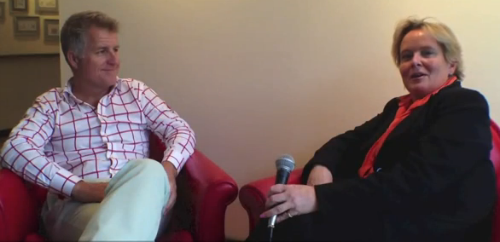
Symposium CEO Kerry Stevenson recently caught up with Sean Russo, managing director of risk advisory specialists Noah’s Rule.

For more information regarding the Gold Investment Symposium visit: www.gold.symposium.net.au