Flow-through tax incentives and the JORC Code

THE CONFERENCE CALLER: Before the recent Federal election the Coalition made a promise to introduce a flow through tax regime.

It’s not a new promise, after all Kevin Rudd gave the same undertaking during the 2007 election campaign, he just never got around to doing anything about it.

But, we have been assured this time it is definitely going to happen…probably, and at the Brisbane Mining 2013 Conference law firm McCullough Robertson partner Hayden Bentley provided some information about what the scheme is and what it will intend to achieve.
 
“We have heard all about this over the years from both sides of politics,” he told the audience.

The introduction for such a scheme has long been pushed by mining industry lobby groups such as the Association of Mining and Exploration Companies (AMEC).

AMEC has been pointing to the success a similar scheme has had over a number of years in Canada.

“Quite a number of years ago Canada introduced a similar flow through share scheme and I think at the time it was thought to be a temporary measure to boost exploration at the junior end of the market,” Bentley said.

“This scheme, that was meant to be a temporary arrangement, has been so successful it has now turned into a permanent feature of the Canadian landscape and the exploration industry.

Bentley said conversation he has had with his colleagues in Canada indicate it has been a great new source for companies to raise funding and to provide, perhaps a new group of investors that may be interested in investing in junior explorers – perhaps for the first time.


Bentley vacated the podium to make room for another McCullough Robertson partner Isaac West.

West used his time at the microphone to inform the crowd of the New JORC Code requirements and rules, which are due to come into effect on 1 December 2013.

There is one exception for this date for one of the new requirements, which is for a company to have a pre-feasibility study or feasibility study completed in order to declare an ore reserve.

This is not due to come into effect until 1 December 2014.

“The changes are generally aimed at enhancing disclosure of drilling results or estimates of resources or reserves,” West said.

“One of the key changes is the ’if not, why not?’ style of reporting.”

West explained this to mean there is a new appendix in the JORC Code, which includes a number of aspects required to be included when reporting a reserve or a resource.

Should a company not be intending to discuss any of these particular categories in its release to the Australian Securities Exchange, it will need to inform investors why it is not doing so.

“I think that is good, as it avoids people cherry-picking the information they’re wanting to release and it means there is a set criteria that people disclose that makes it easier to compare results of companies,” West said.

“That will, generally, enhance the disclosure.”

There will also be a change for the requirements of ‘Competent Persons’ with companies now having to make it very clear what conflicts of interest a company’s Competent Person may have.

“One of the good things, from an administrative point of view is that when you have a Competent Person sign off on a review or a resource statement, if you then want to use that statement in other publications or other reports, you don’t need to go and get the competent person’s sign-off again, provided you cross-reference your previous announcement, that you don’t have any new data and your material assumptions haven’t changed,” West said.

Mining stalwarts return with new project

THE CONFERENCE CALLER: The upcoming IPO and listing of Stavely Mining has reunited some very familiar resources industry identities.

The team of Chris Cairns, Peter Ironside and Jennifer Murphy was a long-time staple on the mining industry conference front when they were the collective face of Integra Mining.


After the company was taken over by its next door neighbour Silver Lake Resources (ASX: SLR) the three amigos determined to come back bigger and better.

“We felt that we really wanted to keep the team together, so we pretty much, immediately started looking for a new project,” Stavely Mining director Chris Cairns told The Roadhouse at the Brisbane Mining 2013 Conference.

“It was a deliberate choice not to go back into gold as we felt the covenant of trust – if you will – between investors and gold producers had been damaged to the point where it was unlikely to recover in  a couple of years.

“So we just felt that gold producers will probably struggle for a couple of years and exploration would be a tough space for gold.

“The alternate view that we did hold was that with China going back to trend growth and the US coming into a recovery phase that copper, as a bellwether, should do pretty well.

“So we went looking for a copper project.”

Stavely picked up a copper project located in western Victoria, which Cairns said was thought to be a little bit unusual as it is in an area not really known for porphyry or epithermal deposits.

“The geology is considered to be an extension to the Mt Read volcanics in Tasmania,” he explained.

“Recent seismic data from the Geological Survey of Victoria indicate it to be an Andean-style convergent margin, which is an ideal porphyry setting.”

The company purchased two copper-gold projects, both of which have had scoping studies completed:

The Ararat project is hosted in Besshi-style VMS and comes with a Mineral Resource of 1.2 million tonnes at 2 per cent copper, 0.5 grams per tonne gold, 0.4 per cent zinc, and 6g/t silver for 30,000 tonnes of contained copper.

The Stavely project is hosted in a secondary chalcocite enriched blanket with a Mineral Resource of 28 million tonnes at 0.4 per cent copper for 110,000 tonnes of contained copper.

“We picked up the project from BCD Resources and had a few consultants come and have a look at it,” Cairns said.

“They all agreed with us that there is potential for porphyry at depth, so we are now looking at bringing the project to market, raising some money and drilling some deep holes.”

The new projects see Cairns and his team not only change their commodity focus from copper to gold, they also take them from the well-populated, in exploration terms, state of Western Australia to Victoria.

“Victoria is probably not a destination of choice for many explorers, but we did see the potential there,” Cairns said.

“Some of the recent work done there by the Geological Survey of Victoria has been outstanding.

“They have completed some regional seismic that has changed a few ideas in the area and looking at the potential for porphyry systems in that part of the world.”

Stavely hopes to complete its IPO and subsequent ASX-listing in the New Year.

The company is looking to raise in the order of $12 million and launch straight into some committed drilling programs.

“Typically, for what we like to do, it is a very technical story, so it appeals to investors and funds with a technical background,” Cairns said.

“We are also hopeful of some heavy parochial support from our new Victorian fan-base.”

www.stavely.com.au

Queensland Mining Awards 2013

THE CONFERENCE CALLER: The winners of the Queensland Explorer and Miner of the Year Awards were presented at the Brisbane Mining 2013 Conference by Minister for Natural Resources and Mines Andrew Cripps.

Before he presented the awards, Cripps shared a few observations with the gathered crowd of the Queensland Government’s vision for the mining sector.

“The Newman Government is determined to make Queensland the most attractive jurisdiction in Australia for the Resources sector, and amongst the most highly-competitive around the world,” he said.

“We are committed to making the business of mining in Queensland simpler, so that Queenslanders benefit and communities benefit from the jobs that mining activity creates.

“We have demonstrated our commitment across all state departments that deal with your sector over the last 18 months in government.

“We are closely examining our processes, the dealings that we have in respect of both our exploration and mining clients, and we are cutting unnecessary green and red tape where ever we can.”

Nominees for the Queensland Explorer of the Year
Cudeco Ltd
DGR Global Ltd
Red Metal Ltd

Winner
Red Metal Ltd

Red Metal is an Australian mineral explorer, combining proven exploration experience with a focused base metal and uranium strategy on exploration tenements covering more than 25,000 square kilometres.

Accepting the award Red Metal managing director Rob Rutherford said the company was happy to be working in Queensland.


“The new changes that are going on the minister elaborated on are making Queensland probably one of the most attractive states in Australia,” he said.

“We have explored in them all, certainly there is a lot that are suffering and getting worse by the day, but Queensland recognised they had to do something different and we like what we are seeing here in Queensland.

“It’s only a matter of time before there are some really big base metal discoveries made in Queensland as it really is one of the best base metal provinces in the world.”


Nominees for the Queensland Miner of the Year

Arrow Energy
Evolution Mining Ltd
Copper Assets Australia Glencore

Winner
Evolution Mining

Evolution Mining is an Australian gold company that owns and operates five gold and silver mines in Queensland and Western Australia. The company holds a 100 per cent interest in all of its operations.

Receiving the award Evolution Mining vice president investor relations and business development Aaron Colleran pointed out four of the company’s five mines were based in Queensland.


“Our newest mine, Mt Carlton is a great case study on why we are focussed on Australia and in particular love operating in Queensland,” he said.

“The rules and regulations and permitting procedures are clear, transparent and fair.

“I’m sure a lot more companies would like to be operating in Queensland.”

The Russell Hotel – The Rocks Sydney

THE HOTEL INSPECTOR: There’s nothing The Inspector likes more than a bit of ‘old world charm’ especially when it’s presented so well.

Okay, for the business traveller, usually the flasher the hotel the more important you are, but when you’re not as important as the other folk at the conference, it’s prudent to live within your means.

Staying at The Russell could be challenging for those who are used to cocooning themselves in their rooms watching as much TV from bed as they can and not having to walk down the corridor to use the bathroom.

If the idea of sharing a bathroom with other guests is too much to bear, then read no further.

For those prepared to step out of your comfort zone, read on.


The hotel is not new. Nothing in The Rocks is. But it is welcoming, comfortable, and The Inspector rates it as one of the most enjoyable places he has stayed in when visiting Sydney.

The rooms are small, however, there is very little chance you will ever stay in a place that offers so many power points per square metre.

Even with all his traveling accoutrement plugged in The Inspector still felt obliged to go out and purchase some new gadgets.

As far as locations go The Russell Hotel is situated in The Rocks, on George Street just after the Cahill Expressway.

The reason most Sydney folk walk under the Cahill Expressway to enter this part of town is to catch the ferry home from Circular Quay.

Others with a more intimate knowledge of the area take the opportunity to have an after work drink in one of its many pubs and bars without the usual noisy crowds.

One of the bars that draws them there is The Push Bar, located beneath the hotel, and which doubles as the breakfast room where guests enjoy their – included in the tariff – continental breakfast.

The bar welcomes a steady flow of office workers and others kicking off a night out with a good selection of beers, a diverse wine list and a delicious tapas menu – try the ginger and chilli fish cocktails.

Spend a couple of nights at bar and the staff become your new best friends.

They know your name, where you live and your favourite drink. They also make you forget you’re staying a long way from home with nobody to talk to.

Corazon deciphers Top Up Rise secrets

Having recently completed a $3 million raising, Corazon Mining (ASX: CZN) is well-funded to continue its exploration program at the company’s Top Up Rise (TUR) project.

For the uninitiated, TUR is located in the Gibson Desert region of Western Australia, an area reasonably new in terms of exploration activity, especially when compared to the more familiar of the State’s mining hubs.

TUR first came to prominence in the mid-1990s when Australian Government geologists discovered what they described to be a large granite alteration system.

At the time TUR was noted for its size – as being big by Australian standards – with chemical characteristics considered to be typical of world-class copper gold systems.

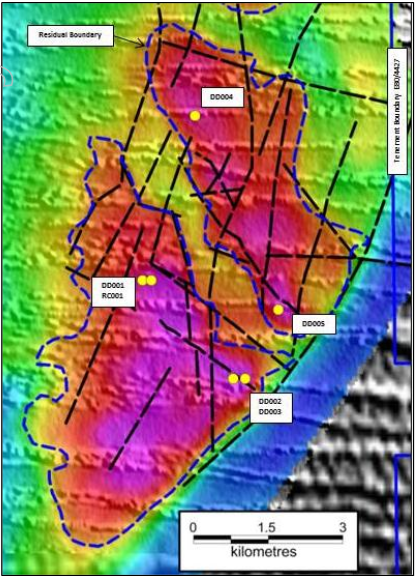
Earlier this year, Corazon completed a detailed ground gravity survey at TUR which extended the anomaly to 10 kilometres by six kilometres.

“The variation in the responses of the gravity amplitudes we received was staggering,” Corazon Mining managing director Brett Smith told The Resources Roadhouse.

“We had variations of up to 18 milligals, usually if you receive a three milligals variation that is considered to be quite significant.

“A peak residual gravity of eight milligals was repeated several times, so whatever it is we have there is quite defined and it is starting to develop a particular geological identity.

“It is coming up hard against interpreted faults from the magnetics and we are starting to understand it more in terms of geological definition.”
 

Corazon recently conducted its first phase of drilling at TUR, the results from which suggest the large gravity anomaly has a coincidental geochemical anomaly, including a robust base and precious metal association.

The aim of the drilling program was to drill shallow holes using an aircore rig, in what the company had predicted could be sand cover of around 100 metres, to test the basement geochemically and then return to drill deeper holes.

Instead it encountered about five metres of sand dune cover and was drilling straight into flat-lying, hard premium sandstone, resulting in an immediate rethink to the program.

“Luckily we were using a rig that was capable of drilling all the methods we required,” Smith explained.

Corazon had identified 11 targets for drilling, but decided it would be best to select its best four gravity targets and set about drilling those.

All four holes, spaced widely apart, encountered extensive low-tenor sulphide mineralisation, including copper sulphide, demonstrating that mineralisation at TUR covers a very large area.

Importantly, drilling revealed a precious and base metal association between copper, lead, zinc, cadmium, silver and gold, however, the source of the TUR gravity anomaly remains unexplained.

The limited drilling completed so far, and the types of rocks encountered by Corazon are yet to shed any clear light on the TUR gravity anomaly.

Although the company accepts the density of these materials may be increased via significant and substantial alteration and/or mineralisation, it is yet to intersect such rock in a scale substantial enough to explain the anomaly.

“We discovered a big area with a small drilling program, and every area we test-drilled had sulphide mineralisation,” Smith said.

“Some of the holes are five kilometres apart, which means we have only tested a small part of what is a very large target area.

“There is an over-riding and robust base and precious metal association and what we are seeing here – wherever we drilled – it looks like this gravity anomaly is also a geochemical anomaly.”

Inspection of the core from the first diamond drill hole caused a flurry of excitement, as it was sprinkled with blebs of chalcopyrite measuring up to three millimetres in diameter and less commonly as coarser crystals on the margins of quartz veins or faults.
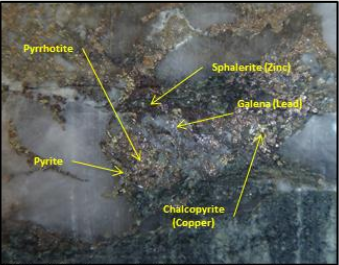
 

Smith said the company considers this chalcopyrite to be an alteration affect, as it is appearing at around one per cent of the rock mass.

“We’re not saying this is a mineralising event, we are saying it is a significant alteration feature right through the entire geophysical anomaly,” he said.

“Quite obviously there is a late alteration phase, which is associated with chalcopyrite, but in addition to that we have several other phases of mineralisation.

“We see granite and porphyry sources for the fluids that we see in the mineralisation, and we also see mafic sources for the fluids, so there is a lot happening.”

As the drilling progressed, Corazon moved to the southeast and drilled its priority target, which had been identified as being a higher intensity alteration.

Drilling here produced evidence of garnet, which has been interpreted to indicate the presence of a higher-temperature metamorphism, or alteration.

Having encountered massive sulphides, the company extended the third hole of the program hitting some interesting looking rock.

“We didn’t quite understand it,” Smith said.

“We knew it was a gabbro, but it was unusual.”

Corazon’s petrologists identified the rock as a troctolite, which is a very rare form of gabbro.

The significance of troctolite is that out of all the gabbros, it has the potential to host nickel-copper-magmatic-type deposits with the best example being the large Voisey’s Bay nickel deposit in Canada.

A troctolite is a rare differentiated mafic rock, which is considered an important host unit at Voisey’s Bay and is also found in other large layered mafic terrains such as the Bushveld Igneous Province in South Africa.

Petrological analysis of sulphides within the Troctolite at TUR has identified pentlandite (nickel sulphide) within pyrrhotite.

Corazon considers the identification of the Troctolite and pentlandite as significant as it unlocks the possibility of nickel-copper sulphide deposits within differentiated mafic rocks as a target deposit, as separate to the mineralisation observed at TUR so far.

“We don’t fully yet understand the distribution of this rock type, nor how significant it is in the region,” Smith explained.

“We’ve got a big geophysical anomaly, we’ve added a lot of value with limited drilling into ground that has never been explored before, and we have taken a conceptual geophysical anomaly into something that is mineralised.”

Corazon is back out in the field conducting further exploration consisting of a reverse circulation (RC) and diamond core drilling program to test lithological and geophysical targets within the TUR gravity anomaly.

The company anticipates assay results from the drilling to be emerging early in November, with drilling continuing until mid-November.

Corazon has outlined two main objectives for this phase of drilling:

To continue to test for the source of the TUR gravity anomaly, which remains unexplained based on the types and density of rocks intersected to date; and

To test, for the first time, zones of structural weakness and other areas that may be prospective as fluid pathways for the base and precious metals mineralisation identified in the initial drilling at TUR.

“The mineralisation we are seeing and the rocks we have hit, suggest aerial VTEM surveys will work well in the region,” Smith said.

“We think VTEM will influence our targeting – we do have quite a bit of drilling cleared and we have priority drill targets, but we think the ranking of those targets may be affected by this survey.”

Corazon Mining Limited (ASX: CZN)
…The Short Story

HEAD OFFICE
Level 1
350 Hay Street
Subiaco WA 6008

Ph: +61 8 6364 0518   
Fax: +61 8 6210 1872

Email: info@corazon.com.au
Web: www.corazon.com.au

DIRECTORS and MANAGEMENT
Clive Jones, Brett Smith, Jonathon Downes, Adrian Byass

SHARES ON ISSUE
401.6 million

MARKET CAPITALISATION
$10.84 million (at 17/10/2013)

Bear markets good; Bull markets bad.

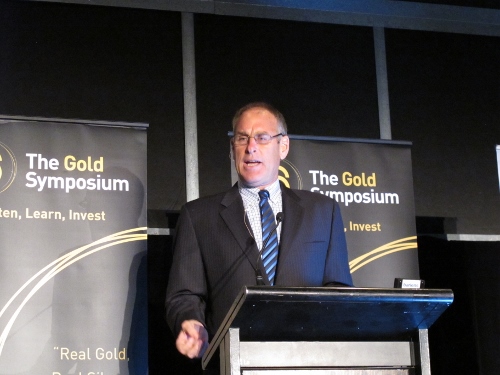
THE CONFERENCE CALLER: In his opening keynote address to the Gold Investment Symposium Sprott Global Resource Investment chairman Rick Rule said he liked Bear Markets as they present great opportunities for buying bargains.

“At any point in time Bull markets feel good and Bear markets feel bad, but…in terms of building wealth the opposite is the case,” he said.

“The thing I am having trouble with in this whole discussion is the disconnect and price response.

“The only thing I can say is that disconnect is real, and it is a great opportunity.

“I would call it a sale.”


Rule compared buying resource company shares to shopping in a large department.

Why is it, he offered, that people will enter a department store seeking to buy consumer items at discounted prices, yet they will not buy shares in the same manner.

He labelled these stores, selling their wares at heavy discounts as Bear Market Merchants, drawing in customers in droves by offering products at a much lesser price that what they were selling for weeks, in some cases, days earlier.

“Bear Market Merchants say, ‘Price five years ago, five dollars – today 37 cents’,” he said to support his assertion.

“Bull Market Merchants sell at the highest price all the time, claiming prices may be higher next week.

“No deals for investors, never – none.”

Rule makes an interesting point. It is odd, with physical assets, investors prefer to pay less and with financial assets prefer to pay more.

Rule said the reasoning behind this is that when buying the financial assets, people feel they are buying something that is currently valued in the marketplace and in turn they become vendors of that valuable commodity.

“What doesn’t change is the nature of markets – what changes is the nature of investors’ responses,” he explained.

“If we can begin to manage our response we can begin to understand that, despite the fact we are terrified [of the state of the market] right now and that we want to sell – what we need to, if we want to make money, is to buy.”

Of course, this isn’t the first Bear Market the world has experienced and, if the investment community is really going to be honest with itself, it will definitely not be the last.

“For many of you this is not your first rodeo, you have been through this before,” reminded his audience.

“Many of you in the room will remember the Bear Markets of 1982 through to 1986, 1998 to 2003, and others

“Those of you who do remember these will also recall the bargains available – some of you took advantage of them – and those of you who remember the price response of the better assets you bought in the worst markets will understand what I’m talking about.

“It is easy to understand it intellectually, but it is tough to deal with the reality,

“But, just like in 1984 – we aren’t going to have the end of mining, we aren’t going to have the end of energy – we are not going to have the end of resources.”

Rule stressed the point that markets are cyclical beasts and that although we have already endure three years of the current run, he predicted there could be a couple more in store.

“The point is that you have been through the pain, so you might as well hang around so you can enjoy the gain,” he said.

He spoke of the 1998 – 2003 Bear Market, which he said, after experiencing a couple before, he was prepared for.

By 1998, Rule said he understood what a Bear Market was all about and that it was a time to employ capital aggressively, to hang on with your finger nails and teeth and ride the resultant market up.

“My 1998 and 2000 partnerships – in a seven year time frame – generated 69 per cent compound annual rates of return,” he said.

“Does this mean I am a better investor that Warren Buffet?

“Of course not. It means I recognised a Bear Market and tried to pick the best companies that I could – I bought them aggressively, I financed them aggressively, and nature took care of the rest.

“When people think through the pain they feel in a market like this, they forget how much they enjoyed the gain of a Bull Market.

“It’s very important to understand how you experience the pain.”

Physical Gold – will I or buy it or not?

THE CONFERENCE CALLER: We all hear about gold and how it is a ‘safe haven’ investment. But how do you actually go about buying it?

The simple answer is to visit a reputable gold dealer, hand over your money and take your gold home.

For a country that was basically built around a gold rush mentality – on both the east and west coasts, Australia doesn’t have a strong cultural background in investing in gold.

Even today, if you speak with gold bullion dealers, most of their clientele will be made up of people from Asia or with Asian ancestry, in particular from China and India.

Because of this ownership of gold bullion is generally viewed as being for the more affluent echelons of society and for people who have come to these shores from foreign lands.

“I don’t think investing in gold is part of an elite club, I think if you are a gold investor you a really smart person” ABC Bullion CEO Janie Simpson told The Roadhouse.

“A lot of gold investors have done a lot of extensive research.

“They haven’t come to the conclusion they wanted to buy gold because they read some throwaway line in a newspaper or heard it on TV.

“They actually have read a lot of reports and spoke with numerous people.

“It doesn’t mean they’re wealthy – they probably will be, in my opinion, with the knowledge they have acquired and the understanding they have now.”

Simpson said buying gold should be part of an investor’s strategy to balance their portfolio or superannuation if, for any reason, just as a form of insurance.

“What we are seeing since the Global Financial Crisis is that there is a need to balance peoples’ portfolios,” she said.

“A lot of people have the traditional 65 to 75 per cent stocks, bonds, or cash, but what you need to do is have a bit of gold as a diversification and a form of insurance.

“A lot of wealth managers and institutions are coming to us for that diversification and are using gold as a separate asset to get that diversification.”

Buying gold as a portfolio stuffer might seem to be a good enough idea, but when it comes to actually taking the plunge there are still a few important decisions to make.

Looking into a cabinet full of gold bars is literally like peering through the window of your local chocolatier with any number of different sized bars on offer from different brands, you just have to decide which one you want.

One price list The Roadhouse found priced a one ounce ABC Bullion gold bar at $1389, while a one ounce bar from PAMP Suisse would cost $1432.

The reason for the difference, we were told, is because the PAMP bars are numbered and come with a certificate of authenticity.

This is apparently important for investors managing their own super funds as the government likes to keep track of things to ensure people aren’t selling and making profits they don’t know about.

Once you have your new gold bar – what do you do with it?

Most gold dealers provide storage facilities, which lowers many home insurance premiums and also lessens the chance of your gold being stolen by treacherous nephews.

Paying around $1500 for an ounce of gold but it is a lot harder frame and hang above your mantelpiece and probably won’t earn as many admiring glances as a new artwork, but it probably will make sound financial sense.

That is of course, the gold price does go up and not down, which like any investment is the core risk.

With the state of the world economy and American senatorial brinkmanship, anything is bound to happen.

“I have been watching the gold market every day since I was 20,” Noahs Rule managing director Sean Russo said in his presentation to the Gold Investment Symposium.

“I am a gold beast – not a gold bug, I have made a living for 30 years being around the gold market and I will make a living being around the gold market for another 30 years.

“I probably believe the gold price can go higher than most people in this room consider to be reasonable and I also think the price I believe it can go to on the low side is probably lower than most people think is ever imaginable.

“The reason for that is because I know that I don’t know and I know that nobody else knows either.”

That chocolate is looking really good right now.

Gold: Where to from here?

THE CONFERENCE CALLER: There was much consternation and many furrowed brows at the Gold Investment Symposium as delegates ruminated over the upcoming fortunes of the most precious of precious metals.

The Roadhouse managed to get a quick summary from a few punters to get an idea of what we might be expecting to see.

Jordan Eliseo chief economist ABC Bullion

“There is a range of views, and I think there is a good chance we could see one last flush out, probably by Christmas time, which could see prices down around the $1100 range.

“I think that could be a very short term move, if it was to drop that low.

“If we see a quick snap back and rally from there we could possibly see prices up around $1500 within 12 months, which would be a good result from where we are now.

“I think every investor, at the moment, is pretty despondent about gold in the past 12 months, so we will be pretty happy to see the end of this correction and prices to start to move back a bit.”

Philip Barton president The Gold Standard Institute

“We use gold as the measure of paper, we don’t use paper as the measure of gold.

“But if you want me to say how far the value of paper money will fall over the next 12 months, I would say that, as a complete guess, I’d say that one ounce of gold will be buying US$2000 in 12 months’ time.

“But that’s a completed guess.”

Kerry Stevenson CEO Symposium

“I don’t think anybody knows where gold is going to go in the next six to 12 months.

“First of all, the world is so topsy-turvy and volatile with different forces – frankly 101 Economics doesn’t work anymore.

“If someone turns around and says it is going to be at $2500 – maybe it will – my own personal opinion – and this is coming from nowhere else than reading a lot and trying to understand it – I think it is actually going to go down, possibly to as low as $900.

“Then I think it is going to have a big uptick, but again- who knows where it is going to go?

The raisings for junior companies continue

THE FUND RAISER: Another good week on the bourse for junior fund raising.

Alcyone secures cornerstone investor

Alcyone Resources (ASX: AYN) has raised $12.832 million, after placing $4.875 million of its recent Rights Issue Shortfall with Malaysian-listed investment holding company, Notion VTec Berhad (MK:NVB).

Notion has agreed to subscribe for $4.875 million of the Rights Issue Shortfall at 0.5 cents per share under the Rights Issue prospectus to acquire 19.9 per cent of Alcyone’s outstanding shares.

In addition Notion has a 6-month option to subscribe for $2.5 million in interest bearing promissory notes which, subject to shareholder approval and an Independent Expert Report, would allow Notion to increase its stake in Alcyone to 30 per cent of Alycone’s issued share capital.

With its equity investment, Notion has the right to nominate one director to the Board of the company.

“Given current conditions in commodity and equity markets for junior mining companies, the success of this Rights Issue highlights the strong value proposition of the company as a low-cost high-grade Australian silver producer,” Alcyone Resources non-executive chairman Paul D’Sylva said.

“This has been reinforced by the commitment from our new cornerstone shareholder, Notion, who we welcome on board.”

Attila raises $7 million

Attila Resources (ASX: AYA) has received commitments to raise up to $7 million (before costs) through the issue of up to approximately 11.67 million shares at 60 cents per share to institutional and sophisticated investors.

Funds raised will be applied primarily towards the completion of a Bankable
Feasibility Study (BFS) on Attila’s Gurnee property at the Kodiak coking coal project, completion of JORC resources on the company’s Seymour project, Upper Thompson and Project X and general working capital purposes.

“We are very pleased with the strong support received for the Placement which ensures Attila remains well funded beyond completion of the BFS on the Kodiak coking coal project,” Attila Resources executive director Evan Cranston said.

“Funds raised pursuant to the Placement will also enable Attila to advance our other projects in the Cahaba basin which have the potential to further improve the already robust economics of the Kodiak coking coal project.

“Our recently completed Pre-Feasibility Study highlighted the technical and economic strength of the Kodiak coking coal project.

“We are looking forward to fast tracking the newly acquired Upper
Thompson seam and Project X into the future production profile of our exciting hard coking coal project.”

Northern Mining to raise $5.24 million

Northern Mining (ASX: NMI) announced a non-renounceable rights issue of up to approximately 436.5 million new shares at an issue price of 1.2 cents per share to raise approximately $5.24 million.

The rights issue is underwritten by Patersons Securities for approximately $4.05 million.

Patersons will only be relieved of its underwriting obligation once applications for approximately $1.19 million have been received.

Provenance Finance Limited, an entity controlled by the company’s non-executive chairman Tony Ong, has agreed to sub-underwrite 137.3 million shares, which includes its entitlement.

Funds raised under the rights issue will be partly used to advance exploration in the company’s East Kalgoorlie project in Western Australia by a combination of geology, geophysics and targeted drilling.

The company has completed a review of all prospects and has indicated its future exploration emphasis will be on following up the project’s prospective gold anomalies at Blair North, Kanowna Lights and the Snake Hill prospects.

Placement to Aterra Capital

Finders Resources (ASX: FND) has entered into a subscription agreement with Aterra Investments Limited to raise $1.5 million by the issue of 7.5 million shares at 20 cents per share.

Aterra is part of Aterra Capital, a geo-diversified investment company which invests in the metals and mining sector in developed and emerging markets.

Finders said the placement to Aterra will provide additional funds for the upgrading and restart of the existing SX-EW plant on Wetar Island, completing the update of the bankable feasibility study and bank financing, and for general working capital.

Provident Capital Partners has also exercised its right to take up its pro rata entitlement pursuant to the original subscription agreement with Provident announced in December 2012.

This amounts to approximately 1.6 million shares at 20 cents each for total proceeds of $319,138.

“We welcome Aterra as a shareholder,” Finders Resources managing director Barry Cahill said.

“We are pleased to have the support of investors such as Aterra and Provident as we advance towards the financing and development of the Wetar copper project.”

What the Brokers Say

WHAT THE BROKERS SAY: Interesting news and views from across the Resource Analyst universe.

Target Energy (ASX: TEX)

Target Energy is a rapidly growing oil and gas producer focussed on the prolific Permian Basin in West Texas. The company has increased its 2P reserves by 887 per cent to 1.2 million barrels of oil (mmboe) (and total reserves and resources by 280 per cent to 2.8 mmboe) during the past year and has achieved a 235 per cent gain in net production over the past two quarters. An active exploration program is in progress and should drive further strong uplift in production. Target Energy is dual listed trading on the US OTCQX and the ASX.

The company’s flagship Fairway Project is located in the highly productive West Texas Permian Basin, which is the largest onshore hydrocarbon basin in the US, covering 52 counties and over 75,000 square miles. Total daily production from the basin is approx. 1.3 million barrels of oil and approx. 4 billion cubic feet of gas. This equates to approx. three times Australia’s total daily hydrocarbon output.

Target Energy has established meaningful acreage positions in proven major hydrocarbon producing areas in the Permian Basin and Gulf Coast regions. From modest beginnings, production and exploration activity is now gathering momentum and creating a robust, sustainable corporate platform.

2P reserves rose strongly to 1.2 mmboe as at 30th June, largely driven by drilling successes at Darwin #1 and #2 (in 2012) and Sydney #1 (in 2013). Similarly, these wells have helped boost net production by more than 200 per cent in the last few quarters. In turn this is driving improved cash flow which is being directed at accelerating growth activities.

Opportunity exists for significant production increases during Q3 and Q4 2013 with five wells either awaiting completion (Darwin #3 and Pine Pasture #3) or about to be drilled (Sydney #2, Darwin #4 and Sydney #3). In addition, production rates will be boosted by a proposed waterflood of the East Chalkley oil-field.

In the near term Target Energy will continue to expand in a relatively low risk, low cost manner via multiple completions based on conventional carbonate reservoirs in vertical wells. In the longer term there is potential to exploit large scale resources via fracture stimulation of shale and tight oil plays in both vertical and lateral wells.


Disclaimer: The above is intended as a guide only. The Roadhouse accepts no responsibility for investments made from this advice, successful or otherwise.