Raising funds and Tax Refunds

THE FUND RAISER: This week more companies raised funds, while others receive more R&D rebates from the ATO.

Receipt of Research and Development proceeds

Eastern Iron (ASX: EFE) has received $690,574 from the partial refund of eligible expenditure from the Australian Government R&D Tax Incentive Program.
 
During November the company also received $150,000 from the proceeds of the sale of its entire interest in exploration licences in central western NSW which Eastern Iron had previously explored for iron pisolite.

The sale of the interest to its former joint venture partner, 3E Steel Pty Ltd means that Eastern Iron no longer retains any interest in NSW iron pisolite exploration.

The transfer of the tenements has also released $130,000 from security deposits to Eastern Iron.

The company also anticipates receiving a further $300,000 from the Victorian Government as a grant towards completion of studies relating to the provision of infrastructure for the Nowa Nowa
project.

These funds are payable on completion of the feasibility study and the company expects that these will be paid in the March quarter 2014.

These funds will be put towards the program of work at Nowa Nowa including the feasibility study as scheduled for completion by the end of this year.

Placement to raise $690,000 and SPP of up to $750,000

Traka Resources (ASX: TKL) is set to carry out a fund raising consisting of a share placement of 11.5 million shares at 6 cents per share to raise approximately $690,000 and a Share Purchase Plan (SPP) capped at $750,000.

Traka will use the proceeds of the capital raising for ongoing exploration of its project portfolio in the West Musgraves area of central Western Australia and for general working capital.

In the Musgraves, Traka has a land holding which is split between its exploration joint ventures with Western Areas and Anglo American Australia and Traka’s own exploration acreage.

Raising working capital

Potash West (ASX: PWN) has completed a placement of 2 million shares and 1 million unlisted options at a price of 10c per share, plus ½ option raising, to raise $200,000.00.

The options are exercisable before 25 October 2015, at an exercise price of 13 cents.

Proceeds of the placement will be directed to ongoing project development activities at Potash West’s Dandaragan Trough single super phosphate and potash projects, north of Perth in Western Australia.

Receipt of $1.5 million plus 25 million Terramin shares from sale of Adelaide Hills tenements

Maximus Resources (ASX: MXR) has received the first stage payment totalling $1.5 million in cleared funds following receipt of Ministerial approval for the sale of 5 tenements located in the Adelaide Hills in South Australia, including the Bird in Hand gold project to Terramin Exploration Ltd, a wholly-owned subsidiary of Terramin Australia (AX: TZN).

Confirmation was received of the issue of 25 million fully paid ordinary shares in Terramin Australia to Maximus, which will be subject to an escrow agreement for 12 months from the date of signing the Sale and Purchase Agreement.

The second and third stage cash payments of $1 million each (total cash consideration for the 5 tenements totalling $3.5 million) are contingent on approval of a Program for Environmental Protection and Rehabilitation (PEPR) and commencement of bullion production.

Maximus will also receive a 0.5 per cent royalty payable on bullion production in excess of 50,000 ounces.

Announcement of Share Purchase Plan

Pioneer Resources (ASX: PIO) will be undertaking a Share Purchase Plan to existing eligible Shareholders for new fully-paid ordinary shares at an issue price of 14 cents per New Share to raise up to approximately $750,000.

The company is offering approximately 53.6 million New Shares to raise a maximum of $750,000 to continue its drilling and exploration programs, which will supplement the deferred payments it receives from KalNorth Gold Mines (ASX: KGM) for the sale of the Western Mt Jewell gold project in 2011.
Impact Minerals poised to live up to its name?

Perth-based exploration play Impact Minerals (ASX: IPT) is hoping to finish, what has already been a successful 2013, on a very high note.

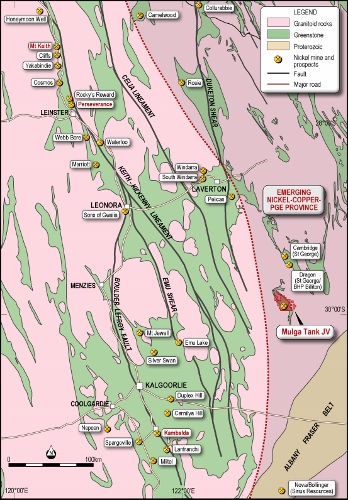
The company’s expectations are high for a drilling program it has just commenced at its recently-acquired Mulga Tank nickel project, located 200 kilometres northeast of Kalgoorlie in Western Australia.


Impact is undertaking 4000 metres of drilling to test seven targets it has identified at the Mulga Tanks project.

The program, which has been part-funded by a grant from the Western Australian Government of $134,000 has been designed to test seven coincident ground electromagnetic and nickel-in-soil geochemical anomalies identified by Impact since the acquisition of the project.

The acquisition of the Mulga Tank project in March this year re-invigorated Impact Minerals during a time when it, and its contemporaries, were looking for some light to escape the dark capital funding clouds that had shrouded the ASX.

Impact struck a deal with the company’s, then 75 per cent-owned subsidiary, Invictus Gold (ASX: IVG) to acquire and divide the assets of private company Endeavour Minerals.

Impact picked up the rights to two nickel-copper-PGE joint ventures with Golden Cross Resources, the Mulga Tank project in WA and the Broken Hill project in New South Wales.

Invictus secured all the shares in Endeavour, which came with the 100 per cent-owned Commonwealth and Rangitira gold and base metal projects, also in NSW.

In order to provide the new projects with the attention they deserve, Impact and Invictus determined this would be best achieved by merging the two companies.

“The thing for us this year has been that Impact Minerals has basically reinvented itself,” Impact Minerals managing director Dr Mike Jones told The Resources Roadhouse.

“At the start of the year Impact only had grassroots projects in Botswana and Invictus only had grassroots projects in Queensland, with one small project in Turkey.

“By acquiring Endeavour Minerals we transformed both companies to such an extent that now, between the two, we have three flagship projects.

“It just made sense to bring them all together, which is why we now have the merger between Impact and Invictus happening as we speak.

“That will leave us as one company, with three flagship projects – the main one of which is Mulga Tank.”

The Mulga Tank project covers about some 425 square kilometre of the emerging mineral province of the south east Yilgarn Craton of Western Australia.

The project is definitely situated within a good neighbourhood with the province being home to Sirius Resources’ Nova nickel deposit; St George Mining’s Dragon disseminated nickel sulphide discovery; AngloGold Ashanti-Independence Group’s Tropicana gold mine; and the Mulga Rocks uranium deposit.

The Mulga Tank project comprises 13 exploration licences, six of which Impact owns 100 per cent.

Two of these licences are granted, while the other four are under application.

The company is also currently earning a 50 per cent interest in seven licences from Golden Cross Resources.

Until last week, two of these licences – E39/988 and E39/1072 – were 20 per cent and 25 per cent-owned, respectively by a third party.

Impact Minerals has now moved to a position of pending majority ownership on the two ELs for a total of $170,000 in cash.

The acquisition positions Impact to move to a 70 per cent stake in E39/988 and a 75 per cent stake in E39/1072.

“All of these projects are way more advanced than anything we previously had at the start of the year,” Jones said.

“We made the decision during the year to keep spending money and advancing them because we had a gut feeling that they were going to become key contributors to Impact being an investable story even though the market, at the time, was running against us.

“It did lead to some sleepless nights throughout May, June, and July, but now we have come out the other end with some great targets.

“Now it is a project that keeps us awake at night because we are so excited about it.”

Work completed earlier this year by Impact identified seven targets, all located on E39/988, of strong, large and undrilled electromagnetic (EM) conductors, which it believes supports the project’s potential to host large, massive nickel sulphide deposits similar to the Perseverance and Rocky’s reward deposits.


The conductors were identified by a ground EM survey and are understood to be variably coincident with strong nickel, cobalt, copper and palladium soil geochemistry responses.

The cluster of conductors have strike lengths of up to 800 metres and commence at depths of between 100m and 350m below surface.

The conductors occur close to the base of the Mulga Tank dunite, which the company has interpreted from previous drill holes and magnetic data to be possible zones of massive nickel sulphide mineralisation that have accumulated at, or close to, the base of the dunite.

“The EM survey surpassed all our expectations by identifying the seven anomalies,” Jones said

“At least half of the results displayed very high conductivity, which is very suggestive of a massive sulphide source.

“It is common to get black shales in such environments and we almost certainly have EM responses from black shales, however we have removed them from our interpretations.

“What we are left with are the short-strike length anomalies, which are the most likely to be massive sulphides. There is an almost unbelievable correlation with the soil sampling.

“In all of my career, I have never seen anything quite like it – that seven geochemical anomalies all underlie the peaks of the soil geochemistry.”


Impact is well-funded having completed a $3 million capital raising through a placement of some 79 million shares at an issue price of 3.8 cents per share, to sophisticated and professional investors.

Funds raised will be used to advance Mulga Tank as well as the Broken Hill copper-platinum project and, post the merger with Invictus Gold, the Commonwealth copper gold-silver-base metal project.

“We completed the raising at a price that was just short of our high for the year, whereas everyone else, who had shut up shop for the year, are now doing raisings at prices close to their lows for the year,” Jones said.

“It’s because we took a brave decision to do some deals earlier this year and push forward with the development of the projects we have.

“We are explorers by trade and we could have continued to spend money on the grassroots projects we have.

“They are, in their own rights very good projects and we haven’t lost faith in them, we still have them on the books and are trimming them down to core areas – but in terms of the value for the dollars we spend we consider it is much better if we spend them on the new projects.”

Impact Minerals Limited (ASX: IPT)
…The Short Story

HEAD OFFICE
309 Newcastle Street
Northbridge WA 6003

Ph: +61 8 6454 6666   
Fax: +61 8 6454 6667

Email: info@impactminerals.com.au
Web: www.impactminerals.com.au

DIRECTORS and MANAGEMENT
Peter Unsworth, Dr Mike Jones, Paul Ingram, Dr Markus Elsasser

SHARES ON ISSUE
420 million

MARKET CAPITALISATION
$24.8 MILLION (AT 6/11/13)

Further question marks over the US economy are good news for gold

GAVIN WENDT: We discussed recently the Fed’s decision to delay the inevitable – the scaling back of its $85 billion a month stimulus program – as being reinforcement of our negative view on the US economy.

The Fed also warned that an increase in interest rates would threaten to bring expansion to a halt.

As we’ve previously highlighted, the US sharemarket rally has been built on flimsy economic foundations.

Trillions of dollars-worth of hand-outs, bail-outs and stimulus to high-risk corporates that were deemed too-big-to-fail have led indices to record highs.

But this doesn’t necessarily provide for a healthy and sustained recovery.

Clear evidence of the stuttering nature of the US economic recovery came recently in the form of plummeting consumer confidence levels and jobless claims that were above expectations.

US consumer confidence sank to its lowest level in eight months on the back of the budget stand-off and the potentially lasting impacts on economic growth.

The Bloomberg Consumer Comfort Index declined to -36.1 in the period ended October 20, the lowest since February, from -34.1.


The report showed more households were pessimistic about the economy than at any time in the past year, despite resolution of the debt issue.

Whilst the number of Americans filing applications for jobless benefits fell by 12,000 to 350,000 during the week ended October 19, this was higher than the 340,000 median estimate from 48 economists surveyed by Bloomberg.

As we’ve described it previously, the US is essentially a market that’s been pumped to the max with Fed-administered financial steroids.

This of course will generate growth to some degree, but like the performance of the steroid-administered athlete, how sustainable is it and what are the potentially harmful longer-term consequences?

The US has mortgaged its future by bringing forward future consumption in an attempt to stave off what could have been a deep and prolonged recession, with the financial taps being left open for far too long.

The result is that the financial sector has become addicted to what was intended only to ever be a short-term pain reliever – not a long-term remedy for the economy’s ills.

Monetary stimulus and ultra-low interest rates are creating all sorts of distortions within the US economy, with the result that asset values and share indices have been pushed to record levels as a result of the flood of ‘easy money.’

The best example of this (or worst depending on your perspective) is how the US share market now rallies on disappointing economic news.

Commonsense normally dictates that a string of poor economic data would take the gloss of markets – but that’s not the case in the current environment.

In the US, weak data generates positive market momentum because traders know there will be more Federal Reserve largesse in the form of the continuation of ‘easy money’ to the tune of $85 billion a month.

Those that have been the biggest beneficiaries of the Fed’s generosity (i.e. Wall Street) have enjoyed an immensely profitable past few years, through share and property investment.

This has come at the expense of savers and retirees on fixed interest incomes, who have seen their living standards slide dramatically due to the Fed’s policy of maintaining low interest rates.

Unemployment has fallen (to some degree), but the negative case (reduced number of participants in the labor force, lower wages, fewer hours worked, reduced full-time and increased part-time employment) is overlooked by many.

Despite the booming sharemarket, more US citizens are today living on food stamps, the labour participation rate has fallen, home affordability is declining for the vast majority of Americans, living standards are deteriorating, the divide between rich and poor has never been greater, and savings are being wiped out by ultra-low interest rates.

Inflation has also been kept in check by the fact that the velocity of money has remained remarkably slow.

However, the large accumulated store of funds can best be viewed as an enormous tsunami of capital poised to flood the system.

When it does, systemic inflation will be the inevitable consequence.

The share market and property booms in the US are driven by investors who have access to low-cost investment capital, not necessarily by strong market fundamentals.

And with bubbles effectively forming, the Fed is right to consider the negative impact of rising interest rates and inflation in the context of the US economy.

We’ve long held the view that such a scenario would be the trigger for the next phase in gold’s price run.

So far the Fed has managed to keep inflation in check, despite the massive blow-out in the money supply.


So far the velocity of money has been slow, meaning inflation has been kept in check.

But it won’t last forever – after all, you cannot undertake monetary expansion on such a mammoth scale without major longer-term economic consequences.

The real driver of the gold price is negative real interest rates (defined by nominal interest rates minus inflation).

Central bank policies of inducing negative real rates to ‘incentivize’ borrowing, expanding the money supply and devaluing currencies, have increasingly forced investors (particularly mums and dads investors) into real assets like gold and silver.

And I don’t see this situation really changing anytime soon, despite journalists pointing to a softer gold price and by association predicting its demise.

Individuals and central banks will continue to covert gold, because when it comes to risk-free wealth preservation, gold does a far better job than any other asset you can think of.

This brings me to an in interesting article I came across this week on Mineweb, related to the insurance value of gold in an investor’s portfolio.

The article referenced Mike Tyson of all people and the fact that he is currently launching his autobiography.

Whilst the controversial pugilist isn’t famed for his eloquence, Iron Mike’s best boxing tip – that “Everyone has a plan until they get punched in the mouth” – is a much more relevant comment than the former world heavyweight champion might ever have intended.

‘Insurance’ is a good word when it comes to gold.

The biggest advantage between gold and many other forms of difference is that once you’ve buy it, your gold never becomes worthless or expires.

No, you don’t plan on needing it. But you don’t want to get punched in the mouth without it!

We anticipate the gold price to trade comfortably around the $1,250 to $1,350 mark for the foreseeable future.

Gavin Wendt is the founder of Minelife, publisher of the MineLife Weekly Resource Report

Raising funds and Tax Refunds

THE FUND RAISER: This week some companies raised funds, while others received R&D rebates from the ATO.

$14.1 million Received in Respect of Eligible Research and Development Expenditure

Lynas Corporation (ASX: LYC) has received $14.1 million from the Australian Taxation Office relating to eligible research and development (R&D) expenditure incurred during the year ended 30 June 2013, principally on the development of the Lynas Mt Weld rare earths project.

Placement completed at Nil Premium

Red Gum Resources (ASX: RGX) has undertaken a placement to sophisticated investors at two cents per share to raise $300,000.

The funds raised represent a nil premium to the company’s last closing share price.

15 million new shares will be issued pursuant to this Placement, which will rank equally with shares the company currently has on issue.

The funds raised are to be used to undertake necessary technical and legal due diligence associated with formation of a possible alliance with Rio Perdido Copper Limited as well as existing working capital.

“That the placement was subscribed at a nil premium highlights the confidence investors place in the opportunity provided by the potential alliance with Rio Perdido Copper Limited,” Red Gum Resources executive chairman Dr Ray Shaw said.

The company said the raising will ensure it can pursue the possible alliance without impeding upon the momentum of its current activities–centred in Region IV of Chile.

Capital Raising to Accelerate Nickel Exploration

Panoramic Resources (ASX: PAN) has received commitments from domestic and international institutions and sophisticated investors to raise $15.12 million.

The funds will be received in two tranches:

Tranche 1 will raise $8.586 million and has been carried out under the 15 per cent placement provisions (under ASX Listing Rule 7.1).

A total of 31.8 million new ordinary shares will be placed at 27 cents per share, a 10 per cent discount to the company’s 30 day VWAP immediately prior to entering a trading halt.

Tranche 2 will raise an additional $6.534 million, also at 27 cents per share. Tranche
2 is subject to shareholder approval at a General Meeting to be held on or about 16
December 2013.

The Placement has been taken up by existing and new investors

Existing shareholders will be able to participate via a Share Purchase Plan, which will be capped at $10 million.

Under the proposed SPP, shareholders will be able to subscribe forup to $15,000 worth of shares in the company.

The new shares under the SPP will be issued at 27 cents per share, the same price as the Placement.

The majority of funds raised from the Placement and SPP will be used to accelerate Panoramic’s nickel exploration programs with a focus on extending mine life.

The balance of funds will be used for nickel production efficiencies, gold and PGM project studies and for general working capital purposes.

Finance Facility

Ramelius Resources (ASX: RMS), through its wholly owned subsidiary, Mt Magnet Gold, has entered into a $16 million gold pre-pay finance facility with Deutsche Bank Australia.

The facility will enable Ramelius to fast track the acquisition and potential pre-mining work at the Vivien gold project in Western Australia, while at the same time, take advantage of opportunities to enhance the company’s Mt Magnet gold project through acquisition and/or  development of a new satellite open pit.

The Facility will be fully repaid in equal instalments through the delivery of gold from January to August 2014 and will be secured against the company’s Mt Magnet assets.

Under the terms of the Facility, Ramelius will acquire put options over 7,500 ounces of gold per month at a strike price of $1,200 per ounce for the period from April to August 2014, in line with the company’s existing gold put option purchase program.

Ramelius already holds put options over 7,500 ounces of gold per month from November 2013 to March 2014, at strike prices between $1,200 and $1,250 per ounce.

“This transaction allows the company to maintain a robust cash balance during expected ongoing challenging market conditions for resources companies and miners into 2014 but delivers us the flexibility to bring the Vivien project to a decision to mine by the end of the June quarter 2014, whilst maintaining our strong growth momentum at our flagship Mt Magnet operations,” Ramelius Resources managing director Ian Gordon said.

$0.5 million Research & Development Tax Refund Received

Helix Resources (ASX: HLX) has received a research and development (R&D) tax rebate of $505,846 resulting from the company’s activities during the 2012–2013 financial year.

The current cash reserves of the company, inclusive of this rebate, is approximately
$2.1 million.

Placement of shares to Professional Investors

Austpac Resources (ASX: APG) has completed a private placement of 71.67 million fully paid ordinary shares at 3 cents each to raise $2.15 million.

The shares were placed with professional investors.

The funds will be used for working capital and completion of construction and commencement of commissioning of the Newcastle Iron Recovery Plant.

These shares rank equally with the existing listed shares of Austpac Resources.

What the Brokers Say

WHAT THE BROKERS SAY: Stockbroking firm, Bell Potter runs its eye over the Pilbara iron ore industry and its main players.

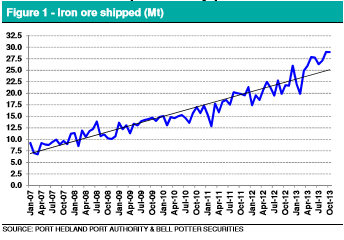
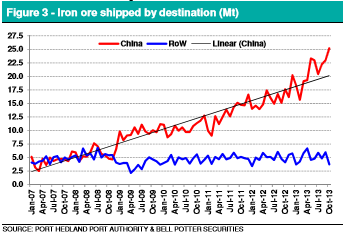
Iron ore sector Port Hedland – October 2013 – Total iron ore shipments flat, record shipments to China.

Bell Potter has dissected the Port Hedland Port Authority’s October 2013 monthly statistics. Key points to arise from the data are:

– Total iron ore shipments were above trend at 28.9 million tonnes (Mt) (flat Month on Month (MoM), up 33 per cent Year on Year (YoY)); and


– Iron ore shipments to China were 25.2Mt (up 10 per cent MoM, up 43 per cent YoY).


According to Bell Potter production capacity expansions from BHP Billiton and Fortescue Metals Group contributed to the increase in China shipments over October 13.

Spot pricing holding up; upside risk to consensus pricing

Spot iron ore prices (62 per cent CFR) are currently ~US$136/t, holding up despite record iron ore exports to China. With the financial year to date iron ore price averaging ~US$133/t, Bell Potter said it envisages upside risk to FY14 average consensus price estimates (i.e. ~US$115-120/t).

Prices will have to average ~US$105-110/t from now until 30 June 2014, to meet average consensus estimates.

Bell Potter nominated Fortescue Metals Group (ASX: FMG) and BC Iron (ASX: BCI) as its preferred iron ore exposures

FMG’s production growth and declining unit cost profile are unique in the industry. With expansion capex winding down, FMG’s free cash flow will improve markedly into FY14. FMG’s next focus will be to de-gear its balance sheet; pay dividends; potentially increase production to 175 to 180 million tonnes per annum (Mtpa); and reduce unit costs.

BCI is the cleanest leverage to iron ore prices, and is a lower cost producer (BP est ~A$48/t) compared to its junior peers. With a strong balance sheet (net cash of A$68 million), Bell Potter sees potential for BCI to:

1) Pursue small-scale growth opportunities; and

2) Return excess free cash flow to shareholders.

Atlas Iron (ASX: AGO) is a higher cost producer compared with BCI and FMG, and its FY14-15 CAPEX commitments are substantial ($464 million for Horizon 1 to take production from 10Mtpa to 14 to 15Mtpa).

The company’s earnings and valuation are therefore more leveraged to iron ore prices than its peers.

AGO is Bell Potter’s least preferred iron ore exposure due to expected weak earnings and free cash flow over FY14/15.

AGO is expensive on short term earnings (FY14 P/E 12x; and FY15 P/E of 8x). AGO’s expansion beyond 12 to 15Mtpa (Horizon 1) will require third party infrastructure agreements and significant capital.

Bell Potter company analysis

Atlas Iron Ltd (ASX: AGO)

AGO is an independent Australian iron ore company, mining and exporting Direct Shipping Ore (DSO) from its operations in the Northern Pilbara region of Western Australia.

The company’s business model has been to develop iron ore resources close to road infrastructure, avoiding the need for significant investment in rail infrastructure.

Horizon 1 expansion:
AGO is aiming to increase production capacity to 10Mtpa by the September 2013 quarter and 12Mtpa by the June 2014 quarter from the incremental addition of the Mt Dove, Abydos and Mt Webber mines. Surge capacity could see Horizon 1 volumes reach 15Mtpa.

Horizon 2 expansion:

Longer term AGO plans to utilise 46Mtpa of port capacity at Port Hedland through the development of its S.E. Pilbara assets. The Horizon 2 expansion will require a rail solution.

We recognise upside earnings risk should iron ore prices remain elevated or from positive sentiment should AGO strike an infrastructure deal for Horizon 2. However, AGO is most leveraged should iron ore prices correct (as we expect).

In addition, a Horizon 2 deal will only further delay positive free cash flow. We are also concerned that Horizon 2 would bring online relatively high cost production (compared with existing production) in a weaker iron ore market.

BC Iron Ltd (ASX: BCI)

BC Iron (BCI) is an iron ore producer with key assets in the Pilbara, Western Australia.

The company’s core focus is the Nullagine iron ore project, an unincorporated 75 per cent:25 per cent joint venture with FMG.

The Nullagine Joint Venture is currently producing DSO at a rate of 6Mtpa (BCI equity  per cent 4.5Mtpa). The NJV uses Fortescue’s infrastructure at Christmas Creek to rail ore to Port Hedland for shipping.
 
BCI remains our top pick in the junior iron ore sector. With minimal CAPEX to spend going forward and cash costs in the bottom half of the cost curve, we see BCI generating substantial free cash flow over the short- to medium-term.

We think it’s likely that a large proportion of this free cash flow will be returned via higher dividends.

Valuation upside exists through its project inventory work, and we are expecting significant earnings and cash flow growth in FY2014.

 
Fortescue Metals Group Ltd (FMG)

FMG is an independent iron ore producer in the Pilbara region of Western Australia.

The company is currently producing iron ore at rates of around 120Mtpa. By the end of 2013, FMG aim to be producing at 155Mtpa rates.

There is also potential for expansions beyond 155Mtpa rates, through the development of resources close to its existing infrastructure, or through the development of a third production hub.

However, to achieve such production growth, additional port capacity would need to be secured.

FMG’s production growth and declining unit cost profile are unique in the industry. With expansion capex winding down, FMG’s free cash flow will improve markedly into FY14.

FMG’s next focus will be to de-gear its balance sheet; pay dividends; potentially increase production to 175 to 180Mtpa; and reduce unit costs.


Disclaimer: The above is intended as a guide only. The Roadhouse accepts no responsibility for investments made from this advice, successful or otherwise.

What the Brokers Say

WHAT THE BROKERS SAY: Interesting news and views from across the Resource Analyst universe.

Australian Bauxite (ASX: ABZ)

ABZ’s strategy has consistently been to identify quality bauxite close to infrastructure and with low socio-environmental impacts.

Tasmania emerged in 2010 as a possible destination with the discovery of bauxite similar in nature to Taralga and nearby deposits.

With costs being the key, focus shifted to Tasmania where a positive scoping study is being completed on a possible mining operation at Bald Hills.

The scoping study will most likely reveal a relatively low cost project underpinned by simple mining methods, short distance to port and existing infrastructure.

The plan is to mine Bald Hill, mine nearby deposits and develop a Tasmanian bauxite industry.

TASMANIAN BAUXITE KEY POINTS

Tasmanian bauxite is gibbsite rich, which only requires low temperature for processing at an alumina refinery thus aiding in reducing alumina production costs.

Identified deposits are located close to existing infrastructure such as roads and rail, on land with little to no environmental issues, and free of socio-political opposition.

With the nation’s highest unemployment, Tasmania offers an eager and experienced workforce having a rich mining history.

Port of Bell Bay is underutilised and spare capacity exists for exports which is advantageous as it could aid in reducing infrastructure spend. A Memorandum of Understanding has been executed between ABZ and Tasmanian Ports Corporation for access to Port of Bell Bay.

Existing rail and road networks are excellent and offer low transport costs as deposits are in close proximity to port.

Tasmania seems abundant with bauxite and offers great potential to establish a long life bauxite mining industry.

BALD HILLS

Bald Hills is the first project for ABZ in Tasmania as it’s ideally situated, being close to port, in close proximity to associated infrastructure and four kilometres from Campbell Town, which could provide some of the workforce.

One of the key reasons Bald Hills was selected as the first mining project in Tasmania was the approvals process, which seems straight forward enabling mining to commence from late 2014. The mining lease application was submitted in early May and a Notice of Intent was lodged with the EPA at the same time.

Bauxite at Bald Hills is very good quality and ideal for special purpose blending, enhancing final alumina quality at refineries.

The expected capital cost at Bald Hills is approx. $8 to 10 million, with total operating costs approx. $30 per tonne. Using long term bauxite price assumptions, we expect margins between $15 and $17 per tonne.

MINING

ABZ is planning to start production at Bald Hills at approx. 500,000 tonnes per annum. We see this increasing to approx. 2.5 million tonnes per annum as more new mines come on stream. On current numbers we expect a mine life of around six years but we are confident that new mines will be added and production extended well beyond 2020. Second mine has already been put forward at Fingal Rail which is in close proximity to Bald Hills and will only require a modest cap-ex to bring into production.

Vital Metals (ASX: VML)

Vitals Metals is an advanced exploration company with its flagship Watershed tungsten project located in northern Queensland.

Watershed currently hosts a JORC Resource of 49.3 million tonnes at 0.14 per cent tungsten-trioxide (WO3) for 70,400 tonnes of contained WO3.

Japan Oil, Gas and Metals National Corporation (JOGMEC) have earned a 30 percent interest in the Watershed project by spending $5.4 million to fund completion of a Definitive Feasibility Study (DFS).

Initially the DFS was designed to assess a one million tonnes per annum capacity processing scenario, however this capacity was recently increased to three million tonnes per annum following a resource upgrade – creating more robust financial outcomes.

JOGMEC will not take Watershed into production but rather act as a match maker to third party Japanese corporation; however, it may act as a bank guarantor during the project finance stage.

Vital also holds a 100 per cent interest in a series of exploration projects in southern Burkina Faso, comprising over 850 square kilometres of contiguous tenements in highly-prospective Birmian Greenstone terrain – collectively known as the Doulnia project.

Early stage drilling programs have been particularly encouraging at the Kollo prospect, encountering significant ‘ore grade’ gold mineralisation. The Burkina Faso tenements are also prospective for VMS style zinc mineralisation.

In 2009 Vital enhanced and diversified its exploration interests to include gold and base metal prospects in southern Burkina Faso, West Africa. It currently holds four permits in a favourable geological setting within the prospective Markoye Fault Corridor.

The Markoye Fault Corridor is host to the Essakane (5.1Moz), Tarpako (1.3Moz), Bombore (5.2Moz) and Kiaka (5.2Moz) gold deposits.

Exploration within the project area is being steadily advanced, with early drill programs intersecting multiple high-grade gold intercepts. Planned drilling campaigns are aimed at extending the limits of the known near surface (open pitiable) mineralisation, as well as identifying additional deposits that will provide the critical mass for a stand-alone project.

An early drilling campaign intersected 44 metres at 6.39 grams per tonne gold from 8 metres depth, highlighting the potential to delineate meaningful scale, shallow resources within the project area.


Disclaimer: The above is intended as a guide only. The Roadhouse accepts no responsibility for investments made from this advice, successful or otherwise.

Raising funds can be half the battle

THE FUND RAISER: One company this week showed us that even though you can raise the cash, doesn’t necessarily mean you’ll get to spend it.

Return of Funds from Conditional Placement

Middle Island Resources (ASX: MDI) has advised the market that efforts to negotiate acceptable terms to acquire a majority interest in the Samira Hill gold mine and mill failed to reach a commercial outcome by the 31 October 2013 deadline.

As a consequence, the A$5 million received and held on trust from the Conditional Placement will be returned to investors.  Likewise, the company will no longer proceed with the proposed Share Purchase Plan (SPP).

Despite the efforts of the Middle Island team, the Niger Government has sought to modify commercial terms originally agreed between Middle Island and the vendor and, despite concessions made by Middle Island, the proposed new terms remain outside what the company deems commercially viable.

Middle Island views its surrounding exploration permits as being critical to the commercial longer-term viability of the project.

In the present circumstances, Middle Island remains receptive to an approach from the current project owners for the company to purchase a majority interest, which Middle Island views as a value-add acquisition opportunity for shareholders, subject to agreement on terms that deliver upside potential commensurate with risk.

The Board acknowledges the support of, and expresses its gratitude to, those shareholders and new investors that endorsed the company’s efforts in this planned acquisition.

The Board will continue to pursue compelling transactions to maximise the value to shareholders, as well as advance the company’s existing gold exploration and development projects in West Africa.

$83.5 Million Placement

Sirius Resources (ASX: SIR) is hoping to raise approximately $83.5 million in a placement to domestic and international institutional and sophisticated investors.

The placement of approximately 34 million shares will be issued at a price of $2.44 per share, a less than 5 per cent discount to the 5 day volume weighted average price.

Funds raised will be primarily used for:

–    Fast tracking of exploration: Western Trend and other nickel targets, Fraser Range gold targets and Polar Bear;

–     Potential project acquisition and/or Nova Bollinger project development costs; and

–    General working capital.

“Following completion of the placement Sirius will have an exceptionally strong balance sheet, enabling the company to aggressively explore the new targets around the Nova Bollinger nickel copper project, to complete the feasibility study and to move into the project development stage,” Sirius resources managing director Mark Bennett said.

“We are pleased with the overwhelming demand and support for the placement from a range of high-quality domestic and international institutional investors.”

Rights Issue to raise up to $5.5 million

Manas Resources (ASX-MSR) has proposed to undertake a partially underwritten, pro-rata non-renounceable entitlement issue to shareholders on the basis of one new share for every two shares held at the record date at an issue price of four cents per share to raise approximately $5.5 million together with one free attaching option (exercisable at eight cents each on or before 31 March 2015) for every share issued.

The funds raised will be used for the Shambesai gold project pre-development and development costs, including plant design, engineering, environmental impact studies and approvals, land acquisition, government and community relations, site works, and project finance due diligence costs, ongoing exploration and working capital.

Halcyon Corporate and Patersons Securities have been appointed Joint Lead Managers to the Rights Issue.

“I am delighted with the support shown by the Directors, management and the Lion Selection Group for the Rights Issue,” Manas Resources managing director Stephen Ross said.

“The level of support shown pays testament to the attractiveness of the low-cost, high-margin Shambesai gold project.

“The funds raised will allow Manas to progress the development of Shambesai, as we move towards finalising project financing and commencing construction next year.”

The company’s directors and senior management have agreed to subscribe for their entitlements (totalling approximately $112,000) and in addition will enter into sub-underwriting arrangements for up to $421,000 of any shortfall to the Rights Issue.

In addition, the company’s leading institutional shareholder the Lion Selection Group, holding approximately 7.7 per cent, has indicated it will subscribe in full for its entitlement under the Rights Issue.

Ventnor and Sandfire: You know it makes sense.

The proximity, grade and quality of copper at Ventnor Resources’ (ASX: VRX) Thaduna/Green Dragon copper project made it an obvious Joint Venture partner for Sandfire Resources (ASX: SFR).

After Sandfire made its DeGrussa discovery in 2009 the market’s only question was, ‘who will be next?’

It was a fair question but then the market asked, ‘where will it get more ore to feed its mill?’ to which the answer turned out to be, ‘no too far at all’.

Sandfire needed to look no further than 40 kilometres east over its back fence to the Thaduna/Green Dragon copper project, which is an ideal fit for the DeGrussa operations.

Ventnor has been busy at Thaduna/Green Dragon, completing over 50,000 metres of drilling since April 2011.

This has resulted in a JORC-compliant Indicated and Inferred Resource of 7.9 million tonnes grading 1.8 per cent copper and 3.7 grams per tonne silver for 142,000 tonnes of contained copper and 945,000 ounces of contained silver.

The resource comprises oxide, secondary sulphide and deeper sulphide mineralisation.

“It is not a package of exploration tenements – this is a Resource,” Ventnor Resources managing director Bruce Maluish told The Resources Roadhouse.

“We haven’t missed with a hole here since October 2011 – no hole has returned less than one per cent copper – it is a substantial and predictable system.”


Ventnor completed a Scoping Study in February 2013, which outlined a potential production profile of 15,000 tonnes per annum of copper over an anticipated mine life of 10 years.

The JV is confident an opportunity exists, subject to further evaluation and technical studies, to process both the sulphide and oxide material contained within the resource.
 
Testwork has demonstrated the sulphide material is potentially amenable for processing through the existing DeGrussa concentrator and the oxide material will be considered for processing as part of, or in conjunction with, the DeGrussa oxide copper project.

“The project has a definite walk up resource, which is already economic, and any drilling to be done on it in the future can only add to it,” Maluish said.

“There is shallow material in these pits that you can float or leach, either way you get a very similar result – better than 85 per cent recovery.”


Ventnor Resources has executed a Joint Venture deal with Sandfire that is basically designed to fast-track the Thaduna/Green Dragon copper project into production.

Importantly for Ventnor, the deal also removes the need for the company to raise additional funding for mine development.

The JV comprises a farm-in, and a funding and toll treatment agreement utilising Sandfire’s modern production facilities at its DeGrussa copper project.

“Sandfire will toll treat our ore at the DeGrussa plant at C1 costs, so there is no capital component in the operating costs,” Maluish said.

“The advantage for our shareholders will be that we don’t have to fund Thaduna/Green Dragon any more as the Joint Venture will pay for mining and treatment.”

It is probably fair to say the announcement of the JV deal really didn’t take too many industry observers by surprise as obvious synergies have made such a deal between the two companies a pretty good bet.

First there is the potential it provides for the possibility of developing the project employing Sandfire’s existing plant and infrastructure.

This simply means there will be no need for Ventnor to replicate similar infrastructure, thereby substantially reducing its overall capital expenditure and greatly reducing the time it would have taken to achieve production and cash flow by a considerable margin.

It will also remove any need for Ventnor to raise finance, either in the form of equity or debt, while at the same time mitigating the risk of project feasibility and development through a farm out and funding solution with a toll milling arrangement at a low operating cost thrown in for good measure.

Once the project is in production Ventnor will be required to repay its share of the development costs above the Sandfire committment, which will be taken from the generated free cash flow.

“Ultimately, Ventnor anticipates receiving, what it hopes will be, a significant quarterly return from the Joint Venture,” Maluish said.

“This has the potential – once it is in production – to deliver $3 million to $5 million dollars a year into Ventnor.

“I don’t want to put the cart before the horse just yet, but when it does start coming in, obviously our options at that point will be wider than they are currently.

“This transaction is a good result all around for Ventnor and its shareholders as it minimises on-going equity dilution for current shareholders.”

The deal also involves some major cost saving advantages, the most significant of which being the reduction to the previous project capital cost estimate of $70 million included in the Scoping Study the company completed in February 2013 to only the establishment costs for the project.

The processing costs at Sandfire’s DeGrussa plant will be much lower because of its higher throughput rate compared to that considered in the Ventnor Scoping Study.

Sandfire is to provide all JV funding through to production from contributions and interest-free loans while Ventnor will not incur any additional financing costs to develop the project.

Sandfire will initially acquire a 35 per cent interest in the project by way of a direct, upfront payment to Ventnor of $3 million.

Sandfire can then acquire the next 16 per cent (taking its total to 51 per cent) after payment of a second $3 million tranche.

A third $3 million tranche payment will account for the final 29 per cent, after which Sandfire will hold 80 per cent of the project.

The funds from the second and third tranches are to be spent exclusively on advancing the project to production.

Should the project not achieve production within five years, Ventnor retains an option to acquire Sandfire’s interest by paying an option price equal to the total amount it has expended to that stage.

Unquestionably, the past year has been a difficult funding environment for the junior exploration sector in terms of being able to raise money.

Ventnor went into a self-imposed trading halt in March 2013 and since then the company has been involved in discussions to secure the future development of the Thaduna/Green Dragon copper project with its eye firmly on delivering maximum future value and minimising dilution for shareholders.

The company is confident the agreement with Sandfire has ticked all the necessary boxes for it to achieve its goals.

“We couldn’t be any happier with the outcome we, as a Board, have achieved,” Maluish said.

“We held a lot of discussions with a range of parties, which has resulted in what can only be described as a landmark agreement with Sandfire, which not only represents a unique solution for the company to secure the development of the Thaduna/Green Dragon project, it enables us to do so in concert with the biggest partner in the region.

“We anticipate the deal with Sandfire will maximise the value of the project while also allowing us to shift our focus to the other prospects in our portfolio we have probably neglected due to the belief and confidence we have had in the potential of Thaduna/Green Dragon.”

Ventnor Resources Limited (ASX: VRX)
…The Short Story

HEAD OFFICE
Level 1
6 Thelma Street
West Perth, WA, 6005

Ph: +61 8 9226 3780
Fax: +61 8 9226 3764

Email: brucem@ventnorresources.com.au
Web: www.ventnorresources.com.au

DIRECTORS
Paul Boyatzis, Bruce Maluish, Peter Pawlowitsch, John Geary

MAJOR SHAREHOLDERS
MS Neeltje Renes        4.23%
Goldbondsuper Pty Ltd    4.21%
Mash Super Pty Ltd    3.94%

SHARES ON ISSUE
71 million

Allan Trench: Is Mean Reversion Pricing Inevitable

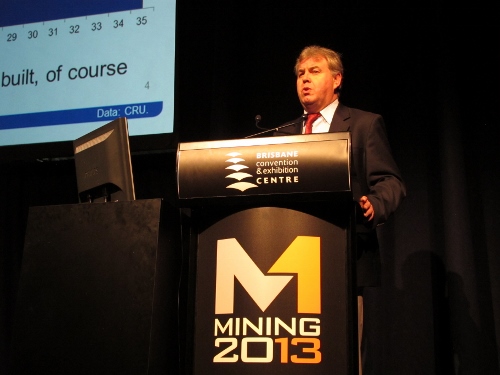
THE CONFERENCE CALLER: Opening the first day of the Brisbane Mining 2013 Conference CRU associate consultant Dr Allan Trench said he was obviously wearing his economics hat when he came up for the title of his presentation.

“Is Mean Reversion Pricing Inevitable is economic speak for ‘is what’s up going to come down, and is what’s down going to come up?’ The short answer is yes,” he said.

Trench said he believed the mining industry was far from dead and that exports continued to be strong.

“The margins in iron ore in particular are amazing, for the majors in particular, but also for the juniors,” he said.

“More money is actually made out of Port Hedland [via iron ore] in one year, at present time, than has been made out of Kalgoorlie in all its history.

“So if you had a choice between iron ore and gold right now, you would probably rather be in the iron ore business.”


Turning his attention to gold, Trench quoted the Spandau Ballet classic song named after the precious metal, which claims it is indestructible, always believing and bound to return.

“That really is where gold is,” he said.

“If we look at gold in a more economic level – what is happening in the gold market at the moment – the good news is central banks are still buying…with Russia leading the pack.”

Russia may be leading the buying pack, but it is China that Trench said is heading the production stakes.

“China is the largest producer now,” Trench said.

“I worry about the future of the Australian gold industry…CRU’s view is along the lines of the consensus view in that as the United States economy emerges from its debt mountain gold will not stay around its current levels, slightly lower even.

“A weakened Australian Dollar means that the Australian gold industry will still probably live on an A$1400 gold price, so we need to be able to make money at those prices.”

From gold it was a quick switch to copper, which he indicated was likely to produce a slight surplus for the global market his year.

“We are still above the cost curve on copper, which is good news,” Trench said.

“Price per tonne still starts with a 7 [over US$7000 per tonne], which is really great news.

“CRU’s view, unfortunate from a miner’s perspective, is that the likely global balance projections are predicting a modest surplus going forward.”

India has long been touted as a driver for global demand for metals, and according to Trench copper demand in India was likely to be reasonably strong.

Although many analysts for some time have been anointing India to be the ‘next China’, Trench said the most likely place to earn that accolade would be China, in particular the development of central and western China.

“What we are anticipating is the coastal strip [of China] moving closer to OECD type levels of urbanisation and the central and western areas of China to move towards eastern China levels of urbanisation,” he said.

Silver stars at Alcyone Resources Texas project

OUT AND ABOUT: While in Brisbane for the Mining 2013 Conference, The Roadhouse was taken out for a drive by Alcyone Resources (ASX: AYN) to visit the company’s 100 per cent-owned Texas silver project.

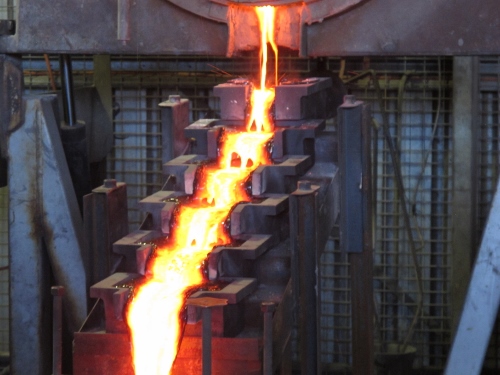
While we were there Alcyone turned on the smelter for a demonstration silver pour which yielded just on 6,000 ounces – roughly around $140,000 worth of silver.

Although it was a small pour compared to the company’s usual output, it impressed the gathered throng of journalists nonetheless.


“We have produced around 1.2 million ounces of silver already from the heap leach operations during the ramp up phase of the project between June 2011 and 31 March 2013,” Alcyone Resources managing director Michael Reed said.

“We are averaging around 700,000 ounces of silver per year, however we want to reach around 1.2 to 1.3 million ounces per year.”

The Texas silver project is located 350 kilometres from Brisbane and 10km from the town of Texas.

The project boasts a JORC compliant (Measured, Indicated and Inferred) resource of 13.25 million tonnes at an average grade of 54 grams per tonne silver for 23 million ounces of silver.

The Resource is distributed across the project’s two main prospects of Twin Hills and Mt Gunyan.

The company recently raised just over $12.8 million, after placing approx. $4.88 million of a recent Rights Issue Shortfall with Malaysian-listed investment holding company, Notion VTec Berhad.

The company’s current focus is to extend the project’s current eight year mine life, and it considers the Mount Gunyan deposit to represent the best opportunity to achieve that aim.

Drilling Alcyone has completed to date has identified a global resource of 3.9 million tonnes at Mount Gunyan.

An exploration budget of $2 million has been earmarked to drill out Mount Gunyan with the target being to take the Mount Gunyan mine life out to 14 years.

Alycone Resources is happy to be the only ASX-listed pure-play silver producer and seller in Australia.

“Everybody talks about gold, but not too many people talk about silver,” Reed said

“Silver demand is growing exponentially, mainly due to the fact it is an industrial metal as well as a precious metal.

“Silver is a super conductor; electronic components love silver. It is also in demand for jewellery and as stored value.

“China and India are the main growth centres for silver and that is mainly due to its use in the solar panel industry.”

www.alcyone.com.au