Laconia picks-up Peruvian project

Gold and base metals explorer Laconia Resources (ASX:LCR) has added some Latin-American rhythm to its portfolio of advanced domestic projects.

Laconia recently reached an agreement to acquire the Rasuhuilca gold-silver development project in the South American country of Peru.

The project, located 500 kilometres south east of the capital Lima, in the Andean volcanic arc, is an advanced high-grade development, which Laconia considers to hold significant near-term development potential and major exploration upside.

 “We are very excited about getting a foothold within Peru but we are also determined to maintain a tight focus on our projects here in Western Australia,” Laconia Resources managing director Ian Stuart told The Inside Story.

“Exploration work at both Lennons Find and at 701 Mile has achieved some extremely encouraging results.

“The drilling program we completed at Lennons Find last year achieved a number of high-grade hits in holes outside the previous Hammerhead Resource and on two other prospects, Bronze Whaler and Tiger.”

Laconia completed a 42-hole, 1,939 metre RC drill program at Lennons Find project that consistently intersected high-grade silver and zinc mineralisation.

Results from Hammerhead included: 4 metres at 174 grams per tonne silver, 0.23 grams per tonne gold, 2.35 per cent zinc, 0.08 per cent copper, 1.04 per cent lead from 150 metres.

At the Bronze Whaler prospect, high grade silver mineralisation was intersected near surface and along strike, including: 5m at 117g/t silver, 0.66g/t gold, 0.67 per cent zinc, 0.23 per cent copper, 1.52 per cent lead from 10m.

Results achieved at the Tiger prospect, included: 2m at 232g/t silver, 0.56g/t gold, 0.07 per cent zinc, 0.08 per cent copper from 15m.


Lennons Find Resource location plan. Source: Company announcement

The success of the drilling enabled Laconia to release an updated Mineral Resource for Lennons Find, which now stands at 1.85 million tonnes at 11.4 per cent zinc equivalent .

The upgrade represents a 37 per cent increase in contained zinc metal equivalent from the previous Resource estimate.

It also represents a 117 per cent increase in total tonnes from the company’s previous Resource released to the Australian Securities Exchange in March 2011.

Laconia also announced a new oxide Resource at Lennons Find of 197,000 tonnes at 89 grams per tonne silver, 0.37 grams per tonne gold, 0.2 per cent copper, 1.2 per cent lead and 1.4 per cent zinc.

The company now has further drilling planned for Lennons Find that will test for additional resources at depth at the Hammerhead deposit and to target further oxide resources within the project area.

In addition a program of RC drilling will target a potential shallow supergene enrichment zone below the current drilling being undertaken at the Tiger and Bronze Whaler prospects and other mineralised prospects – Mako and Grey Nurse.

Auger drilling and soil sampling at the 701 Mile project also returned encouraging results.

The 701 Mile project lies approximately 80 kilometres southeast of Newman, within the north eastern portion of the Collier Basin, formally known as the Bangermall Basin, and is transected by a regionally significant structure called the Tangadee Lineament.

The area has been subjected to little previous exploration, although project scale aeromagnetics has indicated a north easterly trending structural grain, which has been interpreted to be a continuation of the Tangadee Lineament.

One inconvenience Laconia has encountered at 701 Mile is a lot of superficial ground cover, which has made soil sampling difficult.

“701 Mile remains to be something of an enigma at this stage,” Stuart said.

“We conducted an Auger drilling program over the entire tenement just to get through that cover to obtain some solid geochemical samples.

“What resulted from that was a 15 kilometre long anomaly that is high in silver that is telling us that 701 Mile is potentially prospective to be a precious/base metal deposit.”

Laconia has been fortified by the early results from 701 Mile and intends flying a further aeromagnetic survey over the prospect in order to ascertain the make-up of its structures.

“We always considered it to be exceptionally prospective and now we are thinking it is really, really prospective to be something large, Stuart said.

“It is still an exploration play, but, it is a bloody good one.”

With much promise on offer domestically Laconia considers the Rasuhuilca project to be a bolt-on endeavour to complement its existing portfolio rather than a new key focus for the company.

Laconia reached an agreement to acquire the Rasuhuilca project from Perth-based exploration company Gold Mines of Peru.

The company will pay a consideration of 42 million Laconia shares, 14.5 million performance shares and a cash payment of $120,000 paid over six months to a third party.

As part of the deal Laconia will also acquire Gold Mines of Peru’s other Peruvian projects, the Motil and Porcuchia gold-silver tailings projects.

Laconia has recently raised $1.34 million through the issue of 33.6 million shares at $0.04 per share to advance work across its new Peruvian purchases.

The Rasuhuilca project comprises four concessions, labelled Patacancha No. 1 to 4, covering an area of 2,765 hectares.

The concessions partly cover an extensive high-sulphidation alteration system, which in turn, contains a number of gold-silver mineralisation zones.

Gold-silver mineralisation appears at the project as a high-sulphidation epithermal style mineralisation.

The most advanced mineralised body in the project is the Rasuhuilca zone, which has been subjected to underground development over its central 250m long portion.

Within this section a vertical extent of some 180m and reaches a thickness from 17m to 40m in a steeply south-plunging shoot.

Average grades from underground channel sampling have returned around two grams per tonne gold and 185 g/t silver.

“It is an acquisition that makes extremely good sense for a company of our size,” Stuart said.

“It is an advanced project with a modest resource in place at present of 350,000 tonnes at five grams per tonne of gold with enormous exploration potential.

“We are confident that with a bit of practical exploration work we can develop some upside at Rasuhuilca very quickly.”

The Resource, although modest, was the initial aspect of Rasuhuilca that captured Laconia’s attraction.

The project had also undergone some development work carried out, including a Feasibility Study that was completed in 2008.

Having compiled all the available data it has from the historical work Laconia considers it may be able to bring the Rasuhuilca project into production within the next 12 to 18 months.

If this can be achieved Rasuhuilca has potential to establish early cashflow for the company, which could then be used to explore the many potential targets scattered across the tenement.

“We’re approaching things with fresh eyes as far as exploration goes,” Stuart said.

“The mindset of the previous owners’ appears to have been to recognise the existence of  high grade  gold and silver veining so understandably that was where they put their efforts.

“We will explore for more high grade vein systems but we are also stepping back and saying you don’t get such tell-tale signs such as an alteration halo like the one we have without having a porphyry system sitting in the middle of it, so let’s go and find it.”

Laconia Resources Limited (ASX:LCR)
…The Short Story

HEAD OFFICE
Level 1, 41 – 43 Ord Street
West Perth WA 6005

Ph: +61 8 9486 1599
Fax: +61 8 9486 7899

Email: info@laconia.com.au
Web: www.laconia.com.au

DIRECTORS
Michael Sharwood
Ian Stuart
Matthew Howison

MAJOR SHAREHOLDERS
Independence Group NL             8.65%
Pandell Pty Ltd                            8.32%
Ian Stuart                                     5.79%

SHARES ON ISSUE
81.9 million

MARKET CAPITALISATION
3.8 million (at 1 Feb 2012)
Kula Gold increases Woodlark

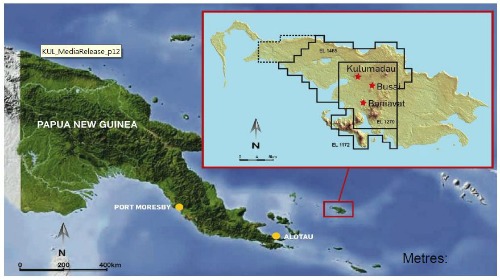
THE BOURSE WHISPERER: Kula Gold has increased the global resource base at its 100 per cent-owned Woodlark Island gold project in Papua New Guinea.


Project location. Source: Company announcement


The Global Mineral Resource for the Woodlark Island project now stands at 42.4 million tonnes at 1.5 grams per tonne gold for 2 million ounces cut or 2.15 million ounces uncut.

 “Achieving a two million ounce project resource is a key milestone in building our expanding global resource base and in the advancement of our project, while demonstrating the continuing strong prospectivity of Woodlark Island,” Kula Gold managing director Lee Spencer said in the company’s announcement to the Australian Securities Exchange.

“The discovery of Kulumadau East beneath young cover sediments confirms our belief that Kulumadau represents a significant mineralised system with the potential to add further shallow resources and that significantly more mineralisation will be found on Woodlark Island under shallow cover.

“While we continue to add additional resources, Kula Gold is focused on delivering a Feasibility Study and advancing the project into the permitting stage in 2012.”

The infill drilling program at Kulumadau East followed previous reconnaissance drilling carried out in early 2011, as part of engineering assessments for the proposed Kulumadau West Pit.

This drilling had confirmed mineralisation 500 metres east of the proposed Definitive Feasibility Study (DFS) pit collar.

A JORC Inferred Resource has been estimated for Kulumadau East of 5.2 million tonnes at 1.2g/t gold for 200,000 ounces, which increases to 240,000 ounces at 1.4g/t gold if no topcuts are used.

The majority of the resource is contained within the Inferred Category.

Kula Gold said its DFS on the Woodlark gold project is scheduled for completion at the end of March 2012.

Australia on Sale

Normally the title is a spam email from our national carrier Qantas but now it is all about our junior mining sector.

I can’t blame speculators and those in the industry for their slow return in 2012 because let’s face it after a brilliant start 2011 will go down as a real bitch of a year.

It was the first time our market had fallen two years in a row since 1981/1982 and with 15 per cent of the broader index I would imagine even some quality speculative portfolios came off anywhere between 25 to 60 per cent.
 
I don’t see it as a waste of a year but rather another challenge to keep the faith in what you are doing before the onset of dare I say it, “upside”.

I am calling the sector the cheapest I have seen it since the “Asian Crisis”.

I remember the days of the teletext TV that would run through the mining companies and thinking just how undervalued the sector looked.

I have spent hours tapping through stocks I cover and am interested in and wish someone would present me a $100,000 scratchie.

The market depths are similar to tax loss selling and although buying support appears thin it would not take much buying interest to see 30 to 40 per cent recoveries for starters.
 
Even though the GFC was brutal, some stocks had fallen from higher levels with fear providing a catalyst for a recovery as it then became “The fear of missing out” and 2009/2010 were quite good years for the juniors.
 
Market Observations:
 
Australia has been in a “cider bubble” (apple, pear and exotic mixes) which is a welcome relief after sports betting, insurance, and funeral plans were allowed far too much airtime. Between now and the next cricket test in Adelaide it will be all about surviving the Christmas hamper commercials and avoiding getting hooked into a five set tennis match.
 
An Australian company has just won the right to call itself “Nuckin Futs” after a year battle and this is going to up the box factory. This might finally lighten things up here as even at times you would think the Kiwi’s and Canadian’s are more open to advertising humour.
 
Hotcopper daytrading forum and market activity is now dominated by the micro-cap biotech stocks. In the run up the Christmas traders were all over junior explorers in the one cent to five cent range and the move towards biotech stocks reflects a slowdown in news flow in that sector.
 
The trading activity is reminiscent of 2001/2002 when the speculative market was dormant and it was the steady increase in daytrading that led to a recovery and mini-bubbles.
 
Quality juniors during late 2011/early 2012 were sold off at the worst possible times when buyers were scarce and this appears to have affected confidence despite a stronger market.
 
Pleasing to see some strength in our mid-cap mining sector after some stocks were punished. Hopefully some of this buying interest will start to flow through to the juniors.

 
Asset Sales and HOA’s now the trend:

I noticed a number of straight out asset sales increasing during the latter stages of 2011.

This reflects the struggle for junior explorers to raise capital so they are forced to rationalise their portfolios and sell off the projects that they are unable to develop.
 
This trend will see bigger companies continue to grow, however it will make it more difficult for the mid-cap sector to be strengthened in Australia.
 
The larger mining companies are starting to buy ounces and tonnes rather than go through the feasibility and construction processes and if you have desperate sellers why wouldn’t they?
 
Both BHP Billiton and RIO Tinto are now getting stuck into the Gawler Craton through deals with junior explorers such as Tasman Resources and Archer exploration and I would expect this to continue as new discoveries are certainly required post Carapeteena and Prominent Hill.

It is also worth watching the activities in QLD and the juniors now surrounding Ivanhoe Australia and their Osborne Mine.

The last major regional bubble here was the Gawler way back in 1996/1997 and perhaps the majors are again assisting in the creation of another one.
 
Both WPG Resources and Copper Strike returned the bulk of their funds to shareholders and now find themselves talent rich but asset poor.

No doubt they will be looking at some of the juniors struggling to raise cash and will use their expertise to benefit from this.
 
Rational thinking in irrational times:
 
I look back at the GFC and my major regret wasn’t buying Ivanhoe for around 15 cents after they floated at $2.00 in August 2008.

Even though I didn’t benefit financially from the absurd price it has helped me to think rationally when the market is irrational.
 
When the entire junior mining sector has looked like a screaming buy as it has now with the benefit of hindsight it was always looked back on as a major buying opportunity.
 
To highlight just how “stupid” cheap our mining sector is, here are two real examples:
 
Company 1 (14c)
 
•         Market Capitalisation $14.5 million, cash position around $5 millon.
 
•         Technical team was responsible for a major discovery in South Australia that is now an operating mine in the hands of a $3 billion company.
 
•         Has just sold its 55 per cent stake in a low-grade gold resource for $6m in total (cash/stock).
 
•         Announced a 1.5 billion tonne magnetite iron resource in Australia with a scoping study well underway.
 
•         Has an industrial mineral project with a resource upgrade and scoping study to follow.
 
•         Possess investments in other ASX-listed companies and holds 22 million shares in a geothermal/alternate energy company. ($2 million value)
 
•         Major explorer in the Cloncurry region QLD for IOCG deposits.
 
•         Holds a strong tenement portfolio in the Gawler Craton and could benefit from any further interest.
 
Company 2 (14c)
 
•         Market Capitalisation of $13 million to $14 million, cash on hand reported at end of September quarter greater than $7 million. The stock is very tightly held and has recovered quickly from the occasional sell down to 11 cents.
 
•         Owns a fully refurbished gold plant that has already poured a dore bar and is ready to commence operations.
 
•         Has JORC resources and is looking to take a measured approach to mining rather than rushing into it.
 
•         RC drilling now underway on a project in Western Australia.
 
One of the barriers I have to overcome in these companies is the waiting period for others to notice.

Sure they might be cheap; however, for larger investors and newsletters to get interested the liquidity has to improve.

The flipside of this is the market cap and share price normally rises so we can get the benefit of being early even though at times you question your reasoning for staying put whilst other stocks are running.

I am happy to provide readers with some samples of my research so please feel free to send me an email or you can visit my website.
 
Looking ahead:
 
Daytrading to continue in the penny stocks, although the market is conducive to reporting a decent mineral discovery.
 
US and world markets have been cruising along nicely and perhaps we might see the odd triple digit drop as a reality check.
 
Asset sales to continue with further investment interests from Chinese and Indian investors.
 
Exploration JV’s to increase as the majors search for discoveries to replenish their precious and base metals production.
 
M&A activity in the gold sector to provide the impetus for gold equities to finally perform. Might even see the return of the “takeover premium”
 
Interest in platinum, shale gas, graphite, and zinc to increase as companies look past next week when it comes to their strategies.
 
New brand of products with “obvious spoonerism’s” to increase to at least let some Australian’s enjoy the economic downturn with a smile on their face.
 
The Kardashians popularity to continue its downtrend whilst Adam Sandler might actually come out with a decent movie and briefly dispel fears he is the next Eddie Murphy.

 
Having two negative years on the ASX doesn’t mean investors and speculators should write off the stock market has a mechanism for attaining capital gains.

Once markets stabilise (and they always do) it will again reward those who are able to discover and develop mineral deposits.

Whilst I would love to do a “Biff” and come back with the mining page from January 2014, it is all about risk/reward and market downturns are a necessary part of speculation.
 
Tony J Locantro
Email: tony@locantro.com
Website: www.locantro.com

Northern Minerals releases non-REE assets

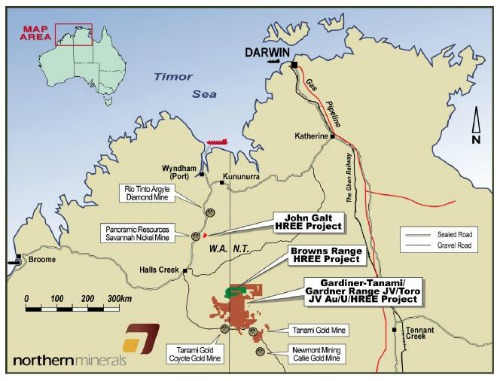
THE BOURSE WHISPERER: Northern Minerals has signed an option agreement with Mineore in regard to the sale of some of Northern Minerals’ non-Rare Earth Elements assets at the Epenarra and Amadeus Basin projects in the Northern Territory.


Northern Minerals project locations. Source: Company announcement


Mineore is a Brisbane-based resources company, which is focused on exploration for fertiliser based minerals such as potash and phosphate.

The company has a number of assets in Queensland, including phosphate exploration licenses in the Georgina Basin.

Mineore have paid Northern Minerals $20,000 for the option agreement, which will entitle it to commence due diligence, taking no longer than 75 days.

Once the full sale agreement has been executed, Northern Minerals will receive an additional $430,000 while retaining the REE mineral rights on the tenements in question.

The final transaction remains subject to due diligence by Mineore and the transfer of the exploration licences, which requires NT Ministerial approval.

Northern Minerals said the agreement reinforced the company’s ongoing strategy to focus on heavy rare earth production at the Browns Range and John Galt projects, while creating shareholder value with other non-REE assets.

“The option agreement with Mineore allows us to remain focused on the pathway to production at Browns Range, as well as allowing further opportunities to grow our mineral inventory at Epenarra and Amadeus Basin in the future,” Northern Minerals managing director George Bauk said in the company’s announcement to the Australian Securities Exchange.

“The past few months have demonstrated that Northern Minerals heavy rare earths projects remain robust, with previously reported encouraging metallurgical results.

“First and foremost we remain committed to delivering a heavy rare earth mineral concentrate by 2015 at Browns Range and John Galt.”

Australian Bauxite hits 28 metre intersection

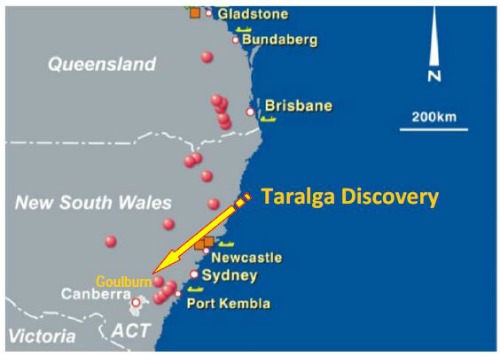
THE DRILL SERGEANT: Bauxite exploration and development company, Australian Bauxite has received results from a drilling campaign carried out in December 2011 at Taralga near Goulburn in southern New South Wales.


Project location. Source: Company announcement


Australian Bauxite claims one hole undertaken at Mt Rae has combined with several nearby holes to confirm the discovery of the company’s thickest high-grade bauxite intersection, which it considers could possibly be one of the thickest bauxite intersections in Australia.

The hole which has sparked the company’s enthusiasm returned 28 metres of continuous high-grade bauxite intersected beneath one metre of clay.

The hole ended in high grade direct shipping bauxite – deposit is still open at depth.

The company compared these results to other Australian bauxite deposits, which it said were normally are less than four metres thick, with some less than two metres thick.

“Australian Bauxite and Marubeni Corporation are currently conducting a $1.5 million pre-feasibility study of the Goulburn bauxite project, and Taralga is one of the bauxite resource study areas that continues to surprise, especially around Mt Rae, west of Taralga,” Australian Bauxite chief executive officer Ian Levy said in the company’s announcement to the Australian Securities Exchange.

Australian Bauxite said the recent discovery hole remains open at depth and laterally adding that bauxite deposits located in the district contain thick zones of premium grade bauxite, with potential for more discoveries.

The company said it intends upgrading the resource estimate for Taralga before the end of the current pre-feasibility study, which is scheduled to conclude at the end of March.

Current bauxite resources at Taralga total 25 million tonnes.

Corazon defines Lynn Lake discovery

Mining companies become excited when a drill hole provides an outstanding discovery and even more excited when they consider what it may be trying to tell them.

In May 2011 Canada-focused nickel exploration play Corazon Mining (ASX:CZN) announced drilling at its Lynn Lake nickel sulphide project had discovered high-grade nickel / copper sulphide beneath the historic EL Mine.

In its heyday the EL Mine was the highest-grade deposit in the Lynn Lake district, producing 1.9 million tonnes at 2.5 per cent nickel and 1.15 per cent copper until it was closed in 1976.

The recent assays confirmed high-grade nickel/copper sulphide at Lynn Lake, the best of which returned:

–    23.75 metres at 3.34 per cent nickel, 1.54 per cent copper and 0.079 per cent cobalt from 731.25 metres.

This included:

–    13.0m at 4.27 per cent nickel, 0.89 per cent copper and 0.099 per cent cobalt from 732m; and

–    2.46m at 3.80 per cent nickel, 0.34 per cent copper and 0.089 per cent cobalt from 751.94m.

As drilling progressed Corazon supplied the market with a positive run of news, which reaffirmed it had made a significant discovery.

This was supported by the revelation of a breccia body similar to the high-grade nickel / copper / cobalt sulphide mineralisation historically mined at the EL Mine.

By December, Corazon was reporting multiple nickel intercepts, grading more than three per cent nickel with individual results returning up to 7.4 per cent nickel over 0.7m.

Drilling highlights from this stage included:

–    44.75m at 1.55 per cent nickel, 0.65 per cent copper and 0.044 per cent cobalt;

–    3.85m at 2.83 per cent nickel, 0.24 per cent copper and 0.073 per cent cobalt;

–    11.03m at 2.31 per cent nickel, 1.01 per cent copper and 0.062 per cent cobalt; and

–    11.51m at 2.37 per cent nickel, 0.78 per cent copper and 0.062 per cent cobalt.

“The style of mineralisation we’re hitting now hasn’t been seen outside the area that was mined from the top of the EL Deposit,” Corazon Mining managing director Brett Smith told The Inside Story.

“What we’re hitting now is spectacular high-energy breccia, which previously hadn’t been identified.

“We feel we are getting into another breccia environment and, geologically, we are very excited about what we are seeing.”

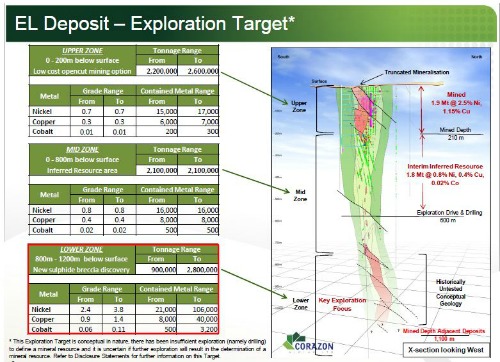
What Corazon is seeing is confirmation the recently-identified EL Deposit extensions contain a high-grade sulphide breccia it considers to be of significant size and economic potential.


It is worth noting the drilling Corazon has carried out to date has only defined a small portion of the targeted EM conductor, while mineralisation remains open to the south at a depth well within the window of historical mining conducted in the region, from surface to 1,100m.

The intensity of the mineralisation identified so far is some of the strongest observed at the Lynn Lake project, and is significantly greater than anything the company has drilled in the upper parts of the EL Deposit and resource area.

“We have more than sufficient funds in the bank since completing a $4.32 million raising, so it is now a matter now to keep drilling,” Smith said.

“We have already drilled 13 holes, of which only one was unsuccessful in hitting mineralisation, but that defined the northern end of the deposit, which is good.

“Apart from that we have no other limitations on the mineralisation because the other 12 holes hit high-grade sulphides of various widths.

“We’re hitting a lot of faulting and those faults are also hosting high-grade mineralisation up to 20 per cent copper.”

It would be an understatement to say the drilling Corazon has completed so far at Lynn Lake has provided a great deal of encouragement.

One issue the company faces however is getting the drill holes to drill exactly where it wants them to go.

“We are drilling 800-plus metre holes and we are trying to hit a 40 metre by 40 metre square at depth,” Smith explained.

 “We are doing quite well and have successfully defined that area but there is another 100 metres to the south that has never been subjected to any drilling.

“At 800 metres we are still well above the maximum mining depth for the region.”

When drilling began Corazon was confident of defining mineralisation at Lynn Lake but the company has been able to throw a lot more into the results basket than it originally expected.

The drilling strategy was to attempt to hit something of significance early, which the company has done, and from there work its way out in small increments.

Due to the depth of the drilling it is undertaking any small incremental change to a drill hole at surface creates a large change at the bottom of the hole.

“We are making small adjustments at surface to enable us to gain greater understanding of the deposit, which means we are conducting a hole by hole program,” Smith said.

At the end of 2010 the nickel market was reasonably strong with healthy demand and limited supply.

In January 2011 analysts were saying global nickel demand was rebounding from a battering it took in 2007.

By June 2011 the same analysts were forecasting growth in the supply of nickel resulting in negative market sentiment for nickel.

Just one month later, in July, the nickel surplus had narrowed.

What this indicates is that the nickel supply / demand curve is very tight and likely to flip based on market intent.

Depending upon the mood if the market in 2012 and if the global price for nickel is strong enough, Corazon may consider starting a second drill rig at Lynn Lake.

The company is keen to define the extents of the deposit by the middle of 2012 and is aware that should it drill successfully in certain areas it could be able to define a Resource.

“What we don’t want the Resource to do is understate what is there,” Smith explained.

“We want the Resource to reflect what is there, which is why we are working towards our exploration target of between 52,000 tonnes and 139,000 tonnes of nickel metal.”

Smith said he would like to see the market begin to focus on what the company is trying to achieve at Lynn Lake.

Fortunately, the company’s long-time shareholders do understand and once it announced the first discovery hole in May 2011 they developed a greater appreciation for the project’s value.

“Once we discovered that they were very happy to stay involved,” Smith said.

“Macquarie Energy and Metals has been buying stock on market and is a significant shareholder in the company.

“A lot of the analysts understood the project from the beginning. They recognised its value then and are beginning to understand it even more now.”

Corazon is well aware, however that it takes more than one hole to fully appreciate a project such as Lynn Lake.

The company is yet to drill a ‘definitive hole’ into the EL Deposit, which Smith concedes to be a complex style of deposit.

“We just want to focus on where we are going,” he said.

“We have the indicators that the grade is there; we have the indicators of the strength of the deposit.

“It’s all good; it’s just going to take time to get it all right.”

Corazon Mining Limited (ASX:CZN)
…The Short Story

HEAD OFFICE
Level 1
350 Hay Street,
Subiaco  WA  6008

Ph: +61 8 6364 0518   
Fax: +61 8 6210 1872

Email: admin@corazon.com.au
Web: www.corazon.com.au


DIRECTORS and MANAGEMENT

Clive Jones, Brett Smith, Jonathon Downes, Adrian Byass

SHARES ON ISSUE
137.9 million

MARKET CAPITALISATION

$13.3 million (at 25 Jan 2012)

Brumby confirms Sixty Sixer mineralisation

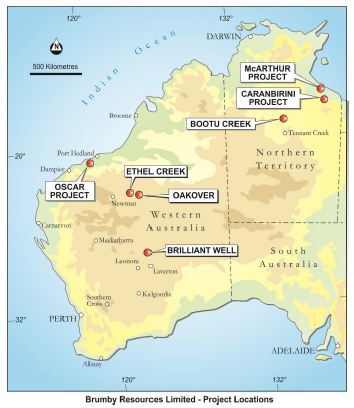
THE BOURSE WHISPERER: Perth-based manganese and base metal explorer Brumby Resources has received results from a 4000 metre RC drilling program conducted at Sixty Sixer prospect, situated within the company’s 100 per cent-owned Oakover manganese project east of Newman in Western Australia.


Source: Company announcement

Brumby said the results have confirmed its expectations regarding the morphology and continuity of manganese mineralisation at the prospect.

The 53 RC hole program was carried out late last year and was designed to test the continuity of manganese mineralisation at the prospect.

According to Brumby the results have indicated the thickness and bulked manganese grade for all downhole intervals of greater than 10m with an average bulked grade of greater than 10 per cent manganese, using a maximum internal dilution length of 2mat greater than 8 per cent manganese downhole.

Using these criteria, Brumby established 39 of the 53 total holes that were drilled contained a minimum downhole thickness of 10m of greater than 10 per cent composite manganese grade, which the company claims to indicate the continuity and thickness of the mineralisation.

Brumby Resources chief executive officer Alison Morley said the results are a significant step towards the company being able to report its first Mineral Resource.

“With mineralisation open to the east and west and only half of the original target area at Sixty Sixer having been drilled, Brumby is in a great position to determine an initial Manganese resource and with further drilling we expect this resource to grow significantly,” Morley said in the company’s announcement to the Australian Securities Exchange.

“There are also numerous other untested regional manganese targets on Brumby’s Oakover tenement that we will follow up later in the year.”

Brumby said it will now undertake an initial Mineral Resource Estimation Study for the Oakover project with results expected in the second quarter this year.

Copper maintains global support

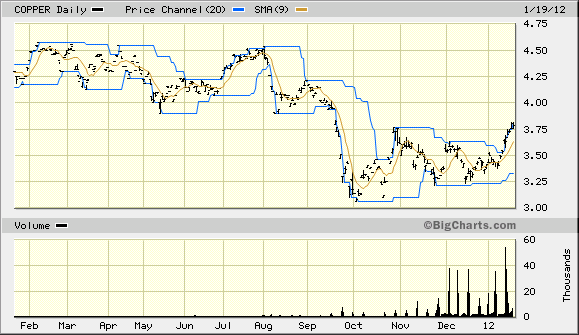
Major supply issues have combined with robust Chinese demand to continue to support global copper prices.

Copper is a bellwether commodity and despite all of the negativity surrounding Europe, the United States and China, the price has demonstrated particular resilience over recent times.

On the demand side Chinese copper imports hit a record during December, whilst on the supply side there are major near-term and longer-term concerns relating to industrial disputes and declining head grades.

These factors have led to a 17 per cent increase in the price of copper over the past month.

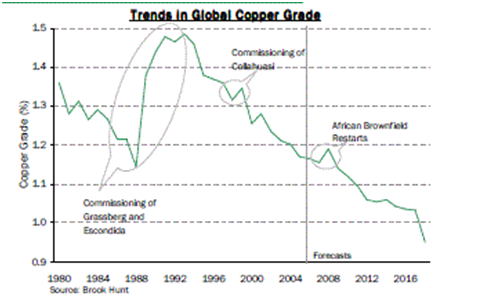
Overall head grades at the world’s biggest copper mines have fallen by around a third over the past decade.

This means that companies have to move a third more dirt in order to produce the same amount of copper, but at a significantly higher cost.

We’ve previously used Rio Tinto as the perfect case study to examine of the problems afflicting the world’s major copper producers.

The company’s just-released December Quarter 2011 production report further reinforces our position.

Rio’s production report showed that Q4 2011 attributable mined production slumped by 26 per cent year-on-year, whilst full-year production of 519,700 tonnes was down 23 per cent on 2010.


Whilst demand in the emerging world continues to climb, the supply-side is being threatened by the terminal decline in grades at the world’s biggest copper mines.

Virtually without exception, all of the world’s biggest copper operations in North America, South America and Asia, are faced with steadily declining production as operations become more mature.

To remedy the situation, the world’s biggest miners now have to search in riskier global destinations, typically for deposits that are deeper, lower-grade and more costly to develop.

This is why I am hugely positive about the outlook for copper.

Companies will demand higher prices in order to push the button on the huge expensive projects needed to meet future demand.

On the demand side, China’s refined copper production rose by 14.2 per cent during 2011, with December monthly output up 8 per cent compared to the same period a year earlier.

Inbound shipments of the refined metal, copper alloy and products totaled 508,942 metric tons, gaining for the seventh straight month, according to data from the General Administration of Customs, the highest level ever.

China’s copper consumption growth will slow to 6.4 per cent during 2012, or 7.85 million tons, according to Beijing Antaike Information Development Co.

This compares with 8.5per cent growth during 2011 to 7.38 million tons, and 11.5 per cent to 6.8 million tons during 2010.

Interestingly, copper inventories in London Metal Exchange warehouses have dropped to a 13-month low, and more declines are likely, due to a pick-up in US demand and concerns about a market deficit.

Copper stocks have slid by around a quarter since October as weak prices have spurred restocking in China, culminating in record copper imports into the country during December.

It’s likely that the 25 per cent drop in LME copper prices during Q4 2011 triggered Chinese restocking, which in turn has resulted in the 17 per cent price recover since mid-December.

China accounts for about 40 per cent of global copper consumption. But Chinese buying is now likely to take a back seat ahead of the Lunar New Year.

Balancing the expected slowdown in copper buying from China are some emerging bright spots for demand, with recent US data from the labour market to manufacturing showing signs of a pick-up in economic activity.

Copper stocks may also be declining due to an anticipated market deficit this year.

The global market for refined copper is seen in a 250,000 tonne production deficit during 2012, before easing to become nearly balanced in 2013, according to a report from International Copper Study Group in October last year.

So keep an eye on copper during 2012 – Chinese buying and supply-side issues are likely to keep prices bubbling.

Gavin Wendt is the founder of MineLife, publisher of the MineLife Weekly Resource Report

Sheffield releases Drummond target

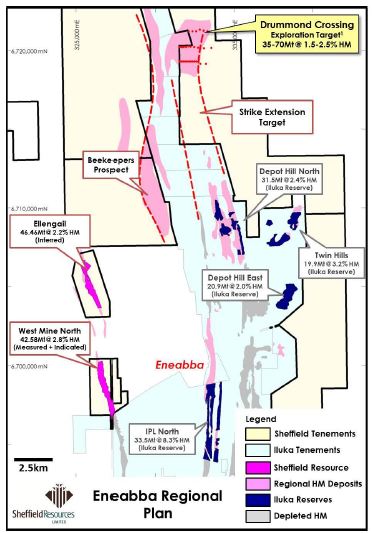
THE BOURSE WHISPERER: Mineral sands exploration-paly Sheffield Resources has announced an Exploration Target for its recently discovered Drummond Crossing prospect, located just 20 kilometres north of Eneabba in the Mid-West region of Western Australia.


Eneabba regional plan showing the location of Drummond Crossing,
Sheffield’s tenure and current Mineral Resources with respect to other
deposits in the region. Source: Company announcement

The Exploration Target follows mineral assemblage testwork (QEMSCAN) carried out by Sheffield that the company said confirmed a valuable heavy mineral (VHM) assemblage comprising 14.9 per cent zircon, 10.2 per cent rutile, 4.4 per cent leucoxene and 51 per cent ilmenite.

Sheffield has outlined an Exploration Target of 35 million tonnes to 70 million tonnes at 1.5 per cent to 2.5 per cent heavy minerals (HM) for the near-surface dunal style mineralisation at Drummond Crossing.

Managing Director, Bruce McQuitty said Drummond Crossing was a significant new discovery.

“This is a terrific result,” Sheffield Resources managing director Bruce McQuitty said in the company’s announcement to the Australian Securities Exchange.

“Twenty-five per cent of the heavy mineral assemblage at Drummond Crossing consists of zircon and rutile, both of which are currently fetching record prices.

“The high value of the mineral assemblage at Drummond Crossing adds to the significance of this discovery for Sheffield.

“We will now proceed to a resource drill out in the second quarter of 2012.”

Sheffield’s Exploration Target at Drummond Crossing follows its announcements last year of Mineral Resources for the nearby Yandanooka, Ellengail and West Mine North deposits.

Pegasus pegs copper discovery

THE DRILL SERGEANT: Pegasus Metals has claimed a copper discovery at its McLarty Range copper project located in the West Kimberley region of Western Australia some 250 kilometres north-east of Broome and 110 kilometres north of Derby.


Source: Company announcement.


Pegasus said recent drilling at the McLarty project had returned native copper in one hole, for which it is awaiting to be assayed.

The drilling also hit an intersection of 7 metres at 1.02 per cent copper.

The three diamond drill holes completed at Bowerbird totalled 652.63m.
Each of the three holes that comprised the drilling returned a number of intersections grading more than 0.2 per cent copper.

Pegasus said the holes were drilled to test the down dip potential of the Bowerbird copper target.

“The results received so far indicate the existence of Proterozoic Sedimentary Exhalative and/or Replacement mineralisation,” Pegasus Metals said in its ASX announcement.

“Of particular interest to Pegasus is a prospective copper-bearing, meta-sedimentary horizon that has been identified and sampled by previous explorers.

“While selected rock chip samples have returned high copper grades (up to 18 per cent copper), the area had remained, until completion of this program, untested by drilling.”

Results from the first two holes included:

–    10.9 metres at 0.31 per cent copper from 28 metres, including 0.32 grams per tonnes silver; and

–    14.55m at 0.23 per cent copper from 49m.

Pegasus said it considers the results confirm the system to be rich in copper, that re-mobilisation does occur and that the supergene system is developed.

The company has additional holes planned for the third section previously drilled at Bower Bird to supplement the third hole drilled during the recent campaign.

The company indicated a number of holes are planned at very broad spacing in the main syncline to complete first pass testing of several prospects, including Copper Cliff, the Sipa Syncline and Vista Valley.