Cloncurry sale launches ‘new’ Exco Resources

Exco Resources managing director Michael Anderson is a man who is very rarely lost for words. Now the sale of one of the company’s major assets has given him plenty more to say.

Exco recently announced it had entered into an agreement to sell the Cloncurry copper project to Xstrata Copper for the tidy sum of $175 million.

The proposed transaction is subject to a number of conditions, including gaining the approval of Exco shareholders, Xstrata receiving FIRB and all necessary Queensland government approvals.

Unsurprisingly, directors of Exco unanimously recommended that its shareholders approve the proposal.

The transaction has the potential to totally transform Exco from a bit player in the northwest region of Queensland to a featured headliner actively seeking out potential merger and acquisition targets.

“Anybody who has spent any time following the Exco story would have known just how much time and effort we have put in getting to this point,” Anderson told the Inside Story.

“It is certainly quite gratifying to be on the brink of delivering such a decent outcome for the company and its shareholders.

“However what is important after the deal is completed is what ‘new’ Exco looks like.”

Following approval of the transaction Exco will boast a bank account of approximately $220 million in Cash.

This figure is based on proceeds from the sale, existing cash reserves and forecast cash flow from White Dam.

“There is a fantastic opportunity, post this deal, to not only reward our patient shareholders, who backed us to deliver this outcome, but the company will be transformed into a very well-funded vehicle with at least two key areas for growth,” Anderson said.

“We are retaining a sizeable package of exploration ground in Queensland. We are, of course, retaining everything we have at White Dam and we will be extremely well funded to go forward with exploration and development activities within that organic portfolio.

“Perhaps for the first time we are also going to be extremely well-funded to look at acquisitions.”

Exco will also have an impressive portfolio of projects including the Hazel Creek project, where it aims to carry out a major exploration program at new discoveries made last year.

At Hazel Creek results have shown the existence of large areas of copper-gold-magnetite mineralisation with potential to define large tonnage, open-pit style deposits.

“Within the portfolio right now there is no question that Hazel Creek, which is our exploration package to the north of Cloncurry, is finally going to get what it deserves, and that is a serious, aggressive, proactive exploration program,” Anderson continued.

“Over the years we have done enough ground work, drilling and exploration, geophysics and the like, to know that the geology and the prospectivity up there is exactly the same as it was at Cloncurry when we first started there.

“It’s just that it doesn’t sit on the doorstep of Ernest Henry.

“But the rocks are the same; and the geology, the mineralogy, the metallurgy is likely to be the same.”

Exco’s White Dam gold joint venture with Polymetals Mining (Exco 75%) in South Australia delivered its first gold pour in April this year.

The project has already repaid financing having recouped its capital cost in less than 10 months and has generated net pre-tax operating cash flow to Exco of $38 million to the end of March 2011.

The project is expected to produce a further 40 thousand ounces (Exco share 30koz) from the remainder of the current reserve with good potential for additional resource extensions.

Exco and Polymetals have access to over 700 square kilometres of granted exploration tenements surrounding White Dam.

“We are very confident that we can replicate the success of White Dam and Cloncurry both from within the portfolio and also by taking a good look at what else is out there,” Anderson said.

“Really it is a pretty simple message. We are realising value now for Cloncurry in a way which I say, wouldn’t come as a surprise to many people, and setting ourselves up to move forward to repeat that success from within the portfolio and by looking internationally as well.

“So it is a very exciting time for Exco. I think the last 12-18 months at White Dam, we have had a spectacular time there. Three years ago we looked at selling that project and couldn’t get anybody to pay $10 million.

“We just made $24 million in a quarter and our calculations are that this price for Cloncurry, at $175 million, represents something in the order of a seven to eight times return on equity.

“Those are two pretty decent outcomes.”

Another string to the ‘new’ Exco bow is the Great Australia Royalty: A royalty over the sulphide ores under the Great Australia Mining Lease in Cloncurry, which is being mined by CopperChem.

Based on prevailing LME copper prices of around US$4.20 per pound and the current estimated 1.7 million tonnes of ore, it is expected that the royalty can generate gross cash to Exco of around A$30 million over the next 4 years.

“The Great Australia Royalty is another aspect to the organic portfolio, which has only just come to people’s attention,” Anderson said.

“The linkage there is quite significant in that they’re 50% owned by WH Soul Pattinson, who are now one of our major shareholders.

“We have had an alliance with CopperChem for many years and that too now shapes to bear some fruit.”

To complement all of this Exco also holds a further tenement package of approximately 2,400km2 in the Cloncurry region, which it says is highly prospective for further copper discoveries.

A good chunk of the sale price for Cloncurry will most probably find its way to funding proactive and targeted exploration / resource development programs across a range of established prospects including the Pumpkin Gully Projects.

Exco is confident it can replicate the success of Cloncurry in identifying a new portfolio of resources.

The focus will be on developing further high grade resources, at key targets including Salebury, Fisher Creek and Tanbah.

“None of these are in resource yet but we are very focused on converting, even modest tonnages to resource reserve quickly, because – a bit like White Dam where our exploration now is just focused on incremental ounces – any tonnage from that area, sitting just 15 -20 km away from Great Australia can be converted to resource reserve and trucked down to that mill very quickly,” Anderson explained.

“So it doesn’t have to justify its own stand-alone facilities.”

The relationship with Xstrata sets a tremendous precedent for Exco and there can be little doubt the major would be interested in maintaining a dialogue with the junior regarding other potential sources of feed for Ernest Henry.

“But we also have another home for potential tonnage and that is with CopperChem at Great Australia and then we have the greenfield stand-alone potential of projects like Hazel Creek,” Anderson said.

“And that’s before you start talking about things up there that we might like to acquire. Because that is certainly on the front of our minds

“Northwest Queensland is a highly prospective belt and it is long overdue that some of these resources and reserves were unlocked and value created from them.”

Exco Resources Limited (EXS)
…The Short Story

HEAD OFFICE
Level 2, 8 Colin Street
West Perth WA 6005

Phone: +61 8 9211 2000
Fax: +61 8 9211 2001

Email: info@excoresources.com.au
Web: www.excoresources.com.au

DIRECTORS
Barry Sullivan
Michael Anderson
Alasdair Cooke
Peter Reeve

MAJOR SHAREHOLDERS
Ivanhoe Australia Ltd 22.9%
WH Soul Pattinson & Co 7.5%
JP Morgan Nominees 7.4%
Alasdair Cooke 5.0%
South Australia okays vital port Infrastructure

As the iron ore minnows of the Pilbara in Western Australia continue their battles to gain access to vital port infrastructure the proposed development of a significant South Australian infrastructure project has moved closer to being.

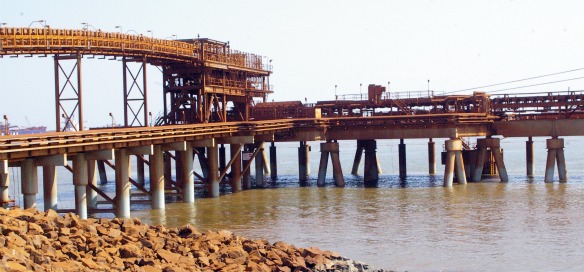
The project in the spotlight is the proposed new multi-million dollar bulk commodities export facility to be located at Port Bonython on Spencer Gulf.

The South Australian government and Spencer Gulf Port Link Consortium, the group originally selected by the government as its preferred bidder for project, has jointly announced a comprehensive Environmental Impact Statement (EIS) will be undertaken into the project.

A wide-ranging public consultation process will also be undertaken to ensure the community is fully educated and consulted on all facets of the proposed development – including the planned construction method.

Based on mining industry expectations for the region, the consortium believes the port is viable, and the timing of its development will meet future demand from a range of iron ore mining projects across South Australia.

Spencer Gulf Port Link Consortium comprises Flinders Port Holdings, Leighton Contractors, Macquarie Capital, BIS Industrial Logistics and the Australian Rail Track Corporation (ARTC).

“One of the most crucial export infrastructure projects in South Australia has taken a monumental step forward today with the SA Government approving the studies and communication phase of our development plan,” Flinders Ports chief executive and consortium spokesman Vincent Tremaine, said in a release.

“The consortium partners are delighted by the faith and commitment the State Government has shown in them to undertake the necessary work to take the project to the next stage.

“We strongly believe the port is viable, and in fact essential, given the expected increases in mineral resource volumes from proposed mining projects in the region.

“The consortium plans to build a state-of-the-art, environmentally sound, highly efficient, cost effective facility in support of South Australia’s growing mining sector.

“Port Bonython is the most appropriate location for this type of port in the area, taking in a number of factors including water depth, land availability, and its proximity to rail and proposed mining projects in the region.

“It is an existing harbour with a defined deepwater passage established enabling large ships to operate efficiently, and it can be expanded to meet expected future demand.

“Further, under our proposal, public access to the foreshore will be maintained.”

The final design for the project is dependent on a range of issues, including geotechnical conditions, environmental controls, finalising user agreements with customers, a wide range of approvals, and financing for the project.

Despite these conditions the project is likely to include a three kilometre-long jetty reaching into deep water, with enclosed conveyors and a ship loader, which will be designed to handle “Cape” size ships carrying up to 180,000 tonnes of cargo as well as significant rail and storage facilities on land adjacent the jetty precinct.

“If the project is approved, construction would take about 2.5 years to complete, and employ about 400 workers,” Tremaine added.

“It would be ready for export in about 4.5 to 5 years from now.”

Tremaine identified the advantages the Port Bonython site held over over other sites being considered to include: the most efficient export facility for iron ore in the region; environmentally manageable with no expensive dredging required, and; capable of expanding output to meet expected future demand of over 50m tonnes of product per annum.

“The Spencer Gulf Port Link Consortium partners had already invested significant resources on the project and were committed to continued investment in the development of the new port facility,” Tremaine said.

The South Australian iron ore industry is definitely make waves with this announcement coming on the back of Ironclad Mining’s plan to develop a multi user bulk shipping port for the project, including a floating harbour, on Spencer Gulf.

IronClad executive chairman Ian Finch recently told companyinsight.net.au about the new project.

“The Lucky Bay port option will cut the land transport distance of iron ore from Wilcherry Hill into ships from 540km for our previous Port Adelaide option to only 154km for Lucky Bay” Finch said.

“We estimate this will reduce operating costs by about $A20- $A25 per tonne from $A85 to $A60- $A65 per tonne. Assuming an average iron ore price of $A140 net of freight into China, this will increase our margin to approximately $A75– $A80 per tonne for Stage One of the project.”

Finch told companyinsight.net.au Stage One of the project is planned to ship 2 million tonnes of premium priced Direct Shipping Ore per year over a period of four years; based on the assumed iron ore price of $A140.

“We are looking at potential margins totalling more than $600 million during Stage One,” Finch continued.

“The current price is about $160 net of freight. Measured against the current iron ore price, our cash flow estimates are relatively conservative.

“IronClad and Trafford (Resources) will share the benefits on an 80:20 basis; making this Lucky Bay port and floating harbour proposal good news for the shareholders of both companies.

“From the time IronClad decided to produce Direct Shipping Ore from the Wilcherry Hill crystalline magnetite, the project has looked to be a commercially robust undertaking. The Lucky Bay port option makes it even more robust, delivering cost reductions in the region of 25% – 35%.”

Ram Resources revises terms for remaining interest

THE BOURSE WHISPERER:    Ram Resources has signed a non-binding Memorandum of Understanding with the minority shareholders of Greenland Resources for the remaining interest in Motzfeldt project in Southern Greenland.

Greenland Resources is a United Kingdom based company, which holds the Motzfeldt project, of which Ram already holds 51%.

The MoU will vary the terms on which Ram may acquire the remaining 49% interest in Greenland Resources, which was approved by shareholders at the company’s general meeting held in August.

The varied terms will provide Ram with an option to acquire the remaining 49% in one stage, as opposed to three as per the current terms, by issuing to the Vendor 200 million fully paid shares in the capital of Ram.

Ram would have 12 months to exercise these new terms.

“The revised terms for acquiring the remaining 49% of GRL, and as a result the remaining 49% of the Motzfeldt project, offer reduced complexity and much greater flexibility over the existing terms,” Ram Managing Director, Mike Drew said in a company release.

“If Ram is able to establish a Mineral Resource at its Aries prospect at the end of the upcoming 2011 field season, a greater focus will be placed on potential development of the Motzfeldt Project.

“We believe that the option of moving to full ownership of the project in one simple transaction will provide better opportunities to introduce a joint venture partner into the project, particularly one who may have existing capability in the processing of complex, multi element concentrates and the extraction of REE oxides.”

In October 2010, Ram entered into a Share Sale and Purchase Agreement with Quayside Services Limited, acting as trustee for Exchange Minerals FZE, Kibe Investments No 3 Limited, Tiwari Limited, Thirlmere Investments Limited, and Marlowe Enterprises Limited, collectively known as the Vendor, in which Ram agreed to acquire, in four stages, all of the issued capital of Greenland Resources.

In the same month Ram completed the acquisition of the initial 51% of the issued capital of Greenland Resources by issuing to the Vendor 150 million fully paid ordinary shares at a deemed issue price of 3 cents each, together with 150 million listed options, in the same class as the existing RMRO options, exercisable at 3 cents each, expiring 30 March 2012.

The proposed variation Ram and the Vendor have entered into, through the MOU, sets out key terms that would provide Ram with a new option to acquire the remaining interest by issuing to the Vendor 200 million fully paid ordinary shares in Ram.

The parties have agreed to work together to negotiate Formal Agreements by 31 May 2011, in line with the key terms as set out in the MOU.


Maiden drilling encouraging for Sheffield Resources

THE DRILL SERGEANT:    Bulk minerals explorer Sheffield Resources has returned encouraging drilling results from its Yandanooka heavy mineral sand project located 50 kilometres northeast of Eneabba in Western Australia’s mid-west region.

The current drilling program is Sheffield’s first at Yandanooka, and its first since listing in December last year.

These latest results have improved on results from historical drilling by outlining a zone of heavy mineral bearing sand approximately 4km long by 1km to 1.6km wide and between 3m and 20m thick.

Within this zone is a coherent higher-grade zone, greater than 3% heavy minerals, which is approximately 3.4km long, 500m to 800m wide and 3m to 10m thick.

Sheffield’s confidence in the continuity and size and scale of mineralisation has also increased, resulting in a subsequent drill coverage closure to 300m x 120m.

Yandanooka is one of few remaining outcropping HMS deposits in the mid-west.

The project is situated on freehold land located 2.5km from existing road and rail infrastructure connecting to Geraldton port, approximately 140km to the northwest.

Yandanooka is one of several projects within Sheffield’s large tenement portfolio in the world class North Perth Basin mineral sands province.

“The results of the Yandanooka drilling are extremely pleasing, given the increase in confidence, and size of the deposit,” Sheffield Resources managing director Bruce McQuitty said in the release.

“This is an exciting start to our exploration program in the North Perth Basin, with one of our key mineral sands projects proving its potential at a time when we are seeing increased demand and strengthening prices for our target commodities.”

According to Sheffield Resources Yandanooka has a relatively high value mineral assemblage, averaging 13.1% zircon, 2.9% rutile, 59.6% ilmenite (at 64.7% titanium dioxide) and 11.2% leucoxene, based on six historical composite samples.

Sheffield will select representative composite samples from the recent drilling for additional mineral assemblage testwork and has resource estimation work scheduled for June.


Winmar Resources drills namesake deposit

THE DRILL SERGEANT:    Iron ore exploration play Winmar Resources has announced some recently received results from its 12,000 metre RC drilling extension and infill program at the Winmar Deposit, at the company’s Hamersley Iron project in the Pilbara region of Western Australia.

The results further enhance the company’s Winmar plans to confirm a JORC Resource upgrade at the project in the current quarter.

The Winmar Deposit has a current JORC Inferred Resource Estimate of 143 million tonnes at 52.6% iron (55.6% calcium iron).

Encouraging results received from the first four holes of the company’s latest 80 hole, 12,000m RC drilling extension and infill drill program at the Winmar Deposit include 44m at 60.7% calcium iron and 48m at 61.0% calcium iron.

Some of the results Winmar has been able to achieve so far have come from up to 500m outside the current resource area giving the company hope of excellent scope for additional resource increases.

The results received so far also provide support to the company’s claimed exploration target of 250-300Mt at 55-59% calcium iron for the Winmar Deposit.

In corporate news the company has appointed iron ore and steel industry veteran Philip Kirchlechner as a marketing consultant.

Kirchlechner has 20 years’ experience in iron ore and steel marketing and business development which include roles with Hamersley Iron, Rio Tinto Iron Ore and JP Morgan. He was also formerly Head of Marketing at Fortescue Metals Group.


Aquilla Resources tables PFS on Hardey

THE BOURSE WHISPERER:    Aquila Resources has announced positive results from the Pre-Feasibility Study of the development of the Hardey iron ore deposit being developed by its 50% owned Australian Premium Iron Joint Venture.

Aquila identified the completion of the PFS for Hardey as the first stage in leveraging the investment in the West Pilbara Iron Ore Project rail and port infrastructure.

The PFS was focused on a direct ship fines product based on a blend of Brockman and Marra Mamba ores.

The company expects the decision to proceed to the next stage to be imminent for the commencement of the feasibility study for the development of Hardey.

“The PFS has confirmed the technical and financial viability of a development based on a 10 million tonnes per annum iron ore operation for 14 years, with 150 kilometres of new railway to join on to the proposed rail infrastructure for the Stage One Project, as well as the use of that project’s train unloader with expanded facilities at Anketell Port,” Aquilla said in an announcement.

Hardey is located approximately 150km south east of the southern terminal of the proposed rail line for the West Pilbara Iron Ore Project
Ship loading will be facilitated by adding an additional berth to the Stage One Project jetty and using the Stage One Project ship loader for the Hardey product.
Subject to approvals, construction of the Hardey Project could be integrated with the Stage One development, with first shipments expected during 2016.

The proposed extension of the rail network provides opportunities for other “stranded” deposits in the surrounding Pilbara area to access an export corridor through Anketell Port.

The West Pilbara Iron Ore Project has a substantial presence in the Pilbara region, with access to over 8,000km2 of prospective ground available through several joint ventures.


Brockman Resources – Wah Nam no thank you Ma’am

Besieged iron ore hopeful Brockman Resources released a letter to its shareholders updating them on the recent takeover activity from hostile suitorWah Nam International Holdings.

In the lengthy letter Brockman advised shareholders, “Wah Nam had publicly advised that it had received acceptances for its offer bringing its holding in Brockman to 45.39 % of the total Brockman shares on issue. Wah Nam’s offer is now scheduled to close on Monday 16 May 2011 at 4pm WST (subject to any further extensions by Wah Nam).”

The Brockman board reiterated its position to shareholders telling them not to accept the Wah Nam offer.

“The Brockman Directors do not currently intend to accept the Wah Nam offer as proposed, in respect of their personal holdings in Brockman,” the company continued.

The letter came hot on the heels of another release from Brockman responding to Wah Nam claims that a broad section of its shareholders had already accepted the offer.

Brockman said an overwhelming majority of shareholders had not accepted Wah Nam’s offer with 96.49% of the total acceptances so far having come from only 9 shareholders, with only 0.59% of acceptances from Australian / NZ registered shareholders.

“Based on information received by Brockman… 96.49% of the total acceptances received by Wah Nam had come from only 9 shareholders or 0.34% of Brockman’s total shareholder base of 2642 shareholders,” Brockman claimed.

“These 9 shareholders accounted for 21.77% of the 22.56% increase in Wah Nam’s relevant interest in Brockman as a result of the takeover.

“Of those acceptances received to date, the majority have originated from off-shore investors located in Hong Kong or Singapore. Acceptances by Brockman shareholders with registered addresses in Australia or New Zealand account for only 0.59% of acceptances (which equates to 0.12% of Brockman’s issued shares).

“From these figures, it is clear that the overwhelming majority of Brockman shareholders have NOT accepted Wah Nam’s offer.”


Cazaly Resources gets Freo Heave-Ho

Cazaly Resources has been told by the Fremantle Port Authority that it has not been allocated any export capacity at the Kwinana Bulk Terminal for its Parker Range Iron Ore Project.

Fremantle Ports has determined that the available export capacity will instead be allocated to a competing iron ore developer in Griffin Coal.

Fortunately Cazaly has had the presence of mind to have been working on a number of alternate options with the preferred option from these having been incorporated into its Feasibility Study.

Cazaly now proposes to initially export through the port of Fremantle at a rate of 1.4 million tonnes per annum followed by export through the port of Esperance at a rate of 4.6 Mtpa.

“The project greatly benefits from its close location to existing and accessible infrastructure including road, rail, port, power and township,” Cazaly said in an announcement.

“This access allows for the relatively rapid development and ramp up to full production within 2 years.”

The proposed initial start-up rate of 1.4 Mtpa utilises capacity available to the company within the existing container transport, storage and port infrastructure facilities at Fremantle.

Containerised product is unloaded into bulk ships using a proven dustless system recently pioneered in South Australia by Flinders Ports and IMX Resources.

The subsequent Esperance port ramp up to 4.6 Mtpa will be undertaken using conventional bulk transport and handling methods.

“These positive results now allow for the advancement of government and non-government stakeholder consultation and the completion of discussions for financing,” Cazaly said.

“The (Feasibilty) study has shown that the Company is on track to become a major iron ore producer in the Yilgarn region of Western Australia behind Koolyanobbing Operations who have successfully operated in the region for many years.”


The world economy – it is essentially all over the place.

Stephen Bartrop managing director of Sydney investment house Lime Street Capital kicked off the final day’s proceedings with a quick snapshot of the world economies.

Opening his address Bartop gave a quick synopsis of what is happening around the globe.

“China, we know it’s slowing – by how much and the real estate bubble risks they are certainly there,” he said.

“India – its GDP growth rate is now higher than China, but obviously India’s GDP is lower than China’s but it will come through and it is going to go to provide support in the longer term.

“The US – we have that subdued growth. There is a recovery happening. When perceptions start to emerge that it is real and the US dollar starts strengthening that certainly has implications for commodity prices and resource stocks.

“Europe – As we know is a mixture of strong economies such as Germany and the not so strong that are debt ridden that create some uncertainty and need to be addressed.

“Japan – we are seeing some recovery after the earthquake and tsunami but for how long that will continue remains to be seen.”

Bartrop paid particular attention to China saying that he latest mantra around its economy is all about the growth being expected to slow.

Some might say that this is all part of a natural development, and of course it all is, but it does seem to have implications.

“The major resource houses are still bullish on commodities,” Bartrop said.

“As GDP per capita increases in China and other emerging economies, the idea is that the intensity of use goes up for certain metals so it advances additional demand.”

Bartrop indicated that BHP Billiton suggest the need for global production of around 1.7 million tonnes of copper will be needed in order to meet the consumption expectations over the next 10-15 years and 1.5 million tonnes of thermal coal production.

“Some of things that you want to consider are – for example – is the average personal consumption evidenced in some western world economies directly applicable to India and China. Maybe they’re not,” he proposed.

“Do consumption trends actually change over time? Of course they do.”

There is, of course a high degree of subjectivity in terms of whether China is really going to follow the same sort of trends western economies have been historically following since the 1960s.

Looking at the USA’s copper intensity in the 1960s one would have to ask whether the average Chinese will have the same level of copper intensity as the US did.

Technology issues back in the 1960s were a lot greater than those faced by consumers today. The amount of steel in cars and the amount of different commodities used in televisions.

Steel consumption at this time US peaked in the United States.

The question to be considered today is whether China going to need to achieve those same levels today.


Red October Resources hunting in Kazakhstan

West Perth-based Red October Resources has announced it is evaluating several advanced mineral projects in the Central Asian Republic of Kazakhstan.

“On the heels of our recently completed initial public offering, we are working to hit the ground running as we strive to bring about early and significant returns to the investors who have put their faith in our experience and abilities,” Red October chairman and managing director Ross Smith said.

“In keeping with our mandate to explore global resource opportunities, the board of Red October has decided to focus on acquiring advanced resource projects in the Central Asian Republic of Kazakhstan.

Smith said the company had been offered a raft of projects covering a number of commodities including gold, silver, tin, copper, manganese, platinum, iron ore and potash.

“All of which have JORC compliant resources associated with them,” he continued.

“We have appointed Perth based Micromine, who have an office in Almaty Kazakhstan along with Russian and Kazakh speaking geological staff to assist us in undertaking our preliminary due diligence of these exciting resource projects.”

Smith identified a clutch of what he called “significant benefits to acquiring advanced resource projects in the Central Asian Republic of Kazakhstan”.

These included low operating costs such as for diesel, which is only 60 cents per litre.

“The projects are all situated near established road and rail links to China for access to markets, resources and materials, and there are minimal topographic or environmental barriers to proceed,” Smith said.

“These are all criteria that form part of our evaluation of any project and we are pleased with what we’ve found thus far in Kazakhstan.”