Winmar Resources eyes acquisition of Hamersley iron project.

THE BOURSE WHISPERER: Iron ore hopeful Winmar Resources has executed a variation agreement with Cazaly Iron, a wholly owned subsidiary of Cazaly Resources, to vary the Farm-in Heads of Agreement the companies had entered into in October 2010.

Winmar currently holds an entitlement to earn into a 51% interest of the Hamersley iron project and has an exclusive option to acquire the remaining 49% from Cazaly Iron.

Under the new variation agreement, Cazaly Iron has agreed to grant Winmar an option to acquire an immediate 100% interest in the tenements, which were the subject of the Farm-in Heads of Agreement for an exercise price of $35 million and the grant of a royalty.

Once that option has been exercised, Winmar will have a 100% ownership interest in the Hamersley iron project in the Pilbara Region of Western Australia.

Winmar has been busy with the company also executing an engagement letter with Miller Mathis, the steel, metals and mining division of Rodman & Renshaw.

The New York based investment bank has been given the task of obtaining a strategic investor or partner for the Hamersley iron project.

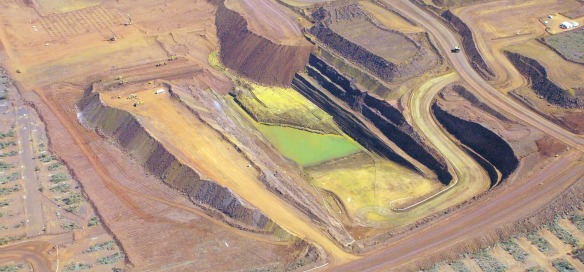
The Hamersley iron project is located in the East Pilbara iron ore precinct, immediately south of Fortescue Metals Group’s Solomon project, and close to Rio Tinto’s 28 million tonnes per annum capacity Mt Tom Price and 15Mtpa capacity Marandoo projects.

Hamersley has a current JORC Inferred Resource of 143 million tonnes at 52.6% iron, and an exploration target of 250Mt-300Mt at 55-59% calcium iron.

Recently announced results from further drilling include; 44m at 57.9% iron (60.8% calcium iron) and 36m at 58.9% iron (61.9% calcium iron).

Winmar has indicated it aims to confirm a resource upgrade during the current quarter.

In light of the early success achieved, Winmar management is eager to acquire 100% of the Hamersley iron project as soon as practicable.

The grant of the option is subject to the parties obtaining a written opinion from ASX that approval will not be required under Listing Rule 10.1.


Western Australian State Treasurer raises royalties

The recent Federal Budget handed down by Treasurer Wayne Swan hardly raised a heckle on the collective neck of the Australian mining industry.

Oddly enough that privilege was left to Western Australian Treasurer Christian Porter in handing down his first budget for the mining boom state.

One feature of the budget that poked its head above the parapet was an increase to the state royalty rate for iron ore which will raise an estimated $1.9 billion.

Porter outlined plans to pension off the existing 40-year old deal on iron ore ‘fines’, which has seen them set at a rate of 5.625%, well below the ‘lump’ iron ore rate of 7.5%.

The rate revision will be staggered to maintain the status quo until June 2012, from when things will start to move with a rise to 6.5%, and ultimately hitting 7.5 from July 2013.

According to Porter the new plan will raise an estimated $1.9 billion over the four year budget period, with most funds coming from Federal Government Minerals Resource Rent Tax confidants BHP Billiton, Rio Tinto and Fortescue Metals Group, which was left out of the MRRT discussions.

That will increase the tax take from iron ore royalties to a hefty $17.8 billion by the middle of 2015.

In total the WA State Government will earn $20.58 billion from mining royalties over the next four years, according to Budget papers.

The move is the latest in an intriguing game of chess being played out between Perth and Canberra with Federal Treasurer Wayne Swan previously indicating the Commonwealth could refund any state royalty payments made by mining companies under its new mining tax.

Porter acknowledged a likely consequence of the decision is that WA could lose that same $1.9 billion from its cut of the GST should the Federal Government choose to withhold it, in order to avoid falling into deficit itself.

It seems that no matter which government, State or Federal, chooses to raise mining royalties or taxes, neither seems particularly keen on conversing with the industry beforehand.

The Association of Mining and Exploration Companies chief executive Simeon Bennison said the organisation was, “extremely disappointed that industry bodies and individual companies have not been consulted in respect of the WA Government’s decision to increase the royalty rate on iron ore fines.
 
“This will be yet another unexpected financial impost on iron ore companies in WA.
 
“It will also add to the considerable uncertainty that is being created by the proposed mining tax and price on carbon emissions.
 
“This lack of consultation and uncertainty will undoubtedly undermine investor confidence, particularly for those companies that are currently attempting to raise equity and debt finance in the domestic and overseas market place.
 
“The situation is further exacerbated by the added uncertainty on whether the proposed increase in State royalties will be fully creditable under the proposed MRRT regime.”

Bennison did, however welcome certain initiatives announced in the budget that included funding for social infrastructure, particularly in regional WA, the Pilbara Cities project, skilled migration, trade training centres and training places, and the ppointment of a full time mining warden to deal with objections to mining tenement applications.

“AMEC also welcomes the government’s overall desire to drive investment in infrastructure and services in regional areas and major population hubs in front of forecast demand,” Bennison said.

“Such a strategy is essential in ensuring that undue production and commodity distribution delays are not encountered by the resources sector.”

There probably wasn’t anybody happier with the budget than State Nationals leader and Regional Development and Lands Minister Brendon Grylls with investment in regional WA set to continue with $1.2billion budgeted through the Royalties for Regions program in 2011-12.

Grylls responded to the budget saying that since the creation of Royalties for Regions in 2008 the Liberal-National Government had allocated $6.1billion to programs that were making regional WA a better place to live, work and invest.

“A major component of the Royalties for Regions program is to deliver improved social infrastructure,” Grylls said.

“This year’s initiatives are investing in regional health, education, skills training, water and Natural Resource Management (NRM), Aboriginal initiatives and SuperTowns.

“By 2015 Royalties for Regions will have allocated more than $1billion towards health services and infrastructure in regional areas, including an investment of $538million to strengthen medical care and services in rural communities in the southern part of WA.

“This is the greatest single investment in regional healthcare in WA’s history.”


Encouraging drill results for West African Resources

THE DRILL SERGEANT: Perth-based gold play West African Resources has received some encouraging high grade results from first pass RAB drilling at its Moktedu prospect.

The Moktedu prospect is part of the company’s 100%-owned Boulsa gold project located in Burkina Faso, West Africa.

The results were struck 800m northeast along strike from high grade results West African reported earlier this year in March and include: 8m at 10.67 grams per tonne gold from 12m, including 4m at 17.79 g/t gold; 3m at 3.23 g/t gold from 28m, which ended in mineralisation; and 18m at 0.67 g/t Au from 4m, also ending in mineralisation.

The latest results complement the previous, which included: 28m at 9.22 g/t gold from surface, including 8m at 31.67 g/t gold; and 13m at 4.60 g/t Au from 20m, including 5m at 11.66 g/t gold.

According to the company the results demonstrate, “significant mineralisation has now been intercepted over a strike length of three kilometres from shallow RAB drilling.

“The results are from first-pass RAB drilling on broad 200m sections targeting shallow auger gold anomalies.

“All drilling is shallow, generally less than 25m. No infill drilling has been completed at this stage.

“The company is in discussions with RC drilling contractors in country and is still aiming to have deeper RC drilling completed on this target before the onset of the wet season, and will inform the market of a start date when known.”

Construction of two further RC drill rigs is currently nearing completion, which are scheduled to be shipped to Burkina Faso in June.

The Boulsa Gold Project in Burkina Faso covers 5,345 square kilometres and 170km of strike length of early Proterozoic Birimian greenstone belts, which West African considers to be prospective for gold mineralisation.

Recent auger geochemical sampling also carried out by the company tested 25km of greenstone belt strike in the southwest portion of the project, representing less than 10% of the current project area.

This work has delineated 25 robust targets, many coincident with artisanal mining activity at the Moktedu Trend and Meguet Trend target areas.

These targets total 30km strike of anomalies, which West African Resources intends to rapidly advance.

RuralAus to study feasibility study of Kangaroo Island renewable power plant

THE BOURSE WHISPERER: Perth forestry group, RuralAus Investments is about to kick off a full feasibility study for a biomass power plant, fired from plantation timber residue on Kangaroo Island.

RuralAus will spend $374,000 to conduct a full feasibility study into a 10 megawatt renewable power station on Kangaroo Island, which it says will potentially provide a ‘clean green’ energy solution.

For the geographically challenged among us Kangaroo Island is located 15 kilometres off the tip of the southern coast of the Fleurieu Peninsula in South Australia, 110kms south-west of Adelaide.

Measuring in at 55kms wide and 165kms east to west with a coastline of some 509kms Kangaroo Island is Australia’s third largest and is famous for its scenery, geographic features and unique flora and fauna, and is promoted internationally as a premier eco-tourism destination.

It has retained many plants and animals no longer found on mainland Australia and the largest remaining tracts of remnant native vegetation within the agricultural zone in South Australia.

The principal centre of the Island’s administrative and economic activity is the township of Kingscote.

RuralAus’ feasibility study has the full backing of relevant South Australian Government agencies mainly due to the fact the current reliability and performance of the island’s energy network is plagued by high costs and limitations of supply associated with power transmission from the mainland.

RuralAus owns and manages approximately 5,000 hectares of timber plantation on Kangaroo Island, and also owns modern saw milling and processing facilities. It is currently exploring a range of timber development options, including export logs and sawn lumber.

According to RuralAus chief executive officer John Ipsen the biomass power station, which uses residue from timber processing and harvesting as a fuel source, represented a significant growth opportunity for Kangaroo Island and RuralAus.

“We have a real opportunity to make a substantial impact on KI. We have ready access to an excellent source of renewable energy, which can provide a clean and relatively low cost power solution for the island,” he said.

A 10MW renewable energy power plant will take approximately 18 months in planning and construction at an estimated cost of approximately AUD$30 million.

Once operational it will, in conjunction with the sawmill, also have the potential to create considerable employment and economic input into the island economy.

“It allows for RuralAus to add a consistent supply to the energy network especially in times of peak use.  It also allows for other industries to either expand or be created as a result of a consistent supply of ‘base load’ clean energy.” Ipsen said.

“We believe this study reinforces the significance of this project and we are excited about the transformational possibilities for the company.”


Aviva scores gold hits in West Kenya

THE DRILL SERGEANT: Aviva Corporation has been busy in West Kenya drilling at the Bushiangala and Kimingini prospects where it has hit gold mineralisation with four exploratory diamond drill holes.  

The two prospects are both situated adjacent to the western end of the Kakamega gold camp, a 25 kilometre by 15 kilometre area located within the company’s West Kenya project area.

Two of three holes drilled at Bushiangala displayed broad and high grade zones with results including: 19.81 metres at 9.41grams per tonne gold from 29.41m and 1.00m at 1205g/t gold from 100.82m; and 1.00m at 5.21g/t gold from 103.93m.

Two holes drilled at Kimingini intercepted broad mineralized zones and historical workings returning results of: 7.43m at 1.79g/t gold from 103.34m and 7.31m at 3.00g/t gold from 126.5m; and 1.0m at 4.27g/t gold from 65m and 1.0m at 2.38g/t  gold from 94.85m.

Aviva has acquired data from the Bureau de Recherché et Minieres (“BRGM”), which has highlighted broad gold mineralisation in historical drilling at the Dhahabu Prospect.

These include: 62m at 2.45g/t gold from 42m; 24m at 2.41g/t gold from 42.4m; and 50m at 1.95g/t gold from 29m.

“The BRGM / Afirore / Lonmin / Aviva data also highlights at least eight broad gold-in-soil geochemistry anomalies along and adjacent with the Limbiri Trend and associated splays of which Aviva has drilled only two,” Aviva said in a market release.

“Soil geochemistry data has not been acquired over the whole trend.

“The area is characterised by numerous historical pre-independence mines and artisanal workings but the lack of any significant modern exploration, especially drilling in the past 60 years, means it remains largely untested.

“The area has the potential to host numerous moderate tonnage, medium to high grade gold deposits.”

Gold Overview – US$1,500 just the start

As expected, gold didn’t require much effort in smashing through the US$1,500/oz psychological barrier on the back of a host of economic factors in Europe and the US and other politico-economic uncertainties in Africa and the Middle East.

And don’t expect gold to stop: there’s only one direction for the price (amidst profit-taking) and that’s up.

The trigger for gold’s cracking of the US$1500/oz mark was the Standard & Poors’ downgrading of the US triple-A rating credit rating. Coupled with ongoing serious debt worries in Europe, and violence and revolution in the Middle East and North Africa, it’s a perfect storm for precious metals, particularly gold and silver.

Don’t be fooled by the sudden influxes and withdrawals of speculative money from the resource sector. Speculators have seen the opportunity to profit from one of the greatest economic expansions in history, which has provided fertile ground for sizeable swings in commodity prices.

Silver was one of the best (or worst) examples, with the price surging by almost 80% from its low in late January to its recent peak in late April, a period of just three months! Clearly this was unsustainable and something had to give. But silver’s fundamentals are still favourable and the price will recover.

With interest rates remaining low in most countries, there is virtually no reason not to own gold, as the metal currently offers the best returns around, without any significant risks. And irrespective of the potential for handsome returns, gold is also a fabulous insurance policy in the current financial climate.

The move by S&P to downgrade the credit rating of the US is somewhat ironic, because it comes at the same time as it has revised upwards the credit rating of former problem child, Rio Tinto. The Rio upgrade is appropriate and acknowledges the restored financial strength of the company’s balance sheet, which has been achieved through prudent financial management, namely cutting expenditure and eliminating debt.

This is the same sort of fiscal medicine that markets have been calling for the US to swallow, but so far politicians and bureaucrats in the world’s biggest economy have remained complacent, instead seemingly happy to try and spend their way out of trouble. It’s little wonder that S&P have applied the blowtorch to US economy.

All of this, coupled with further serious financial worries in Europe and ongoing violence and revolution in the Middle East and North Africa (which may be spreading to Ivory Coast and Burkina Faso in West Africa), paints a hugely compelling scenario for gold. Inflationary fears will keep interest rates low, which means that the most touted reason not to own gold – the fact that it doesn’t generate any interest – is virtually irrelevant.

Countries with big deficits are happy to see their currencies devalued, which means that the only constant in the world today in terms of value remains gold, the supply of which is fortunately outside the control of governments.

China remains a key player in all of this, which is why comments this week by central bank Governor, Zhou Xiaochuan, are extremely important. In his view China needs to reduce its foreign- exchange reserves as they currently exceed the level the nation requires. The management and diversification of the holdings, which topped US$3 trillion at the end of March, should be improved.
He believes one option would be to consider some new types of investment agencies which focus on new investment areas.

Considering that the US dollar and US Treasuries are the bulk of China’s reserves, what this all boils down to is a warning to the US that China will no longer be buying as many dollar-denominated assets. In fact it might even become a seller. This is a major warning indicator as to the future value and importance of the US$.

Whether industrial commodities perform to the same degree depends on whether the perceived recovery in the economies of the U.S. and Europe continue to gather steam, and Chinese tightening does not cut too significantly into that country’s growth. Irrespective, I am extremely bullish on the outlook for both ‘hard’ commodities (minerals, metals, energy) and ‘soft’ commodities (food, crops), due to growing demand pressures coinciding with supply-side restrictions.

All this has been taking place just as GFMS has released its 2011 gold price outlook. The GFMS price outlook is for gold to average US$1,450/oz in 2011, although this forecast contains significant seasonal volatility, with prices forecast to head down to the US$1,350-$1,370/oz range within the next three months, then rebounding toward US$1,600/oz by year end 2011.

Average gold mine cash costs in 2010 were US$557/oz, +17% (or +$79/oz) compared to 2009. After only 3% cash cost growth during 2009, gold mining cost inflation in 2010 returned to the 15%-25% annual levels seen between 2003 and 2008. The biggest driver of 2010 cost inflation was FX rates, as the currencies of gold-producing countries strengthened relative to the US$, contributing to a US$39/oz increase in cash costs.

A 5% decline in average head-grades to 1.51g/t was the next largest contributor to cash costs, adding US$24/oz. Declining head grades is a major concern for the industry. The industry is being insulated however, with the average total cash margin increasing from US$495/oz to US$668/oz due to a 26% increase in the gold price. I believe that declining grades will necessitate a higher gold price, not only now but in the future.

Don’t forget that the same key factors that have been driving the gold price recently – weakness in the US$ that shows no sign of easing, combined with investor nervousness related to the ongoing ‘quantitative easing’ taking place in the US – have actually been present for the past decade. Now, we have geopolitical concerns in MENA and financial worries in Western Europe added to the mix, with little prospect of resolution.

US fiscal irresponsibility has further raised the spectre of a scenario in which the international role of the dollar has come into question. The US cannot continue to run a current account deficit without jeopardizing the stability of the world economy. Little wonder that the gold price is set to continue its inexorable climb.

Gavin Wendt is the founder of MineLife, publisher of the MineLife Weekly Resource Report

Iron Ore Holdings conceptualises Bungaroo South

THE BOURSE WHISPERER: SRK has completed a Mine Concept Study, on time and within budget, for Iron Ore Holdings on the Bungaroo South project.

The Bungaroo South channel iron deposit currently contains a 241 million tonnes JORC Resource of average 57.2% iron grade and is one of IOH’s largest identified deposits.

Bungaroo South lies within IOH’s Western Hub on its Buckland Hills tenement approximately 45km south east of Pannawonica and 35km from existing Robe rail infrastructure

It is also just 50 km from the proposed Australian Premium Iron (API) joint venture’s planned rail infrastructure to Anketell port.

The study did not identify any material matters that would prevent an economic mining operation from being developed at Bungaroo South while highlighting technical and financial synergies for both IOH and API should the IOH deposit be co-developed with the adjoining API deposit.

The study determined a two staged mine development process was the most appropriate course of action, allowing for the Western IOH deposit to be developed first due to relatively simple and cost effective surface water management initiatives that will be required.

Development of the Eastern IOH deposit could occur following or during the development of the Western IOH deposit.

Optimum extraction of ore, efficient water management and cost savings are possible if the Eastern IOH deposit is mined in conjunction with the API deposit.

The Study indicated a mine life of 15 years at a rate of 15 million tonnes of ore per annum at peak production to be feasible both technically and financially.

SRK recommended that further pre-feasibility study level work be undertaken to develop increased accuracy and confidence in the groundwater and geotechnical parameters, and to define the most suitable transport solution to link with existing infrastructure.

The company has accepted the study’s finding that an environmental approval process of at least two years is likely, making approvals the critical path towards potential production in 2015.

However, this timeline is in line with the estimated commissioning timeline of the Anketell port facilities.

“This positive Mine Concept Study confirms our internal view that a sizeable mine project is feasible at Bungaroo South and IOH will now consider taking the project into the next stage of pre-feasibility study activities to decrease risk and add value to the commercial options,” Iron Ore Holdings managing director Alwyn Vorster said in a statement.

“IOH will also continue engagement with the state government and Dampier Port Authority on securing future capacity at Anketell Port.

“IOH has now established two projects, Iron Valley in the Central Pilbara and Bungaroo South in the Western Pilbara, both with a Resource of ~240Mt, which can be independently developed into 15 million tonnes per year operations.”


Spitfire Resources hardens up Woodie Woodie

THE DRILL SERGEANT: Spitfire Resources has reported a third manganese discovery to join the Tally-Ho and Contact discoveries at its South Woodie Woodie project in the East Pilbara region of Western Australia.

The new area is imaginatively known as Contact North, as it lies just 700 metres north of the recently discovered Contact deposit.

The first six holes Spitfire put down at Contact North intersected a new zone of manganese mineralisation with visually logged thickness of between 9m and 17m, commencing from an average depth of 47m below surface.

Significant visual intersections of manganese oxide mineralisation have been logged in all six of the holes drilled to date.

To top off a good announcement Spitfire said it has also received initial assay results from the 2011 drilling program at the Contact discovery, where drilling has defined a substantial zone of manganese mineralisation.

Initial assays with up to 30% manganese have been received from the first RC drill holes completed as part of the current drilling program at Contact.

Some of the best results received include:

10m at 21.12% manganese from 27m, including 6m at 27.81% manganese from 30m and 1m at 30.07% manganese from 34m.

6m at 22.47% manganese from 52m including  4m at 25.96% manganese from 52m and 1m at 29.41% manganese from 53m.

4m at 15.22% manganese from 10m including 1m @ 25.22% manganese from 10m.

The Contact area is located in a good neighbourhood for manganese with the north-eastern part of Spitfire’s 100%-owned tenement situated 11km north-west of the company’s Tally-Ho deposit and approximately 70km directly south of the world-class Woodie Woodie manganese mine operated by Consolidated Minerals.

Spitfire Resources managing director John Mackenzie, said the company was delighted to have made a third discovery at South Woodie Woodie hot on the heels of the Contact find.

“These intersections from the Contact North discovery are very encouraging and provide more evidence that the South Woodie Woodie Project has the potential to be an economic development,” he said in a company announcement.

 “Drilling is continuing at both Contact North and Contact with a steady flow of assay results expected over coming weeks and months.”


BC Iron releases summary KPMG report

THE BOURSE WHISPERER: Perth-based iron ore producer BC Iron’s has released a summary by of the report by independent expert, KPMG Corporate Finance explaining why it was of the opinion the now terminated Scheme of Arrangement with Regent Pacific Group was not fair and not reasonable, and therefore not in the best interests of BC Iron’s shareholders.

KPMG’s assessed value range for BC Iron in its original report was $3.80 to $4.13 per share, as compared to Regent Pacific’s offer of $3.30.

KPMG retained the services of Golder Associates to assist it in the valuation of the Company’s mineral exploration, development and production assets, which made up the majority of this valuation.

The assumptions of KPMG are set out in the Summary Report which is now released.

In January 2011, BC Iron announced a Scheme with Regent Pacific offering to acquire all existing BC Iron shares not already owned by it for cash consideration of $3.30 per BC Iron share.

At that time, the BC Iron directors surprised a lot of market observers by quickly unanimously recommending the Scheme in the absence of a superior proposal and subject to the opinion of an Independent Expert, concluding that the Scheme was in the best interests of BC Iron shareholders.

However, it was noted that BC Iron shareholders should have the opportunity to assess the merits of the Scheme once all relevant information had been compiled.

BC Iron subsequently commissioned KPMG to prepare an Independent Expert report in relation to the Scheme. Unfortunately, intervening events resulted in the Independent Expert report being delayed until Regent Pacific reinstated its finance for the Scheme in late April 2011.

KPMG were then instructed to refresh and finalise the report which was completed last week.

KPMG formed the opinion that, after having regard to both valuation and other qualitative matters, the Scheme was neither fair nor reasonable and therefore not in the best interests of the Company’s shareholders.

The Independent Expert report was prepared specifically in relation to the Scheme for inclusion in a Scheme Booklet but as the Scheme was terminated, the report was not subject to normal regulatory review and the Scheme Booklet was no longer required to be sent to shareholders.

As a result the report was not published in a form suitable for market release.

However, BC Iron determined it appropriate, and KMPG consented, to release a Summary Report, which accompanied the company’s market release.

The Summary Report outlines KPMG’s reasoning and the basis on which it reached its assessed values and opinion.

KPMG notes that a number of considerations applicable to the Scheme no longer apply.

Given the specific purpose for which the Summary Report has been prepared and the fact the Scheme is no longer proceeding, BC Iron notes that the Summary Report is provided solely for general information purposes and that readers are not entitled to place reliance upon its contents, including for making investment decisions in relation to BC Iron.


Nullagine JV partners set to help further WA’s mining revenues

When BC Iron’s Nullagine joint venture in Western Australia’s Pilbara was officially opened during mid April, it literally hit the ground running.

Along with JV partner Fortescue Metals Group, the company had already seen 20,000 tonnes of its ore exported through Port Hedland and another 20,000t moved.
It also looked on course to achieve its 180,000t shipment target (weather permitting) from June onwards.

Nullagine’s birth was significant for a number of reasons.

Aside from the fact it marked the arrival of a new mining operation – which itself was a reason to celebrate – it also represented the first time third party iron ore had been transported using existing Pilbara infrastructure (in this case the rail and port facilities owned FMG).

Additionally, it took BC Iron less than five years since listing on the ASX to get the operation going.

Also, the operation has shown FMG’s willingness to embrace junior partners in what is a 50:50 JV.

Finally, the native title negotiations went smoothly with the Palyku Native Title Claim and the Nyiyaparli People, the latter of who were crucial in the venture’s establishment of the project’s southern haul road.

While officially opening the operation, the sitting member for the Mining and Pastoral Region – Ken Baston – said Nullagine would help further strengthen the WA economy and add to the benefits which were already flowing through from the mining sector into the state’s community.

He also highlighted the profound impact iron ore was having on WA’s balance sheet.

“Mineral and petroleum exports last year accounted for 91% of the state’s total export earnings in 2010,” he noted.

“Furthermore, WA led the nation in attracting mining capital investment. This was reflected in the value of the state’s resources industry to the local economy.

“Last year the sales surged to a record $91.6 billion.

“Of course it will come as little surprise to you that iron ore recorded the biggest growth and made up the bulk of the sales.

“The commodity was worth an astonishing $48.5 billion and accounted for 53% of total sales.
“New and expanded mines lifted iron ore production by 10% to a record 391 million tonnes last year.” 

Later, during a press conference, colourful BC Iron managing director Mike Young said one of the reasons for the company’s success was the fact it had been willing to extensively consult with all of the main stakeholders – including the WA Government.

It was, he explained, pivotal that the company had talked to the people in all the relevant departments.

“It amazes me how many people who put a mining proposal in don’t go and talk to the government first – it makes life so much easier,” Young noted.

The BC Iron boss also indicated that the Nullagine operation – which has an annual target of 5 Mt – could produce 7 Mt per annum with some infrastructure upgrades.

“FMG doesn’t plan to have a lot of spare capacity I wouldn’t think, so that’s really a matter of how much capacity is available,” he said.

“At this deposit that is as high as we could go on an annualised basis, but I think at 5 Mtpa we’ll be pretty busy.

“It’s a lot of dirt.”

Young also said it was a good time to be a new iron ore miner, despite the planned introduction of a minerals resources rent tax by the Labor Federal Government.

“It’s a tax on profit, right? So if you’re profitable you’ll get taxed,” he said.

“It’s a bit like income tax – everyone grizzles about it, but you are making money, so it’s a great time to be an iron ore producer.”

Mark Fraser is editor of Gold and Minerals Gazette