


Western Australian State Treasurer raises royalties
The recent Federal Budget handed down by Treasurer Wayne Swan hardly raised a heckle on the collective neck of the Australian mining industry.
Oddly enough that privilege was left to Western Australian Treasurer Christian Porter in handing down his first budget for the mining boom state.
One feature of the budget that poked its head above the parapet was an increase to the state royalty rate for iron ore which will raise an estimated $1.9 billion.
Porter outlined plans to pension off the existing 40-year old deal on iron ore ‘fines’, which has seen them set at a rate of 5.625%, well below the ‘lump’ iron ore rate of 7.5%.
The rate revision will be staggered to maintain the status quo until June 2012, from when things will start to move with a rise to 6.5%, and ultimately hitting 7.5 from July 2013.
According to Porter the new plan will raise an estimated $1.9 billion over the four year budget period, with most funds coming from Federal Government Minerals Resource Rent Tax confidants BHP Billiton, Rio Tinto and Fortescue Metals Group, which was left out of the MRRT discussions.
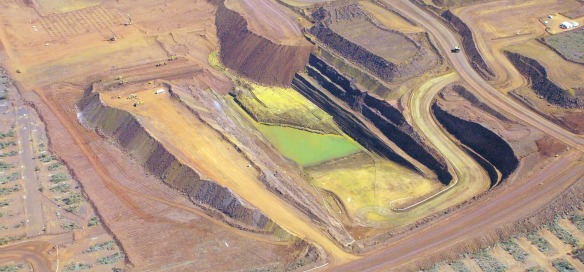
That will increase the tax take from iron ore royalties to a hefty $17.8 billion by the middle of 2015.
In total the WA State Government will earn $20.58 billion from mining royalties over the next four years, according to Budget papers.
The move is the latest in an intriguing game of chess being played out between Perth and Canberra with Federal Treasurer Wayne Swan previously indicating the Commonwealth could refund any state royalty payments made by mining companies under its new mining tax.
Porter acknowledged a likely consequence of the decision is that WA could lose that same $1.9 billion from its cut of the GST should the Federal Government choose to withhold it, in order to avoid falling into deficit itself.
It seems that no matter which government, State or Federal, chooses to raise mining royalties or taxes, neither seems particularly keen on conversing with the industry beforehand.
The Association of Mining and Exploration Companies chief executive Simeon Bennison said the organisation was, “extremely disappointed that industry bodies and individual companies have not been consulted in respect of the WA Government’s decision to increase the royalty rate on iron ore fines.
“This will be yet another unexpected financial impost on iron ore companies in WA.
“It will also add to the considerable uncertainty that is being created by the proposed mining tax and price on carbon emissions.
“This lack of consultation and uncertainty will undoubtedly undermine investor confidence, particularly for those companies that are currently attempting to raise equity and debt finance in the domestic and overseas market place.
“The situation is further exacerbated by the added uncertainty on whether the proposed increase in State royalties will be fully creditable under the proposed MRRT regime.”
Bennison did, however welcome certain initiatives announced in the budget that included funding for social infrastructure, particularly in regional WA, the Pilbara Cities project, skilled migration, trade training centres and training places, and the ppointment of a full time mining warden to deal with objections to mining tenement applications.
“AMEC also welcomes the government’s overall desire to drive investment in infrastructure and services in regional areas and major population hubs in front of forecast demand,” Bennison said.
“Such a strategy is essential in ensuring that undue production and commodity distribution delays are not encountered by the resources sector.”
There probably wasn’t anybody happier with the budget than State Nationals leader and Regional Development and Lands Minister Brendon Grylls with investment in regional WA set to continue with $1.2billion budgeted through the Royalties for Regions program in 2011-12.
Grylls responded to the budget saying that since the creation of Royalties for Regions in 2008 the Liberal-National Government had allocated $6.1billion to programs that were making regional WA a better place to live, work and invest.
“A major component of the Royalties for Regions program is to deliver improved social infrastructure,” Grylls said.
“This year’s initiatives are investing in regional health, education, skills training, water and Natural Resource Management (NRM), Aboriginal initiatives and SuperTowns.
“By 2015 Royalties for Regions will have allocated more than $1billion towards health services and infrastructure in regional areas, including an investment of $538million to strengthen medical care and services in rural communities in the southern part of WA.
“This is the greatest single investment in regional healthcare in WA’s history.”