Elvis has left the building No.3

THE BOURSE WHISPERER: The regular game of musical chairs continues within the boardrooms across the resources industry. The Whisperer pokes his head down the corridors of power to take a quick look at some of the chairs to have recently been vacated and to find out which ones have been filled:

Medusa restructures board

Following the company’s decision to delist from the Toronto Stock Exchange, and to oversee the next phase of its growth and development, Medusa Mining announced some changes to the composition and structure of its board which are to take effect immediately:
 
Peter Jones is to stand down as chairman and retire as Non-Executive Director.

Geoff Davis will stand down as managing director to be re-appointed as non-executive chairman to replace Jones.

Peter Hepburn-Brown is to be appointed as managing director of the company to replace Davis.

Roy Daniel is to retire as finance director and joint company secretary of the company but will continue in his role as chief financial officer.

Carabella Resources changes chairman

Following a review of the company’s board structure, current Carabella Resources non-executive director Andrew Amer, will replace Michael Addison as non-executive Chairman of the company.

Addison, currently a substantial shareholder, will remain on the board as a non-executive director.

Norton Non-Executive Director Steps Down

Mark McCauley announced his resignation from the board of Norton Gold Fields effective 31 August.

“On behalf of the Board I would like to thank Mr McCauley for his contribution over the last 4 years”, Norton chairman Mark Wheatley said.

“Mark has been involved with Norton over a period of restructure and renewal and the time is right for Mark to move on. The notice period will allow sufficient time for me to work with the board to secure the services of a suitable independent non-executive director as a replacement”.

Busy appointment book at Stonehenge

Stonehenge Metals announced a number of key appointments to its management in line with its corporate objective to develop Korea’s first uranium mining project.

The appointments included:
Tony Chamberlain as chief metallurgist to be responsible for maximising extraction of multi metals from the Black Shales.

Steven Michael as chief financial officer. Michael was recently with the Royal Bank of Canada as director of research sales – global equities. He holds a degree in commerce and has been a member of the Institute of Chartered Accountants for 15 years.

Injin Jeong  as project engineer to be responsible for coordinating all geological, metallurgical and environmental matters for the company. Jeong holds a degree in chemical engineering from Chonnam National University and is studying for a masters’ degree at UWA.

NuPower appoints managing director

NuPower Resources has appointed of Andrew Johnstone as managing director.

Johnstone has previously held senior management positions at a number of ASX listed companies including Discovery Metals and Gulf Industrials. He brings with him over 20 years’ experience working in exploration, resource development and mining.

NuPower executive chairman Mick Muir said the company considered Johnstone’s appointment a significant milestone in the company’s progress.

“Andrew joins us at an opportune time with a capital raising well underway and a major phosphate exploration program about to begin. His experience in Northern Territory exploration will be invaluable to NuPower,” Muir said.
 

And the winners are…

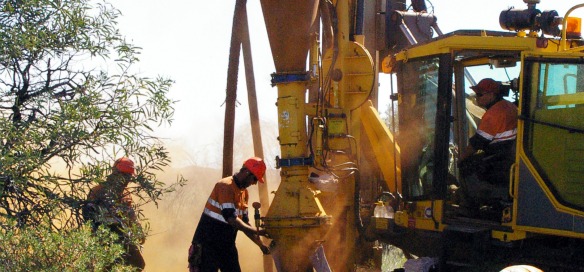
The Western Australian State Government has drawn the names out of the Co-funded Exploration Drilling Program hat.

A total of 42 companies and individuals applied for help with drilling 53 different exploration plays up and down the state.

The list includes company names such as Hancock Prospecting and Fortescue Metals Group demonstrating how much easier it must be to accept money from government coffers than it is to stoke them up.

Gold stood out as the commodity of choice for exploration plays by featuring in 49 per cent of applications.

There were 26 projects listing it as the main target, or as one of the, cl9osely followed by copper in 17 projects, nickel in 10 and iron for nine projects.

Other commodities being explored include platinum group elements, zinc, lead, uranium and manganese.

The list also included one geothermal project and an oil and gas project among the successful applications.

WA Mines and Petroleum Minister Norman Moore said the program provided companies an extra incentive to drill in underexplored areas, which was the key to the continuity of the WA mining industry.

Successful companies included Chrysalis Resources, which scored twice for its Doolgunna West and Pioneer projects.

Chrysalis was awarded $155,000 for a deep diamond hole (500 metres) to be drilled at its Doolgunna West project in the Narracoota Volcanics in the Bryah Basin and a further $28,000 for a RC drill programme at our Pioneer project in Norseman.

Beadell Resources also hit the jackpot twice with funding headed its way for drilling of it Hercules and Pleiades prospects.

Beadell has previously identified a new anomalous gold trend at Hurcules during wide spaced targeted reconnaissance aircore drilling.

This drilling recorded results including 1m at 0.7 grams per tonne gold from 55m, 1m at 0.2 g/t gold from 41m and 3m at 0.1 g/t gold from 42m.

Holes were drilled on three consecutive wide-spaced drill traverses defining a strike length of at least one kilometre.

Wide spaced aircore drilling on approximately one kilometre by 250m hole spacing at Pleiades Lakes has intersected a large low tenor gold anomaly 20km east of the Tropicana deposit.

Laconia Resources put its hand up and received funding to continue drilling on its 100% owned Barramine gold and base metals project.

Geophysical data and interpretation from Barramine has indicated a number of electromagnetic (EM) anomalies.

Laconia has carried out further evaluation of these geophysical anomalies via a preliminary geochemical orientation survey with the preliminary data.

Sampling focused over EM anomalies provided strong encouragement for base metal mineralisation in this area.

“We have had some really good exploration success at Barramine over the past twelve months,” Laconia Resources managing director Ian Stuart recently told The Roadhouse.

“We have been able to successfully move Barramine from being something with very little work having been conducted over it, to an exploration project that has undergone an EM survey, good geological mapping and geochemical sampling.

“As a result we now have a number of drill targets identified there.”

Gold Road Resources had its ticket drawn to enable it to drill at its 100%-owned Golden Sands project is located about 25km north of AngloGold-Ashanti / Independence’s Tropicana deposit and covers approximately 1,500 square kilometres with a strike length of about 65kms.

The Golden Sands project is considered highly prospective for gold and uranium mineralisation.

Gold Road also scored funding to drill at its Dorothy Hills prospect.

The most recent application round closed on March 25 and resulted in 53 successful applications.

Applications included nine from prospectors for drilling programs which will be carried out between July 2011 and the end of June 2012.

General applicants will share in $4.5million while prospectors are being offered $196,000.

The Co-funded Industry Drilling Program provides co-funding of up to 50 per cent of direct drilling costs with caps of $150,000 for a multi-hole project, $200,000 for a single deep hole and $30,000 for a prospector’s project.

Payment is made to successful applicants after the completion of their drilling programs.

Information acquired by the companies through the drilling programs is publicly released on the Department for Mines and Petroleum’s website after a short confidentiality period.

The information adds to the geological knowledge of the State and helps reduce risks for subsequent explorers.

Another round of co-funded drilling will be advertised from August 2011 – calling for applications in September-October 2011 for projects to be undertaken between January 2012 and the end of December 2012.

To view the list in full click here.

Gold popular in co-funded drilling program

THE BOURSE WHISPERER: The current round of the Western Australian State Government’s Co-funded Exploration Drilling Program has highlighted gold to be the much-favoured commodity of choice for exploration plays by featuring in 49 per cent of applications.

WA Mines and Petroleum Minister Norman Moore didn’t surprise anyone by speaking glowingly about the program that began under his watch.

However, what he did say has been supported by the number of applications the program receives each year.

Moore said the program provided companies an extra incentive to drill in underexplored areas, which was the key to the continuity of the WA mining industry.

“Again gold was the commodity that featured in most successful applications with 26 projects listing it as the main target, or as one of the commodities sought,” Moore said.

“Gold was followed by copper in 17 projects, nickel in 10 and iron for nine projects. Other commodities being explored include platinum group elements, zinc, lead, uranium and manganese.

“It is also pleasing to see a geothermal and an oil and gas project among the successful applications.”

The most recent application round closed on March 25 and resulted in 53 successful applications.

Applications included nine from prospectors for drilling programs which will be carried out between July 2011 and the end of June 2012.

General applicants will share in $4.5million while prospectors are being offered $196,000.

The Co-funded Industry Drilling Program provides co-funding of up to 50 per cent of direct drilling costs with caps of $150,000 for a multi-hole project, $200,000 for a single deep hole and $30,000 for a prospector’s project.

Payment is made to successful applicants after the completion of their drilling programs.

Information acquired by the companies through the drilling programs is publicly released on the Department for Mines and Petroleum’s website after a short confidentiality period.

The information adds to the geological knowledge of the State and helps reduce risks for subsequent explorers.

Another round of co-funded drilling will be advertised from August 2011 – calling for applications in September-October 2011 for projects to be undertaken between January 2012 and the end of December 2012.


Southern Cross Goldfields rubs Golden Orb

THE DRILL SERGEANT: Recent infill RC drilling carried out at the Golden Orb deposit by Southern Cross Goldfields has demonstrated its potential as an open pit and underground feed source.

Significant intersections received from the recent in-fill drilling include:
– 8 metres at 6.7 grams per tonne gold from 10m;
– 3m at 24.0 g/t gold from 13m;
– 8m at 7.6 g/t gold from 44m, and
– 10m at 6.1 g/t gold from 67m.

The feed is earmarked for feeding to the company’s proposed 400,000 tonnes per annum modular gold plant at its Marda gold project near Southern Cross in Western Australia.

Southern Cross’ drilling to date at Golden Orb has focussed on bringing the deposit into JORC Measured and Indicated Mineral Resource classification (previously Inferred – 1.023 million tonnes at 2.2 grams per tonne gold for 71,000 ounces) so that any resulting Ore Reserve can be incorporated into the company’s gold production strategy.

With a known strike length of over one kilometre, Golden Orb is one of Southern Cross’ largest mineralised systems.

The company is confident of potential extensions to the existing resource both along strike and at depth.

Mineralisation outcrops at surface and continues to the current extent of drilling at 150 metres below surface.

Golden Orb is located 15 kilometres south west of Marda and forms part of the company’s gold production and consolidation strategy in the Southern Cross region.

Southern Cross is currently conducting a feasibility study into the establishment of a 400,000tpa modular gold plant at Marda to treat ore from its Marda and Southern Cross deposits.

Assay results received to date from the current phase of drilling at Golden Orb demonstrates mineralisation outcropping at surface and continuing to a depth of at least 150 metres, being the extent of current drilling.

The company expects the continuity and grade of the mineralised zone demonstrated in the results of drilling to date to have a positive effect on the average grade of the updated resource estimate.

Southern Cross Goldfields managing director Glenn Jardine said the recent drilling demonstrated the potential for Golden Orb to emerge as a short-term open pit feed source to the proposed plant at Marda, and for it to transition to a longer term underground ore source over the medium term.

“We continue to be pleasantly surprised by the results of our drilling programmes at the Company’s gold deposits where in many cases we have only really scratched the surface,” Jardine said.

“Golden Orb is just one example of the significant upside within the Company’s gold portfolio that is beginning to be revealed with our current drilling focus.”

Proto acquires German development project

THE BOURSE WHISPERER: Sydney-based Proto Resources & Investments has acquired rights over the Kiefernberg nickel-cobalt development project located in Saxony, Germany.

Proto has entered an option to purchase the Granulite Mountains licence from Deutsche Rohstoff AG.

The licence covers over 600 square kilometres and includes both known mineralised zones and the site of a historical nickel-cobalt mine.

The Granulite Mountains licence also contains several known nickel laterite mineralisation including an advanced nickel laterite development project at Kiefernberg.

Proto intends to induct the Kiefernberg project as its second nickel-cobalt development, and will use the same technology as that at the company’s flagship Barnes Hill project in Northern Tasmania which is currently in approvals.

Proto managing director Andrew Mortimer indicated the strategic significance of the acquisition to the company.

“Kiefernberg is the perfect fit for Proto, and will allow us to leverage the nickel processing technology we have been piloting for Barnes Hill into an environment marked by excellent infrastructure,” Mortimer explained in an announcement.

“Our ability to cheaply and rapidly replicate the extensive development work undertaken for Barnes Hill will be key to our plans to build nickel production tonnage over the next few years.”

Proto has already begun the process of compiling all historical geochemical results from the Kiefernberg project into a digital database.

From this the company will prepare and implement a program of targeted drilling to provide the necessary confirmatory information for it to define a JORC-compliant resource in conjunction with the extensive existing geological and exploration data.

The Kiefernberg project has undergone historic al material non-JORC compliant drilling carried out by the GDR’s former Communist Government.

These historical drill results were assayed at 0.5m intervals, with tight drill spacing of less than 30m by 30m.

The company is expectant this should allow rapid completion of the necessary geological work to define a JORC compliant resource and reserve in order to support mine planning and plant engineering.

Proto considers that Kiefernberg represents an excellent opportunity to replicate the plant that has been designed for its flagship project at Barnes Hill in Tasmania.

The initial assessment of historical drilling results has identified several high grade nickel zones that would allow the fast-tracking of the plant and suggest sound economic potential.

Vital drill results from Doulnia

THE DRILL SERGEANT: West African gold explorer and Queensland tungsten developer Vital Metals, along with its Farm in partner Ampella Mining, has provided the market with an update on exploration progress at the Doulnia Gold Project in Burkina Faso.

The farmers last updated the market in March, reporting reported drill results from 66 holes in the Phase 2, 12,000 metre drilling program, which is currently underway.

Since then an additional 30 holes have been drilled from which assay results from four-meter composites have now been received.

Vital Metals chairman David Macoboy said the latest results continue to confirm the Doulnia project’s gold prospectivity.

“We are committed to progressing exploration activities at the Doulnia project,” Macoboy said in an announcement.

“Each batch of results adds to our understanding of the local geology, and increases our confidence in the prospectivity of the Project.”

Significant intervals received from latest assay results include:

– 4m at 8.16 grams per tonne gold from 68m, and
– 5m at 6.34 g/t gold from 80m.

Vital said the phase 2 round of drilling is nearing the halfway stage of the program. This has enabled the company to test the Kollo prospect on a more regional scale, leading to an increased geological understanding of the area.

“Our geologists have identified that gold mineralisation at Kollo is largely hosted within quartz feldspar porphyry, and we are currently reviewing all assay results, geology logging and field mapping with the aim of refining the exploration model for the remaining drilling,” Macoboy continued.

“That will focus on the most prospective soil anomalies that are associated with felsic litho types.

“Vital’s confidence in the gold prospectivity of the Kollo prospect is further supported by a significant increase in artisanal mining in the immediate vicinity of the prospect.

“While artisanal mining does pose some management challenges in the field, it provides first hand evidence on the prospectivity of the area.”

Vital also indicated it is on track to meet the first farm-in milestone, spending of $1.5 million to secure a 60% interest in the Doulnia gold project Joint Venture with Ampella.

This milestone is expected to be achieved in the current quarter. Vital then has the option to earn a 70% interest in the Joint Venture through spending $3.5M.

Sole funding of a Project Bankable Feasibility Study will earn Vital an 80% interest in the project.

Vital has secured the services of a second RC Rig, which will be on-site in June.
The company said this rig will provide it with significant operational upgrade for it to carry out its field programs.

There is a still a number of priority drill targets identified from the soil-sampling program that remain un-drilled.

The second RC Rig will allow testing of all of these targets and provide the necessary infrastructure to drill through the wet season.

Kula Gold confirms new mineralisation at Kulumadau

THE DRILL SERGEANT: Kula Gold has intersected further gold mineralisation adjacent to the Kulumadau Resource at its 100% owned Woodlark Island gold project in Papua New Guinea.

Recent assay results received by the company have confirmed a new, previously undiscovered zone of mineralisation present under a relatively thin 20 metre limestone cover.

The new zone of mineralisation was uncovered due more to chance than circumstance when the company was drilling a sterilisation line of 20 RC drill holes at approximate 75m collar spacing to sterilise an area for a waste dump, immediately to the east of the proposed Kulumadau pit.

Significant new assays results included:

– 47m at 1.3 grams per tonne gold Au from 25m;
– 64m at 1.3g/t gold from 34m including 13m at 3.3 g/t gold;
– 11m at 4.6 g/t gold from 91m including 2m at 15.5g/t gold, and
– 23m at 1.5g/t gold from 22m including 1m at 8.3g/t gold.

“The confirmation of this new mineralisation outside of the proposed open pit at Kulumadau is very welcome and the company will be accelerating its drilling program to delineate the full potential of this larger mineralised system,” Kula Gold managing director Lee Spencer said in an announcement.

“This new discovery confirms our belief in the excellent near-surface potential under thin cover on Woodlark Island.”

Geological logging carried out on the holes indicated the hydrothermal system at Kulumadau to be much larger than previously thought as a result of the intensive phyllic alteration and intrusive breccias that were intersected in a number of these RC holes.

Three out of the first four holes drilled returned significant gold assays, which the company had reported in an announcement in May.

The new assay results provide confirmation that the newly discovered mineralisation extends for some 400m east of the Kulumadau pit collar as delineated by the Pre-Feasibility Study.

The company is hopeful an intersection of lower grade mineralisation in two of the holes together with zones of elevated base metals in other holes may indicate additional zones of mineralisation are present closer to the PFS pit collar.

A diamond hole was drilled to confirm structural and host lithological data, which indicated the style of alteration and mineralisation are similar to that which constitutes the Kulumadau Resource.

A reconnaissance RC drill hole line is presently being drilled 300m to the south and parallel with the first drill line with the objective of determining the limits of the mineralising system and two RC holes have been drilled 75m to the north to determine strike orientation.

Scandinavian Resources acquires iron ore portfolio

THE BOURSE WHISPERER: Scandinavian Resources has acquired a portfolio of nine iron permits from Swedish company Grängesberg Iron AB.

The acquisition was made via the company’s its wholly owned subsidiary Kiruna Iron AB (KIAB).

The portfolio includes the advanced Ekströmsberg iron project and Tjårrojåkka iron-copper project located 45 kilomteres from Kiruna in northern Sweden.

The acquisition combines with KIAB’s existing JORC resources and JORC exploration targets to provide consistency to KIAB’s long term strategy.

KIAB intends to mine iron from a number of 50 million tonne to 100 million tonne iron deposits within the world class Kiruna Iron District and subsequently transport a premium quality magnetite concentrate to the Port of Narvik.

“This is an important strategic transaction for Kiruna Iron AB,” Scandinavian Resources technical director Olof Forslaund said in a company announcement.

“Ekströmsberg and Tjårrojåkka are key iron projects because they add additional tonnage to the portfolio and adjoin our existing iron projects, which are located close to modern infrastructure at Kiruna.

The acquisition also provides us with options in terms of planning future exploration, development and mining activities.

This is critical because the flexibility enables us to align our work programs within the parameters set by the community, landowners, Sami, government and environment.”

The consideration comprises the issue of 8.2 million fully paid ordinary shares in Scandinavian Resources, a US$2 million payment and a 1 per cent Net Smelter Royalty on future production.

Scandinavian will fund the cash component from existing cash reserves and existing facilities.

The payment is payable in three tranches: US$500,000 within 14 days, US$750,000 by
15 August 2011 and US$750,000 by 15 November 2011.

The 8.2 million shares will be issued prior to 30 June 2011 and will be escrowed until 15 August 2011 whereupon fifty per cent will remain in escrow until 15 November 2011.

No shareholder meetings will be required to complete the transaction, which will be effected through the acquisition of 100% of the issued capital in a wholly owned Swedish incorporated subsidiary of Grängesberg Iron AB which owns a 100% unencumbered interest in the permits.

Sale of the permits by GIAB allows it to focus on reopening the historic Grängesberg iron mine in southern Sweden and completing an Initial Public Offering during 2011.

Tanami Gold lifts Resources and Reserves

THE DRILL SERGEANT: Australian gold producer Tanami Gold increased its company-wide gold Resources and Ore Reserves across both of its operational centres as production at the Central Tanami project moves towards commencement.

Recent drilling at the company’s flagship Groundrush deposit has resulted in a maiden Mineral Resource of 203,000 ounces gold and a Mineral Reserve of 48,400 ounces gold.

“Due to time constraints on some assays, only 2 of the 13 holes drilled to date were included within the new Reserve and Resource,” Tanami Gold said in an announcement.

“Given this, there is excellent potential for further growth in both Reserves and Resources with a number of wide-high grade drill intersections yet to be included in the Resources, including diamond hole GD 0008 which reported 4.35metres at 159.50 grams per tonne and 9.5 metres at 38.8 grams per tonne.

“An extensive and focused surface diamond drilling program is planned to target known extensions to the mineralisation, which remains open along strike in both directions and at depth.”

Tanami announced a further substantial increase in its gold Mineral Resources, with total Measured, Indicated and Inferred Mineral Resources increasing to 2.30 million ounces of gold from 23.7 million tonnes grading 3.0 grams per tonne.

The updated Mineral Resource represents a 12 per cent increase in total Resource ounces compared with the December 2010 Mineral Resources estimate of 21.3Mt at 3g/t for 2.03 million ounces, which the company announced in February.

The latest increase also includes a 17% increase in the Mineral Resources at Tanami’s 100%-owned Central Tanami project in the Northern Territory, providing encouragement for it plans to commence production at the project in 2012.

The company expects the Central Tanami project will form a second substantial production hub alongside its existing 40-50,000 ounce per annum Western Tanami Operations.

The latest Central Tanami project Resources estimate has resulted in total Measured, Indicated and Inferred Resources of 1.75 million ounces of gold from 20.9 million tonnes grading 2.6g/t (see Table 6).

Within the total new Resources, 1.3 million ounces, or approximately 75%, classified as Measured or Indicated.

“The latest upgrade of Resources and Ore Reserves represent key milestones for the company, enabling it to focus on completing the Central Tanami project Feasibility Study with the aim of commencing gold production at the Central Tanami project by mid-2012,” Tanami Gold managing director Graeme Sloan said in the announcement.
 
“Particularly pleasing is that within four months of announcing updated Resources in February 2011, we have further increased Resources by more than 12 per cent and announced a total Ore Reserve of 402,000 ounces of gold for both our key operational hubs, the Western and Central Tanami.

“Achieving this level of Resource growth over such a short period highlights the enormous potential of the Central Tanami Project area – especially at Groundrush, where timing constraints resulted in the inclusion of just two of thirteen diamond drill holes from the current drill program within the maiden Resource of 203,000 ounces of gold.

“Add to this the recent grant of two large Exploration Licences, which opens up approximately 100 kilometres strike of the highly prospective Mt Charles Formation, and you can understand why the company is confident the Central Tanami project will deliver increasing Resources, Reserves and gold production.

“A ramp-up in drilling is currently underway for Resource to Reserve conversion, to drill test extensions to known mineralisation, and to drill test numerous new targets.”


Study ticks viability of 53Mt coal project

THE BOURSE WHISPERER: Pan Asia Pacific has received the results of an independent study carried out on the TCM underground coal mine project in Kalimantan Indonesia.

The study on the 53 million tonne JORC resource project was carried out by underground mining group
KOPEX.

Pan Asia holds a 75% interest in the TCM project and commissioned KOPEX to undertake an Independent Study on all its key aspects.

“The completion of this study provides the Company with a roadmap to deliver the project to full production,” Pan Asia Pacific chief executive officer Alan Hopkins said in an announcement.

“We now look forward to undertaking all work required to complete the Final Feasibility Stage and bringing this project into production”.

According to the company the outcomes of the study indicate its original target of production of at least 1.5 million saleable tonnes per annum over a 15 year period (following initial construction), is considered achievable.

The study also showed the target underground area at the TCM mine to be a viable and economic opportunity with additional underground reserves possibly existing in the North area.

Current resources for the TCM concession area, dated 31 January 2011 are stated as 53,237,303 tonnes, comprising 22,418,736 tonnes of Indicated Coal Resources and 30,818,567 tonnes of Inferred Coal Resources.

The study has identified the quality of coal to have an average calorific value (adb) of 6534 kilocalories per kilogram (Kcal/kg), moisture 5.65% and ash 14.24%.

The most appropriate mining methods to emerge from the study is retreat longwall mining as these are considered the best option to attain the target production levels established for the project.

“Mine designs are expected to be conservative with respect to potential longwall extraction rates,” Pan Asia Pacific said.

“Increased longwall dimensions would increase reserves, overall productivity, & project economics.

“The access to the seams has been assumed to be by inclined drifts from the surface. KOPEX recommends that the option of access from an opencut highwall should be pursued as part of the future studies.

“Initial indications from the geotechnical assessment are that the ground conditions will be better than those encountered at the Indominco underground mine in East Kalimantan.

“This is an important and positive factor to the project as there were no major geotechnical issues encountered at the Indominco mine.

“Based on the potential benefits as described, KOPEX recommends that the TCM project be advanced to full final feasibility stage.”

Pan Asia Pacific recently commissioned a next phase of drilling and further detailed test work required to complete of the Full Final Feasibility Study.

The company will also use the drilling results in the Full Final Feasibility Study in order to upgrade the existing JORC resource and carrying out detailed mine planning, as well as assessing the open pit potential.

The drill program is planned to comprise 13 holes for 4270 metres. This will assist it to progress the southern underground mining area through to Full Final Feasibility Study and increase the level of confidence (resource and reserve estimates) in the proposed southern underground mining area.

This particular drill program will also see the company conduct all necessary test work (geotechnical, hydrogeological, methane gas and spontaneous combustion tests) required to commence an underground coal mining operation and look to expand resources.

The company will also undertake up to 9 holes for 1342 metres to target a potential open pit area. As well as another 3 holes for 1050 metres to test the extension of the resource to the North and a possible further underground mine.