Revolver Resources Locked and Loaded for North Queensland Exploration

COMMODITY CAPERS: Revolver Resources is a copper exploration company that listed on the ASX in September last year with a self-proclaimed focus on development of natural resources to meet the world’s accelerating electrification needs.

The company has advanced copper projects in Queensland: Project Osprey; and the Dianne project.

The Dianne project, which was once one of the highest-grade operating copper mines in the world and has left a remaining orebody ripe for redevelopment, located in North Queensland’s polymetallic Hodgkinson Province.

The Dianne Copper Mine produced 63,758 tonnes of high-grade copper ore with an average grade of 22.7 per cent from open cut and underground operations between 1979 and 1983 before mining operations ceased.

Work carried out by Revolver at Dianne to date has the company already labelling it an emerging potentially high-grade multi-mineral new discovery.

Assays released earlier this year indicate much higher grades and higher volumes of copper, zinc, cobalt and gold than what the company had previously thought existed within the project.

The company now views the Dianne project as one of enormous untapped potential pointing to the highly encouraging and exciting results it has achieved to reveal a far more extensive mineralised and multiple commodity system than has been previously understood.

“These results offer the potential of expanding the known mineralisation significantly,” Revolver Resources managing director Pat Williams said.

“Put into context, the assay results we have from these samples – which were obtained only from surface – highlight ore grades greater than the average grade of some mines operating today.

“The pathway to material, low-cost, near-term production has been greatly enhanced with this new information.

“Our systematic exploration program on the Dianne project is unveiling a considerable mineralised system and its inherent characteristics, and this is rapidly evolving how we adapt to efficiently continue to explore and grow the size of the ultimate resource.

“Our exploration methodology is being validated and we are opening up multiple parallel work fronts to bring forward further critical information about the full potential of the Dianne project.”

Project Osprey lies within Queensland’s world class North-West Minerals Province, where exploration has confirmed the characteristics of both Iron Oxide Copper Gold (IOCG) and Mt Isa style copper mineralisation systems.

The area is no stranger to the industry with world -class mines already established in the region, including Mt Isa copper mine, George Fisher/Hilton copper mine, Century zinc mine as well as the Mount Gordon deposits – Mammoth, Esperanza and Esperanza south and Ernest Henry.

Revolver is targeting Mt Isa style copper mineralisation within several already identified zones.

The company has reinterpreted historical regional geology by using gravity, magnetic, and drilling data that has demonstrated its geological targets occupy the (faulted) contacts of the basaltic basement with sediments of the younger McNamara Group (termed Paradise Creek and Lady Loretta Formations).

Revolver has established an exploration program for the next two years for Project Osprey to include phases of diamond drilling, further geophysical EM and IP surveys.


Email: hello@revolverresources.com.au
Web: www.revolverresources.com.au
Directors: Pat Williams, Paul McKenna, Brian MacDonald


Alto Metals Keeps 2022 Momentum Running at Sandstone

COMMODITY CAPERS: Alto Metals (ASX: AME) reported a mineral resource update for the company’s 100 per cent-owned Sandstone gold project in Western Australia.

The mineral resource estimate for the Sandstone gold project now totals 12.4 million tonnes at 1.6 grams per tonne gold for 635,000 ounces of contained gold.

The updated mineral resource incorporates updates for the project’s Lord Nelson, Lord Henry, Havilah and Vanguard Camps and was prepared by independent mining industry consultants, Snowden Optiro and reported in accordance with the 2012 JORC Code.

Highlights of the update, include:

• Resource update represents an increase of 92 per cent in contained gold at an average discovery cost of less than A$14 per ounce.

• Updated Mineral Resources constrained within $2,500/oz optimised pit-shells at a 0.5g/t gold cut-off and over 90 per cent of total ounces within 160m from surface.

• Shallow, high-grade resources remain open along strike and at depth at all deposits highlights the strong potential to continue to grow the resource inventory with further drilling.

• Excellent gold recoveries of approx. 96 per cent in fresh rock returned from preliminary gold recovery testwork (avg. of 93% across all rock types) demonstrates gold will be recoverable through a simple cyanide extraction process.

• Rapid growth at Vanguard Camp with a tripling of the resource to 2.3 million tonnes at 2g/t gold for 150,000oz and mineralisation remaining open along a +2km long NW/SE trending corridor.

• Substantial resource growth at Lord Nelson, increasing by 138 per cent to 5.3 million tonnes at 1.6g/t gold for 267,000oz and mineralisation remains open.

• Mineral Resource Estimate excludes an update for Indomitable Camp. Recent high-grade gold results outside the current resource and assays from planned drilling to be included in an update in the second half of the year.

“We view this very much as an interim resource upgrade, with significant scope to delineate additional shallow, high-grade gold ounces with the current and planned drilling at the Lords Corridor, Vanguard and Indomitable,” Alto Metals managing director Matthew Bowles said.

“The company remains focused on adding further ounces with extensional drilling and plans to mobilise additional rigs to fast-track this resource growth and also test a number of our high-priority regional targets.

“Alto completed over 60,000 metres of drilling in 2021 and the scale of growth, particularly at Lord Nelson which has more than doubled and Vanguard which has tripled in size, gives us the confidence that we can continue to materially grow the resources beyond what is currently defined at Sandstone.”

Alto has enjoyed a fairly busy 2022 thus far: before attending the 2022 RIU Explorers Conference in February, the company reported gold results from drilling completed at the end of 2021 at Sandstone.

Alto carried out the extensional drilling at the Indomitable deposit that forms part of the Indomitable Camp, which is currently defined over a two kilometres strike length and is hosted within the +20km NW/SE Indomitable/Vanguard/Havilah Trend that forms part of Alto’s priority ‘Alpha Domain’ target area.

Multiple, broad zones of gold mineralisation were intersected from shallow depths in step‐out RC drilling at the Indomitable Camp located approximately 15km north‐west of the Lords Corridor.

Results included:

SRC 574
21 metres at 2 grams per tonne gold from 46m, including 1m at 14.9g/t gold from 61m and including 1m at 6.3g/t gold from 66m, and 11m at 2.5g/t gold from 92m, including 2m at 7g/t gold from 93m.

The Indomitable Camp currently has an Inferred Mineral Resource of 1.7 million tonnes at 1.5 grams per tonne gold for 74,000 ounces. These resources remain open along strike and at depth.

“At Indomitable we have now defined mineralisation over a strike length of 500 metres, with numerous broad intersections of strong gold mineralisation, encountered from shallow depths, which remain open at depth and along strike,” Bowles said.

“Such an unusually deep weathering profile suggests the mineralisation structures at the Indomitable deposit are long‐lived and extensive, which is encouraging as it indicates the potential for a much larger system.

Commencing 2022, Alto reported on activities undertaken to close 2021 at Sandstone being gold results from the Havilah‐ Maninga Marley prospect, which along with the Havilah West target makes up the Havilah Camp that is defined over a 1,500 metre strike located less than one kilometre west of the Lords Corridor.

The Havilah deposit currently has an Inferred Mineral Resource of 371,000 tonnes at 1.7 grams per tonne gold for 20,300 ounces.

The results from Havilah confirmed continuity of high‐grade mineralisation outside the current resource and remains open down plunge, and included:

SRC551
3 metres at 1.4 grams per tonne gold from 51m and 13m at 2.5g/t gold from 104m, including 1m at 21.9g/t gold from 114m.

Alto also reported on further high‐grade intercepts achieved at the Lord Henry pitttt that included the latest one‐metre resplits of previously reported four‐metre composites from RC drilling designed to test extensions of gold mineralisation.

The results continued to highlight the presence of multiple stacked lodes of high‐grade gold, within broader zones of mineralisation, that remain open to the north.

These latest results will be incorporated into the updated mineral resource estimate for Lord Henry.


Email: admin@altometals.com.au
Web: www.altometals.com.au
Directors: Richard Monti, Matthew Bowles, Terry Wheeler, Dr Jingbin Wang


Azure Minerals Moving Andover Apace

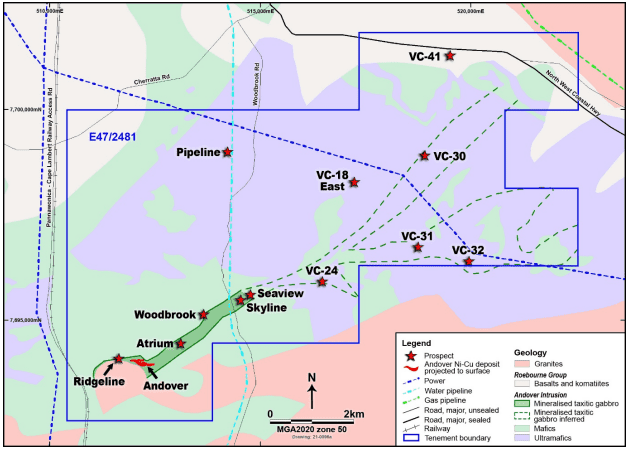
COMMODITY CAPERS: One would have had to have been hiding under a weighty rock over the past year or so to not hear about the advancement of Azure Minerals (ASX: AZS) Andover nickel-copper-cobalt project in the West Pilbara region of Western Australia.

Azure Minerals rounded out a successful 2021 by claiming a new discovery at the Andover project (60% Azure / 40% Creasy Group).

Azure Minerals announced diamond drilling had discovered a new zone of nickel-copper sulphide mineralisation at the Skyline prospect located approximately 300m to the west of the VC-23 prospect.

The drilling also intersected substantial massive nickel and copper sulphide mineralisation in the VC-07 West mineralised system.

Up to that time, 133 diamond drill holes had been completed on the Andover project, with 102 holes drilled at VC-07 East, 20 holes at VC-07 West, 8 holes at VC-23 and 3 holes at Skyline.

The first three Skyline drill holes intersect nickel and copper sulphide-rich mineralisation coincident with electromagnetic (EM) conductors, encountering:

ANDD0129
7.4 metres of disseminated nickel-copper sulphides from 55.5m;
6.4m of disseminated nickel-copper sulphides from 64.2m; and
6.7m of disseminated nickel-copper sulphides from 81.4m

ANDD0131
2.9m of disseminated nickel-copper sulphides from 70m; and
1.8m of disseminated nickel-copper sulphides from 73.8m

ANDD0132
2.6m of disseminated nickel-copper sulphides from 106.8m; and
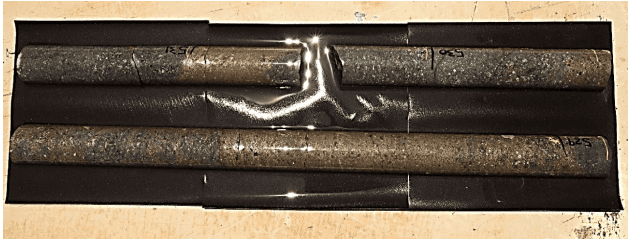
13.7m of blebby and disseminated nickel-copper sulphides from 115.2m.

“We’re very pleased that our regional exploration drilling has got off to such a great start with a new nickel-copper sulphide discovery made at the Skyline prospect,” Andover Minerals managing director Tony Rovira said at the time.

“The first three holes all intersected nickel-copper sulphide mineralisation coinciding with EM conductors, confirming that on the Andover project, electrical conductance continues to be associated with sulphide mineralisation.

“Meanwhile our drilling continues to intersect substantial nickel-copper sulphide mineralisation within the VC-07 mineralised corridor, with the latest massive sulphide intersections at VC-07 West also coinciding with electromagnetic conductors.

“With multiple mineralised drill hits and extensions of the EM conductors that have yet to be drilled, VC-07 West looks promising for hosting significant nickel-copper sulphide mineralisation.”

In February, Azure Minerals reported receiving assay results from the final 14 drill holes of the mineral resource drill-out of the Andover deposit, which it subsequently sent off to its consultants to be included in the prospect’s maiden Mineral Resource Estimate (MRE), which is expected to be released in late March 2022.

The company then turned its attention to drilling at the Ridgeline nickel-copper sulphide prospect, which it announced this week had returned multiple high-grade nickel and copper intersections.

Nickel-copper sulphides intersected at Ridgeline returned high-grade assays, including:

ANDD0134
6.3 metres at 3.59 per cent nickel, 0.21 per cent copper and 0.17 per cent cobalt from 459.2m downhole, within 12.6m at 2.17 per cent nickel, 0.46 per cent copper and 0.10 per cent cobalt from 459.2m;

ANDD0128
4.9m at 3.5 per cent nickel, 1.34 per cent copper and 0.17 per cent cobalt from 542.8m downhole, within 14.5m at 1.84 per cent nickel, 0.88 per cent copper and 0.09 per cent cobalt from 537m; and

ANDD0127
0.9m at 4.45 per cent nickel, 0.19 per cent copper and 0.17 per cent cobalt from 356.6m downhole, within 4.1m at 1.4 per cent nickel, 0.6 per cent copper and 0.06 per cent cobalt from 356.6m.

A geologically targeted step-out drill hole, ANDD0147, collared approximately 140m along strike to the west of Ridgeline intersected a three-metre-wide zone of nickel-copper sulphide mineralisation, including two intervals of massive nickel-copper sulphides.

Nickel-copper sulphide mineralisation at Ridgeline starts approximately 200m along strike to the west of the Andover nickel-copper deposit and extends to the west for at least 600m.

Azure has drilled 32 holes at Ridgeline, intersecting several distinct horizons of sulphide mineralisation.

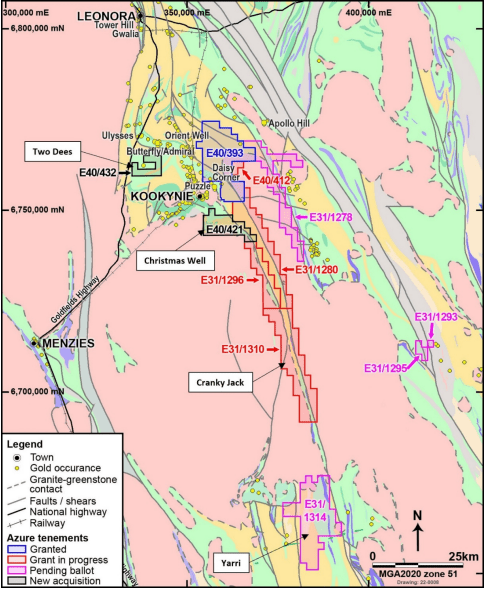
While attending the recent 2022 RIU Explorers Conference, Azure announced staking of two new Exploration Licence Applications (ELAs) in the Kookynie gold district and application for an additional two new ELAs to the south of the company’s Barton tenement package.

Azure made application for two Exploration Licences located within the Kookynie gold district.
The tenements are:

• Christmas Well ELA 40/421 69sqkm Azure is sole applicant;
• Two Dees ELA 40/432 33sqkm Azure is sole applicant.

Christmas Well is thought to have potential for Kookynie-style gold mineralisation and Volcanogenic Massive Sulphide (VMS) mineralisation (copper-zinc-lead-gold-silver).

Two Dees is considered prospective for gold mineralisation considered similar to Genesis’ nearby Ulysses and Admiral-Butterfly-Clark gold deposits.

Azure has also made applications for two new Exploration Licences further south from Kookynie:

• Cranky Jack ELA 31/1310 173sqkm Azure is sole applicant; and
• Yarri ELA 31/1314 208sqkm Multiple applications, pending ballot.

Azure Minerals expects to eventually hold a large, strategically-situated portfolio of tenements within the Kookynie district with potential extensions to the south, comprising:

• One granted Exploration Licence (E40/393: 198sqkm);
• Six ELAs (totalling 483sqkm) with Azure as the sole applicant; and
• Four ELAs (totalling sq336km) where Azure is a competing applicant, and will go into a Mining Warden’s Court ballot to decide ownership.


Email: admin@azureminerals.com.au

Web: www.azureminerals.com.au

Musgrave Minerals Enjoys Freedom to Explore Home Ground

COMMODITY CAPERS: Musgrave Minerals has been making the most of the freedom bestowed upon it to focus on the company’s 100 per cent owned tenure at the Cue gold project in Western Australia after Evolution Mining elected to act as earn-in manager over the pair’s Joint Venture from Day one of 2022.

This week, Musgrave Minerals reported further high-grade gold assay results from RC drilling at the Mosaic Lode.

The new intersections were achieved when testing along strike from the original Mosaic discovery intersection announced in December 2021, and include:

22MORC052
4 metres at 79.6 grams per tonne gold from 20m, including 3m at 105.4g/t gold from 20m;

22MORC053
4m at 8.9g/t gold from 61m;

22MORC001
3m at 6.5g/t gold from 50m;

22MORC047
2m at 7.8g/t gold from 92m; and

22MORC051
2m at 5.8g/t gold from 58m.

Elsewhere on the company’s 100 per cent ground two RC pre-collar drill holes at Break of Day intersected gold mineralisation in previously untested locations outside the current Mineral Resource Estimate boundary.

New extensional intersections from composite sampling included:

22MORC066
2m at 10.4g/t gold from 138m to EOH with the RC pre-collar terminating in high-grade mineralisation, in an area poorly drill tested.

The intercept is approximately 80m south of the current Break of Day Mineral Resource boundary and a diamond tail is pending for this hole.

22MORC066
6m at 2.4g/t gold from 66m was encountered in an area not previously drill tested and approximately 100m south of the current Break of Day Mineral Resource boundary.

22MORC071
6m at 4.3g/t gold from 84m was hit within the broader Break of Day Mineral Resource area but approximately 20m away from a currently defined lode.


“These results from the new Mosaic Lode at White Heat continue to highlight the upside potential of the project,” Waugh said in the company’s recent ASX announcement.

“The near-surface high grades intersected at Cue are some of the best, recent near-surface exploration hits in the Yilgarn.

“We are continuing to grow our understanding of the system and the controls on mineralisation and have confidence in our ability to grow the Mineral Resource base.

“We are on track to deliver a maiden Mineral Resource for Big Sky and White Heat-Mosaic in late Q2 2022.”

This followed up news in February, when Musgrave Minerals reported gold assay results from reverse circulation (RC) and diamond drilling of prospects on its, then new, Mosaic target located just south of the earlier White Heat prospect discovery.

The newly discovered Mosaic Lode returned high-grade gold results, including:

21MORC414
9m at 110.5g/t gold from 42m, including 3m at 307.3g/t gold from 45m; and

21MODD041
2.8m at 122.2g/t gold from 72m, including 0.8m at 381g/t gold from 74m.

The drill rigs were busy at Mosaic, following up on strong assay results achieved from resource infill drilling at the Big Sky prospect that included.

21MORC259
3m at 22.6g/t gold from 68m, including 1m at 62.6g/t gold from 69m;

21MORC260
2m at 9.1g/t gold from 64m; and

21MORC241
8m at 4.3g/t gold from 23m, including 1m at 30.9g/t gold from 23m.


“Our Cue gold project continues to deliver with more exceptional near-surface gold results in both RC and diamond drilling,” Musgrave Minerals managing director Rob Waugh said at the time.

“We think there is a lot more gold to be found in this district.

“These results again demonstrate the upside of the project.

“Even modest tonnages at these sort of near surface grades could have a positive impact on the future project economics.

“The company currently has three drill rigs on our 100 per cent tenure and one on the Evolution JV.

“The immediate focus is on building the resource base and delivering a Mineral Resource Estimate update in late Q2 2022.”

The current resource estimate for the Cue gold project totals 6.4 million tonnes at 3.2g/t gold for 659,000 ounces, including the Break of Day deposit (797kt at 10.2g/t gold for 262koz contained gold) and the Lena deposit (4.3Mt at 2.3g/t gold for 325koz contained gold) located 130m to the west of Break of Day.

The new gold discoveries at White Heat-Mosaic and Big Sky are both outside the existing resource areas.

All this didn’t mean Musgrave took its eye of the Cue Joint Venture with Evolution Mining over Lake Austin ball with the JV announcing new assay results in January from aircore and diamond drilling programs.

The aircore results continued to extend the large regolith gold mineralisation at the West Island prospect and the diamond drilling returning high-grade basement gold mineralisation.

Diamond core intercepts from the December 2021 quarter included:

21MODD025
4.26m at 41.5g/t gold from 160.74m, including 0.41m a 400.2g/t gold from 160.74m; and

21MODD033
6m at 2.7g/t gold from 125m;

Evolution had initially committed to a $5 million exploration spend to fund further drilling at Cue in FY22 but has increased the JV budget for the second half of the year.

The intent is to accelerate exploration and to delineate the scale of the gold system at West Island, to test additional gold-in-regolith aircore anomalies and define new diamond drilling targets through aircore drilling.

“The gold system at the Cue JV with Evolution continues to deliver strong results with diamond drilling confirming the potential for multiple high-grade basement gold lodes within the dolerite sill at West Island,” Musgrave Minerals managing director Rob Waugh said.

“Evolution increasing the exploration budget in H2 2022 and electing to act as Earn-in Manager from 1 January 2022 is a positive move and an indication of the upside potential of the Joint Venture ground.”


Email: info@musgraveminerals.com.au


Web: www.musgraveminerals.com.au


White Rock Minerals Chasing Global Commodities

COMMODITY CAPERS: White Rock Minerals (ASX: WRM) describes itself as being a near-stage gold producer and poly-metallic and precious metals explorer.

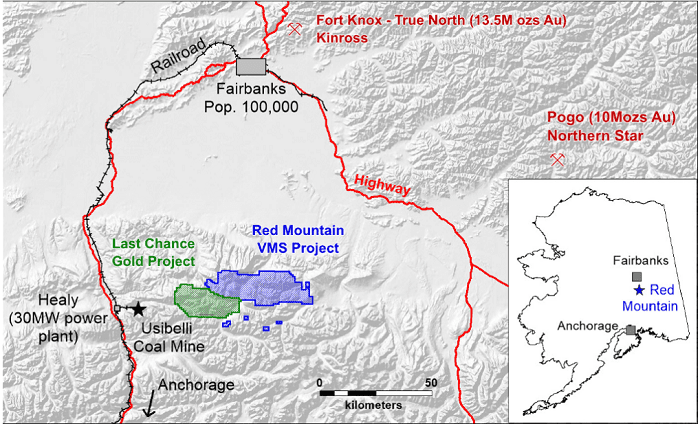
The company’s aspirations are spread across a portfolio of three projects: the Woods Point gold project in Victoria, the Red Mountain silver-zinc VMS and Last Chance IRGS gold projects in Alaska USA, and the advanced gold and silver Mt Carrington project in News South Wales.

White Rock believes its portfolio provides investors with diversification through high-quality projects at differing developmental stages, exposed to different commodities, in two first world jurisdictions.

White Rock recently updated the Inferred Mineral Resource estimate for the Red Mountain project thanks to a doubling of the Dry Creek deposit high-grade Inferred Mineral Resource to 4.9 million tonnes at 8.4 per cent zinc equivalent or 393 grams per tonne silver equivalent (at a 3% Zn cut-off).

Dry Creek joins the West Tundra Flats as the most significant deposits within the Red Mountain project combining for a high-grade Inferred Resource of 11.6 million tonnes at 12 per cent zinc equivalent or 555g/t silver equivalent (at a 3% Zn cut-off).

The global Inferred Mineral Resource for Red Mountain now stands at 21.3 million tonnes at 8.5 per cent zinc equivalent for 1.8 million tonnes of contained zinc equivalent or 393g/t silver equivalent for 207 million ounces of contained silver equivalent.

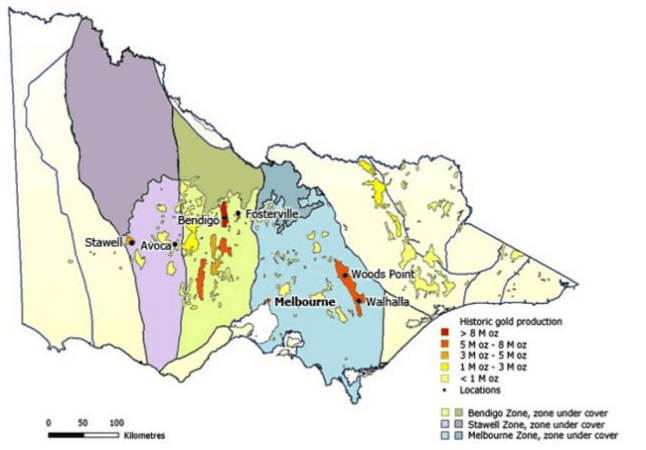
Much of White Rock’s attention of late, however, has been focused on advancing its Woods Point gold project north-east of Melbourne in Victoria, which the company acquired in 2021.

Woods Point contains 660 square kilometres of highly prospective exploration ground that has seen historical production of more than 1,600,000 ounces of gold.

Along with the land holding, Woods Point also contains the Morning Star gold mine, which came complete with mining licenses, operational shaft and winder, underground workings, and a gold processing plant.

Over its lifetime, the Morning Star mine produced over 883,000 ounces of gold at an average grade of 26.5g/t.


With production now halted, White Rock has taken on the project with its focus on in-mine exploration, with the goal of following up high-grade gold potential in specific zones of the mine to define a long-term resource and mine plan, before considering a restart of production.

The most recent news from Morning Star came from an underground drilling foray that produced further assay results from the Kenny’s target area.

The Kenny’s target area includes multiple high-grade gold structures including the Whitelaw Reef, the Upper and Lower Burns Reefs, and the Upper and Lower Campbell Reefs.

This target area is located between 6 Level and 9 Level, where existing development provides access to the Whitelaw Reef and the immediate high-grade target area that White Rock is currently assessing for its future mining potential.


Recent drill intersection assay results from the Whitelaw Reef, include:

22KPL9002
4.3 metres at 9.3 grams per tonne gold, including 0.3m at 68.3g/t gold (true width); and

22KPL9004
0.2m at 56.6g/t gold (true width).

These results followed previous drilling results from the Whitelaw Reef, which included:

21L7006
0.8m at 34.1g/t gold, including 0.3m at 107g/t gold (true width); and

MS402
0.6m at 74.8g/t gold (true width).

White Rock has since moved the underground drill rig to the southern end of the mine, still on 9 Level, where it is completing definition drilling on extensions to the recently mined McNally Reef with a view to re-commencing mining in the near term.

The underground drill rig will then resume drill testing the prospective Gap Zone between 10 Level and 14 Level in conjunction with continuing to drill nearer-term production targets above 9 Level as it progresses through different drill sites along 9 Level.

While the McNally Reef is being drilled, White Rock will undertake a mining assessment of the Whitelaw Reef to determine whether it can be included in future development and production plans or requires additional drilling to reach a decision point.

The company believes these current drill programs potentially deliver four working areas for future mining, dependent on the outcome of an assessment of drilling results for each, providing a pathway to recommence mining at:

1. McNally Reef extensions where development is in place to commence mining immediately;

2. Dickenson Reef where sufficient development is in place to commence mining in the short term;

3. Stacpoole / Age of Progress Reefs where development is in place and minor infrastructure requirements will allow mining to commence in the short term; and

4. Whitelaw Reef where minor development is required, and more substantial infrastructure is needed to enable mining to commence in the mid-term.


Email: info@whiterockminerals.com.au
Web: www.whiterockminerals.com.au
Directors: Peter Lester, Matt Gill, Jeremy Gray, Lord Christopher Wellesley, Paul McNally


Quarter Time Wrap.

COMMODITY CAPERS: Company Quarterly Reports are a good way to catch up on what’s been happening over the past three months. Here we take a quick glimpse at a few.

Caspin Resources (ASX: CPN) completed a solid December Quarter with highlights including:

At the Yarawindah Brook project RC drilling at the XC-22 prospect intersected further nickel-copper sulphides that included a zone of up to 40 metres of disseminated nickel and copper sulphides in serpentinised ultramafics and pyroxenites in drillhole YARC0022, including a 2m zone of up to 20 per cent sulphides (assays pending).

Drilling was carried out of drillhole YARC0027 (assays pending), 175m along strike and down dip of YARC0022 that intersected gabbro and pyroxenite sequences with trace to minor disseminated sulphides.

Caspin sees the XC-22 prospect to be emerging as a separate prospect with mineralisation remaining open at this stage.

Other work has resulted in large-scale PGE-nickel-copper mineralisation trends emerging at the Central Yarabrook Hill prospect.

Continuity of mineralised ultramafic has been demonstrated over 1,500m down-dip and 3,000m of strike extent.

Multiple target concepts are still to be evaluated.

Caspin completed an EIS-funded stratigraphic diamond hole with multiple zones of sulphides intersected and lithologies supporting the company’s conceptual geological model.

Drilling is scheduled to recommence in February 2022 with several Phase 2 holes to be extended with ‘diamond tails’ in addition to drilling new, previously untested targets.

Airborne Electromagnetic survey now providing complete project-wide coverage Corporate.

The company is in a strong financial position with $12.3 million in the bank at end of quarter.


The focus for Argentina-focused lithium play Galan Lithium (ASX: GLN) during the December Quarter was ongoing feasibility works, construction activities and further drilling at the company’s high-grade Hombre Muerto West (HMW) project and the completion of the PEA/scoping study for the Candelas project.

Both projects are in the Hombre Muerto West salt flat in the South American Lithium Triangle.

Galan completed an updated stronger, compelling HMW economic study, resulting in unleveraged pre-tax NPV of US$2.2 billion, IRR of 37.5 per cent and less than three year payback period.

The HMW Feasibility Study was awarded to Hatch an independent firm that is anticipated to work with Galan’s close knit, highly experienced group of consultants.

Long term average lithium price assumption of US$18,594 per tonne lithium carbonate equivalent (LCE) battery grade used for both the HMW and Candelas projects economic assessments.

The company achieved excellent Preliminary Economic Assessment (PEA) results for Candelas, including unleveraged pre-tax NPV of US$1.225 billion, IRR of 27.9 per cent and a four year payback period.

The study determined an initial capital cost of US$408 million with a long project life of 25 years at 14,000 tonnes per annum of battery grade LCE.

A competitive cash production cost for Li2CO3 of US$4,227/t would position Candelas as a low-cost developer in the lithium industry.


During the December Quarter Neometals (ASX: NMT) advance progress of the company’s Lithium Battery Recycling Project (Neometals 100%, SMS earning into 50% through Primobius GmbH incorporated JV).

Neometals has developed a sustainable process flowsheet targeting the recovery of battery materials contained in production scrap and end-of-life lithium-ion batteries (LIBs) that might otherwise be disposed of in land fill or processed in high-emission pyrometallurgical recovery circuits.

Neometals’ process flowsheet (LIB Recycling Technology) targets the recovery of valuable materials from consumer electronic batteries (devices with lithium cobalt oxide (LCO) cathodes), and nickel‐rich EV and stationary storage battery chemistries (lithium‐nickel-manganese‐cobalt (NMC) cathodes).

The LIB Recycling Technology is designed to recover cobalt, nickel, lithium, copper, iron, aluminium, carbon and manganese into saleable products that can be reused in the battery supply chain.

A pilot trial at SGS Lakefield, Canada in 2019/20 produced cathode-grade nickel and cobalt sulphate products which collectively represent approximately 80 per cent of the value of the basket of products recovered.

A demonstration scale trial commenced in DecQ 21, which is expected to generate data for the company’s Feasibility Study.

Source: Company announcement

Neometals entered an incorporated 50:50 Joint Venture with SMS group GmbH, called Primobius GmbH.

Primobius was incorporated to co-fund and complete final stage evaluation activities and to consider commercialisation of the LIB Recycling Technology.


Roadhouse translation


“Help me please,” he wailed. My pants are on fire!”

Green Hydrogen: Aspiring Towards 2050 Zero Emissions Energy Production

COMMODITY CAPERS: Opening the book on ‘Green Hydrogen’ a reader would most likely be surprised to read of the collaboration between former Australian Prime Minister Malcolm Turnbull and mining magnate Andrew ‘Twiggy’ Forrest.

The two gents are co-founders of the Green Hydrogen Organisation (GH20), which advocates clearer boundaries between green hydrogen made using renewables, and supposedly ‘clean’ H2 as a by-product from the fossil fuel sector, such as blue hydrogen, which is made from fossil gas linked to carbon capture and storage (CCS).

H2, also called molecular hydrogen, is a gas which forms when two hydrogen atoms bond together and become a hydrogen molecule.

It is the most common form of Hydrogen because it is stable with a neutral charge.

The thinking behind the formation of GH20 is to provide green hydrogen with its very own organisation for representation around global energy table talks.

This is because the emerging technology requires a different set of policy settings and investment decisions, as opposed to fossil fuel hydrogen.

Speaking at a Clean Energy Council webinar earlier this year, Forrest said Australia needs to set a target for green hydrogen as a contributing factor in the Nation’s quest to reach net zero emissions by 2050.

“This is our last chance to slow, then stop, the planet cooking,” he said.

“I am not in the doomsday business; I’m an optimist, and I am in the solutions business.

“My answer is renewable green hydrogen.

“The answer isn’t to stop mining iron ore, which is critical to the production of steel, and to humanity.

“The answer is green zero-emissions energy to make all iron ore and steel.

“If it is not renewable green, don’t be fooled by any other colour-coded spin.

“Any other colour than renewable green is dirty hydrogen.”

The potential for hydrogen as a potential source of clean energy is well-founded, especially when you consider one kilogram of hydrogen contains about 2.4 times as much energy as natural gas.

The only input needed to release this energy is oxygen and the only output is water, the consequences being that, as an energy source, hydrogen produces zero greenhouse gas (GHG) emissions.

However, to be able to utilise it as a source of energy, hydrogen must be in its pure form, which means it must be extracted from another material.

Depending on the source material used, the hydrogen produced is graded into colours to acknowledge the GHG emission profile.

The brighter, more user-friendly members of the rainbow spectrum, such as green, blue, even turquoise and pink, have lower emissions, while the gloomier colours of grey, brown and black produce higher emissions.

Green hydrogen is extracted using a method that does not produce GHG emissions and as a result is considered sustainable and environmentally friendly.

“Green hydrogen is most commonly produced using a device called an electrolyser,” Commonwealth Scientific and Industrial Research Organisation (CSIRO) said in a CSIROscope article.

“Electrolysers use electricity to split water into hydrogen and oxygen.

“The key to this method of producing green hydrogen is that the electricity that powers the electrolyser comes from renewable sources, such as wind, solar, which have no associated GHG emissions.”

Blue hydrogen is produced using a process called ‘steam reforming’, which uses steam to separate hydrogen from natural gas.

Production of blue hydrogen does produce GHGs, however carbon capture and storage technologies can be used to capture and store those emissions.

“Hydrogen has exciting potential as an emerging source of clean energy,” CSIRO said.

“But not all hydrogen is the same.

“Colours help to differentiate between the types of hydrogen.

“The colours, however, can be distracting from the main game.

“Hydrogen will only achieve its goal of being a clean source of energy if it does not generate emissions during production.”

CSIRO is not the only body with a positive outlook for the role hydrogen from renewable energy could potentially play in the global energy transformation.

The International Renewable Energy Agency (IRENA) has said in its Hydrogen: a renewable energy perspective report, “hydrogen from renewable power, so called green hydrogen, could translate into eight per cent of global energy consumption by 2050.”

At this time, IRENA anticipates some 16 per cent of all generated electricity would be used to produce hydrogen by 2050.

“Green hydrogen could particularly offer ways to decarbonise a range of sectors where it is proving difficult to meaningfully reduce CO2 emissions.”

According to the Department of Industry, Science, Energy and Resources (DISER) Hydrogen is a priority low emissions technology for Australia.

DISER said producing clean hydrogen under $2 per kilogram (H2 under 2) is a priority stretch goal under the federal government’s 2020 Low Emissions Technology Statement.

In the statement, Minister for Energy and Emissions, Angus Taylor outlines the government’s intention to continue to invest in mature technologies, such as coal, gas, solar, and wind via its Technology Investment Roadmap research and development strategy.

“The Government’s efforts will focus on new and emerging technologies with the potential for transformational economic and emissions outcomes, in Australia and globally,” Taylor says.

“Getting these technologies right will create jobs, and preserve and expand our energy-intensive export industries.

“We will beat our 2030 emissions reduction target, with a platform for future emissions reductions beyond the next decade.

“This technology-led approach won’t compromise energy affordability or reliability, and will position Australia as a global technology leader.”

DISER outlined the aims of the strategy to include:

Delivering more affordable, clean and reliable energy to households and industry for transportation, heating, production and power;

Expanding production and increasing productivity, creating jobs and substantially reducing emissions from Australia’s primary industries;

Preserving and expanding onshore manufacturing of energy-intensive products and capturing new export markets for low emissions commodities; and

Scaling geological and biological sequestration such that we provide globally significant permanent sequestration of CO₂.

Hydrogen hasn’t featured very high on too many top ten lists of interesting things in recent times, despite it being the most common chemical in the universe.

This is a bit unfair, especially given Hydrogen is a multi-talented chemical, which in musical theatre terms would be described as a ‘triple threat’, in that it can be produced as a gas or liquid, or made part of other materials, enabling it to be used in myriad forms, including as fuel for transport or heating, a way to store electricity, or as a raw material in industrial processes.

The government is now talking up the green credentials of hydrogen, by highlighting it can be produced using renewable energy or processes, enabling it to be stored as a form of renewable energy for use at a later time when it is needed.

The strategy was supported this year when government agency, Australian Renewable Energy Agency (ARENA) announced funding to support a feasibility study by Rio Tinto to investigate the potential to partially decarbonise its alumina refining operations using renewable hydrogen.

Historically, alumina refining has used natural gas to achieve the high temperatures necessary in the calcination process.

The Rio Tinto study will investigate the technical implications of displacing natural gas with renewable hydrogen at the company’s Yarwun alumina refinery in Gladstone, Queensland.

“If we can replace fossil fuels with clean hydrogen in the refining process for alumina, this will reduce emissions in the energy and emissions intensive refining stage of the aluminium supply chain,” ARENA CEO Darren Miller said.

“Exploring these new clean energy technologies and methods is a crucial step towards producing green aluminium.

“This study will investigate a potential technology that can contribute to the decarbonisation of the Australian alumina industry.

“If successful, the technical and commercial lessons from Rio Tinto’s study could lead to the implementation of hydrogen calcination technology, not only in Australia, but also internationally.”

IRENA noted the falling cost of renewables is advantageous to the potential of green hydrogen.

This is particularly for so called ‘hard-to-decarbonise’ sectors and energy-intensive industries and the global desire to clean them up and to limit CO2 emissions.

“Large-scale adoption of hydrogen could also fuel an increase in demand for renewable power generation,” IRENA said.

“In total, IRENA sees a global economic potential for 19 exajoule (EJ) of hydrogen from renewable electricity in total final energy consumption by 2050.

“This translates into around 4-16 terawatts (TW) of solar and wind generation capacity to be deployed to produce renewable hydrogen and hydrogen-based products in 2050.”

As IRENA says, the introduction of hydrogen-based solutions will not happen overnight, and the technology is more than likely to be at the rear of the global pack, unless governments start to get super serious.

“Green hydrogen could make a substantial contribution to the energy transition in the long run,” IRENA said.

“(The Agency’s Report)…recommends acknowledging the strategic role of hydrogen in the transition and at the same time calls on governments and private sector to better understand energy system benefits, cost-reduction and investment requirements to tap into the potential of a hydrogen future.”


Batteries Generating Market Buzz

COMMODITY CAPERS: If you haven’t heard rumblings in recent times regarding the rise of global battery markets, then you really haven’t been paying enough attention.

The world received its first lithium-ion battery in 1980 when it fell off the drawing board of American inventor John Goodenough.

From humble beginnings they went on to take over the world, being responsible for powering so many of the devices we use every day, such as our phones, computers and televisions.

Climate change and carbon emissions have combined to provide the perfect storm for Li-ion batteries thanks to their use in the development of electric vehicles (EVs).

This is by no means a new phenomenon.

In 2017 EVs had become the environmental touchstone and were predicted back then to dominate the market sooner, rather than later, due mainly lower costs for battery manufacturing and commitments from car companies to establish themselves as market leaders.

In its Electric Vehicle Outlook 2017 report, Bloomberg New Energy Finance noted just how quickly EVs would start to dominate the global car market.

“By 2040, 54 per cent of new car sales and 33 per cent of the global car fleet will be electric,” Bloomberg said.

“Falling battery prices will bring price-competitive electric vehicles to all major light-duty vehicle segments before 2030, ushering in a period of strong growth for electric powertrain vehicles.

“While EV sales to 2025 will remain relatively low, we expect an inflection point in adoption between 2025 and 2030, as EVs become economical on an unsubsidized total cost of ownership basis across mass-market vehicle classes.”

That was then and just last year more than 2.6 million electric vehicles were sold in the world’s two emerging major EV markets, with Europe selling almost as many plug-in electric cars as China a trend that is showing no signs of slowing down this year.

Western European plug-in electric car sales rose to 12.3 per cent of car sales in 2020, while in China EV sales hit 5.4 per cent of the broader market in 2020.

Australia should not be left out of any discussion concerning the purchase of electric cars.

If there is a new status symbol in town, Australians, particularly those in the West are always eager to cut in line for their bit of the action.

In its 2021 August/September Horizons members’ magazine the Royal Automobile of Western Australia declared the state to be on the way to 2000 registrations of EVs, with the WA Department of transport data affirming 1819 EVs had been registered by March 2021.

“These included battery electric vehicles (BEV), plug-in hybrid electric vehicles (PHEV) and fuel cell electric vehicles (FCEV),” RACWA said.

“Of these, 1393 were BEV, 411 were PHEV and 15 were FCEV.

“The most common BEV was the Tesla Model 3, at 426, followed by the Nissan Leaf (201) and the Tesla Model S (149).”

Battery market growth creates unique opportunities for Australian producers of key commodities, notably lithium, graphite and cobalt.

“Already, demand for batteries and associated technologies has changed the game for producers of lithium, cobalt and graphite, turning them into outliers at a time when other commodities are undergoing price falls and declining investment,” the Department of Industry, Science, Energy and Resources said.

“Time and technological change will show whether the battery boom can drive wider change in global markets and energy models.

“Investment is being drawn by the promise of electric vehicles, and by the potential for community-generated solar power to displace grid monopolies and fossil fuels.

“This investor interest is, in turn, generating sizeable funds dedicated to further research and development.

“Commodity demand will be strong in the short term, but long-term prospects for battery technology are still in motion.

“The potential opportunities are vast, and investment and production decisions of today could cast a long shadow into the future.”

Australia ranks fourth globally for lithium deposits and is currently the largest producer of lithium.

Source: DISER: Resources and Energy Quarterly June 2021

The country hosts substantial resources of spodumene, potentially making it a major producer over the longer term.

Graphite is used for a range of products, including lubricants, foundry operations, brake linings, and steelmaking, with the use of graphite in batteries on the rise.

China is currently the main producer of graphite, but there is noise from countries such as Brazil and Turkey that they too could host greater reserves than what is presently known.

Australia’s reserves of graphite are comparatively modest, and at this stage there are no operating graphite mining projects, however, a range of projects are currently being progressed.

Refined cobalt supply is expected to fall below consumption, which is being pushed up by demand from Li-ion batteries and aerospace industries and advancements are suggesting developing battery technologies may require less cobalt.

Until that time cobalt will need to be found somewhere, and again China leads the refined cobalt producer pack, owning 70 per cent of global refinery capacity.

What is advantageous to potential Australia producers is that the bulk of cobalt is sourced from mines in the Democratic Republic of Congo, where there is increasing concern over the use of child labour and environmental damage.

Australia has significant cobalt reserves, although there are no dedicated cobalt mines in operation with most cobalt mined as a by-product of copper, gold or nickel mining.

Around 40 of Australia’s gold and nickel operations are co-located with some form of cobalt deposit.

If you think this is all going unnoticed by the country’s mining industry, think again

At the 30th Diggers & Dealers Mining Forum in Kalgoorlie this year, there was any number of companies more than willing to talk up their battery metals credentials that are combining to contribute to a revolutionary transformation of the traditional nature of the mining sector.

One such company was IGO Limited (ASX: IGO), which concluded the forum by taking out the prestigious Dealer of the Year Award at the closing night Gala Dinner.

Speaking during his presentation spot on Day One, IGO managing director and chief executive officer Peter Bradford went through the company’s recent transition from a diversified producer seven years ago with two profitable but short-life base metals mines and a 30 per cent minority stake in the Tropicana gold mine (with international partner AngloGold Ashanti) to one specifically focused on metals that are critical to a green energy world.

The movement began with IGO’s acquisition of the Nova nickel-copper project in WA through a friendly takeover of Sirius Resources in 2015.

As Nova reached commercial production, the company then known as Independence Group saw crystal ball opportunities of the emerging demand for battery metals to drive a global trend towards clean energy.

A subsequent change of tack that included the sale of its Tropicana stake to Regis Resources, resulted in IGO holding a unique portfolio of nickel, copper, lithium and cobalt assets in a Tier 1 jurisdiction and further exploration projects focused on discovery of the next generation of nickel and copper mines.

Bradford said the company’s impetus was its belief in a green energy future, “and our belief that we can make a contribution to a better planet.”

COVIC-19 didn’t succeed in driving the climate change conversation away, but it did ramp it up.

“COVID hit the pause button on the planet, we paused power production, we paused industry and we paused transportation,” Bradford said.

“As a result, we all got an opportunity to see what could be. Places around the world that haven’t seen clean air for generations were able to see clear blue skies.

“That’s allowed all of us to visualise what could be possible and how we could make a contribution for future generations.

“Our strategy is to be a globally significant supplier of clean energy metals and a diverse suite of products made safely, ethically, sustainably and reliably.

“To my knowledge, we are the only company globally that produces that one-stop for electric vehicle battery metals.”

Source: IGO Diggers & Dealers Presentation

Batteries are now the tip of the global manufacturing iceberg.

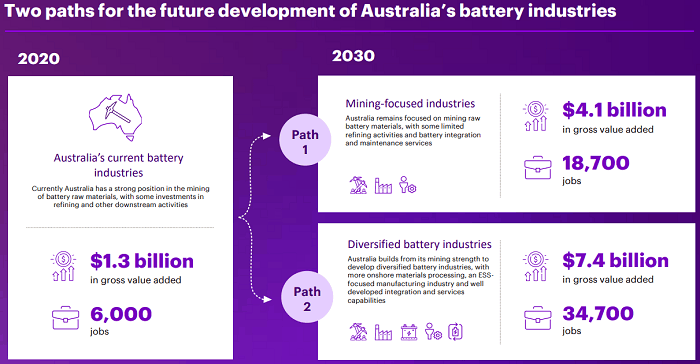
A report prepared in June this year for the Future Battery Industries Cooperative Research Centre (FBICRC) by Accenture determined that diversified battery industries could contribute $7.4 billion annually to Australia’s economy and support 34,700 jobs by 2030.

The report concluded that Australia now has a major economic opportunity to leverage its competitive advantages to become a dominant supplier of battery minerals and expand its role within a growing global industry.

“This report provides a compelling business case for Australia to develop into a competitive player in the international batteries industry, and Australia has many strengths for succeeding in this ambition,” Stedman Ellis, CEO of the FBICRC said.

“We are shining a light on the different segments of an industry in which Australia can be a leader, and there is substantial economic value to gain if we capture the opportunity.”

The report lays down a pathway for Australia over the next ten years, during which time the opportunity exists for real industry growth, shaped by changing international relationships and driven by technological improvements in batteries, increasing demand for energy storage and regulatory changes to energy systems.

Source: Accenture – Future Charge: Building Australia’s Battery Industries Report

Demand for batteries has grown steadily but is now forecast to accelerate, increasing nine to ten-fold over the next decade, with sales expected to reach US$133-151 billion by 2030.

I think we would all like a piece of that.


Global Lithium on Lithium Hunt at Marble Bar

COMMODITY CAPERS: Global Lithium (ASX: GL1) is a recently-listed lithium exploration company with a primary focus on the company’s 100 per cent-owned Marble Bar lithium project (MBLP) in the Pilbara region of Western Australia.

Global Lithium has already defined a maiden Inferred Mineral Resource at the MBLP of 10.5 million tonnes at 1 per cent lithium at the Archer deposit, which it believes to confirm the project as an emerging new greenfields lithium discovery of note.

The Marble Bar project is located 150km south-east of Port Hedland and 15km north-west of Marble Bar in a neighbourhood that is already populated by globally significant lithium deposits, including the world-class Pilgangoora deposit of Pilbara Minerals (ASX: PLS) and the Wodgina deposit Joint Venture between Albemarle and Mineral Resources (ASX: MIN).

Global Lithium claims the MBLP exhibits spodumene bearing pegmatite intrusives within the project area greenstone, which is a similar geological setting to that as seen in those nearby major lithium deposits.

The company reported its maiden drilling program at the MBLP substantially extended the known strike length of known lithium mineralisation at the Archer deposit and its surrounds.

RC holes and surface rock chip samples recording lithium mineralisation and anomalism, with associated anomalous tantalum, which Global interpreted to be further evidence that the MBLP is continuing to emerge as an important spodumene lithium deposit in a premier hard rock lithium mining jurisdiction.

“Our maiden RC drilling program as a listed company has delivered some excellent results, providing us with a fantastic foundation to build on as we progress into our next phase exploration programs, which planning for is already well underway,” Global Lithium managing director Jamie Wright said.

“Our strategy of stepping out from Archer to test the broader area has given us confidence that mineralisation at the MBLP continues to extend beyond Archer and has now been traced for over six kilometres in a north-to-south strike direction, and remains open, including to the east and potentially into our newly acquired tenements.”


Email: info@globallithium.com.au


Web: www.globallithium.com.au