


TNG identifies new McArthur River targets
THE DRILL SERGEANT: TNG Limited (ASX: TNG) has identified a large geochemical zone with coincident geophysical targets at the company’s McArthur River project in the Northern Territory located 60 kilometres south of the McArthur River zinc mine.
The identification of the anomaly follows the completion of a review of historical exploration data from the McArthur River project by the company.
The newly-identified targets include a large central continuous geochemical anomaly extending over a strike length of three kilometres and up to 450m wide, containing laboratory analytical values of up to 1,400ppm zinc and 670ppm lead from soil samples.
TNG said two other zones had been identifies of strong surface geochemical anomalism, with existing coincident geophysical targets from Induced Polarisation surveys.
TNG has subsequently applied for additional tenure adjacent to its existing McArthur River tenements, increasing its total land-holding in the region to 223 square kilometres.
The recent review work conducted by TNG has included 50 years of previous exploration data, which the company said has outlined prospective lithologies with geophysical anomalism and anomalous base metal geochemistry recorded, exposed over some 17km of strike.
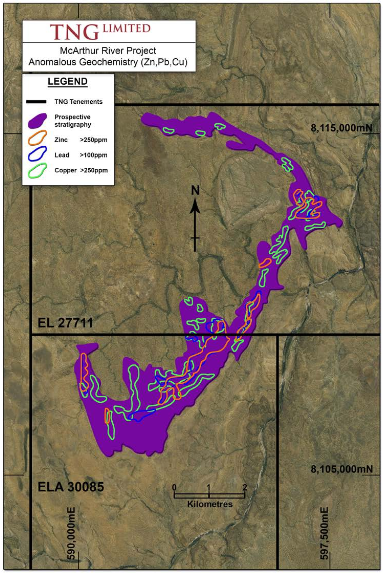
Location of prospective stratigraphy and geochemical anomalies in
the central McArthur River project area. Source: Company announcement
“The internal review work we have completed in recent months has revealed a hidden exciting opportunity within historic data from a highly-prospective and under-explored area, adding value to our McArthur River project,” TNG Limited managing director Paul Burton said in the company’s announcement to the Australian Securities Exchange.
“It ticks a lot of boxes given the geological location and proximity to structures that run through it, and the strong coincident geophysical and geochemical results we have identified.
“We will continue to conduct strategic reviews of this nature to add value to our exploration tenure followed by low-cost reconnaissance exploration activity before considering the best way to move the project to the next stage.
“This includes our existing reviews of the extensive position we hold in the emerging prospective Arunta region where our Mt Hardy, Sandover and Wallabanba projects are located.
“Our focus remains on completing the current Feasibility Study on the Mount Peake strategic metals project.”