Forge buys Balla Balla

THE BOURSE WHISPERER: Forge Resources has signed all the necessary legally binding agreements with Atlas Iron to acquire the Balla Balla magnetite, vanadium and titanium project in Western Australia.

The Balla Balla project came into Atlas’ possession after it acquired Aurox Resources in August 2010.

Balla Balla is located near the Pilbara coastline, approximately 100 kilometres east of Anketell Point and 120km south-west of Port Hedland, and adjacent to the Pilbara Energy Gas pipeline and the grid power line between Karratha and Port Hedland.


Balla Balla project Location Map. Source: Company announcement

The Balla Balla project has a JORC compliant Resource of 456 million tonnes at 45 per cent iron, 0.64 per cent vanadium, and 13.7 per cent titanium.

A Definitive Feasibility Study was completed on the project in February 2010 that confirmed strong project economics using historical commodity prices of A$68 per tonne magnetite at 58 per cent iron concentrate grade and A$152/t concentrate at 45 per cent titanium concentrate grade, compared to current prices of approximately US$120/t and US$225/t respectively.

In its release to the Australian Securities Exchange announcing the deal Forge Resources said it believes the Balla Balla project is an exciting opportunity for a number of reasons.

These include the advancement already achieved at the project and its low technical and resource risk.

“The project is at the DFS stage and has a mineral reserve on an approved mining lease,” Forge said.

“The resource is well defined and with potential for extension. Processing is simple and well understood. The magnetite process is a crush, grind, and magnetic separation. The ilmenite circuit is further gravity and magnetic separation, followed by flotation.”

Forge said the project possesses strong economics that are driven by low operating costs for magnetite production.

The project holds ilmenite by-product credits that Forge said, assuming current pricing, would contribute $10 per tonne of magnetite as a by-product credit.

Balla Balla is located close to the coast, providing it with a transportation cost advantage compared to other iron ore projects located further inland.

The project is expected to produce a relatively coarse grained magnetite concentrate that will cost less to mill.

At its recent Annual general Meeting, Forge Resources was forward-thinking enough to seek shareholder approval to have a share placement facility on hand so additional equity funds can be raised for such a purchase.

The company therefore has already secured shareholder approval for a share placement facility of up to 30 million shares.

The company said it will now use that share placement facility to raise funds to meet the conditions to make the initial payment to Atlas.

The Roadhouse holds shares in Atlas Iron.

Millennium updates Nullagine numbers

THE BOURSE WHISPERER: Millennium Minerals has reported an update of the gold Mineral Resource and Ore Reserve Inventories for the company’s Nullagine gold project in in the East Pilbara District of Western Australia.

The global Mineral Resource estimate for the Nullagine project now stands at 34.68 million tonnes grading at 1.19 grams per tonne gold Au for 1,328,500 contained gold ounces.

The Ore Reserve for the project is now 16.38 Mt at 1.4 g/t gold containing 741,000 ounces, using a cut-off grade of 0.5 g/t gold, and $1,500 per ounce gold price.

The upgrade covers Mineral Resource and Ore Reserves estimates for six of the company’s gold deposits located within the Nullagine project.


Nullagine gold deposits Location Plan. Source: Company announcement

Millennium conducted drilling on the six gold deposits – Golden Eagle, Shearers, Otways, All Nations, Bartons and Little Wonder – during 2011 to test for extensions to mineralisation outside the margins of its current proposed pit designs.

“We are delighted to be able to deliver such a substantial increase in Ore Reserves at our project in the run up to the start of gold production next year,”  Millennium Minerals chief executive officer Brian Rear said in the company’s announcement to the Australian Securities Exchange.

“Our construction program is now well advanced with engineering, earth works, civils, tank refurbishment and village construction on schedule and on budget.

“We are on track to commence commercial operations by the fourth quarter of 2012.

“We are confident in our ability to further increase the Mineral Resource inventory at all of the deposits that make up the project and we are considering a very substantial drilling program in 2012.”

The increase in the Mineral Resources at Nullagine has resulted from a further 81,000 ounces of gold being added from the Golden Eagle, Shearers, Otways, All Nations, Bartons and Little Wonder deposits.

The new numbers represent a 57 per cent increase in Ore Reserve tonnes equating to 5,928,700 tonnes and a 31 per cent increase in Ore Reserve ounces equating to 174,000 ounces of gold.

Millennium said the new Ore Reserve will be used to prepare an updated mining plan in the coming weeks.

Carnegie makes waves in Chile

THE BOURSE WHISPERER: Carnegie Wave Energy has completed a site assessment study for projects using its CETO technology along the Chilean coast and the appointment of a South American Development Partner.

Carnegie has been working in conjunction with its Chilean representative and local development on opportunities for its CETO technology within the South American country.

This resulted in the undertaking of a detailed Chilean site assessment study, which followed on from a previous Chilean wave energy study that found that if only 10 per cent of the theoretical wave resource identified was extractable then potentially 17GW of capacity could be installed off Chile.


Chilean wave energy resource assessment. Source: Company announcement


Carnegie claims this has the potential to completely power the main Chilean Electricity grid (the Sistema Interconectado Central).

Carnegie’s site assessment study analysed a number of CETO specific criteria.

The company has identified a number of immediately viable CETO sites along the Chilean coast.

Based on the favourable results it achieved from the site assessments, Carnegie has also now appointed the Chilean-based Renewable Energy Development Enterprises (REDE) as its local development partner.

Carnegie and REDE have signed a five year development agreement, under which the companies will work together in building CETO projects in Chile.

“It is a great time for us to move forward formally with our Chilean development partners,” Carnegie Wave Energy chief executive officer and managing director, Dr Michael Ottaviano said in the company’s announcement to the Australian Securities Exchange.

“It is encouraging to see the Chilean government’s efforts over the last few years and the recognition of the role this enormous untapped resource could play.

“Our site assessment results combined with the macro economic factors in Chile gives us the commercial confidence to move forward with our Chilean project development plans.”

The Chilean Government has recently supported wave energy feasibility studies including the deployment of wave buoys for site specific measurements.

It has also enacted Non-Conventional Renewable Energy target legislation to financially incentivise renewable energy development outside of the hydroelectric industry.

ZYL considers EOIs

THE BOURSE WHISPERER: Perth-based coal play ZYL Limited has been on the receiving end of two unsolicited expressions of interest from industry participants to either partner with or acquire the company.

ZYL has two coal projects located in South Africa, the Kangwane project and the Mbila project.


Kangwane location map. Source: Company web site.


According to ZYL the two approaching suitors have each executed a confidentiality agreement in favour of ZYL to facilitate an orderly exchange of information.

The company said, apart from the two EOIs presented so far, it may also consider further EOIs from other third parties.

Should this arise, ZYL has appointed Macquarie as financial adviser in relation to the current EOIs.

ZYL executive chairman Bevan Tarratt said in the company’s announcement to the Australian Securities Exchange that the receipt of the EOIs is not unexpected.

He indicated growing market recognition regarding the inherent value of the company’s asset portfolio.

Tarratt also highlighted the ever-diminishing supplies of high-quality anthracite in both the South African and global coal markets, a product the company is confident of producing from its Mbila and Kangwane projects.

ZYL also anticipates increasing the resource bases of its two projects.

Other factors to have attracted the EOIs, according to ZYL, include:

The proximity of the projects to key infrastructure such as railways, roads, ports and water supply, as well as sources of labour;

The short timeframe required to bring the projects into commercial production; and

The ability of the projects to increase production through organic growth over time.

Blackthorn un-wraps first Perkoa parcel

THE BOURSE WHISPERER: Blackthorn Resources has extracted the first parcel of mineralised ore from underground workings at the Perkoa zinc project in Burkina Faso, West Africa.

The Perkoa Project is currently being developed by a joint venture between Blackthorn Resources (39.9%) and Glencore International (50.1%), with the remaining interest held by the Government of Burkina Faso.

The ore zone was intersected by a development cross-cut which was driven from the main decline.

Blackthorn said 500 tonnes of mineralised material was estimated to have been extracted from the Level 1 CX South.

“The project is making good progress in accordance with expectations and the production of the first ore from the mine is another major milestone to be completed,” Blackthorn Resources managing director Scott Lowe said in the company’s announcement to the Australian Securities Exchange.

“The Perkoa project remains an important part of the company’s portfolio and we are also very excited by the proposal to add value to the current project through the changes that Glencore has proposed relating to the extraction of silver and lead, increased throughput and open-cut mining.”

The JV scaled up construction activities at Perkoa from early 2011 including the mobilisation of additional personnel, plant and machinery.


Construction progress at the Perkoa zinc project. Source: Company announcement


In addition, Glencore proposed a number of investment enhancing initiatives, including an increase in processing plant throughput, the ability to extract a separate silver-lead concentrate from the production stream, and the addition of open-cut mining to compliment the underground operation.

Blackthorn recently granted conditional approval for investment in these improvements subject to provision of further information by Glencore to validate financial and technical assumptions.

Current mining progress at Perkoa has advanced the main decline to 545 metres from the mine portal, with total metres developed, including cross-cuts and other services drives, now in excess of 720 metres.

According to the company’s announcement other construction activities for the mine are progressing in-line with its expectations.

These include the excavation for a ventilation shaft, clearing and construction of a tailings dam and other site buildings.

Blackthorn Resources said it is continuing to review the information provided by Glencore to support the enhanced business case for the Perkoa project.

To this end, ongoing test work and review of data is being carried out.

Hillgrove moves first concentrate

THE BOURSE WHISPERER: Hillgrove Resources has commenced trucking concentrate from its Kanmantoo copper mine to Port Adelaide, where it is to be stored awaiting ship-loading in early 2012.

Hillgrove has approximately 1,000 tonnes of copper concentrate in the concentrate storage shed at Kanmantoo.

This stash is currently being added to by production of between 150 tonnes and 200 tonnes per day.

The company expects full production rates to average more than 200tpd.


Source: Company announcement

A local Adelaide Hills trucking company has been contracted to haul the full containers to Port Adelaide at approximately 300 tonnes each day, five days a week.

When Kanmantoo is in full production Hillgrove said it anticipates it will be using three truck-trailer rigs, running a total of about 10 trips per day to the port.

For every 2,500 tonnes delivered to Port Adelaide (about 80-90 containers), Hillgrove will receive an ’early payment’.

This will be 75 per cent of the value of the copper in the concentrate.

The ‘early payment’ is part of the terms of the company’s offtake agreement with JP Morgan Metals & Concentrates.

Hillgrove expects the first early payment will be paid before the end of the 2011 year, which will represent the first sale of copper concentrate and first revenue for the project.

The company sadi it expects to have accumulated 10,000 tonnes of concentrate at Port Adelaide by early February 2012.

Once this milestone has been reached, the containers will be emptied into a bulk ship and Hillgrove will receive payment for a further 15 per cent of the copper in the concentrate.

The final 10 per cent is payable based on final assays at the discharge port.

“While we are in ramp-up mode at the moment, we are approaching design capacity and expect to be consistently achieving design throughput within the next few months,” Hillgrove Resources managing director Drew Simonsen said in the company’s announcement to the Australian Securities Exchange.

“The early payment mechanism means that we will be generating cash for our shareholders in the near term, which is a very significant milestone in the life of the company.

“We expect the project to be generating positive cash flow by the end of the first quarter, 2012.”

Stonehenge divests Tassie assets

THE BOURSE WHISPERER: Perth-based South Korea-focused exploration play Stonehenge Metals has reached an agreement with fellow Western Australian ASX-listed RMG Limited.

The agreement will result in Stonehenge selling off two of its non-core tenements in Tasmania.

Under the terms of the agreement RMG will purchase 100 per cent of the two tenements in question, which are located in the Zeehan district of Tasmania, for a total consideration of $70,000 cash and 20 million RMG shares.

The divestment is subject to the transfer of ownership being approved by the Minister of the Department of Infrastructure, Energy and Resources Tasmania.

“The Tasmanian tenements have not been part of our company strategy to focus on the Uranium, Vanadium and Molybdenum mineral resources in Korea,” Stonehenge Metals managing director Richard Henning said in the company’s announcement to the Australian Securities Exchange.

“We are pleased to have found a company in RMG that will further explore the project in Tasmania whilst Stonehenge retains an indirect interest in the potential upside of their success.”

Stonehenge’s main focus is on developing its multi-mineral project in South Korea.


South Korean Location Map. Source: Company announcement.


The company holds 100 per cent of the rights to three projects in South Korea including the Daejon project, which it claims to contain the largest uranium resource within South Korea at 65.0 million pounds (inferred) grading 320 parts per million uranium equivalent (in accordance with JORC guidelines).

MacPhersons adds tenements

THE BOURSE WHISPERER: MacPhersons Reward Gold has entered binding agreements to acquire 40 square kilometres of additional tenements situated around and between the company’s recently acquired Nimbus and Boorara tenements.

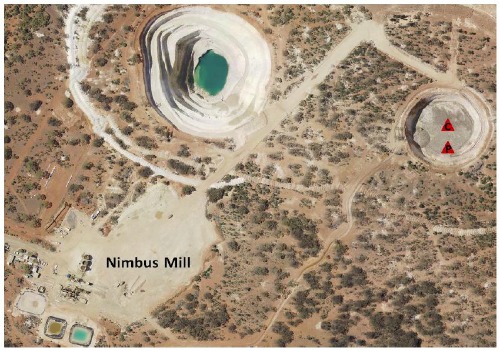
The agreements are with four neighbouring tenement holders that will result in the acquisition of various tenements situated adjacent to the Nimbus silver-gold-zinc mine site, located eight kilometres east of the Kalgoorlie superpit.


Tenement location plan, east of the Kalgoorlie superpit. Source: Company announcement


The tenement acquisitions are denoted as Areas 1 to 4.
 
Area 2 abuts the existing Nimbus silver tailings storage facility which is undergoing a review for expansion in preparation for the resumption of silver processing operations in 2012.

“Prior to the tenement acquisitions, MacPhersons’ Nimbus-Boorara project had approximately 40 square kilometres of tenement area,” MacPhersons said in its ASX announcement.

“With the acquisition of the additional tenements, Macphersons’ project area will be approximately 80 square kilometres covering the highly prospective Boorara Shear zone and the Nimbus VHMS silver-gold-zinc belt.”

Terms of acquisition of each Area are as follows:
 
Area 1

Known as the Balagundi West and Balagundi East projects is being acquired from Cazaly Resources for a consideration of:

A cash payment of $150,000;

500,000 fully paid ordinary shares in the Purchaser (Shares) that equates to $150,000 worth of Purchaser shares (at an issue price of 30 cents per share);

Three years from signing the agreement a cash payment of $700,000; and

A Net Smelter Return of one per cent capped at $2 million effective upon production coming from the Balagundi tenements.

Area 2

Known as P25/2144 is being acquired from the East Kalgoorlie Joint Venture, an unincorporated joint venture between ASX-listed Northern Mining (76%) and Balagundi Gold (24%), for a consideration of:

A cash payment of $250,000; and

806,452 fully paid ordinary shares in the Purchaser (Shares) that equates to $250,000 worth of Purchaser shares (at an issue price of 31 cents per share).

Area 3

Known as the Nimbus East project is being acquired from Ralph John Winter, for a consideration of:

A cash payment of $50,000; and

166,667 fully paid ordinary shares in the Purchaser (Shares) that equates to $50,000 worth of Purchaser shares (at an issue price of 30 cents per share).

Area 4

Known as P26/3832 is being acquired from Thomas Giri, for a consideration of:

A cash payment of $5,000.

Brighton begins Cambodia exploration

THE BOURSE WHISPERER: Brighton Mining Group is about to kick off a program of intensive exploration work at the company’s Antrong project in Cambodia.

The work programs are starting later than the company had scheduled due to them having been delayed by a longer than usual wet season and unprecedented flooding in the regional parts of Cambodia that directly affected the company’s project areas.

“The exploration work will be part of the continual work programs of the company over the next seven months during the dry season and will include follow up drilling at the Antrong concession, preliminary drilling at Ropoah concession, infill soil sampling, auger sampling, trenching and stream sediments sampling on all concessions and geophysics which will include flying aeromagnetic surveys to cover all the concession areas,” Brighton Mining said in its ASX announcement.

“In addition ground geophysics using down hole EM (electromagnetic conductivity) at Antrong and IP (induced polarisation) will be done to test geological areas of interest.”

“The company is very excited about these next programs of work as they will focus on areas that have previously produced significant exploration results, as well as initiating work on other areas that have been identified through prior reconnaissance as hosting mineralisation.”

Brighton said it will also carry out stream and soil auger sampling out at Kang Roland North.


Geological setting for the Kang Roland North Concession. Source: Company announcement


This area has been identified by the company to host another larger granodiorite similar to that located at Antrong, which hosts the Okvau project of ASX-listed Oz Minerals.

Korab gets Geolsec okay

THE BOURSE WHISPERER: Korab Resources has received authorisation from the Northern Territory Department of Resources to conduct mining activities.

The company applied to the department under the Mining Management Act with respect to activities at several of its Rum Jungle leases including a mineral lease containing the Geolsec phosphate deposit.

The Geolsec phosphate deposit is located at Rum Jungle 70 kilometres from the Darwin port via the four-lane Stuart Highway.

Geolsec’s location 70 km from Darwin allows easy access Australian and Asian markets. Source: Company announcement

Korab claims the Geolsec phosphate deposit extends from surface to 40-120 metres depth.

In its announcement to the ASX the company said it is intending to develop the Geolsec deposit as a simple quarrying operation utilising modern techniques to reduce the environmental impact of the operations and to minimise the operating costs.

Korab said the deposit is accessible during both dry and wet seasons with CAPEX and start-up costs estimated at between $200,000 and $300,000.

“Korab will be shortly undertaking drilling program at Geolsec with the aim of increasing the size of the phosphate deposit and to drill test several phosphate anomalies in close proximity,” Korab said in its announcement.

“In conjunction with phosphate rock drilling, Korab will complete number of drill holes to test several nickel and copper anomalies and to drill test dolomite breccias for rare earths mineralisation associated with previously announced rare earths anomalism.”