South Boulder takes Colluli potash resource over 1 billion tonnes

THE BOURSE WHISPERER: South Boulder Mines has announced an updated JORC Code / NI43-101-compliant Mineral Resource Estimate for the company’s Colluli potash project in the African nation of Eritrea.

The resource at the Colluli project now stands at 1.08 billion tonnes at 18 per cent potassium oxide for 194 million tonnes of contained potash.

The company said the new figure represents an 85 per cent increase in contained potash at the project with mineralisation starting from just 16 metres below surface.


Colluli Project JORC/43-101-compliant Mineral Resource Estimate plan. Source: Company announcement

South Boulder said the expanded resource is expected to improve what it described as, “the already robust economics of an open pit mine at Colluli”.

The company’s confidence stems from the shallowness of the deposit, which is open in many directions.

South Boulder is currently carrying out resource extension at Colluli and expects this will enhance the robust nature of the project.

The company has an engineering scoping study (ESS) completed in November 2011, which demonstrated a pre-tax Net Profit Value of US$1.33 billion with start-up capital costs of US$0.74 billion.

“This upgrade further confirms Colluli as a Tier 1 asset,” South Boulder Mines managing director Lorry Hughes said in the company’s announcement to the Australian Securities Exchange.

“The 17-year mine life indicated in the scoping study will definitely be extended.

“In addition, the scoping study didn’t consider substantial production increases that are apparent from this huge resource.

“Over the course of the definitive feasibility study, the upside will be included to demonstrate the significance of Colluli in relation to the global potash market.”

The Colluli project is located approximately 70km from a proposed export site at Anfile Bay on the Red Sea coast and proximal to major international shipping routes.

South Boulder Mines said it has commenced negotiations with the Government of Eritrea for its purchase of a paid participating interest in the Colluli project, which is the precursor to the formation of the Joint Venture Share Company and the ultimate granted Mining Exploitation License.

UGL scores $370 million worth of new projects

THE BOURSE WHISPERER: Engineering, property services and asset management and maintenance provider UGL Limited has been awarded approximately $370 million in new projects across Australia.

The company said that more than $270 million of the new contracts are focused within the resources sector.

UGL has been given the task of constructing the new Solomon mine power station for Fortescue Metals Group in Western Australia as well as the provision of rail signalling and communications systems for the Solomon Rail Spur.

The company has also signed a two year contract with international heavyweight Rio Tinto for the provision of maintenance services at the Hail Creek mine in Queensland.

Still with the big players UGL has signed a new three year contract for the provision of maintenance services at BHP Billiton Mitsubishi Alliance (BMA) coal operations’ Gregory Crinum Mine in Queensland.

UGL will be upgrading the Sydney West to Holroyd Transmission Line for TransGrid in New South Wales while carrying out a number of new power systems and power transmission projects across Queensland.

“Securing these significant new wins provides further support to the continued solid performance of our engineering businesses,” UGL managing director and CEO Richard Leupen said in the company’s announcement to the Australian Securities Exchange.

“These wins reflect the strength of our client relationships across a diversified base of blue-chip customers and are demonstrative of our ability to convert the recent record levels of tendering activity across a number of our core markets.

“A significant pipeline of opportunities remains visible supported by substantial levels of private investment and government spend.

“We anticipate ongoing success in converting a number of these opportunities as they are awarded.”

Northern Start hits 2330g/t at Paulsens

THE BOURSE WHISPERER: Northern Star Resources is understandably pleased with itself having received recent drilling results of up to 2330 grams per tonne at the company’s Paulsens gold mine in Western Australia.

The company said the latest results have set up a substantial increase in resources and mine life for Paulsens as they indicate the existence of an extremely high-grade pocket of mineralisation, which has produced a number of hits of more than 12,000g/t.

The latest drilling results come from both the Voyager 1 lode, which has produced all the gold mined to date at Paulsens under Northern Star ownership, and from the adjacent Voyager 2 lode.


Long section view of significant drill results for Voyager One lode and extension position. Source: Company announcement


The latest drilling results from Voyager 1 include (uncut):

–    2.3 metres at 1115.4 grams per tonne gold (2m true width), including 1.1m at 2330 grams per tonne gold;

–    19m at 75.8g/t (12m true width), including 4.0m at 251.7g/t gold; and

–    4.3m at 86.3g/t gold (2.3m true width);

All the fresh results from Voyager 1, as well as all the results ever generated from Voyager 2, were not included in a 318,000 ounce resource estimate Northern Start recently reported for the Paulsens project.

The company said the new figures, although spectacular in grade, held more importance in regard to their impact on the overall resource estimate and mine life at Paulsens.

“These results show Paulsens is headed for another substantial resource upgrade, which will in turn add years to the project’s life,” Northern Star Resources managing director Bill Beament said in the company’s announcement to the Australian Securities Exchange.

“When you combine this outlook with the strong margins and revenue being generated at Paulsens, the economic consequences of these results become clear.

“In essence, they are extremely valuable to Northern Star shareholders.”

Northern Star said the project is now characterised by growing mine life, a clear plan to increase production from 80,000 to 100,000 ounces per annum, strong cash margins and rising revenue.

The company is also advancing plans to establish a 100,000ozpa stand-alone operation at its neighbouring Ashburton project, where it recently increased resources by 50 per cent to one million ounces.

Could Diggers depart Kalgoorlie?

THE BOURSE WHISPERER: Twenty years ago Geoffrey Stokes came up with the idea of holding a mining conference in the iconic mining town of Kalgoorlie.

A delegation of 150 mining-minded types attended the first conference in 1992, which has evolved into one of the mining industry’s mandatory calendar event hosting crowd numbers reaching well above 2000 for the three-day and three-night event.

The candles on the Diggers and Dealers birthday cake may be set alight in Kalgoorlie for the last time this August however, with news the city’s Goldfield’s Arts Centre may be closing, forcing the conference to find a new venue.
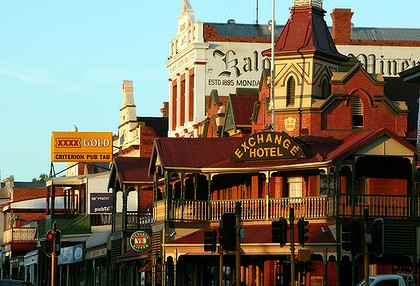
 

The Goldfields Arts Centre is currently administered by Curtin University, which no longer views the Arts Centre to be part of its core business of education and training.

Curtin has apparently been in negotiations with the City of Kalgoorlie-Boulder for a number of years for the city to take over the management of the Arts Centre.

“The week before last, we received a letter from Curtin saying they have been unable to reach agreement with the City of Kalgoorlie-Boulder,” John Langford director of Palace Securities, the company that owns Diggers and Dealers told The Roadhouse.

The City of Kalgoorlie-Boulder has put a condition on taking over the management of the Arts Centre requiring funding of around $17 million.

The Roadhouse understands around $9 million dollars of that is required to upgrade the Arts Centre, with another $7 million to cover ongoing operating costs.

“Curtin has advised the City of Kalgoorlie-Boulder that if they don’t reach agreement by 30 April they will announce that the Arts Centre will close effective from 31 August, so they will keep it open until the last day of Diggers and Dealers this year,” Langford explained.

Apparently the City of Kalgoorlie-Boulder applied for funding through the Western Australia state government’s Royalties for Regions scheme but had its request knocked back.

The City said the refusal of the state government funding means it can no longer afford to operate the Goldfields Arts Centre.

One glimmer of hope emerged when WA Premier Colin Barnett was ambushed by journalists saying he was unaware of the request for extra funding.

Barnett said his government provided support for conference centres around WA and would look at any funding request to keep the Goldfield Arts Centre open.

“Diggers and Dealers is very much identified with being in Kalgoorlie, the heart of the gold mining and nickel district, and I guess the historic and iconic start of the mining industry in Western Australia, so that’s where it needs to be,” he told journalists.

Barnett told the ABC he didn’t know all the details but he is of the opinion Diggers and Dealers needed to remain in Kalgoorlie.

“Diggers and Dealers will not work in Perth.” he said.

Curtin University will relinquish its role as manager of the Arts Centre when the current contract expires at the end of the year.

According to the university the centre will close if new management isn’t confirmed by the end of May.

“We have written to the City of Kalgoorlie-Boulder saying that we have to have certainty on a venue,” Langford said.

“Logistically we need to know before Diggers and Dealers [this year] because people start to book their accommodation for the year ahead.

“We have told Council that we need some certainty by 31 May.”

The location of Kalgoorlie as host city for the Diggers and Dealers is part of the character of the event and is a major reason many delegates return each year.

Having to relocate such a well-established event would no doubt have some effect on its success.

“It would become more like all the other conferences and certainly loose its uniqueness,” BC Iron managing director Mike Young told The Roadhouse.

“I would like to see it stay in Kalgoorlie.
 
“There is no doubt that the local economy receives a boost during the week and with all the talk of mining not supporting the regions, which is untrue, this adds fuel to that argument as well.”

Young’s sentiments were echoed by Atlas Iron chairman and product of the Kalgoorlie School of Mines David Flanagan.

“It would be a shame if Diggers and Dealers would have to leave Kalgoorlie as I feel there is a close connection between the conference and the local community,” Flanagan said.

Langford said the preference of the conference organisers is very much to stay in Kalgoorlie as the conference works well in Kalgoorlie, and is a major event on the city’s calendar.

“We need the facilities in the Arts Centre,” he continued.

“In Kalgoorlie there is nowhere else for us to go. If we can’t get that certainty [from the Council] then we will need to find a location for Diggers and Dealers.

“We’re not taking that decision lightly. We’re not offering any threats. Either we do have a venue or we don’t.”

Langford stressed that the conference organisers had no qualms with the decision taken by Curtin University as they understand running the Arts Centre is not part of its core business.

“To be honest with you, it is a decision for the City of Kalgoorlie-Boulder. Whether they want to have an Arts Centre.,” Langford said.

“We’re a willing tenant there for a week but we certainly aren’t in a position to offer comment with respect to whether Kalgoorlie can have a viable Arts Centre for the rest of the year.”

Langford said the most common question conference organisers have been asked over the last 20 years by journalists has been, ‘is it true that Diggers and Dealers is looking at moving away from Kalgoorlie?’

He said that until the last week that has never been a point of discussion at Diggers and Dealers.

Now it looks like it could become a reality.

Iron Road secures DFS funding

THE BOURSE WHISPERER: South Australia-based iron ore play Iron Road Limited has written a big bank deposit slip having secured $11.5 million (before costs) in additional funds.

The company said the funds will enable it to continue the current definitive feasibility study (DFS) being conducted on its Central Eyre iron project (CEIP) and to option or purchase key land on the Eyre Peninsula of South Australia.


Central Eyre iron project location map. Source: Company announcement


Iron Road has raised the funds via a placement that will result in the issue of just under 21.03 million shares at a price of 55 cents.

“At every stage of developing the Central Eyre iron project we have consistently demonstrated its commercial viability with increasing confidence,” Iron Road managing director Andrew Stocks said in the company’s announcement to the Australian Securities Exchange.

“These funds will allow us to continue the journey to development and take the project to the next stage.

“Securing land for the associated infrastructure is a significant strategic step for the company.

“By commencing this action we have responsibility and control of the delivery of key assets, as we build South Australia’s largest iron ore project.”

The company said the current DFS on the Central Eyre iron project will assess opportunities for expanded production over the 12.4 million tonnes per annum level delineated in its Pre-Feasibility Study, following the delineation of significant additional Mineral Resources.

The raising strongly supported by long term Iron Road institutional investors including specialist resources investor The Sentient Group and endowment funds associated with Columbia and Duke Universities.

The Sentient Group will subscribe to the placement in two tranches (T1=4.9M shares, T2=5.2M shares), the second tranche being on or about the 16 May 2012.

The share placement will result in The Sentient Group and Columbia University increasing their holdings in the company to 34.3 per cent and 7.2 per cent respectively.

“I very much look forward to delivering the Definitive Feasibility Study,” Stocks continued.

“The funds secured today, from a diverse range of leading global institutions, are testament to the growing confidence in the project.

“Our economics and development rationale are now well understood and is up to us to deliver on that underlying promise.”

Focus increases production in March quarter

THE BOURSE WHISPERER: Focus Minerals produced 47,489 ounces of gold for the March 2012 Quarter, representing a 28 per cent increase on the company’s production from the December 2011 Quarter of 37,098 ounces.

The company put the growth spurt down to an improved performance from its recently acquired Laverton operations and ongoing, consistent output from its Coolgardie mines.

“We are delivering strong production growth,” Focus Minerals chief executive officer Campbell Baird said in the company’s announcement to the Australian Securities Exchange.

“On a quarterly production basis we are among the top tier of Australian gold producers.”

The break down from the company’s two operations had Laverton delivering 25,636 ounces of gold from its tenth ore processing campaign at the Barrick Granny Smith mill, which ran for 50 days.

“We completed Campaign 10 with over 150,000 tonnes already stockpiled on the ROM pad at a grade of 1.8 grams per tonne in preparation for the next Campaign in the June Quarter,” Baird said.

Production from the Coolgardie mines was 21,853 ounces of gold, keeping in line with company forecasts, and with the preceding Quarter.

“We are on track to deliver consistent, stable production at Laverton and Coolgardie with operational efficiencies that will enable us to achieve margin expansion at a time of strong gold prices,” Baird said.

“At Laverton we have developed three new sources of ore including the Apollo pits and are focused on delivering a structured turnaround.

“The improvement in performance has resulted from a combination of the number of open pits in operation giving us blended ore sources to maintain recovery and throughput.

 “At our Coolgardie operations we have also demonstrated our ability to develop and commission new mines, having established two new mines there in the first half of FY 2012 to grow production.”

Focus said it was targeting the consistency it achieved in March production for the June Quarter at both Laverton and Coolgardie.

The next Laverton processing campaign at Barrick Granny Smith is scheduled to be 41 days but with mining from higher grade ore zones to sustain stable production.

De Grey announces 40 per cent increase in Turner River gold

THE BOURSE WHISPERER: The news has been good for De Grey Mining with its farm-in partner on the Turner River gold project, Lansdowne Resources providing maiden estimates of gold resources for the Amanda and Mt Berghaus deposits.

Using a cut-off grade of 0.5 grams per tonne gold the estimated resources are:

Amanda: 687,000 tonnes at 1.6 grams per tonne gold for 35,000 ounces of gold (inferred); and

Mt Berghaus: 920,000 tonnes at 1.4g/t gold for 43,000oz gold (inferred).

The estimates follow a diamond core drilling program at Mt Berghaus undertaken by Lansdowne in late 2011 along with a reinterpretation of geological controls on mineralisation at Amanda.

De Grey said applying previous estimates for the Wingina Well deposit, gold resources at the Turner River project, applying a 0.5g/t gold cut-off grade, now total:

6.72 million tonnes at1.41g/t gold for 305,000oz gold (measured + indicated + inferred).

The Amanda and Mt Berghaus estimates have added approximately 40 per cent to total gold ounces in resources at Turner River.

The news continued to flow with Lansdowne also informing De Grey of initial estimates of resources contained in the Discovery and Orchard Tank Volcanogenic Massive Sulphide (VMS)-style base metals deposits on the Turner River base metals project.


Estimates of inferred resources at 1 per cent zinc cut-off grade. Source: Company announcement


“These estimates begin to quantify the potential of the Turner River VMS belt,” De Grey Mining managing director Gary Brabham said in the company’s announcement to the Australian Securities Exchange.

“The consistently high precious metals credits in particular have a significant impact on the value of these deposits and we have every reason to believe that there is potential for further discoveries.”

Turner River project is located approximately 60 kilometres south of Port Hedland, in the Pilbara region of Western Australia.

IMX inks new sales contract and revises work plan

THE BOURSE WHISPERER: IMX Resources has struck a Life Of Mine sales contract with Vingo Resources for 50 per cent of all ore produced from the Cairn Hill mining operation located 55 kilometres south-east of Coober Pedy in South Australia, close to the Darwin – Adelaide railway.

The Cairn Hill mining operation operates under a Joint Venture between IMX Resources (51 per cent) and Taifeng Yuangchuang International Development Co. Ltd. (49 per cent).

Cairn Hill produces 1.7 million tonnes per annum of magnetite-copper direct shipping ore (DSO).

The sales contract between IMX and Vingo is based on industry standard iron ore and copper pricing benchmarks and has commercial terms comparable to the Taifeng LOM contract.

IMX also confirmed it is in advanced negotiations with a number of other end-user customers to finalise LOM sales contracts for the remaining Cairn Hill DSO product, at similar terms.

IMX said the Joint Venture partners have agreed on a revised Work Plan for the Cairn Hill mining operations.

This new Work Plan was implemented at the end of March resulting in the mining contractor demobilising surplus labour and equipment.

The new Plan is targeting cash operating costs of $80 per tonne Free On Board (FOB), which IMX said it expected would be achieved in the current quarter.

 “The Life of Mine sales contract with Vingo will remove much of the uncertainty associated with the Taifeng LOM Contract which has weighed heavily on market sentiment toward IMX over the past six months,” IMX managing director Neil Meadows said in the company’s announcement to the Australian Securities Exchange.

“We have achieved pricing similar to the Taifeng LOM Contract and with the implementation of the revised work plan we expect Cairn Hill to generate EBIT of $40 to 45 Million per year going forward.
“IMX’s share of this will underpin our ambitious growth strategy aimed at delivering value to our shareholders.”

Silex subsidiary signs California solar deal

THE BOURSE WHISPERER: ASX-listed solar energy research and development company Silex Systems announced its wholly-owned subsidiary Solar Systems has secured a site in Beaumont, California for the construction of its first Concentrating Photovoltaic (CPV) solar power demonstration facility in the United States of America.

According to Silex the grid-connected facility of up to one megawatt (MW) capacity will put the operational performance of Solar Systems’ proprietary ‘Dense Array’ CPV solar conversion system on show as the company anticipates near-term deployment of the technology in the US solar market.

“Securing the Beaumont site is another significant step forward in the commercialisation of Solar Systems’ unique ‘Dense Array’ CPV technology,” Silex Systems chief executive officer Dr Michael Goldsworthy said in the company’s announcement to the Australian Securities Exchange.

“The Beaumont facility will allow potential US customers to observe and measure the performance of the ‘Dense Array’ CPV system first hand.

“We are excited about the commercial potential of this technology in the US market, which is expected to grow strongly over the next decade and beyond.”


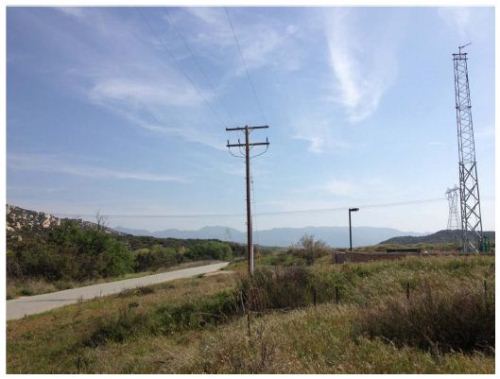
Beaumont CPV Demonstration Facility Site (with grid connection point in foreground). Source: Company announcement

The 10 acre site is located approximately 130 kilometres east of Los Angeles in Riverside County and only 30 minutes’ drive from Palm Springs airport.

Solar Systems will lease the property from the Metropolitan Water District (MWD) of Southern California, the largest water utility in the US.

The lease is subject to the successful completion of a geo-technical survey and environmental assessment.

The costs of the facility will be primarily funded internally but Silex said it expects Solar Systems to be eligible for the US Federal Government’s Renewables Income Tax Credit Scheme, which could account for up to 30 per cent of the capital costs.

Construction of the facility, subject to permitting activities, is planned for completion by mid-2013 (CY), which will be grid connected.

Silex said a small revenue stream could be generated through a Power Purchase Agreement Solar Systems will soon be negotiating with the local power utility Southern California Edison.

Ironclad gets SA government nod for new port facilities

THE BOURSE WHISPERER: IronClad mining has received approval from the South Australian Government on development application for port facilities designed for iron ore shipments from the company’s new Wilcherry Hill mine.

The Wilcherry Hill iron ore project is located on the Eyre Peninsula and is an 80:20 Joint Venture between IronClad and Trafford Resources.

The company said the government go-ahead concludes all the processes required for it to commence construction of infrastructure at the existing Lucky Bay port.

“We are most appreciative of the South Australian Government’s expeditious approval of this Development Application for another vital piece of South Australian mining infrastructure,” IronClad Mining managing director Wayne Richards said in the company’s announcement to the Australian Securities Exchange.

“For IronClad, development approval for the port facility finalises the company’s requirements for an ‘end-to-end’ logistics supply chain for the ore produced from our Wilcherry Hill project, and has the potential to be expanded to accommodate the ore from our larger Hercules project currently under review.

“The port facility will provide an important export point not only for IronClad, but for other potential mining companies and exporters in the region.”

IronClad said its iron ore export facilities open up a new multi-user shipping avenue for South Australian exporters.

The company will initially use its facilities at Lucky Bay facility to transport iron ore to ships anchored offshore adjacent to the port.

IronClad’s growth plans could potentially upgrade this system to incorporate a floating harbour, with suitable holding warehouses for the ore, both on land and at sea.

Cape-sized vessels with a carrying capacity of up to 150,000 tonnes could then be loaded with iron ore from the floating harbour, which would potentially be owned and operated by IronClad.

IronClad has an agreement with Sea Transport Development SA (SEATS) for full access rights to the designated 50-hectare port site at Lucky Bay, where it will store and ship iron ore from its Wilcherry Hill and Hercules projects.

The company has a 50-year lease to this facility and the accompanying land within the 50-hectare site.