Silex to power up in Saudi Arabia

THE BOURSE WHISPERER: Solar Systems, a wholly-owned subsidiary of ASX-listed Silex Systems has commenced construction of a one (1) mega-watt (nominal) Concentrating Photovoltaic (CPV) solar power station at the Nofa International Equestrian Resort in the Kingdom of Saudi Arabia.

This is the first project to be undertaken by the company in the Middle East region.

The facility is to consist of 28 units of the commercial CS500 CPV Dish System product and will be used to offset existing diesel generator capacity at the Nofa resort.

Silex said the facility would also showcase the operational performance and suitability of Solar Systems’ proprietary Dense Array CPV power conversion system for the burgeoning solar market in the Middle East.

“Securing the Nofa project is a key step forward in the marketing of Solar Systems’ unique Dense Array CPV technology in the Middle East,” Silex Systems chief executive officer Dr Michael Goldsworthy said in the company’s announcement to the Australian Securities Exchange.

“The Nofa facility will allow potential customers in the region to observe and measure the performance of this unique technology first hand.

“With several governments in the region laying out plans for a massive expansion in solar power generating capacity, including the recent announcement by the government of Saudi Arabia regarding a US$109 billion plan to build 41 giga-watts of solar power capacity over the next two decades, we are very excited about the commercial potential of this technology in the Middle Eastern market.”

The Nofa resort is owned by His Highness Prince Sultan Bin Mohammed Bin Saud Al Kabeer.

It is located approximately 90 kilometres west of Riyadh along Highway 40, which is the country’s main highway linking Jeddah and Mecca in the west to Dammam in the east.

The funding of the facility will be shared by Solar Systems and Nofa.

The plant construction is expected to be completed around the end of CY2012, subject to finalisation of import customs arrangements and completion of project planning and design activities over the next few months.

What the Brokers say

THE BOURSE WHISPERER: We received a diversified group of research notes this week looking at companies exploring for commodities ranging through molybdenum, gold, uranium and tungsten.



Dart Mining (ASX:DTM)

Dart Mining has announced highly encouraging drilling results from its 20-hole resource upgrade drilling program at the Unicorn molybdenum-copper-silver porphyry project in Victoria.

The latest drilling results have highlighted the potential to extend the boundaries of the Unicorn deposit to the south and east beyond the current conceptual pit boundary.

The latest drilling returned impressive intersections of up to 30m at 0.18 per cent molybdenum equivalent and significant copper mineralisation (20m at 0.7 per cent copper) was identified in the northern part of the deposit (overall this hole intersected 186m at 0.06 per cent molybdenum equivalent from surface).

We expect there is significant potential to expand the existing resource of 105 million tonnes at 0.07 per cent molybdenum equivalent.

These drilling results have confirmed that the surrounding brecciated material is strongly mineralised (not waste) and can be included in the upgraded resource estimate.

We note that with the inclusion of this material, DTM’s conceptual pit design could have a very low strip ratio to significantly improve the economic viability of the project.

Drilling intersected 252m at 0.06 per cent molybdenum equivalent including 54m at 0.08 per cent molybdenum equivalent within the breccia.

Drilling will likely be completed by July and with one more batch of assay results to be announced in coming weeks, DTM is well placed to announce the resource upgrade for the Unicorn project in August/September.

DTM is targeting initial production of 5 million tonnes per annum (approx. 25-30 thousand tonnes per annum of metal-in-concentrate).

There is strong support for the project by the local community and a ready workforce.

DTM has significant infrastructure advantages and would benefit from significant cost savings during development as the Unicorn project is located 100km from Albury and is supported by power, water, sealed roads and community housing plus existing logistics infrastructure to transport concentrate to smelters in Asia.

The latest drilling at Unicorn has demonstrated the potential for a significant upgrade to the existing JORC resource in Q3, CY12.

DTM will likely outline a Scoping Study for Unicorn in Q4, CY12.

RECOMMENDATION:

We reiterate our Buy (Speculative) recommendation for DTM with a 12 month target price of $0.18/sh.


Alligator Energy (ASX:AGE)

Alligator Energy is a cashed-up, aggressive uranium exploration company with a large strategic acreage position in one of the world’s best uranium provinces, the Northern Territory’s Alligator Rivers region.

The company’s singular focus is the search and discovery of uranium mineralisation in the region and the reasons are simple: firstly, it’s a proven uranium location, hosting both large and high-grade deposits; and secondly, the Northern Territory welcomes uranium exploration and development.

Alligator’s principal assets areit interests in the Tin Camp project, located within the Alligator Rivers Uranium Province (ARUP) in the northern Territory.

Alligator has secured a prospective land holding in the region and a potential pipeline of quality projects.

In total, Alligator holds 283 square kilometres under three granted tenements and 1,025sqkm under 15 tenement applications.

The Tin Camp project area has been explored intermittently since 1970, resulting in the discovery of the Caramal deposit, the South Horn prospect, the NE Myra prospect, the Two Rocks prospect and the Gorrunghar prospect.

The Caramal deposit and prospect is one of the more significant occurences of uranium mineralisation in the ARUP outside of the Ranger-Jabiluka mining camp.

Given the prospectivity of the Tin Creek project area, it’s no surprise that the company was recently able to announce a maiden JORC-compliant resource estimate for its primary Caramal deposit comprising 944,000 tonnes at 31 per cent uranium for 6.5 million pounds uranium (at a 0.1 per cent uranium cutoff).

Drilling has confirmed high-grade Ranger-style uranium mineralisation, which remains both open along strike and down-dip.

RECOMMENDATION
Speculative BUY

Vital Metals (ASX:VML)

Vital Metals has historically been a tungsten-focused company, with 100 per cent ownership of one of the world’s most advanced, undeveloped tungsten deposits – Watershed in northen Queensland.

The project is now being fully funded through DFS, at a cost of $5.4 million, by Japan’s JOGMEC (Japan Oil, Gas and Metals National Corporation) group.

The Watershed project hosts an undiluted, JORC-compliant Indicated Resource of 15.1 million tonnes grading 0.46 per cent tungsten oxide for 69.3 thousand tonnes of contained metal at a cut-off of 0.1 per cent.

The Resource comprises 997 mineralised intercepts, including 304 intercepts exceeding 5m at 0.5 per cent tungsten oxide, of which 160 exceed 5m at one pe cent tungsten oxide.

The average length of the mineralised intercepts is 5.4m.

The company has actively sought to diversify its exploration focus by farming-into a 450 square kilometre exploration project in southern Burkina Faso, West Africa, where gold is the major target.

Recent drilling has returned the best results yet, including 5m at 60.36g/t gold from 75m, including 2m at 128.5g/t gold from 76m and 15m at 7.75g/t gold from 105m.

The new drilling results are a strong follow up to assay results from previous drilling at Kollo, which have included 18m at 2.95g/t gold from 37m, 31m at 3.19g/t gold from 34m, and 44m at 6.39g/t gold from 8m which included 4m at 58g/t gold from 24m.

The particular importance of these results is that they have extended the limits of known gold mineralisation (still open along strike and at depth) on the Kollo trend.

The team is now working to complete the interpretation of the gold mineralisation with the objective of defining a maiden JORC-compliant resource.

RECOMMENDATION
Speculative BUY

Cassini makes early move on Nevada exploration

THE BOURSE WHISPERER: Cassini Resources has commenced exploration activity on all three of the company’s projects, located in Nevada in the United States.

The company has kicked off its North American exploration activities ahead of the schedule, saying it expects to advance each of these projects significantly over the next six months.

Cassini considers its Nevada projects represent a near term opportunity for exploration success in one of the world’s pre-eminent mining jurisdictions.


Cassini project locations in Nevada. Source: Company announcement

Cassini has staked additional claims at the Goldstar project to cover structural targets on the eastern margin of the claim block.

“Negotiations with holders of patented claims covering historic workings within the Goldstar Area of Interest have commenced,” Cassini Resources said in its ASX announcement.

The company indicated it had just completed detailed structural mapping at Goldstar and is set to commence ground magnetic surveying.

“Target zones identified using the mapping and magnetics will be rock chip sampled in mid-July 2012,” the company said.

Cassini has also staked an additional 80 claims over prospective structure and stratigraphy at the Leonid project to extend the project by an additional 3.7 kilometres of strike length on the northwestern side of the claim block.

Detailed structural mapping is nearing completion with gravity surveying scheduled to be carried out in July 2012.

Prospective structures will be rock chip and/or soil sampled in July 2012.

At the Pasco Canyon project road and drill pad construction has commenced and will be completed by the end of June 2012.

The diamond drill rig is scheduled to arrive on site early next month.

The drill program will consist four holes and is expected to take approximately 30 days to drill.

Middle Island cuts out assay middle man

THE BOURSE WHISPERER: The frustration being caused by delays on assay results felt by companies exploring in West African nations has reached breaking point for Middle Island Resources.

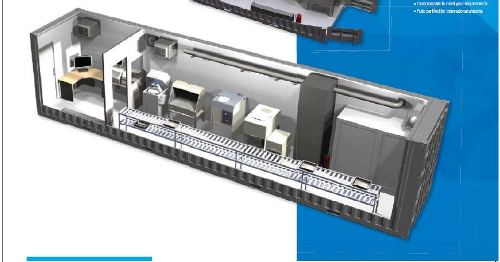
After doing a bit of shopping around for the best equipment available Middle Island has ordered a dedicated, fully equipped, containerised sample preparation laboratory from South Africa.

The company was motivated to purchase its own equipment due to backlog it, and other companies, has been suffering.

Middle island currently has an assay backlog in the SGS laboratory in Ouagadougou totalling 16,596 samples (6,125 drill holes).

The company did say that it was reasonable to anticipate this backlog could be progressively resolved prior to commencement of the 2012-13 field season, providing it with a flow of exploration results from July through to October 2012.

However, despite repeated laboratory assurances and guarantees, Middle Island expressed its frustration at the delays caused by this ongoing issue and the affects it was having on the progression of its exploration efforts during the 2010-11 and 2011-12 field seasons.

Unlike commodity prices and market sentiment, the company identified the issue does lie within its control and that it wasn’t worth taking the risk of the situation recurring in the 2012-13 field season.

“While I am philosophically opposed to investing shareholders funds in acquiring analytical or drilling equipment, this decision represents a compelling and cost-effective solution to a frustrating problem that, if not addressed, risks costing shareholders considerably more in the longer term,” Middle Island Resources managing director Rick Yeates said in the company’s announcement to the Australian Securities Exchange.

The containerised sample preparation laboratory facility will be initially located in Ouagadougou, the capital of Burkina Faso, in order to process samples generated from the company’s Reo project, as well as its Nassilé and Dogona projects, located in neighbouring Niger.


Diagrammatic representation of the containerised sample preparation
laboratory recently ordered by Middle Island Resources. Source: Company
announcement

The unit is completely enclosed within a conventional shipping container, which means it can be relocated to the centre of exploration/development activity in any country at any time.

Middle Island is in the process of appointing a recognised independent analytical company to manage the sample preparation facility in order to ensure independence and to avoid distracting exploration personnel.

The facility will provide the flexibility to rapidly process samples to produce 200 gram sample pulps that can then be cost-effectively flown to any internationally accredited laboratory in the world for analysis, significantly reducing current turnaround times.

Any excess capacity in the sample preparation facility will be made available to peer-group companies in order to optimise operating costs, and several companies have already expressed strong interest in participating.

Green Rock scores WA Government funding

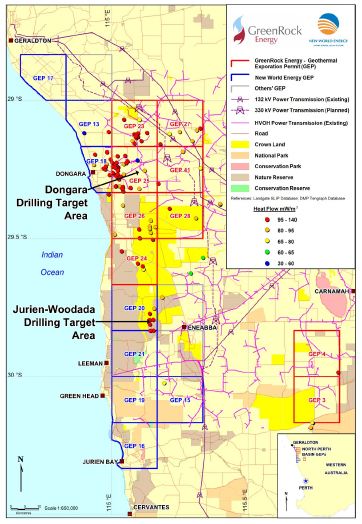
THE BOURSE WHISPERER: Geothermal play Green Rock Energy has received notice from Western Australia Minister for Environment and Water Bill Marmion that its application for Low Emissions Energy Development (LEED) funding for its Mid West Geothermal Power Project has been successful.

Green Rock had applied for, and has received all of, $5.38 million.

The company said the success of the application will strengthen the case Green Rock has made to the Commonwealth’s Emerging Renewables Program which puts a strong emphasis on State support.

 “This announcement represents a substantial step towards commercialising the very large hot sedimentary aquifer geothermal resources in our Mid West exploration permits,” Green Rock Energy executive chairman Richard Beresford said in the company’s announcement to the Australian Securities Exchange.

“We look forward to working with the State Government so that geothermal power can make a significant contribution to the State’s electricity demand.


Green Rock Energy and New World Energy Mid West permit areas. Source: company announcement


“We consider the project to be a strong contender for the Commonwealth’s Emerging Renewables funding and our objective is to have the majority of at least the first well costs covered by LEED and Emerging Renewables Program funds.

“This would address the lack of private investor appetite in Australia for the drilling necessary to demonstrate commercial production of geothermal energy.

“However, once demonstrated in the Mid West, we are confident that industry and utility investors will recognise the value of the very large geothermal resource and its proximity to existing power infrastructure and a rapidly-growing energy market in the Mid West Region.”

What the Brokers say

THE BOURSE WHISPERER: Japan has hinted at reopening a couple of nuclear power reactors and we receive a couple of Broker’s notes on uranium plays; Coincident?

BLACK RANGE MINERALS

We see Black Range Minerals as a quality investment opportunity that offers exposure to the growing domestic uranium demand of the US market. We believe the company has significant upside and will re-rate on the back of positive PEA expected in 3QCY12 and commencement of permitting applications.

Black Range is currently advancing the high-grade Hansen/Taylor Ranch uranium project, located in Colorado, USA, toward production.

The project contains JORC Resource of 90.9 million pounds uranium at a very robust grade of 600 parts per million (ppm) (250ppm cut off), making it the 3rd largest uranium resource within the USA.

The Hansen deposit, which is the focus of a PEA study, is the most advanced of the deposits and hosts a JORC resource of 19.7Mlbs (750ppm cut off) at an exceptionally high grade of 1290ppm.

Historic feasibility studies were based on underground and open pit mining, however a recently completed Scoping Study identified Under Ground Bore Hole Mining (‘UBHM’) combined with ablation and off site milling as the preferred development approach.

In addition to the capital and operating cost benefits, the proposed use of UBHM and ablation is likely to streamline the permitting process given the approach does not involve onsite processing of uranium, and should lead to a significant advantage in the permitting process.

Black Range is trading at an EV/Resource of $0.29/lb, a steep discount to the ASX and TSX peer group average of $1.14/lb for both explorers and developers.

We believe such a steep discount is unwarranted given its exceptional high grade, high tonnage resource located in a uranium friendly mining jurisdiction and we expect the stock to re-rate and trade closer to the peer group average as key permitting milestones are achieved.

RECOMMENDATION:

We initiate a SPECULATIVE BUY recommendation and a price target of $0.07/share.


AURA ENERGY

Aura Energy has released the results of its 2012 drilling program at the Häggån uranium property in Sweden.

This drilling intercepted mineralisation up to 148m thick and a new area of near surface mineralisation.

This was the third phase of Häggån drilling, comprising 14 holes totalling 2,226m.

Nine holes were part of the exploration programme designed to extend the area of mineralisation outside the current resource boundary.

The second set of five drill holes were larger diameter holes that were drilled as twins of earlier holes to provide samples for metallurgical test work.

It was an excellent set of results and they are expected to support a substantial increase to the existing JORC resource when the expanded resource is released in the September quarter.

A new area of near surface mineralisation was identified with an intersection of 147m grading 170ppm uranium only 15m from the surface.

This near surface mineralisation is expected to provide additional options for the mining studies currently underway.

The results of the metallurgical test work will be reported separately when complete.

RECOMMENDATION:
We have retained the Buy on Aura Energy, with an unchanged target price of
A$0.80/share.

Sooner it’s dug, sooner you’re out!

THE BOURSE WHISPERER: During the week Rio Tinto announced it would be committing US$4.2 billion to develop its tier one iron ore business.

The investment covers US$3.7 billion for expansion of the mining giant’s Pilbara iron ore operations in Western Australia.


Also included in the announced spend-up is US$501 million earmarked for further infrastructure development at the Simandou iron ore project in the West-African nation of Guinea.

“We are directing investment to projects that will generate the most attractive returns for shareholders and are resilient under any probable macroeconomic scenario,” Rio Tinto chief executive Tom Albanese said in the company’s announcement to the Australian Securities Exchange.

“Our superior Pilbara iron ore business has one of the highest margins in the industry, low capital intensity of investment and a strong track record of completing projects on time and budget.”

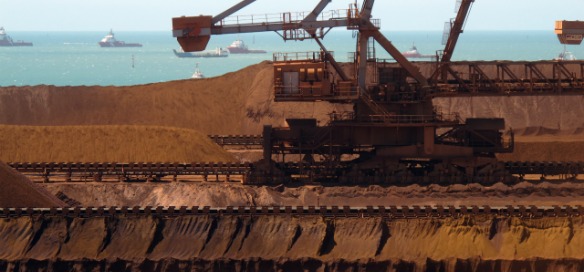
The investment outlay in the Pilbara will result in the company completing associated port and rail elements in order to expand iron ore production capacity to 353 million tonnes per annum in the first half of 2015.

US$2.9 billion will be spent on adding two berths to the new Cape Lambert jetty and wharf, the replacement of the existing original Cape Lambert rail car dumper, and the Rail Capacity Enhancement project.

US$570 million will be spent on a new gas-fired power station at Cape Lambert, which Rio claims will be more energy-efficient and produce significantly lower carbon emissions than its predecessor.

Rio’s capital expenditure explosion will extend the life of the Yandicoogina mine in the Pilbara to 2021 and expand its nameplate capacity from 52 to 56 million tonnes per annum.

Rio said the expansion was in keeping with its strategy of investing in and operating long-life, low-cost, tier one assets, while maintaining consistency with the company’s economic outlook.


“We continue to see positive prospects for medium- to long-term iron ore demand driven by ongoing growth in Chinese consumption,” Rio Tinto Iron Ore chief executive Sam Walsh said in the announcement.

“We continue to forecast that annual Chinese steel production will grow from its current level of around 700 million tonnes to around one billion tonnes a year out towards 2030.

“This demand growth is coupled with an increasingly challenged supply response, as several high-profile competitor projects have recently been either delayed or postponed.

“Our Pilbara expansion is already well underway, positioning us to capture the opportunities of this market environment. And we have the natural advantages of a readily-expandable Rio Tinto-operated port and proximity to the Chinese market.

Africa has been an investment hub for Rio Tinto of late as it has for the world’s biggest customer for iron ore, China.

The reasons for this are pretty simple. The price of iron ore is coming down and once the nice shiny new African infrastructure is in place it will be a much cheaper place to be a producer.

According to Global Market Research body IBISWorld revenues from iron ore are set to decline.

“After two years of extraordinary growth in 2011 and 2010, the revenue generated by the Global Iron Ore Mining industry is expected to contract by about 4.3 per cent in 2012,” IBISWorld’s said in its Global Iron Ore Mining global market research report in March this year.

“Although output will continue to expand, prices are easing from the high levels recorded in the previous year.

“The gains made in 2011 and 2010 follow a period of gloom during global recession.

“Following the recession, most iron ore supply contracts shifted from annual pricing (which has been the norm since the 1960s) to more flexible quarterly or even monthly pricing.

“The industry’s share of total world GDP in 2012 is expected to be about 0.2 per cent.

“Higher iron ore output and prices over the five years through 2012 are expected to yield average annual growth in industry revenue amounting to 23.9 per cent.”

In other words if you can get out of the expensive areas and into the cheaper ones to allow you to continue digging out extraordinarily large amounts of iron ore at lower costs so as to maintain your profit margins do so as soon as you can.

This probably shines some light on Rio’s haste in bringing the Simandou iron ore project in Guinea closer to being in operation.

The company’s investment plan at Simandou will be used in detailed design studies, early works and long-lead items.

This is primarily for rail and port infrastructure with first commercial production planned for mid-2015.

Rio said its plan at Simandou entails staged funding approvals with its partners for a progressive ramp up of the operation.

The company envisages it becoming a long-life, low-cost operation producing one of the highest grade iron ores on the market.

It could also be described as an emerging product hub operating at much lower costs than its Australian counter-operation.

“The investment we and our partners are making in Simandou takes us a step further towards the phased development and ramp up of a new world-class iron ore resource,” Walsh continued.

“Further investment will be made as the Government of Guinea progresses its financing strategy and grants approvals for the next steps in developing rail and port infrastructure.

“The experience gained in expanding our Pilbara operations will be invaluable as we develop Simandou.”

The cynics out there may feel that it could be Rio could just want to deplete its Pilbara mines as quickly as possible in order to focus more attention to, and take more profits from, Africa.

Silver Lake to commemorate 250,000oz production

THE BOURSE WHISPERER: Silver Lake Resources has reached a production milestone with the first 250,000 ounces of gold bullion having been produced from the company’s Mount Monger operations.

Ore mined at the Mount Monger operations is processed at the company’s Lakewood gold processing facility, located five kilometres south east of Kalgoorlie in Western Australia.


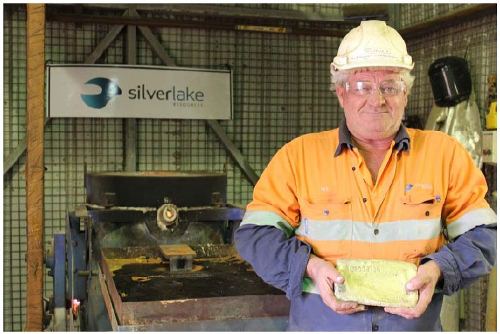
Lakewood facility deputy mill manager Neil Dellar holding the gold bar
containing the 250,000th ounce. Source: Company announcement

The 250,000 ounce milestone has been achieved by Silver Lake processing 1.3 million ore tonnes at a blended grade of 6.4 grams per tonne gold from multiple underground and open pit feed sources at an average (blended) metallurgical recovery of 93.5 per cent.

“This is a significant milestone for our company and our shareholders,” Silver Lake Resources managing director Les Davis said in the company’s announcement to the Australian Securities Exchange.

“When we purchased the Mount Monger project in November 2007 it was on care and maintenance with a resource base of 235,000 ounces of gold and limited mine life.

“In December 2007 we commenced production from a single ore source at Daisy Milano.

“We have now poured our first 250,000 ounces of gold, grown the resource base to 1.7 million ounces and we are producing from four underground mines and one open pit mine with an expected mine life of 10 years.

“Furthermore we have expanded our Lakewood gold processing facility from 300,000 tonnes per annum to 900,000 tonnes per annum since acquiring the facility in November 2007.”

The company has decided to commemorate its production milestone in response to expressions of interest received from its shareholders.

This will take the form of commissioning the Perth Mint to make a combination of 2.5oz, 5oz and 10oz gold bars for shareholders to purchase.

The gold bars will contain the company logo on one side and an authenticity stamp from the Perth Mint on the other.

Sundance increases Mbalam by 49 per cent

THE BOURSE WHISPERER: Sundance Resources has increased the high‐grade hematite Resources at the company’s Mbalam project in Central Africa by 49 per cent to 775.4 million tonnes grading 57.2 per cent iron.

According to Sundance over 95 per cent of the updated Resource is in the Indicated category, which it claims further underpins the strength of the development of Stage One of the project.

Stage One has already established the project at 35 million dry tonnes per year (Mdtpa) for 10 years from a previously announced Ore Reserve of 352 million tonnes at 62.4 per cent iron with low impurities of five per cent silica, 2.6 per cent alumina and 0.09 per cent phosphorus.

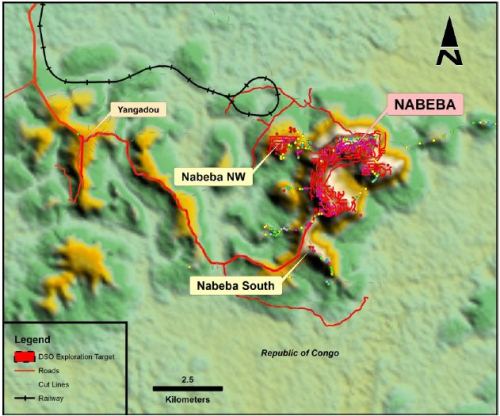
The company revealed it has also defined a maiden resource of 1.4 billion tonnes of Itabirite mineralisation at 35 per cent iron at the Nabeba deposit in the Republic of Congo in addition to 2.3Bt of Itabirite it has previously announced at the Mbarga deposit in the Republic of Cameroon.

This brings the Mbalam project’s total high‐grade Hematite and Itabirite resources to 4.49Bt.


Location of Nabeba Northwest and Nabeba South deposits in relation to the Nabeba deposit. Source: Company announcement


“The size of the high‐grade hematite resource clearly demonstrates the potential of this project,” Sundance Resources CEO and managing director Giulio Casello said in the company’s announcement to the Australian Securities Exchange.

“Combined with our exploration target of a further 90 to 150 million tonnes of high-grade hematite and also considering the other areas within our tenements that are yet to be explored, we are confident of approaching one billion tonnes of high‐grade, which further demonstrates that Mbalam is a world‐class iron ore asset.

“The maiden Itabirite Resource at Nabeba is consistent with our previously announced exploration targets and confirms the long life potential of these deposits with total Resources of 4.5 billion tonnes.”

Sundance was able to increase the global JORC‐Code compliant Mineral Resources for the Mbalam iron ore project due to the following reasons:

–    Addition of the Nabeba Northwest deposit (50.3Mt at 52.8 per cent Indicated resources);

–    Addition of the Nabeba South deposit (9.9Mt at 57.3 per cent iron Indicated resources);

–    Re‐interpretation of the Main Nabeba and Mbarga deposits based on additional drilling information (accounts for an increase of approximately 80Mt of Resources); and

–    A relaxation of previous chemistry ‘cut‐off’ and ‘cut‐over’ restraints as a result of the Enhancement Study (accounts for an increase of approximately 115Mt of high-grade Resources).

Sundance identified the relaxation of previous chemistry constraints to be significant in that previous resource estimations have applied various iron cut‐offs inside defined mineralised domains and then had further restraints placed for silica and alumina to ensure a premium quality resource was provided to the Ore Reserve Estimation process.

The company indicated work carried out on its Enhancement Study has so far is demonstrated its Ore Reserve process can handle lower quality specifications and still produce a high-grade product by use of in‐pit scheduling and blending.

This has enabled Sundance to optimise the Resource to present maximum tonnes for the Ore Reserve Estimation process while also allowing use of the upgraded plant already within the company’s Definitive Feasibility Study to treat more resource tonnes.

Golden Rim outlines new anomalies at Sebba

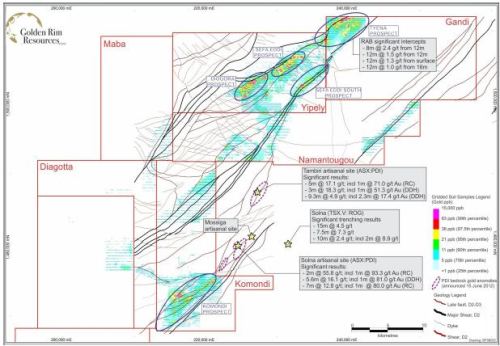
THE BOURSE WHISPERER: Golden Rim Resources has received anomalous soil sample gold assays from several prospect areas within the company’s Sebba Project, Burkina Faso.

The company collected a total of 6,900 geochemical samples (soil and auger) and 178 rock chip samples were collected from areas that were selected after interpretation of regional high-resolution aeromagnetic survey data and a review of existing prospect geochemistry.


Location of gold in soil geochemical anomalies at Sebba. Source: Company announcement


The geochemical sampling has identified a new gold in soil anomaly at Sefa Eddi South.

This anomaly is approximately six kilometres long and approximately 600 metres wide.

Values up to 107 parts per billion gold were returned during the survey.

“Geologically, the geochemical anomaly lies within a series of metamorphosed volcanic (mafic) units that occur along the shear zone,” Golden Rim Resources said in its ASX announcement.

“The anomaly sits on an extensive shear structure that extends further south into the Nantougou and Komondi licences.

“Other, less extensive geochemical anomalies have been returned along other areas of the shear that have been sampled.”

Another area to undergo geochemical sampling was the Tyena prospect area, which has resulted in an increase to the size of the gold in soil anomaly to approximately 6km by 3km.

Values up to 137ppb gold were returned from this survey area.

Geochemical sampling has also increased the size of the gold in soil anomaly at the Komondi prospect to a length of approximately 10km and is up to 3.5km wide.

Values up to 297ppb gold were returned during the most recent sampling.

Several anomalous rock chip samples (up to a value of 5.6 grams per tonne gold) were returned from this area.

“The Komondi anomaly is located on the same shear structure that hosts the extensive Solna and Tambiri artisanal gold workings, located five kilometres and 7.8 kilometres northeast respectively, directly along strike on Predictive Discovery’s Bangaba project,” Golden Rim Resources said.

According to Golden Rim, Solna is the largest artisanal mining community in the region with over 4,000 inhabitants and has been worked extensively for over 20 years.

Golden Rim is currently planning further exploration, including drilling to follow-up the Sebba gold in soil anomalies.