THE DRILL SERGEANT: Emmerson Resources (ASX: ERM) received interesting results from drilling at the company’s Kadungle gold-copper project in New South Wales.
Recently completed drilling at the Kadungle project identified potential for both deeper copper-gold and now, shallow epithermal gold at the Trig prospect.
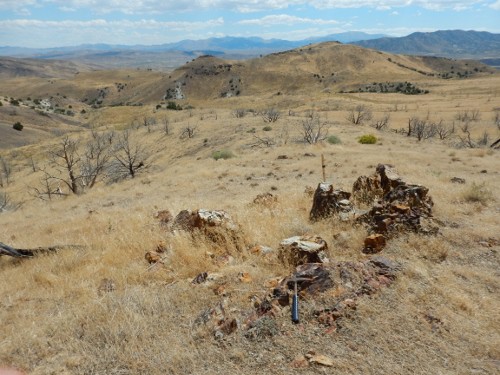
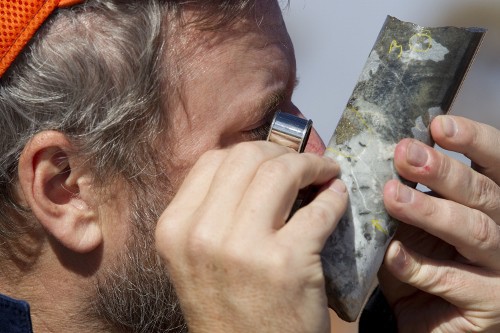
The company indicated that assays are still pending, however construction of the drill access track at Trig revealed extensive boulders of epithermal quartz.
The last drill hole at Trig (drill hole TRC004) intersected multiple epithermal veins, which Emmerson interpreted to correspond with boulders at surface that contain extensive quartz-hematite veins.
Previous rock chip sampling at Trig returned highly anomalous gold geochemistry with up to 1.27 grams per tonne gold.
At the company’s Tennant Creek project, recent drilling at the Gecko-Goanna project has confirmed potential for non-ironstone hosted copper.
Better results included:
GRC1413
4 metres at 2.87 per cent copper from 122m, including 3m at 3.63 per cent copper;
plus, a deeper intersection of:
6m at 4 per cent copper from 137m, including 2m at 6.8 per cent copper.
GRC1416
5m at 1.36 per cent copper from 177m, including 1m at 4.7 per cent copper and 1m at 3.8 per cent copper.
The company claimed this to support previously announced mineralisation in drill hole GODD032 of 7m at 5.98 per cent copper and 3m at 4.75 per cent copper encountered by drilling in 2015.
Emmerson explained the funding for this recent drilling completes the Stage 1 Earn-in obligation from its Joint Venture partner, Evolution Mining (ASX: EVN).
Discussions are ongoing between the two companies regarding the future options for the Tennant Creek JV.
Emmerson said it was confident that these discussions will deliver a mutually attractive path forward for the project.
“Emmerson is extremely well positioned with commanding ground positions in New South Wales and Tennant Creek,” Emmerson Resources managing director Rob Bills said in the company’s announcement to the Australian Securities Exchange.
“This project portfolio is now diversified beyond Tennant Creek and attractive for development, either by Emmerson or third parties.
“We are confident that positive results across this portfolio will continue to build quality assets and consistency of news flow.
“Further, Emmerson is one of few junior companies building a revenue stream from small high-grade mines.
“Pleasingly the last round of drill results at Kadungle is consistent with the emergence of a large mineralised system that supports ongoing exploration for both shallow gold and deeper copper-gold.
“Assay results for the Trig drilling will be available toward the end of February as work continues both at Kadungle and across our other New South Wales projects.”
https://resourcesroadhouse.com.au/wp-content/uploads/2017/06/logo-finalized4.png00Wally Grahamhttps://resourcesroadhouse.com.au/wp-content/uploads/2017/06/logo-finalized4.pngWally Graham2018-02-09 08:05:512018-02-09 08:05:51Emmerson Resources Encounters High-Grades on NSW and Tennant Creek Projects
THE BOURSE WHISPERER: Latin Resources (ASX: LRS) finalised the sale of the company’s Peruvian copper assets to TSX-V-listed Westminster Resources Limited (WMR).
Latin Resources said the sale and transfer will entitle Westminster to 100 per cent ownership of a total of 44 concessions, including the Ilo Norte and Ilo Este projects, spread over 36,000 hectares that are held by Latin’s 100 per cent-owned subsidiary, Peruvian Latin Resources.
Westminster has completed due diligence and the formal Property Purchase Agreement has been executed by both parties with Latin to receive the first instalment of USD$150,000 ($195,000) within seven days.
Based on the current share price of WMR of CAD$0.345 the sale transaction has a total value of more than $6.8 million comprising $6.5 million in shares and US$250,000 in cash.
“The objective of the sale of the projects was to secure material tangible value for Latin’s shareholders given that the projects are no longer a strategic priority of Latin and are surplus to its requirements,” Latin Resources explained in its ASX announcement.
“It will also save the company $140,000 in annual concession costs.”
Latin Resources said the divestment of its copper projects will now allow the company to focus on its lithium and cobalt projects in Argentina, where it has 101,096 Hectares under application or agreement in San Luis Province and over 70,000 hectares in the Catamarca province.
“This is the largest lithium hard rock pegmatite land holding in Argentina,” the company claimed.
“The company remains in discussions with a number of parties in relation to joint venture and offtake opportunities to assist in and fast track the development of its lithium projects.”
THE BOURSE WHISPERER: Blackham Resources (ASX: BLK) provided an operational update for the month of January 2018 at the company’s Matilda-Wiluna gold operation in Western Australia.
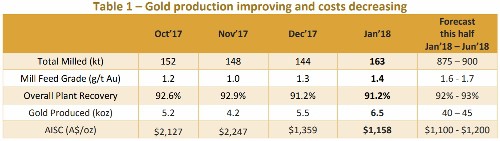
Blackham Resources indicated that gaining access to high-grade zones in the M4 and Galaxy pits late in the December 20117 quarter was a contributing factor to it achieving record monthly gold production of 6,498 ounces and a low stripping ratio of 3.6:1 (waste: ore) during January 2018.
This resulted in Blackham achieving a record low monthly AISC in January 2018 of $1,158 per ounce, in comparison to an average previous realised gold price of $1,663 per ounce, which the company said demonstrated a clear step change in economics.
Blackham said it expects milled grade and gold production to continue to improve throughout the March 2018 quarter.
The Operation is now building high-grade stockpiles for the first time since March 2017; these high-grade stockpiles currently total 108,000 tonnes at 1.5g/t gold.
During Feb’18, the Operation is expected to mine approximately twice as much high-grade ore as it will process, providing strong operational flexibility.
“With the Operation’s production at record levels and a significant reduction in AISC having already been achieved, the company is clearly demonstrating that its operational turnaround is well underway,” Blackham Resources executive chairman Milan Jerkovic said in the company’s announcement to the Australian Securities Exchange.
“This operational performance, in conjunction with the current strong AUD gold price, is expected to make 2018 a transformational year that is expected to generate significant cash flows and value for Blackham and its shareholders.”
https://resourcesroadhouse.com.au/wp-content/uploads/2017/06/logo-finalized4.png00Wally Grahamhttps://resourcesroadhouse.com.au/wp-content/uploads/2017/06/logo-finalized4.pngWally Graham2018-02-08 10:54:082018-02-08 10:54:08Blackham Resources Reports Record Month of Gold Production
CONFERENCE CALLER: Investment conference specialists, Vertical Events manager Doug Bowie reports on the company’s annual trek to Vancouver in January to attend the Vancouver Resources Investment Conference (VRIC).
VRIC is run by Cambridge House International and Vertical Events have been the agent for this conference since 2009.
The VRIC has been running since 1997 and this year attracted over 8500 delegates (mostly investors), 330 Exhibitors, and 60 speakers.
Of these exhibitors there were eight Australian companies exhibiting with two companies giving corporate presentations and two company CEOs appearing as experts on panels.
Held on a Sunday and Monday, the VRIC started early on the Sunday morning with three of the most well-known newsletter writers (Frank Holmes, Rick Rule, and Marin Katusa) facing off with their best company predictions to an audience of over 800 people whilst at least another 200 people were still in line waiting to get in to the conference.
Gold was still and clearly, the major commodity represented in the Exhibition area with copper, uranium and lithium quite a fair way back in numbers but still well represented.
In line with tradition, Sunday at the VRIC is very much retail investment focussed with casual dress the order of the day.
It closed with a debate on Cryptocurrency vs Gold which filled the main auditorium.
In between there were plenty of keynote presentations, company presentations, and panel sessions.
Tony Rovira of Azure Minerals presented on its Mexican operations and left a very positive impact on all the investors that attended.
Wayne Taylor of Heron Resources followed and gave an informative presentation on the company’s Woodlawn project.
Meanwhile in Auditorium one: Matt Gill’s White Rock Minerals were part of the Alaskan panel entitled ‘Alaska: North to Opportunity’.
Overall Day One was highly successful and everyone was kept entertained by the presentations or by the NFL playoffs that were televised at about four exhibition booths at the conference.
Day Two came and the suits were out in force.
Brokers and funds from the BC area as well as the United States and Toronto were in abundance and looking for bargains.
Part of the value options were seen in the Cobalt Panel where Scott Williamson of Blackstone Minerals provided a great overview of its cobalt project in British Columbia.
Overall, the companies that travelled for the conference were all happy with the VRIC.
“For a first-timer to the VRIC, I did find the format and location ideal,” White Rock Minerals managing director and CEO Matt Gill said.
“With not too many parallel sessions, I was able to attend those I wished to, and still leave room to man my booth and wander the exhibition hall to meet and network with other companies and suppliers.
“With White Rock’s globally significant zinc VMS project in Alaska, and plans to be on the ground this season, the VRIC was held at an ideal time and location for us.
“With over 300 companies and some 8,500 attendees, it provided great exposure and the chance to meet many all in the one location.”
The conference wound up at about 5pm that day and all Monday the Vancouver Round Up run by the AMEBC was in the Exhibition hall next door.
This is another 6000 plus delegate event that looks at the technology and geology behind many projects in Canada and the Americas.
Australian companies featured in the core shed were Solgold on the first two days and Xanadu Minerals and Blackstone Minerals on the final 2 days.
Over the past few years, the week in Vancouver has got bigger and better with many other events evolving including the Metals Investor Forum on the Friday and Saturday before the VRIC featuring over 20 companies and 1000 investors and an event in Whistler later in the week as well.
The general feeling is that the resources industry is alive and well in Canada, but unusually, lagging a little behind Australia due to the confusion in the investment market supplied by Bitcoin and other cryptocurrencies, Blockchain, and Cannabis stocks.
Australian markets have been less exposed to these markets giving the resources market better access to capital and a bigger spotlight.
S2 Resources (ASX: S2R) managing director and CEO Mark Bennett knows better than most how exploration success can create wealth and good times for shareholders.
Bennett is also aware of how that same success can create expectations, especially when those shareholders support your next endeavour.
S2 Resources was spun out of Sirius Resources, after the discovery and subsequent sale of the Nova nickel deposit.
S2 enjoyed exploration joy at its Polar Bear gold project in Western Australia, quickly establishing a Mineral Resource estimate for the Baloo deposit of 2.8 million tonnes at 1.8 grams per tonne gold for 123,000 ounces of gold at a lower cut-off grade of 0.8g/t gold.
As encouraging as that all seemed, Bennett had, as it turns out, much loftier ambitions for the company.
“We do have a number of shareholders on the register who went through the Nova experience with us, which they would like to see us repeat – and quite frankly who could blame them,” Bennett told The Resources Roadhouse.
“That’s the base level expectation, so we need to make some brave exploration calls to try and find monster deposits.
“That is why we lifted our gaze from the Goldfields to look internationally.
“We could find a few hundred thousand gold ounces, which is fine in a commercial sense, but in a company, corporate, share price sense it’s not what our shareholders want.
“So, we looked around at a few different regions, prepared to take bigger risks as we attempt to find a Nova-equivalent deposit.”
First port of call on S2’s global odyssey was the Skellefte district of northern Sweden, a prolific mining district populated by numerous major polymetallic zinc-copper-gold-silver volcanogenic massive sulphide (VMS) deposits.
The neighbourhood where S2 has approximately 805 square kilometres of ground, considered highly prospective for similar polymetallic VMS mineralisation and orogenic shear zone hosted lode gold mineralisation, includes the mining and smelting operations of global Swedish metals and mining giant Boliden.
S2 ran the first ever VTEM survey to be carried out over the area, generating 64 targets, which it subsequently raised to over 100.
“Our team in Sweden spent the last European summer, when there’s no snow on the ground, mapping, prospecting, sampling, as well as conducting some geophysics and geochemical sampling to complete as much as they could during that window,” Bennett explained.
“The aim was to get as much information as possible to enable us to make an intelligent decision on what targets to prioritise for the drilling season.”
The second hole drilled in S2’s Swedish winter drilling campaign, diamond core hole SBJK170008, confirmed continuation of VMS mineralisation a further 170 metres down plunge from hole SBJK170006, the last hole drilled during the company’s previous winter program.
The hole intersected an upper 2.7 metre thick zone of brecciated massive sulphides and a lower 10.1m thick footwall stringer zone.
Assays returned:
Upper sulphide lens:
2.7m at 7.14 per cent zinc, 0.32 per cent copper and 8.9 grams per tonne silver from 301m; and
Footwall stringer zone:
10.1m at 0.52 per cent copper and 7.1g/t silver from 319.25m.
The extensive VMS mineralisation hit at Bjurtraskgruvan was substantial enough for S2 to believe it had affirmed the prospectivity of the belt, while at the same time validating its exploration methodology.
However, the thickness of the mineralised horizon wasn’t enough to divert its attention from the many other targets it still has scheduled for reconnaissance drilling over the winter season.
These include the Granbergs target, which S2 identified using induced polarization (IP) geophysics and base of till (BoT) infill drilling.
Granbergs sits along strike from a gold-rich VMS deposit mined by Boliden in the 1950s.
The Nasvattnet target is located outboard of the western end of the Skellefte belt and contains two known clusters of mineralised boulders comprising polymetallic sulphides, whose source has not yet been identified
Individual boulders have been shown to contain up to 3.85 per cent copper, 17.2 per cent zinc, 9.2 per cent lead, and 680g/t silver.
The Storgroven gold target was identified by prospecting and follow up BoT drilling around two known VMS occurrences on the company’s Petitrask number 402 lease.
Storgroven is centred 400m to the north of the known Aliden VMS occurrence.
BoT drilling defined a 1,000m long gold anomaly, which remains open to the northwest.
On the northwestern-most BoT line this anomaly is 500m wide and contains a distinct gold and silver bearing gossan concealed beneath four metres of glacial till, grading 1.1g/t gold and 8.2g/t silver.
Extensional and infill BoT drilling is in progress to better delineate the anomaly as a precursor to planning a diamond drill program scheduled for late March 2018.
S2 Resources other international commitments involve three active earn-in agreements with TSXV-listed Renaissance Gold on three Carlin-style gold targets in Nevada in the United States of America.
“The way things seem to operate in Nevada is that majors, such as Barrick, Newmont, and Kinross dominate the landscape and juniors pretty much work up prospects until they are ready for the big boys to take them off their hands,” Bennett said.
“The juniors tend to be very small, low-cap companies with plenty of good ideas but not much cash in the bank for exploration activities, something we recognised as a niche in the market.
“We noticed there weren’t too many juniors actually drilling, and what juniors were, didn’t have enough money and were over-reliant on the majors.
“We are smaller and flexible, which fits in with how they want to operate, but -most importantly – we still have enough money to carry out the activities they can’t.”
The Pluto project is located 50km north of Austin in Lander County, Nevada, on the north-south ‘Rabbit trend’ of gold deposits.
S2 can earn a 70 per cent interest by spending US$3 million by June 2022 and can withdraw after the expenditure of US$200,000 by June 2019.
The target at Pluto comprises a gravity anomaly interpreted to represent an uplifted block containing carbonate bearing stratigraphy known to be favourable for gold mineralisation.
Four deep reverse circulation (RC) holes were drilled as an initial ‘proof of concept program, however, no significant gold was intersected.
These four RC holes did intersect a thick sequence of Havallah Formation mudstones S2 believes forms a hangingwall seal to the more favoured Antler sequence host-rocks.
These results will be reviewed in early January prior to any further work being undertaken at Pluto.
The South Roberts (S2 earning 70%) project is in Eureka County, Nevada, 35km northwest of Eureka, on the Battle Mountain–Eureka trend of world class gold deposits and on the western margin of the northern Nevada rift in a similar setting to Barrick Gold’s 12 million-ounce Goldrush deposit to the north.
The Ecru (S2 earning 70%) project is 40km southeast of Battle Mountain in Lander County, Nevada, in the heart of the highly endowed Battle Mountain–Eureka trend and surrounded on three sides by Barrick’s Cortez District property, containing the Pipeline, Cortez Hills and Goldrush deposits with a collective gold endowment of approximately 50 million ounces.
S2 Resources is planning to drill its first programs on the South Roberts and Ecru projects once they are accessible, which is most likely to be from April 2018 onwards.
S2 Resources (ASX: S2R) …The Short Story
HEAD OFFICE
North Wing, Level 2
1 Manning Street
Scarborough WA 6019
DIRECTORS
Jeff Dowling, Mark Bennett, Anna Neuling, Grey Egerton Warburton.
https://resourcesroadhouse.com.au/wp-content/uploads/2018/02/DSCN0092-300x225.jpg225300Wally Grahamhttps://resourcesroadhouse.com.au/wp-content/uploads/2017/06/logo-finalized4.pngWally Graham2018-02-07 11:33:302018-05-08 09:36:40S2 Resources on International Discovery Tour
With fully-funded construction underway to mine Australia’s most recent greenfields gold discovery, it would be tempting for a junior gold explorer to become complacent.
However, having made its big, company making, Gruyere gold discovery Gold Road Resources (ASX: GOR) is determined to create a company culture that ensures discovery of such deposits keeps coming.
Gold Road, along with its 50:50 Joint Venture partner, Gruyere Mining Company Pty Ltd, a member of the Gold Fields Limited group, currently has development of the Gruyere gold project, 200 kilometres east of Laverton in Western Australia, well under control.
Development kicked off at Gruyere in December 2016, and with construction activities having been in progress for more than 12 months, the project remains on schedule to pour first gold at the end of the first quarter of 2019.
Most pleasing is that costs incurred to date are in line with the budgeted overall Project Capital of A$532 million.
A five‐year A$400 million mining services contract with Downer EDI Mining will begin soon with Downer scheduled to mobilise its workforce in the March 2018 quarter to commence construction of the mining infrastructure.
Mining activities are due to launch in the December 2018 quarter.
In November last year, Gold Road signed margined Gold Forward Facilities with two major banks for up to 200,000 ounces of Australian dollar denominated forward sales.
The Hedging Facilities equate to 100,000 ounces of gold with each bank and so far the company has forward sales contracts locked in for 25,000 ounces at an average forward price of A$1,705.
With the gold price currently above the modelled Gruyere Feasibility Study gold price of A$1,500 per ounce, the company believes it is prudent to lock in a small portion of its forecasted production.
The hedging is part of the company’s stated “prudent management of financial risks”, under which it is reviewing options for standby revolving credit or working capital facilities, which would also include discretionary gold hedging facilities.
The company has slated the end of the March 2018 quarter as a target for the finalisation of any Standby Facilities with the intention to merge the early hedges into any Standby Facility, and to roll the delivery dates of the hedged ounces to meet forecast gold production dates.
By combining higher gold prices and the Standby Facilities, the company can lower its risk profile and ensure flexibility in an environment which is historically volatile.
To date project engineering is 72 per cent complete and construction 32 per cent complete, numbers that support the JV’s confidence of hitting its 2019 deadline.
The company gives a great deal of credit for the achievements of the past 12 months to its project team and the project contractors.
In 2017, Gold Road Resources embarked on a A$30 million greenfields exploration drilling program.
The drilling focused on the Wanderrie and Corkwood Camps, located within the company’s 100 per cent-owned North Yamarna tenements.
RC and diamond bedrock testing of prioritised highest-ranked targets, and infill definition of gold anomalies identified through regional aircore drilling were conducted while Gruyere studies were being completed.
The results improved understanding of these targets with Santana and Satriani (Wanderrie Camp), and Ibanez (Corkwood Camp) standing out.
Broad spaced drilling confirmed gold bedrock mineralisation along the main mineralised shear through the Santana and Satriani prospects, which form part of a continuous 11-kilometre-long mineralised corridor known as the Wanderrie Supergroup Trend.
Gold Road’s geologists were able to develop a deeper understanding of each prospect’s potential, which they have been encouraged to demonstrate inhouse over the summer break.
To keep the company’s exploration ambitions on track, the company called in its geologists from the field for a moment’s respite from the extremely hot December, January and February sun, for what Gold Road’sManaging Director and CEO described as, “The Summer of Fun”.
The heat in the company’s air-conditioned West Perth offices soon intensified as each geology team began presenting what the exploration programs had taught them about their respective prospects.
“Basically, it is creating some competitive tension between the members of the team regarding who it might be that will make the next big discovery for the company,” Murray told The Resources Roadhouse.
“They have all been allocated different geographical areas across the tenement package looking at all the historical work we have conducted over each.
“That then culminates in a meeting where – as a peer group – they will all decide what should be the highest priority exploration targets for the company to tackle next.”
The company’s strategy is simple, but highly effective.
The various teams collect a large amount of information throughout the year in the field, which means they are kept so busy it becomes almost impossible to adequately collate the information and assess the quality and priorities of the targets.
At some 6,000 square kilometres, Gold Road’s Yamarna Belt tenement holding is substantial, and is expected to produce more discoveries to follow the 148 million tonnes at 1.3 grams per tonne for 6.2 million ounces of contained gold Gruyere deposit.
The company has a large number of targets scattered across the belt and believes the best way to determine which targets stand out from the rest is for each to be presented to, and debated by the entire geological group.
“It is a terrific way for the team to reassess, regather their thoughts and retarget opportunities right across the belt,” Gold Road’s Executive Director – Exploration and Growth Justin Osborne said.
“This entails looking at all the work we have conducted at Corkwood, down at Wanderrie and some new areas.
“We have updated the whole geological map for Yamarna with an improved geological understanding.
“That means we can take a good look across the entire tenement area and not just fall in love with one project.
“It allows us to step back and consider the merits of each project in the context of being a small part of the large picture.”
Osborne expanded his point, saying that when targeting prospects, it is very important for the company to have a consistent set of criteria to use when identifying and assessing each one.
“Otherwise, you will have somebody that will look at a target and emerge super-optimistic about it, while somebody else may be more conservative in their approach and consider the same target to be interesting, but that is all,” he explained.
To that end, Gold Road spent a great deal of time last year developing and defining a system that applies consistent parameters to the targets, so the company is then able to classify each with a targeting score.
“This is based on a range of geological criteria that we have determined to be important for gold deposits at Yamarna and can be applied across the Yilgarn,” Osborne continued.
“We can then put all the targets together and rank them objectively – we will work through and update all the interpretations – and then all the targets that come out of that.
“They will be peer reviewed by the whole team, from where we will develop a ranked list of targets.”
Gold Road Resources (ASX: GOR) …The Short Story
HEAD OFFICE
Level 2
26 Colin Street
West Perth WA 6005
Testwork carried out by aspiring gold developer Middle Island Resources (ASX: MDI) on the company’s Sandstone gold project in Western Australia provided a ‘Eureka’ moment.
Middle Island’s focus at the Sandstone project is to extend and enhance its proposed gold production profile to recommission the on-site processing plant.
One major hurdle had been Sandstone’s Two Mile Hill tonalite deeps deposit, for which Middle Island has released an Exploration Target of 24 to 34 million tonnes at 1.1 to 1.4 grams per tonne gold for 0.9 to 1.5 million ounces of gold.
Two Mile Hill tonalite deeps sits four kilometres north of the 600,000 tonnes per annum Sandstone plant, and was previously considered incompatible with existing processing plant capacity.
Because of this perceived incompatibility, the company was considering Two Mile Hill tonalite deeps as a potentially separate project, even a possible farm-out deal.
The company reviewed its assessment of Two Mile Hill tonalite deeps after positive results from preliminary ore sorting testwork conducted on drill core demonstrated the deposit’s amenability to pre-concentration of gold mineralisation.
This ticks off several boxes for the recommissioning of the Sandstone processing plant, including reduced throughput and costs, and an increase to the feed grade to a level that is anticipated to be compatible with the plant’s capacity and capability.
This means the Two Mile Hill tonalite deeps deposit has potential to provide a substantially higher production profile over an extended period, without the requirement for a new larger processing plant, and Middle Island has adjusted its focus accordingly.
“We were running two separate projects within the Sandstone project,” Middle Island Resources managing director Rick Yeates told The Resources Roadhouse.
“The first was focused on recommissioning the mill, and the second was how we would develop the Two Mile Hill tonalite deeps deposit.
“We are very confident the initial ore sorting results can be substantiated by further test work.”
The process of ore sorting is not, as might be thought, grading of small bags of ore material by weight or colour.
It is rather, a simple mechanised pre-concentration process that facilitates ‘upgrading’ of ore and mineralised waste and has been used across the industry for sorting myriad of commodities, such as diamonds, uranium, tungsten for more than 25 years.
Like other technological advancements in the industry, ore sorting has also benefitted from improvements in technology, including the use of sensors and applying faster data processing speeds, which have contributed to the application of the process.
Sorting has been found to be effective for managing dilution from mining operations, upgrading low grade stockpiles, reducing haulage costs for satellite operations and, most importantly, improving processing costs and efficiencies.
Middle Island appointed Nexus Bonum Pty Ltd, a highly experienced consulting group in sorting technology and its application to mining projects, to advise on all aspects of the sorting program.
“The ore sorting technology we have employed is a good example of how new or enhanced technologies can transform the economics of mining and processing operations,” Yeates said.
“Middle Island is proud to be an early mover in utilising this significant technological opportunity.”
The ore sorting study followed an encouraging mineralogical assessment on ore sourced from the Two Mile Hill tonalite deeps deposit in October 2017. This work identified that greater than 99 per cent of the gold is hosted within the quartz veins.
The test work aimed to determine if a mill feed upgrade was achievable and the optimum pre-concentration route to do so.
Two ore sorting processes were run.
The first by Tomra, was undertaken on 78 kilograms of -30mm/+10mm material following screening to remove fines.
A primary sort using X-ray transmission (XRT) was followed by a Colour scavenge on the product and waste fractions generated.
A -10mm screen upgrade to 6.38g/t gold recovered 19.4 per cent of the gold in just 7.3 per cent of the mass in this test with the Tomra results showing 64.5 per cent of the gold was recovered in 24 per cent of the mass by XRT sorting following screening.
Colour sorting of the XRT product did not result in any further upgrade. However, Colour sorting of the XRT waste fraction recovered a further 12.3 per cent of the gold to yield a total screening (fines) plus sorting gold recovery of 96.3 per cent in 41 per cent of the mass.
Middle Island interpreted the data to indicate that a mined grade of 2.38g/t gold could be upgraded to a plant feed grade of 5.61g/t gold by screening and XRT/Colour sorting.
A second sorting trial using a Steinert sorter was carried out to assess if Laser sorting would be more effective than Colour sorting.
The Steinert sort was conducted on the recombined Tomra products (73kg), following sub-sampling for gold analyses.
The 73kg recombined composite sample was run through a Laser at different settings to produce two concentrates.
The Laser waste fraction was then scavenged twice by the XRT sensor to produce high grade (HG) and medium grade (MG) fractions.
The Steinert results indicated 12.2 per cent of the gold was recovered in 14.2 per cent of the mass by Laser (concentrates combined).
Scavenging of the Laser waste fraction with XRT recovered a further 75.6 per cent of the gold (HG plus MG) to yield a total screening plus sorting gold recovery of 95 per cent in 81 per cent of the mass.
The MG material is below the marginal cut-off for processing and would not be recovered.
Overall, the Steinert test resulted in a 93.9 per cent recovery of gold in 54 per cent of the mass.
Middle Island saw the results as an indication that reviewing ore sorting is a valid means of upgrading mill feed, thereby lowering process operating costs – and consequently the mining cut-off grade – for a possible underground mining operation, is readily justified.
It also signalled the potential that the substantial scale of the Two Mile Hill tonalite deposit could ultimately prove compatible with the milling capacity of the existing Sandstone processing plant.
“The results from the ore sorting characterisation testwork are obviously, at this stage, only preliminary, however, these initial results are outstanding,” Yeates said.
“Even Nexus Bonum principal, Geoffrey Laing, described the indicative performance as one of the best he has seen.
“The opportunity to generate a 185 to 257 per cent increase in sorter product grade, whilst retaining more than 93 per cent of the gold, is an outstanding result.
“The expected equivalent decrease in unit haulage and mill operating costs will also feed back into the economic mining cut-off grade, thereby potentially increasing the material available for mining and processing.
“Assuming more definitive testwork on larger composite samples replicates or improves on these results, ore sorting has the potential to make a significant positive impact on the economics of the Two Mile Hill tonalite deeps deposit.
Middle Island has lodged a Program of Work (POW) application to complete a large diameter (PQ) diamond core hole to provide material for more definitive ore sorting trials.
On the back of the initial ore sorting testwork results, it also lodged another POW to drill out the upper levels of the tonalite deeps deposit (to approximately 450m depth) to a notional Indicated Resource status.
Middle Island Resources Limited (ASX: MDI) …The Short Story
HEAD OFFICE
Suite 1
2 Richardson Street
West Perth WA 6005
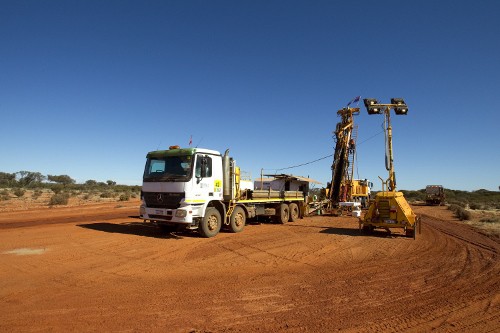
THE DRILL SERGEANT: Ausgold (ASX: AUC) has kicked off a major reverse circulation (RC) drilling program at the company’s 100 per cent-owned Katanning gold project (KGP), located in the south-west region of Western Australia.
Ausgold said the 24,000 metre RC program is designed to target mineralisation within a 10 kilometre radius of the KGP resource area.
“The initial phase of RC drilling will test strike extensions of the Jinkas deposit as well as new targets generated through the re-interpretation of historical exploration data and the recent round of air core (AC) drilling and ground-based geophysics including gravity and moving loop electro-magnetic (EM) surveys at Jackson-Olympia, Jinkas, Lukin and Fraser,” Ausgold said in its ASX announcement.
THE DRILL SERGEANT: S2 Resources (ASX: S2R) received results from base of till drilling undertaken on the company’s 100 per cent-owned Skellefte project in Sweden.
S2 Resources said the drilling had been carried out at the Storgroven target within the Skellefte project and has identified two adjacent zones of gold-silver mineralisation, with seven base of till holes ending in mineralisation greater than one gram per tonne gold and 20g/t silver.
Peak end of hole assays returned 2.5g/t gold and 60g/t silver in the southern zone and 2.3g/t gold and 42g/t silver in the northern zone.
The company drilled 115 holes on a nominal 25 by 25 metre grid to follow up an anomaly it identified in earlier broad spaced (400 by 50m) reconnaissance base of till drilling.
S2 said the infill drilling outlined two zones of strong sericite-silicasulphide hydrothermal alteration with gold and silver anomalism or mineralisation at the end of numerous holes defining a broad gold-silver anomaly measuring 300 by 200m.
The southern zone measures 80m across at a greater than 0.5g/t gold contour and is open to the southeast, with the peak end of hole sample assaying 2.5g/t gold and 60g/t silver.
This zone also contains elevated zinc with the peak end of hole value being one per cent zinc.
“No prior drilling or prospect pitting is documented in this area, but it is not possible to verify this until the spring thaw,” S2 Resources explained in its ASX announcement.
“The nearest known historic diamond drilling and trenching is at the Aliden VMS deposit, located 450 metres to the south on S2’s ground.
“The first phase of diamond drilling to test the source of this mineralisation is scheduled to commence next week.
“Further infill and extensional base of till drilling is continuing.”
THE DRILL SERGEANT: Intermin Resources (ASX: IRC) announced first pass drilling results from the company’s 100 per cent-owned Blister Dam gold project, located on the Zuleika and Kunanalling shear zones, north west of Kalgoorlie-Boulder in Western Australia.
Intermin Resources drilled 46 holes, to an average depth of 90 metres, at nine of 21 high-priority targets it had identified in 2017.
Five new prospects have been generated in the project area, including: Argo, Seven Seas, Syledis, Atlantic and Tasman, all located along the Zuleika shear zone.
High-grade RC downhole intercepts included:
Argo BDRC17050
5 metres at 4.12 grams per tonne gold from 46m; and
BDRC17006
1m at 19.9g/t gold from 24m.
Seven Seas BDRC17025
1m at 36.00g/t gold from 35m; and
BDRC17046
4m at 3.33g/t gold from 43m.
Syledis BDRC17056
2m at 1.31g/t gold from 67m.
Tasman BDRC17016
8m at 0.53g/t gold from 30m.
Intermin said the initial drilling had confirmed two distinct gold mineralisation styles: strongly developed high grade quartz veins and broader lower grade shear hosted gold mineralisation.
The company has designed the next phase of drilling at Blister Dam following a review of all results and further detailed geological assessment.
As part of a $4 million new discovery and resource growth program planned for 2018, over 7,000 metres of drilling has been allocated at Blister Dam in the first half of 2018 with up to an additional 7,000m as required in the second half of the year.
“With these excellent first pass results, Blister Dam has certainly staked its claim as one of the most exciting assets within our portfolio to deliver a significant new discovery,” Intermin Resources managing director Jon Price said in the company’s announcement to the Australian Securities Exchange.
“We now look forward to the large scale follow up program commencing shortly in an area on the Zuleika shear zone that has had very little modern exploration and remains virtually untested at depth.”
https://resourcesroadhouse.com.au/wp-content/uploads/2017/06/logo-finalized4.png00Wally Grahamhttps://resourcesroadhouse.com.au/wp-content/uploads/2017/06/logo-finalized4.pngWally Graham2018-02-07 08:56:352018-02-07 08:56:35Intermin Resources Pleased with First Pass Results from Blister Dam