


Platypus Minerals
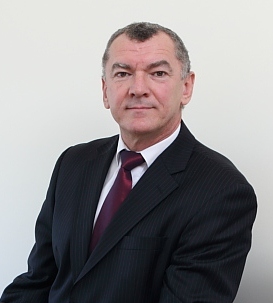
ONE OFF THE WOOD: Platypus Minerals managing director Tom Dukovcic dropped into The Roadhouse to give us the lowdown on what’s happening at the company’s Peruvian projects.
Platypus Minerals has only been Platypus Minerals for 12 months since changing its name from Ashburton Minerals. Has there been any major change of focus since then for the company?
There has, in the form of a portfolio of Peruvian properties that were owned by our unlisted Australian subsidiary company called Platypus Resources.
What was it about those projects that raised your interest?
It means we are now viewed by the market as a company that is exploring for copper porphyry-style mineralisation in Peru.
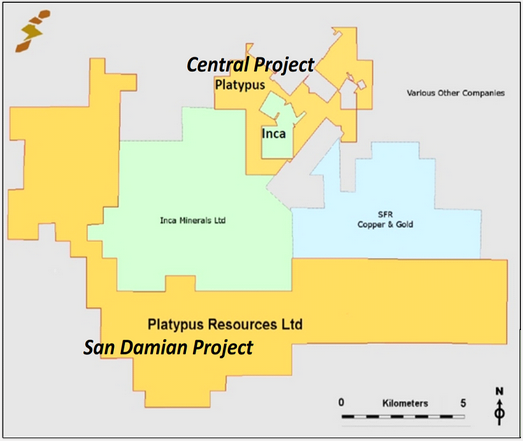
We hold rights to 15 concessions covering around 3,450 hectares in the central Chanape area of the San Mateo Mining District in Peru, located some 100 kilometres east of the capital Lima. We also hold in our own right a further 20,000 hectares of regional ground surrounding the Chanape area.
That is augmented by our Gobbos project where we are chasing copper-molybdenum-porphyry-style mineralisation in the Archean of Western Australia.
Of the two which is your priority project?
The Peruvian project has the greater potential, while the Gobbos project is more advanced at this stage and we have just completed a three-hole 750m reverse circulation drilling program there.
Hopefully that drilling will provide an indication of whether porphyry-style mineralisation is getting stronger at depth beneath the mineralised brecciated basalt. We’ve drilled to around 250 metres depth, but there is a possibility we may need to go deeper.
But the bigger picture potential is significantly greater in Peru by virtue of the fact it is a proven copper district with number of world-class billion tonne-plus copper porphyry deposits in the belt where we are exploring, with all of the world’s major copper miners active in the belt.
So what are the plans for the projects in Peru?
In order to fund all of our exploration work we currently have a rights issue in place looking to raise $1.6 million, which will be then primarily applied to exploration in Peru.
The first stage of that campaign will be ground-based work such as mapping, geochemistry, and rock chip sampling, augmented by acquisition of geophysical and remote sensing data.
Our ground is Peru is in a long-standing artisanal mining district where mining has concentrated on small tonnage vein-hosted mineralisation by non-mechanised methods.
However, what has now been confirmed in the district is that this mineralisation is being driven by an underlying porphyry mineralised system – and this is where the real excitement lies, as these deposits are typically very large and high value, the discovery of which would totally re-rate the company.
Has there been any exploration of note carried out by other companies in the area?
Our ground surrounds a small 800 ha holding being explored by ASX-listed Inca Minerals. Inca has drilled several 600 metre – 800 metre holes that intersected porphyry-copper mineralisation.
Their best result was 284m at 0.32 per cent copper, which is open-ended at beyond 800m depth.
How is Inca Minerals’ drilling a good result for Platypus?
Because that landholding is so small and narrow, and because we hold all the ground totally surrounding it, anything they find is bound to extend into our ground.
In order to exploit anything they find through an open pit operation they would need to cut into our ground. So anything they find is to our benefit.
But more importantly, our central project is four times larger and we have a number of targets totally within our ground, and not dependent on the Chanape deposit. What we’re aiming to do now is to carry out the lead-up work on those targets immediately after the current fundraising.
So how do you see 2015 shaping up for Platypus Minerals exploration wise?
Assuming we satisfactorily complete the rights issue, we will be on the ground in Peru in the first quarter of 2015 conducting the ground-based first phase of work.
Once we have those results we’ll be able to hone in on our drilling targets such that by mid-year we’ll have all the permits in place to commence drilling of the optimised targets.
Any particular target putting its hand up yet?
We want to drill one prospect in particular called Shullac, which is a historical lead-zinc-silver mine with intense wall-rock alteration and adjacent breccias.
We know that where Inca has drilled beneath a breccia they have hit mineralisation, so we have all the indications that Shullac is a must-drill target.
Furthermore, we believe Shullac sits in a structurally uplifted block such that any underlying porphyry should be much closer to surface than the deep porphyry at Chanape. But, we need to drill to confirm this.
The drilling phase always brings the most excitement, so we’re really looking forward to putting some holes into Shullac!
Website: www.platypusminerals.com.au