


Peter Balsarini – Carbon Conscious
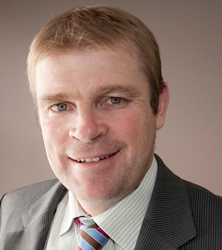
ONE OFF THE WOOD: Carbon credit provider Carbon Conscious chief executive officer Peter Balsarini took time off from the company’s recent tree planting activities to give The Roadhouse a quick lesson in carbon sequestration.
What is it that Carbon Conscious does?
We take marginal agricultural land, which we either buy outright or lease from the farmers, and plant mallee eucalypt trees, which are native to the wheatbelt areas of Australia.
As a tree grows it sequesters carbon into the mass of the tree. It starts off as a seedling and each year the incremental growth provides a carbon credit.
If you were to pull a tree out of the ground, roots and all, remove all the dirt and place it on a scale – there is actually a conversion between the weight of a tree and how much carbon it stores.
So it is the storage of the carbon in the mass of the tree – in the leaves and the trunk and the roots – all of it.
What companies would benefit most from utilising your services?
Companies that have carbon liabilities; in a simple sense we are selling a financial hedge.
Our two major clients are BP and Origin Energy. They are emitters of carbon and they have long term assets, be they power generation or oil, these types of assets.
This means they have a liability under the Clean Energy Scheme that starts on 1 July 2012, and they have that liability for any number of years because they have assets that last for any number of years.
Basically, our trees deliver a stream of carbon liability offsets as they grow.
Does your contract period with these companies reflect the potential life of their projects?
Our contract period is 15 years. When companies contract with us they make an initial upfront payment and continue to make contract payments throughout the 15 year period.
Through that period they earn the carbon credits as the trees are growing.
Does that mean they buy a tree and that tree is theirs for the term of the contract?
We buy the land, we buy the trees, we plant the trees and then we hold a licence over those trees for a period of 15 years. We’re responsible for managing the land and the trees, and our clients have the rights to the carbon credits the trees generate over 15 years.
How many trees does it take to sequester one tonne of carbon?
You would need four to five trees to sequester one tonne of carbon. So we talk in terms of carbon lots and we grow 1000 stems per hectare.
This year we are planting 10,000 hectares, which is ten million trees; that’s the scale we work on.
.JPG)
Why are mallee eucalypt trees your tree of choice?
The mallee eucalypt is the primary native tree of the wheatbelt areas of Australia. Not just the Western Australian wheatbelt, but the South Australia, Victorian, and New South Wales wheatbelts too.
These areas have been cleared for farming over the last hundred years or so. We are now earning carbon credits because we are reforesting these areas.
Why do you conduct your planting in the wheatbelt areas?
There are a couple of reasons; one being in order to earn a carbon credit that is compliant under the terms of the Kyoto Protocol a tree has to be planted on, what is termed, cleared agricultural land – that is land cleared through human endeavour.
That means somebody has to have gone out and cleared the land and that has to have happened pre-1990.
This means we are actually talking about agricultural land, and that is broken down into land that has been cleared to raise cattle or grow sugar or wheat.
Of all these, wheat country is considered to be the lower-value land as it is usually in areas of less rainfall, areas where these trees don’t require irrigation as they are native and thrive in those conditions.
.jpg)
You must anticipate an extremely busy time for the company after July 1?
We have been around since 2008. In 2009 the CPRS (Carbon Pollution Reduction Scheme) was coming through until it was eventually voted out of parliament in December that year.
2009 was when we actually executed the BP and Origin contracts. That was in anticipation of the CPRS being passed.
Since the latest legislation has been passed Origin has exercised an option, which is why we are currently planting 10,000 hectares and we are talking to a number of other parties about potential opportunities to plant for them.
There is always some element of political dynamics where people want to wait and see how things pan out, but I do anticipate conversations being a lot stronger on the other side of 1 July.
Having said that, a lot of the parties we are dealing are, in turn, dealing with a lot of compliance issues.
They’re actually dealing with the fact that after 1 July they have to start counting their carbon and they have to start understanding their liabilities and begin managing those liabilities.
You have already established a revenue stream for the next 15 years from the tree planting. How does this work?
Our clients pay 50 per cent of the project costs up front and the other 50 per cent over the 15 year life of the contract.
Our clients are at the high-end of town, such as BP and Origin, but potentially we could also be planting for others such as Woodside, Rio Tinto, or Chevron.
These companies want to ensure we are able to maintain the 15 year management of the contract which is why payment spans the life of the contract.
That’s good from our perspective as it means we have an ongoing, enduring revenue stream through the management process, not just from the initial planting of the trees.
After the 15 years is up, what happens to the trees?
All the assets are ours. We can continue to sell the carbon and the trees will continue to grow.
We own the land and we own the trees so we see them as being a long-term asset for the company.
So far you have made inroads planting trees in Australia and New Zealand. Do you have your gaze set on any other horizons?
We plant pine trees in New Zealand. We have completed around 800 hectares of planting over there.
New Zealand has had a scheme in place since 1 July 2010. There is huge potential for the New Zealand scheme to be joined to the Australian scheme.
Obviously we are interested in other types of opportunities; there are international units that are allowable in the Clean Energy Scheme but they don’t come along until 2015.
So we are still a few years away from being able to sell other types of projects, perhaps out of Asia and other places.
The reality is that our current business plan is pretty strong. We would like to get more trees under management and that involves expansion.
I would think that if other opportunities came along we would always look at them but at the moment we are pretty heavily focused on our main business.